
What is elemental analysis in materials?
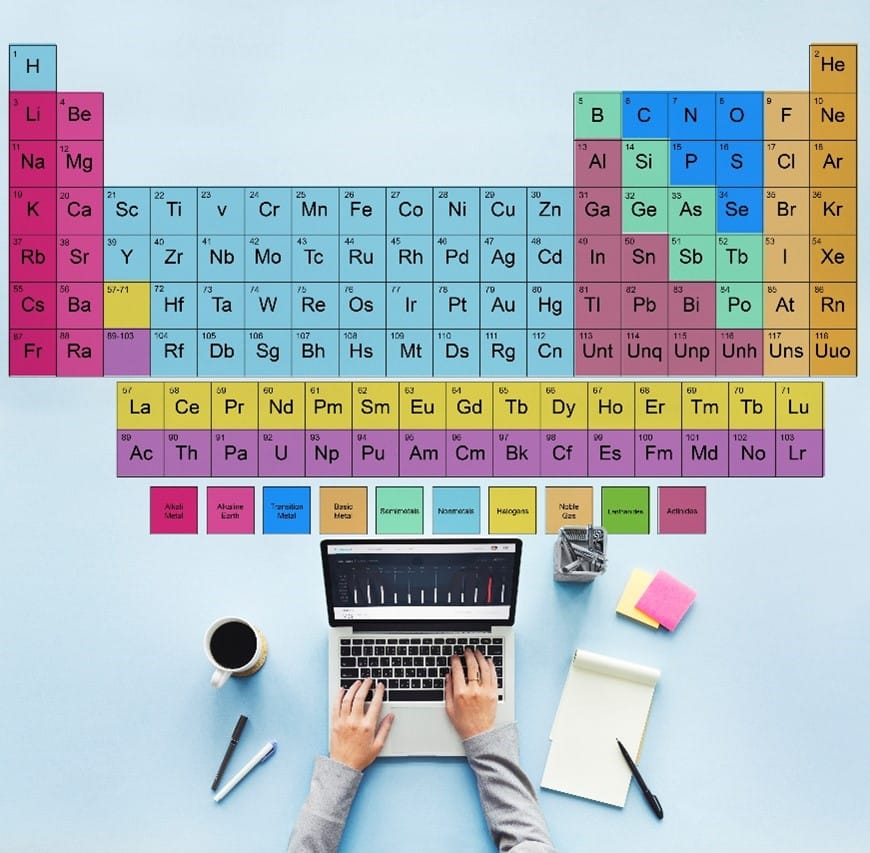
Elemental analysis in materials encompasses a set of techniques aimed at identifying and quantifying the chemical elements present in a sample, providing a direct view of its composition. This type of analysis constitutes one of the strongest foundations for understanding the behavior of a material, as it makes it possible to establish a clear relationship between its composition and its functional properties. In industrial environments, where materials are subjected to demanding conditions, this information is especially relevant to ensure process reliability and repeatability.
Unlike other characterization approaches focused on physical or structural properties, elemental analysis makes it possible to approach a material from its most fundamental chemical nature. This is essential when it is necessary to validate whether a material meets a technical specification, identify deviations between batches, or verify the conformity of a raw material. Even in cases where the material appears correct from a macroscopic point of view, small variations in composition may be enough to alter its in-service performance.
Elemental analysis in materials makes it possible to understand what a material is made of and anticipate its behavior.
In addition, this type of analysis is not limited to identifying which elements are present, but also allows them to be quantified with different levels of precision. This capability is especially relevant in complex materials, such as metallic alloys, filled polymers, or functional coatings, where the proportion of certain elements can modify key properties. In this sense, elemental analysis becomes an essential tool for reducing uncertainty in technical decision-making.
Finally, its relevance increases when it is integrated into a broader characterization approach. Elemental analysis should not be interpreted in isolation, but rather as one part of a wider technical evaluation system. When combined with other techniques, it makes it possible to build a complete view of the material, from its composition to its behavior under real operating conditions.
Chemical composition of materials as the basis of technical behavior
The chemical composition of materials is the starting point for understanding how a material responds under different conditions of use. Each element present in a material contributes, to a greater or lesser extent, to defining properties such as mechanical strength, ductility, conductivity, or corrosion resistance. For this reason, knowing precisely which elements are present and in what proportion is essential to anticipate its behavior.
The chemical composition of materials directly determines their properties and in-service performance.
In many industrial materials, composition is neither homogeneous nor simple. It is common to find combinations of major elements, alloying elements, and small quantities of trace elements which, although present in low concentrations, can have a significant impact. These combinations are the result of design decisions, manufacturing processes, or even variations in raw materials, which adds further complexity to their analysis.
Elemental analysis makes it possible to break down this complexity and translate it into quantifiable data. Based on these data, it is possible to assess whether a material complies with a given specification or whether there are deviations that may compromise its performance. This aspect is especially critical in sectors where tolerances are strict and margins for error are small.
From a technical perspective, correctly interpreting chemical composition requires not only identifying the elements, but also understanding their interaction. The simultaneous presence of certain elements can generate synergistic or antagonistic effects that directly influence material behavior. Therefore, elemental analysis is not only an identification tool, but also a starting point for deeper technical analysis.
Trace elements in materials and their impact under real operating conditions
Trace elements in materials represent one of the most critical and, at the same time, most complex aspects of elemental analysis. Although they are present in very low concentrations, their influence can be decisive in material behavior, especially under demanding conditions or in applications where reliability is critical.
These elements may have different origins, such as impurities in the raw material, contamination during the manufacturing process, or even chemical reactions that occur during service. In many cases, their presence is unintentional, which makes their detection and quantification even more relevant. The difficulty lies in the fact that these elements are not usually detectable through visual inspection or conventional techniques.
Elemental analysis makes it possible to identify these trace levels with high sensitivity, which is essential for anticipating potential problems. For example, the presence of certain elements may promote phenomena such as localized corrosion, embrittlement, or chemical degradation. These effects may develop progressively, leading to failures that are difficult to explain without a detailed compositional analysis.
In an industrial context, controlling trace elements is not only a matter of quality, but also of reliability and safety. Their analysis makes it possible to establish acceptable limits, compare materials from different suppliers, and assess the stability of production processes. In this sense, elemental analysis provides an additional layer of control that is difficult to replace with other methodologies.
Technical relevance of elemental analysis in materials
Elemental analysis in materials has a direct impact on multiple industrial areas, from material selection to failure investigation. Its ability to provide objective information about composition makes it possible to reduce reliance on assumptions and strengthen the technical basis on which decisions are made. In environments where variability can generate significant problems, having reliable compositional data is a key factor.
One of the main areas where it is applied is the detection of deviations from technical specifications. These deviations may not be obvious at first sight, but they can have relevant consequences for material behavior. Elemental analysis makes it possible to identify these differences accurately, facilitating corrective or preventive decision-making.
Many deviations in materials are not visible, but they can be detected through elemental analysis.
Another relevant aspect is its application in failure investigation. In many cases, premature failures are not related to visible defects, but rather to alterations in chemical composition, which makes it necessary to address them from a forensic engineering approach capable of correlating analytical evidence with in-service behavior. These alterations may result from errors in material selection, variations in the manufacturing process, or external contamination. Elemental analysis makes it possible to identify these causes and establish a relationship between composition and the observed failure.
In addition, its use in industrial environments helps improve traceability and process control. By having detailed information on composition, it becomes possible to compare materials, assess suppliers, and detect trends that may affect the quality of the final product. This makes elemental analysis a strategic tool, beyond its purely analytical function.
Metallic contamination in materials as a source of failure and degradation
Metallic contamination in materials is one of the most frequent causes of technical problems in industrial components. This contamination may be introduced at different stages of the process, from raw material production to machining or final assembly. In many cases, its presence goes unnoticed until its effects become apparent during service.
The effects of this contamination may vary depending on the nature of the material and the operating environment. In some cases, it may lead to a reduction in mechanical strength, while in others it may promote corrosion processes or alter functional properties such as conductivity. What matters is that these effects are not always immediate, but may develop progressively.
Elemental analysis makes it possible to identify the presence of elements that should not be present in the material or that appear at higher concentrations than expected. This information is key to determining whether contamination is the cause of the problem or whether it acts as a contributing factor. In addition, it makes it possible to locate possible sources of contamination within the production process.
From a technical point of view, addressing metallic contamination requires not only detecting it, but also understanding its origin and impact. Elemental analysis provides the basis for this evaluation, making it possible to establish relationships between composition and observed behavior. This is essential for implementing effective corrective measures.
Material quality control through composition verification
Material quality control relies on verifying that chemical composition remains within the limits defined by specifications. This verification is essential to ensure that the materials used in a process meet the requirements necessary for their proper functionality.
Elemental analysis makes it possible to carry out this verification objectively, providing quantitative data that can be compared with reference values. This is especially useful in raw material reception, where it is necessary to validate that the supplied material actually corresponds to what was requested. It is also relevant in production control, where it makes it possible to detect deviations between batches.
Another important aspect is the comparison of materials from different suppliers. In many cases, apparently equivalent materials may show differences in composition that affect their behavior. Elemental analysis makes it possible to identify these differences and assess their potential impact.
Integrating this type of analysis into quality control not only improves the reliability of the final product, but also makes it possible to detect problems early thanks to preventive analysis. This reduces costs associated with rework, in-service failures, or claims, and contributes to improving the robustness of the production system as a whole.

Selection of techniques by sensitivity and application
Elemental analysis in materials relies on a wide variety of analytical techniques, each with its own capabilities and limitations. Choosing the right technique depends on factors such as the type of material, the required accuracy, or the nature of the problem to be solved. In many cases, there is no single optimal technique, and several must be combined to obtain a complete picture.
These techniques are based on different physical principles, such as interaction with X-rays, electrons, or plasmas. Each of them provides a specific type of information, which makes it possible to adapt the analysis to the needs of each case. For example, some techniques are more suitable for rapid and global analyses, while others allow a greater level of detail or sensitivity.
Technological development has made it possible to significantly improve the capability of these techniques, especially with regard to the detection of elements at trace levels. This has expanded the range of applications of elemental analysis, making it possible to address increasingly complex problems. However, this greater capability also implies the need for proper interpretation of results.
For this reason, elemental analysis should not be understood solely as a measurement, but as part of a broader evaluation process. The correct selection of techniques, together with a rigorous interpretation of the data, is what makes it possible to draw useful conclusions from a technical point of view.
SEM-EDX analysis for localized characterization of materials
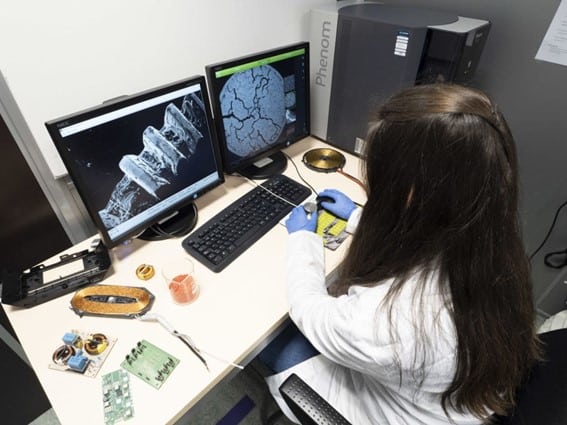
SEM-EDX analysis combines electron microscopy with X-ray spectroscopy to provide information about chemical composition at a local level. This capability is especially useful when it is necessary to analyze specific areas of a material, such as defects, inclusions, or altered surfaces.
One of its main advantages is the possibility of correlating chemical information with material morphology. This makes it possible to identify not only which elements are present, but also where they are located and how they are distributed. In the context of failure investigation, this information may be key to understanding the mechanisms that led to the problem.
However, this technique has certain limitations, especially in terms of sensitivity for elements at very low levels. For this reason, it is usually used in combination with other techniques that allow more precise quantification. Even so, its ability to provide localized information makes it a fundamental tool.
In industrial applications, the use of SEM-EDX makes it possible to analyze materials in a detailed and contextualized way, facilitating the interpretation of results and the identification of root causes in complex problems.
X-ray fluorescence XRF in elemental analysis of materials
X-ray fluorescence XRF is one of the most widely used techniques in elemental analysis in materials when rapid identification of chemical composition is required without altering the sample. Its operating principle is based on the interaction of X-rays with the elements present in the material, generating a characteristic signal that makes it possible to identify the detected elements.
One of the main advantages of this technique is its non-destructive nature, which makes it possible to analyze components without the need for complex preparation or alteration of their original state. This is especially useful in industrial environments where materials must be verified quickly, such as in raw material reception or in-line quality control.
From a technical point of view, XRF provides a global view of the chemical composition of materials, being especially effective in the detection of medium- and high-atomic-weight elements. However, it has limitations in the detection of light elements and trace levels, which conditions its use in applications where high sensitivity is required.
In practice, XRF is used as a first-approach tool, making it possible to quickly identify compositional deviations or confirm the nature of a material. Its speed and versatility make it a key technique in material identification and initial verification processes, although in many cases it must be complemented with other techniques to obtain a more detailed analysis.
ICP-OES for quantification of elements in materials
The ICP-OES technique (Inductively Coupled Plasma Optical Emission Spectrometry) is used in elemental analysis in materials when it is necessary to accurately quantify the elements present in a sample. Unlike faster techniques such as XRF, ICP-OES requires prior sample preparation, usually by dissolution, which allows for a more controlled and precise analysis.
The use of high-temperature plasma makes it possible to excite the atoms present in the sample, generating light emissions characteristic of each element. From these signals, it is possible to determine the concentration of the different elements with a good balance between accuracy, sensitivity, and analytical cost.
This technique is especially useful in the analysis of metals, alloys, coatings, or liquid solutions, where it is necessary to verify the chemical composition of materials with greater accuracy. It makes it possible to detect deviations from technical specifications and assess consistency between different production batches.
However, ICP-OES has certain limitations in the detection of elements at extremely low concentrations, where other more sensitive techniques may be more suitable. Even so, its versatility and robustness make it a widely used tool in material quality control and in the validation of industrial processes.
ICP-MS for detection of trace elements in materials
The ICP-MS technique (Inductively Coupled Plasma Mass Spectrometry) represents one of the most advanced methods in elemental analysis in materials, especially when detection of elements at very low concentrations is required. Its high sensitivity makes it possible to identify and quantify elements at trace levels, which is crucial in applications where small quantities can have a significant impact.
Like ICP-OES, this technique requires prior sample preparation, generally through chemical digestion. However, its mass spectrometry-based detection system allows much lower detection limits to be achieved, making it especially suitable for the analysis of impurities or contaminants.
ICP-MS is commonly used in contexts where the presence of trace elements in materials can affect product behavior, such as premature failures, corrosion processes, or chemical degradation. It is also relevant in sectors with high purity requirements, where impurity control is critical.
From a technical point of view, this technique makes it possible to address complex problems that cannot be solved by less sensitive methods. However, its greater complexity and cost mean that its use is reserved for cases where the required analytical level justifies it, especially in advanced studies or in forensic engineering contexts.
LIBS for rapid and portable elemental analysis in materials
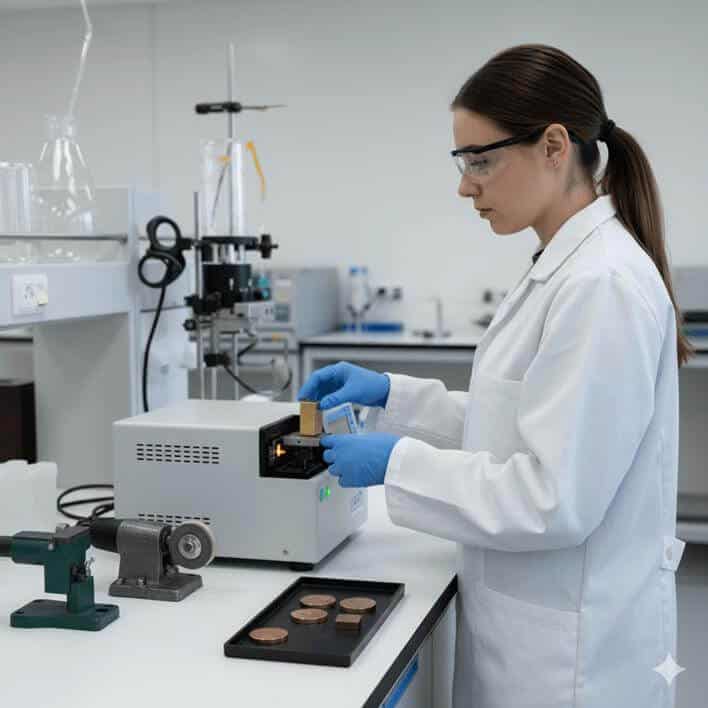
The LIBS technique (Laser-Induced Breakdown Spectroscopy) is used in elemental analysis in materials when rapid compositional information is required with minimal sample preparation. Its operating principle is based on the generation of a microplasma by means of a laser pulse on the surface of the material, whose emission makes it possible to identify the elements present.
One of the main advantages of LIBS is its ability to perform analysis practically in situ, without the need for complex preparation or strict laboratory conditions. This makes it an especially useful tool in industrial environments where an immediate response is required, such as field inspections, material classification, or rapid verifications in production processes.
From a technical point of view, LIBS makes it possible to detect a wide variety of elements, including some that present difficulties for other techniques, such as light elements. However, its precision and reproducibility may be lower than those obtained with techniques such as ICP, which limits its use in applications where highly accurate quantification is required.
In practice, LIBS is used as a screening or preliminary analysis technique, making it possible to quickly identify the nature of a material or detect obvious deviations in its composition. Its value lies in its speed and flexibility, although in many cases the results must be complemented with more precise techniques for a detailed evaluation.
Combustion analysis for carbon, sulfur, and light elements
Combustion analysis is a fundamental technique within elemental analysis in materials when it is necessary to accurately determine the concentration of light elements such as carbon, sulfur, oxygen, nitrogen, or hydrogen. Unlike other techniques, this method is based on the complete oxidation of the sample at high temperature, making it possible to quantify the gases generated during the process.
This type of analysis is especially relevant in metallic materials and alloys, where elements such as carbon or sulfur have a direct impact on mechanical properties such as hardness, strength, or brittleness. In these cases, small variations in concentration can translate into significant changes in material behavior.
From a technical point of view, combustion offers high accuracy and reproducibility in the quantification of these elements, overcoming the limitations of other techniques that are not suitable for their detection. For this reason, it is a key tool in material quality control, especially in sectors where specifications are strict.
In practice, combustion analysis is used both in raw material validation and in final product verification, making it possible to ensure that composition meets the established requirements. Its application is especially relevant in industrial environments where the control of light elements is critical to guaranteeing material performance.
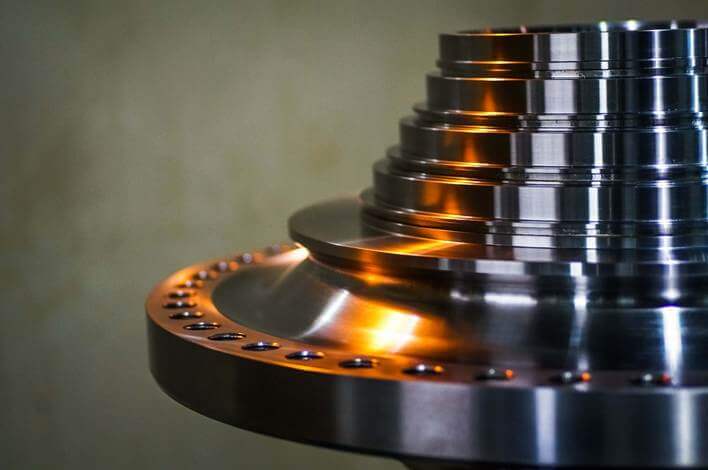
Not all techniques offer the same sensitivity or precision in elemental analysis.
Interpretation of elemental data in an industrial context
Elemental analysis in materials is a fundamental tool for understanding the chemical nature of materials and their influence on in-service behavior. Its ability to identify and quantify elements makes it possible to address technical problems from an objective basis, reducing uncertainty in decision-making.
Throughout the life cycle of a product, this type of analysis plays a key role in raw material validation, quality control, and failure investigation. In many cases, the information obtained makes it possible to detect deviations that would not be visible through other methods, which contributes to improving the reliability and robustness of industrial systems.
However, it is important to consider that elemental analysis alone does not provide a complete explanation of a material’s behavior. Its true value lies in its integration with other characterization techniques, which makes it possible to build a more complete and accurate picture. This integration is especially relevant in complex problems, where multiple factors are involved.
In this sense, elemental analysis should be understood as a tool within a broader technical approach. Its correct application and interpretation make it possible to transform data into useful knowledge, facilitating informed decision-making and improving the understanding of materials in industrial environments. In situations where it is necessary to evaluate a material or understand the origin of a deviation, having access to specialized technical analysis makes it possible to move forward with greater reliability.