


Preventive failure analysis
Preventive failure analysis is a technical discipline within reliability engineering that makes it possible to identify, assess, and neutralize potential failure modes in a material, component, or system before they occur during its service life. Unlike forensic analysis, which acts after the failure, the preventive approach anticipates the problem: it detects structural, chemical, or mechanical weaknesses at the design, validation, or manufacturing stage, when it is still possible to act with the lowest cost and greatest effectiveness.
The process combines advanced materials characterization techniques, testing under real or simulated conditions, and systematic failure analysis and prevention methodologies, such as FMEA or fault tree analysis, to obtain a technical diagnosis grounded in objective data and prevent future problems. INFINITIA acts as an external technical partner in this process, designing test protocols tailored to each industrial case: from tests to fail and accelerated aging tests to on-site diagnostics with portable instrumentation on the plant floor.
Adopting a proactive approach through preventive failure analysis in the early stages of the industrial cycle drastically reduces the risk of post-sale incidents, claims, and unplanned downtime. To learn how this service integrates into forensic engineering at INFINITIA and what other services complement preventive analysis throughout the industrial cycle, check out the full failure analysis area.
Talk to a specialist
Request a free initial consultation; contact a consultant from our team of specialists

What is preventive failure analysis?
What is it?
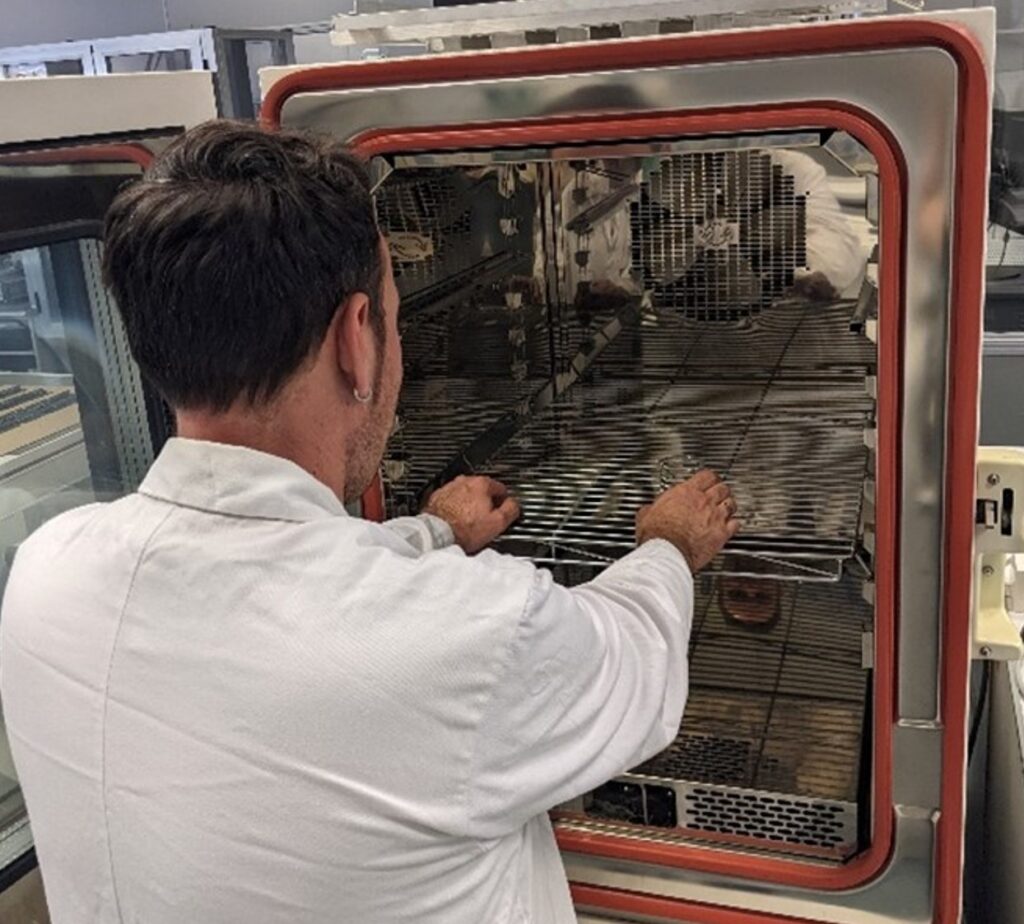
Preventive failure analysis is the set of techniques and methodologies that make it possible to identify, prioritize, and mitigate the potential failure modes of a component, material, or system before an actual failure occurs. Its main function is to anticipate product behavior under demanding conditions of use, providing technical data that supports decisions on design, material selection, and process control.
In the industrial context, this service falls within reliability engineering and addresses a critical need: understanding the real operating limits of a product before it enters service. Its application extends throughout the entire life cycle, from the conceptual design stage to control in series production, and is especially relevant in projects where a post-sale incident would have a significant impact on cost, reputation, or safety. Standards such as ISO 9001, IATF 16949 in automotive, or ISO 14971 for medical devices include explicit requirements for failure risk analysis and management, which this type of service directly helps to fulfill.
Technically, preventive failure analysis can include structured methodologies such as FMEA (Failure Mode and Effects Analysis), FTA (Fault Tree Analysis), or criticality analysis, combined with physical, chemical, and mechanical testing on real materials and components. Variables studied include operating temperature, exposure to chemical agents, cyclic mechanical stress, relative humidity, or loading and unloading cycles. Combining comparative materials characterization with systematic failure mode analysis makes it possible to build an actionable technical risk map.
INFINITIA approaches this service as an external industrial technical consultant, providing analytical independence and a cross-sector outlook built up across multiple industries and product types. The differentiating value lies in the ability to combine the technical rigor of testing with interpretation geared toward industrial decision-making: it is not just about detecting the potential failure, but also assessing its probability, its severity, and the most effective preventive actions to neutralize it.
Preventive failure analysis at INFINITIA. A technical methodology geared toward industrial decision-making
Preventive failure analysis at INFINITIA starts from one premise: technical data only creates value when it is directly linked to an industrial decision. That is why each analysis is designed with a specific objective, validating a material, qualifying a process, establishing an operating limit, or identifying a critical failure mode, and the results are translated into actionable recommendations rather than descriptive reports with no practical implications.
The methodology combines systematic failure mode analysis with the experimental characterization of materials and components. Depending on the case, techniques applied include infrared spectroscopy (FTIR), scanning electron microscopy (SEM), thermogravimetric analysis (TGA), tensile, flexural, or impact mechanical testing, electrochemical corrosion analysis, or accelerated aging tests under ISO or ASTM standards. In all cases, experimental data collection follows traceability criteria that ensure the technical validity of the results. When the analysis requires it, it is complemented with failure reproduction testing under controlled conditions, which makes it possible to validate hypotheses with direct experimental evidence.
INFINITIA’s approach integrates three dimensions simultaneously: rigorous technical testing, interpreting the result within an industrial context, and orienting the outcome toward corrective or preventive action. This combination of laboratory analysis, on-site diagnosis, and technical consulting sets the service apart from standard characterization. In complex processes, preventive analysis is coordinated with the failure mode study, making it possible to build a complete picture of the component’s behavior throughout its life cycle.
INFINITIA’s differentiator as an external technical partner lies in combining multi-technique analytical rigor with experience built up in demanding industrial sectors. Independence from the manufacturer and the process ensures an objective assessment, free of confirmation bias. The result is a technical diagnosis that answers the question that really matters to the client: is this component, material, or process reliable under the expected real conditions of use?
Problems addressed by preventive failure analysis in industrial environments
Benefits
Failures not detected during the design or validation stage inevitably turn into field incidents: returns, claims, line stoppages, or, in the most critical cases, risks to end-user safety. Preventive failure analysis breaks that cycle by moving problem detection to the point where it is still possible to act without incurring the cost of poor quality.
Incorrect material selection is one of the most common causes of premature failure in industrial products. A polymer that degrades on exposure to certain cleaning agents, a metal coating that loses adhesion under thermal cycling, or an elastomeric seal that fails due to chemical incompatibility with the working fluid are scenarios systematically detected through chemical resistance testing, thermal analysis, or accelerated aging tests. Without this prior analysis, the failure appears in the field, and correcting it multiplies the cost of intervention. Custom test design makes it possible to reproduce the exact conditions of use and verify the suitability of the material before approval.
Manufacturing processes introduce variability that can compromise component integrity even when the design is correct. Parameters such as molding temperature, curing time, rolling pressure, or welding conditions directly affect the mechanical, microstructural, and surface properties of the material. Without preventive analysis that assesses the process’s sensitivity to these variables, latent defects (microcracks, pores, residual stress zones, hardness variations) remain hidden until conditions of use trigger them. Early detection of these defects through techniques such as electron microscopy, non-destructive testing, or fractography makes it possible to intervene in the process before series production amplifies the problem.
Reactive maintenance, acting only once a failure has already occurred, and failures resulting from insufficient preventive maintenance generate operating costs far higher than those of a structured preventive analysis program. In equipment or facilities with a long operating life, the absence of preventive diagnosis means not knowing the real degradation state of critical equipment and its components: friction wear, incipient fatigue, stress corrosion, or the progressive loss of sealing properties. This lack of knowledge leads to unplanned downtime, premature replacements, or, in the worst case, catastrophic failures that could have been avoided with effective RCA analysis. Reliability analysis under real conditions, using portable instrumentation, thermography, or on-site sensors, provides the data needed to move from corrective to predictive maintenance, improving equipment performance based on technical evidence.

Applications of preventive failure analysis to anticipate product failure modes
types
Preventive failure analysis applies to any stage of the industrial cycle where it is necessary to assess the behavior of a material, component, or system before failure occurs under real conditions. Its cross-cutting nature makes it a frequently used service both in design and development stages and in series production, supplier changes, redesigns, or recurring claims management. The ability to detect potential failure modes before they materialize reduces the cost of poor quality and strengthens technical decision-making with objective data.
At INFINITIA, applications of preventive analysis are always designed based on the specific industrial context: type of material, conditions of use, sectors involved, and the technical decision that needs to be supported. This tailored approach ensures that the tests and methodologies applied respond to the client’s real circumstances, not a generic protocol.
FMEA analysis: a methodology for identifying failure modes in industrial components
FMEA (Failure Mode and Effects Analysis) is a structured methodology that makes it possible to systematically identify the potential failure modes of a component or process, assess their severity, probability of occurrence, and detectability, and prioritize corrective actions with precision, focusing on the most critical failure modes backed by real data. It is applied both at the design stage (Design FMEA) and the process stage (Process FMEA), and is a fundamental tool in sectors such as automotive, where the IATF 16949 standard explicitly requires it, or medical devices under ISO 14971.
INFINITIA integrates FMEA as an analytical tool within preventive failure analysis, combining it with experimental testing that validates or refutes the failure hypotheses identified in the documentary analysis. This integration of systematic methodology and experimental evidence makes it possible to define corrective actions grounded in real data, avoiding the biases that commonly arise when the analysis is carried out by the design or manufacturing team itself.
FMEA applied with experimental rigor is not merely a documentary exercise: it is an engineering tool that, when combined with real materials characterization and testing representative of conditions of use, generates an actionable technical risk map that supports design, process, and validation decisions with objective, traceable criteria.
Accelerated aging tests for service-life prediction
Accelerated aging tests are designed to reproduce, within a controlled and reduced time frame, the deterioration a material or component will experience over its service life under real conditions of use. The material is subjected to intensified stress factors (elevated temperature, high relative humidity, UV radiation, thermal cycling, exposure to chemical agents), following acceleration models such as the Arrhenius equation for thermal degradation or standardized protocols under ISO 4892, ASTM G154, or equivalent.
This application allows INFINITIA to predict the long-term behavior of plastic materials, coatings, adhesives, elastomers, or electronic components before they are launched to market, without needing to wait for the real service life to elapse. The results directly inform critical decisions: whether a polymer retains its mechanical properties after simulating five years of UV exposure, whether an anti-corrosion coating meets sector regulatory requirements, or whether a sealing gasket maintains its tightness after repeated thermal cycling. INFINITIA, as an industrial technical consultant, designs this testing by tailoring the acceleration factors to the client’s real conditions of use.
Accelerated aging tests are the most direct tool for validating a product’s service life before it goes to market, providing experimental data that supports technical specifications, supplier approvals, and the case against durability-related claims.
Tests to fail: assessing real operating limits
Tests to fail are tests designed to bring a component or material to its failure point in a controlled way, in order to determine its real operating limits (mechanical, thermal, chemical, or electrical) and understand the mechanism by which it fails. Unlike standard validation tests, which verify compliance with a specific requirement, tests to fail explore the margin between design conditions and the failure threshold, providing critical information for sizing, material selection, and defining safety margins.
Knowing the real margin between working conditions and the failure limit makes it possible to make technical decisions with much greater rigor: adjusting safety factors, identifying design weak points, comparing material alternatives with objective data, or detecting unexpected failure modes that conventional compliance testing does not reveal. INFINITIA designs these tests by tailoring the loading protocol (mechanical, thermal, chemical, or combined) to the component’s real conditions of use, ensuring that the induced failure is representative of the potential failure in the field.
A well-designed test to fail reveals more information about a component’s real reliability than any number of compliance tests that merely verify minimum specifications, because it exposes the failure mechanisms before real-world field use does.
On-site preventive diagnosis, plant-floor analysis, and root cause
On-site preventive diagnosis involves assessing the real condition of materials, components, or equipment directly at the client’s facilities, without needing to stop production or disassemble the systems being analyzed. Portable instrumentation techniques are used (infrared thermography, vibration measurement, acoustic emission analysis, portable spectroscopy) that make it possible to detect thermal, mechanical, or material anomalies under real operating conditions.
This type of preventive analysis is especially valuable in industries with continuous production lines, where unplanned downtime has a significant operational and economic impact. Infrared thermography, for example, makes it possible to monitor overheating areas in rotating machinery or electrical connections before they lead to failure; vibration measurement identifies incipient misalignment or bearing wear before it leads to breakdown, at very early stages of deterioration. INFINITIA integrates on-site diagnosis with laboratory analysis when plant inspection reveals anomalies that require deeper characterization, establishing a complete diagnostic cycle from detection through to root cause using methodologies such as RCA or 8D analysis.
On-site preventive diagnosis eliminates the uncertainty associated with maintenance based purely on time intervals, as it makes it possible to gather objective technical data on the real state of the system. Applying structured methodologies such as Ishikawa diagrams to interpret this data helps guide interventions with precision, reducing both the cost of unplanned downtime and that of premature replacement of components still in good condition.
NOK/OK comparative analysis and root cause analysis to prevent recurrence
NOK/OK comparative analysis is a preventive analysis technique that involves the systematic characterization of defective samples (NOK, Not OK) against conforming reference samples (OK), in order to identify the technical variables that differentiate the two conditions and determine which material, process, or design parameters are responsible for the failure. It is a fundamental tool for preventing recurrence: it not only explains why a component failed, but also identifies the technical indicators that make it possible to anticipate the failure before it occurs.
The comparison between NOK and OK samples is carried out using materials characterization techniques such as FTIR spectroscopy, scanning electron microscopy (SEM/EDX), differential thermal analysis (DSC/TGA), hardness testing, or comparative mechanical testing. The results identify differences in chemical composition, microstructure, mechanical properties, or surface morphology that explain the failure and guide the necessary changes to the process or purchasing specifications. As an external technical partner, INFINITIA brings the objectivity needed to interpret these differences free from interference from the internal production process.
NOK/OK comparative analysis turns technical data into concrete preventive action: once the critical variable distinguishing the defective sample from the conforming one has been identified, it becomes possible to take specific corrective measures (implementing process controls, redefining raw material specifications, or modifying manufacturing parameters) that eliminate the root cause of recurrence before it repeats in production.
Validating materials and suppliers before series production
The technical validation of materials and suppliers before series production begins is a direct application of preventive failure analysis aimed at ensuring that purchased materials and components meet the required technical specifications and will behave reliably under real conditions of use. It includes raw material characterization, approval of new suppliers, validation of material or process changes, and verification that received supplies match the agreed specifications, minimizing the risk of uncontrolled variability before series production.
In series production environments, a supplier change that has not been technically validated, or a raw material with undetected variability, can trigger widespread failures with a major impact on cost and reputation. INFINITIA carries out this validation through materials approval testing and comparative characterization that verify compliance with mechanical, chemical, thermal, and functional properties against the reference material specifications. The process includes issuing a specialized technical report that documents the results and supports the approval or rejection decision with objective criteria.
Prior technical validation of materials and suppliers is the preventive measure with the greatest impact on quality in series production: it acts on the root cause of variability before it enters the value chain, making it possible to improve sourcing and manufacturing processes at the source, rather than managing the defect once it has occurred.
Sectors that use preventive failure analysis
sectors
Preventive failure analysis at INFINITIA: technical decisions, maintenance, and industrial judgment
Value
Preventive failure analysis delivers its greatest value when integrated as a systematic tool within the technical decision-making process, not as a one-off response to incidents. Anticipating the behavior of a material, component, or system under real conditions of use makes it possible to design with greater precision, approve suppliers on objective criteria, establish well-founded technical specifications, and implement plans based on the actual state of the system, optimizing maintenance processes instead of relying on arbitrary intervals.
The impact of this approach on industrial decisions is direct and measurable: it reduces the number of design-stage iterations by identifying failure modes before manufacturing costly prototypes, decreases production variability by detecting critical process parameters before series production, and supports material and supply acceptance or rejection decisions with technical data. INFINITIA integrates preventive analysis with other forensic engineering services, such as root cause failure diagnosis and materials characterization, to offer a complete analysis cycle covering everything from prevention to resolution, feeding the lessons learned from each case back into accumulated technical knowledge.
From an operational and economic standpoint, investment in preventive analysis pays off through a reduction in the cost of poor quality: fewer returns, fewer warranty claims, less unplanned downtime, and less need for costly corrective repairs, which directly benefits the plant’s operating profitability. In sectors with high production volumes, detecting a critical failure mode before series production starts can save a significant number of defective parts and the associated management costs. Supplier scouting and validation carried out with rigorous technical criteria, as part of preventive analysis, also reduces the risk of uncontrolled variability in the supply chain.
In regulated sectors (medtech, aerospace, defense, automotive), preventive failure analysis does not just add technical value: it is part of regulatory compliance. Standards such as ISO 14971, IATF 16949, AS9100, or the European MDR explicitly require the identification and management of potential failure modes as part of the quality management system and the design process. In this context, INFINITIA positions itself as a strategic technical partner that provides specialized analytical capability, technical independence, and cross-sector experience so that companies can meet these requirements with solid, traceable experimental evidence, building a foundation of reliability that translates into real competitive advantage.
Frequently asked questions about preventive failure analysis
FAQs
What is preventive failure analysis and how does it differ from corrective analysis?
Preventive failure analysis is a set of reliability engineering techniques aimed at identifying the potential failure modes of a material, component, or system before an actual failure occurs. Its goal is to anticipate the problem at the design, validation, or production stage, when it is still possible to intervene with the lowest cost and greatest effectiveness.
The key difference from corrective failure analysis lies in the timing of the action: corrective analysis investigates a failure that has already occurred, seeking its root cause to prevent recurrence; preventive analysis acts before the failure, assessing potential risks based on the behavior of the material or component under simulated or real conditions. Both approaches are complementary and form part of the reliability engineering discipline that INFINITIA develops as an external technical partner.
What happens if preventive failure analysis is not carried out before series production?
The absence of preventive analysis means that the potential failure modes of a component or material are not identified until they appear under real conditions of use, usually in the field and with the product already in the hands of the client. This leads to high costs of poor quality: returns, warranty claims, replacement costs, and damaged reputation with the end customer. In addition, in regulated sectors such as automotive, medtech, or aerospace, the absence of preventive technical validation can result in regulatory non-compliance, with the legal and commercial consequences that entails. The cost of detecting and correcting a critical failure mode at the design stage is typically ten to a hundred times lower than the cost of managing it once it has occurred in the field, which underscores the importance of root cause analysis.
How are the appropriate tests selected for preventive failure analysis?
Test selection starts with analyzing the specific case: type of material or component, expected real conditions of use, the most likely failure modes based on the sector, and the technical decision that needs to be supported. There is no universal protocol; each analysis is designed based on the specific industrial context. At INFINITIA, the selection process combines a technical review of the component and its specifications with experience built up in similar cases. The relevant stress factors are identified (temperature, humidity, mechanical load, chemical exposure, use cycles), and the test techniques that allow them to be assessed representatively and with the necessary level of sensitivity are selected. Standards such as the ISO 9001, ASTM, or IEC series provide reference frameworks that guide selection when an applicable sector standard exists.
What is the difference between standard preventive analysis tests and custom-designed tests?
Standard tests follow standardized protocols (ISO, ASTM, IEC) that define conditions, parameters, and acceptance criteria for generic use situations. They are suitable when the conditions of use of the product reasonably match the assumptions covered by the standard, and when the client needs to demonstrate compliance with a specific regulatory or contractual requirement. Custom tests are designed when the real conditions of use of the product are not covered by any existing standard, when a specific combination of stress factors needs to be reproduced, or when the goal is to explore material behavior beyond the limits of the specification. INFINITIA designs custom tests by tailoring loading parameters, exposure cycles, and evaluation criteria to the real circumstances of the client, providing technical information that is far more relevant and actionable than that offered by a generically applied standard test.
What value does preventive failure analysis add compared to a visual inspection or documentary verification?
A visual inspection only detects surface defects perceptible to the naked eye or with basic inspection instrumentation. A documentary verification confirms that process parameters or material specifications have been correctly declared by the supplier. Neither approach assesses the real behavior of the material or component under the expected conditions of use. Preventive failure analysis goes beyond superficial or documentary verification: it experimentally characterizes material behavior, reproduces conditions of use in a controlled environment, identifies failure modes that are not visible through inspection or reflected in documentation, and provides objective technical data on the real reliability of the component. This difference is especially critical when the potential failure is internal in nature (microstructural, chemical, or mechanical) and would not show up in any conventional incoming inspection.
Can failures or real conditions be reproduced in a controlled environment for preventive analysis?
Yes. Reproducing real conditions of use in a controlled environment is precisely one of the goals of preventive analysis testing. Accelerated aging techniques make it possible to simulate the deterioration a material will experience over its service life by applying intensified stress factors (temperature, humidity, UV radiation, chemical agents) over a shortened time period, following validated acceleration models such as the Arrhenius equation or ISO and ASTM protocols. Tests to fail bring the component to its operating limit in a controlled way, revealing the failure mechanism before it occurs in the field. On-site diagnosis using portable instrumentation assesses the behavior of the equipment or component directly under real operating conditions. INFINITIA designs these protocols by tailoring the reproduction parameters to the real conditions of use declared by the client, ensuring the results are representative of the expected field behavior. The technical reports generated document the results with objective, traceable criteria, and can be used by a court-appointed expert as supporting documentation for their opinion, should the case require it.
How does preventive failure analysis help reduce industrial costs?
Preventive failure analysis reduces industrial costs by addressing the causes of variability and failure in the earliest stages of the industrial cycle, when the cost of intervention is lowest. Detecting a critical failure mode at the design or validation stage prevents it from appearing in series production, where the consequences multiply with the volume of affected units.
The cost-reduction levers are direct: fewer design-process iterations, fewer defective parts in production, fewer returns and warranty claims, less need for unplanned corrective maintenance, and lower field-incident management costs. In series manufacturing processes, identifying critical process parameters through preventive analysis also makes it possible to optimize quality controls, concentrating inspection resources on the points that are genuinely relevant to product reliability.
How much does preventive failure analysis cost?
The cost of preventive failure analysis depends on multiple variables: the number and type of tests required, the complexity of the component or system analyzed, the number of samples needed, and the level of detail in the technical report. There is no single flat rate, as each case is assessed individually based on its specific requirements.
At INFINITIA, the usual process begins with an initial technical consultation in which the case is assessed, the objectives of the analysis are defined, and a test protocol tailored to the budget and needs of the client is proposed. This first consultation lets the client know the scope, cost, and timeline before committing any resources. To request a no-obligation assessment, you can contact us directly through the website form.
How long does it take to get the results of preventive failure analysis?
The initial response is fast: after the consultation, the technical team reviews the case and returns a preliminary assessment within 24 to 72 hours, defining the approach, scope, and tests needed. In critical cases with operational urgency (ongoing production incidents or field failures with immediate impact), that assessment may already include an initial indicative diagnosis.
The complete analysis, however, takes longer. Once the protocol has been defined, executing the tests and issuing the final technical report typically takes between 2 and 4 weeks, and may extend depending on the complexity of the case. Some factors naturally lengthen the timeline: accelerated aging tests require controlled exposure periods that cannot be compressed, and diagnoses combining several techniques (materials characterization, NOK/OK comparisons, etc.) require coordinating results before reaching conclusions.
The client can indicate their timeline needs during the initial consultation, and the technical team will adjust the scope and prioritization to match the urgency of the case, always without compromising the reliability of the result.
Why does the supplier certify that the material meets specifications, yet the component fails in real use?
This discrepancy is common and reflects a fundamental limitation of standard compliance tests: they verify that the material meets the values declared on the technical data sheet under standardized laboratory conditions, but they do not assess its behavior under the specific combination of real conditions of use (operating temperature, chemical exposure, cyclic mechanical stress, interaction with other materials in the assembly) to which it will be subjected in the final product.
Preventive failure analysis addresses this gap by designing tests that reproduce real conditions of use and assessing material behavior in that specific context. It is common to find, for example, that a polymer meeting its mechanical specifications under standard conditions degrades significantly on contact with a specific lubricant, or that a coating compliant with its reference standard loses adhesion under thermal cycling with amplitudes greater than those covered in the approval protocol. INFINITIA identifies these incompatibilities before they reach the final product.
Why does the same failure keep appearing even after a correction has been applied?
The recurrence of a failure after a correction usually indicates that the action taken addressed a symptom or a secondary cause, not the real root cause of the problem. This is a common situation when the initial diagnosis is carried out without in-depth technical characterization of the material or the failure mechanism, relying instead on visual inspection or production analysis without experimental data.
Preventive failure analysis addresses recurrence through the systematic characterization of the real failure mode (NOK/OK comparative analysis, fractography, microstructural analysis, controlled failure reproduction) to identify the causes that actually drive the appearance of the defect. Once precisely identified, corrective actions can be defined with objective technical judgment, avoiding costly iterations on fixes that do not address the real origin of the problem. For cases with a history of recurrence, INFINITIA recommends combining preventive analysis with root cause failure diagnosis.
Why does the component work correctly during validation but fail in real use by the client?
This situation reflects a gap between validation conditions and real conditions of use in the field. Standard validation protocols cover a defined set of test conditions that do not always capture the real variability of use: ambient temperature varying with the geography of the client, cleaning or maintenance conditions different from those specified, interactions with other system components not assessed during validation, or load and use profiles more aggressive than those assumed in the design.
Preventive failure analysis geared toward this type of scenario extends the scope of validation beyond standard testing, incorporating extreme conditions of use, combinations of stress factors, and robustness assessments that make it possible to identify the real operating limits of the component. To find out how to design a validation protocol more representative of the real conditions of use of your product, contact the INFINITIA technical team through the contact form.