
What is material selection in engineering?
In industrial product development, choosing the right material is a strategic decision that directly determines the performance, reliability, and durability of a component. Material selection in engineering consists of identifying which material provides the best balance between technical properties, in-service performance, cost, and manufacturability for a specific application.
This decision is usually made during the early stages of design, but its consequences extend throughout the entire life cycle of the product. A poorly selected material can lead to deformation, premature failure, maintenance problems, or increased operating costs, whereas a suitable choice helps optimize performance and extend the service life of the system.
In industrial applications, components are typically exposed to complex operating conditions that combine different stresses. Parts may experience high mechanical loads, thermal changes, continuous friction, exposure to chemicals, or corrosive environments. These conditions require careful evaluation of how available materials behave under such circumstances. In addition, increasing requirements for reliability, energy efficiency, and sustainability have made it even more important to select materials capable of maintaining their properties over long operating periods.
Material selection in engineering directly influences the reliability, cost, and service life of a product. An incorrect choice can lead to premature failures or later redesigns.
The complexity of the selection process is also due to the large number of materials currently available. Advanced metal alloys, engineering polymers, composite materials, and functional coatings offer a wide range of properties suitable for different applications. However, this diversity also requires engineers to carefully evaluate the advantages and limitations of each option. The process does not simply involve comparing properties in technical tables, but also understanding how materials interact with the operating environment and with the design of the component itself.
For this reason, material selection has become a fundamental discipline within industrial design. A rigorous evaluation makes it possible to identify materials capable of withstanding real operating conditions without compromising safety or unnecessarily increasing production costs. In many cases, selecting the right material can even simplify product design or improve manufacturing efficiency.
Fundamentals of material selection in engineering
Material selection in engineering can be defined as a systematic process of technical evaluation aimed at identifying the most suitable material for a specific application. This process involves analyzing the physical, mechanical, chemical, and technological properties of a material, as well as its behavior under the expected service conditions. Among the most relevant properties are mechanical strength, stiffness, hardness, toughness, density, thermal or electrical conductivity, and chemical stability.
In the design of structural components, for example, mechanical properties usually play a decisive role. Tensile strength, yield strength, and elastic modulus determine the ability of a component to withstand loads without deforming or fracturing. In other applications, such as heat exchangers or electronic components, properties such as thermal or electrical conductivity may be more critical. This demonstrates that material selection always depends on the specific context in which the component will be used.
Properties listed in technical datasheets do not always reflect the real performance of a material. Manufacturing processes and service conditions can significantly affect its behavior.
Another important aspect of the process is the interaction between the material and the geometry of the component. In some cases, small design modifications can allow the use of more efficient or more economical materials. Likewise, the choice of material may influence the final shape of the product, the required thickness, or the need to include structural reinforcements. For this reason, material selection is often carried out in parallel with the design of the component.
In addition to the intrinsic properties of the material, factors related to industrial production must also be considered. Some materials present difficulties in machining, welding, molding, or forming processes, which can significantly increase manufacturing costs. Evaluating these limitations in the early stages of design helps prevent problems during product industrialization.
Main criteria for selecting industrial materials
Material selection criteria help structure the decision-making process and allow different alternatives to be compared objectively. These criteria are based on the relationship between the properties of the material and the real operating conditions of the component. The most relevant factors include the mechanical loads the part must withstand, the service temperature, the presence of chemical agents, the level of friction between surfaces, or exposure to corrosive environments.
Evaluating these criteria requires understanding how different physical phenomena interact during product operation. In many industrial applications, materials are not subjected to a single type of stress but to a combination of several. For example, a component may simultaneously experience high mechanical loads, repeated thermal cycles, and exposure to moisture or chemical substances. These interactions can accelerate degradation processes such as fatigue, corrosion, or wear.
Another relevant factor is the expected service life of the component. Some products are designed to operate for decades without significant maintenance, while others may be replaced periodically. This aspect directly influences material selection, as in some cases it may be preferable to use more economical materials even if their durability is lower.
Finally, material cost and availability must also be considered in the selection process. A technically optimal material may be impractical if its price is too high or if supply is limited. In large-scale industrial applications, the total life-cycle cost of the product often becomes a decisive factor.

Technical impact and industrial implications
Material selection has a direct impact on the technical performance of industrial products. Many failures that occur during the service life of equipment or components are related to incorrect decisions made during this stage of design. When a material cannot withstand service conditions, phenomena such as permanent deformation, accelerated wear, corrosion, or fatigue fractures may occur.
In industrial sectors such as automotive, energy, transportation, or heavy machinery, components must operate reliably over long periods of time. Safety and durability requirements make it necessary to accurately evaluate how materials will react to repeated mechanical stresses, thermal variations, or aggressive environments. The ability to anticipate these behaviors is essential to prevent unexpected failures.
Many failures in industrial components originate from incorrect material selection or from an incomplete evaluation of operating conditions.
Furthermore, the selected material also influences the efficiency of the system in which it is integrated. In applications where weight is a critical factor, such as transportation or aerospace, material density can affect energy consumption. In other cases, properties such as thermal conductivity or wear resistance may influence equipment performance and maintenance requirements.
For these reasons, material selection must be considered a strategic decision in industrial product development. A proper analysis helps reduce technical risks, optimize product performance, and improve the competitiveness of the manufacturing process.
Wear resistance of materials in industrial applications
Wear resistance is a key factor in applications where surfaces are in contact or where there is relative motion between components. Wear occurs when surfaces interact under load and friction, which can lead to progressive material loss and functional deterioration of the part.
Different wear mechanisms exist, such as abrasion, adhesion, erosion, or surface fatigue. Each of these mechanisms depends on factors such as material hardness, surface roughness, the presence of abrasive particles, or lubrication conditions. In mechanical systems subjected to continuous friction, these phenomena can significantly reduce component service life.
Selecting materials with high wear resistance helps minimize these effects and maintain the dimensional stability of parts over long operating periods. In many cases, in addition to choosing the appropriate material, thermal treatments or surface coatings are applied to increase hardness or reduce friction.
This aspect is particularly relevant in industrial machinery, where components such as gears, bearings, or sliding surfaces operate under constant load conditions. If the material does not provide sufficient wear resistance, progressive deterioration can lead to efficiency losses, vibrations, or even structural failure.
Corrosion resistance of materials in industrial environments
Corrosion resistance is a fundamental parameter when components are exposed to humid environments, chemical agents, or aggressive atmospheres. Corrosion is a chemical or electrochemical degradation process that can cause material loss, structural weakening, or surface deterioration.
In many industrial environments, such as chemical plants, fluid transport systems, or outdoor structures, corrosion can become one of the main factors limiting component service life. Even small amounts of material loss can generate stress concentrations that favor the appearance of cracks or fractures.
To avoid these problems, it is necessary to select materials with good chemical stability in relation to the operating environment. In some cases, this means using corrosion-resistant alloys, while in others protective treatments such as galvanizing, anodizing, or polymer coatings are applied.
Proper evaluation of the chemical environment is essential in this process. Factors such as the pH of the medium, the presence of salts, temperature, or electrochemical potential can significantly influence the corrosion rate. Understanding these variables allows engineers to select materials capable of maintaining their structural integrity throughout the expected service life.
Methods of analysis, evaluation, or solution
Selecting a material for an industrial application should not rely solely on prior experience, commercial recommendations, or simple comparisons of technical datasheets. While these sources may be useful as a starting point, demanding applications require evaluation methodologies that allow decisions to be made with greater technical confidence. This involves combining theoretical criteria, comparative tools, behavior analysis, and, when necessary, experimental validation.
In this context, material analysis does not simply aim to determine which option is stronger or which offers the best cost-performance ratio in general terms. Instead, it seeks to understand which material responds best to the complete set of requirements of a specific component. The same family of materials may behave differently depending on geometry, manufacturing processes, surface finish, or operating environment. Therefore, evaluation methods help filter options, structure comparisons, and reduce uncertainty before validating a final solution.
Material selection involves comparing alternatives according to application requirements. Tools such as Ashby diagrams facilitate this initial evaluation.
Another important aspect is that selection does not always end with the choice of a base material. In many cases, the most suitable solution may involve a combination of material, surface treatment, heat treatment, or manufacturing process modification. For example, a conventional steel may be sufficient if it incorporates appropriate surface protection against wear or corrosion. In other cases, a geometric change may allow a more economical material to be used without compromising functionality.
From an industrial perspective, analysis methods help reduce design errors, avoid overspecification, and technically justify decisions. This is particularly important when a component presents recurring failures, when one material must be replaced with another equivalent option, or when an existing part must be optimized. In these scenarios, rigorous technical analysis makes it possible to move from a decision based on assumptions to one based on evidence.
Ashby diagrams applied to material selection
Ashby diagrams are one of the most useful tools for comparing material families according to key properties. Their value lies not only in presenting data but in enabling visualization of relationships between properties that are usually analyzed separately. This makes it easier to identify materials that provide the best compromise for a given application, particularly in early design stages where several alternatives are still possible.
Their usefulness becomes clear when relationships between weight, stiffness, strength, or thermal performance must be evaluated. For example, if an application requires minimizing mass without losing rigidity, Ashby diagrams allow engineers to compare metals, polymers, or composites in terms of structural efficiency.
However, their use should not be overstated. While Ashby diagrams are extremely valuable for preselection, they do not replace detailed analysis of real service conditions. Two materials located close to each other in a diagram may behave very differently with respect to fatigue, localized corrosion, aging, or manufacturability.
Their main advantage lies in bringing order to the selection process. Instead of starting with an extensive catalog of materials, they allow engineers to establish a logical filtering and prioritization process based on the most relevant properties for the application.
Material analysis to validate selection in engineering
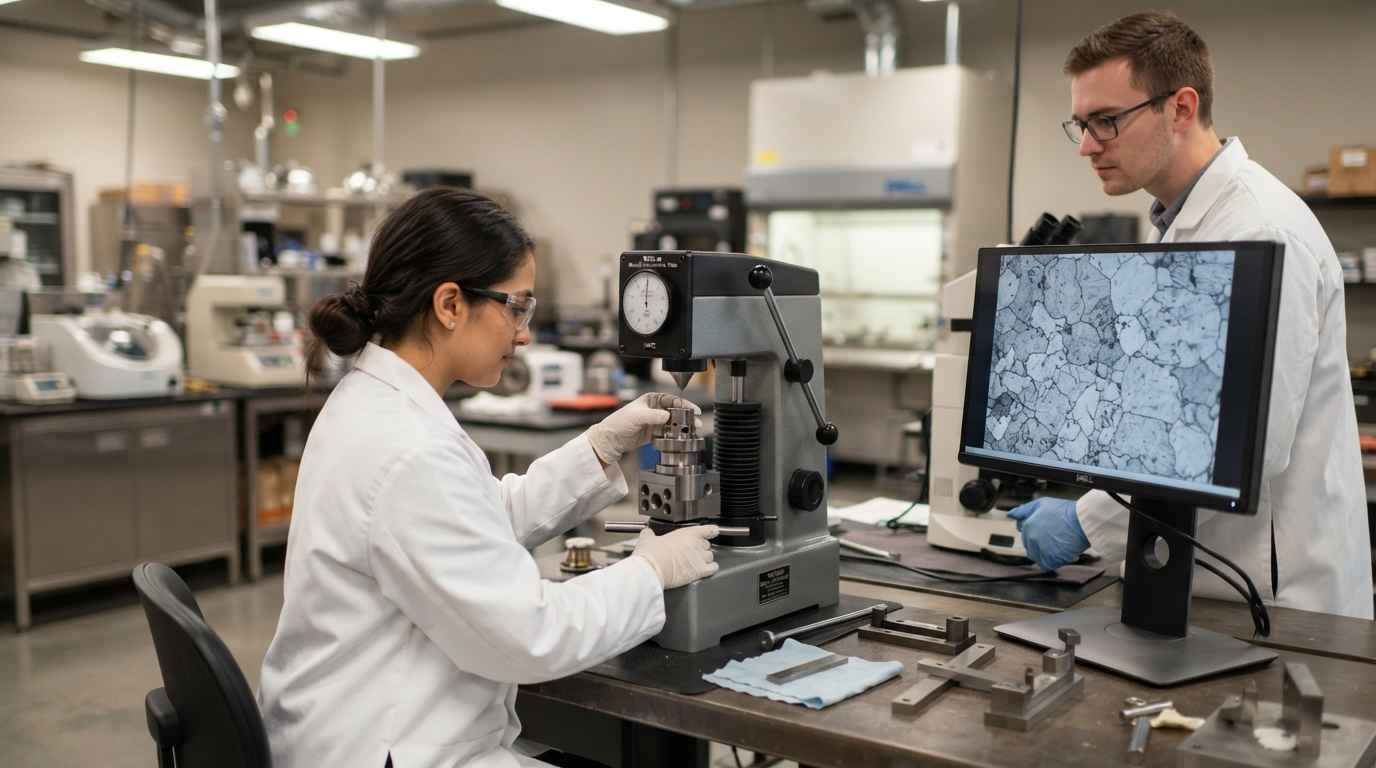
The practical application of material analysis begins when selection moves beyond theoretical comparison and is applied to a specific component, failure, or industrial requirement. At this stage, the analysis must consider not only nominal material properties but also how manufacturing processes influence microstructure, residual stresses, surface finish, or variability.
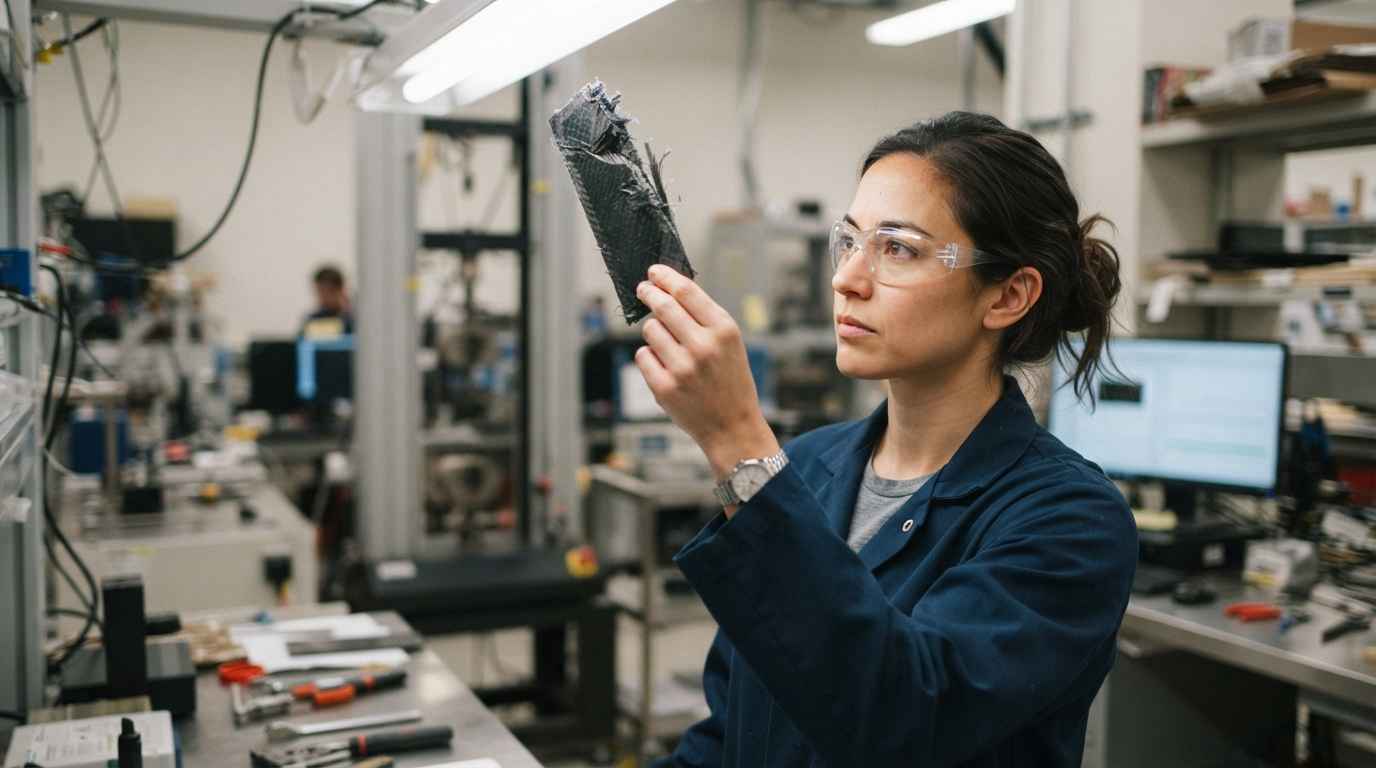
In real applications, material decisions are often supported by experimental characterization, comparative studies, or previous failure analyses. When a component has failed or shows insufficient performance, material analysis can help determine whether the origin lies in inadequate properties, accelerated degradation, or incompatibility between material and operating environment.
Often, the optimal solution does not require changing the material family completely, but rather improving the combination of material, process, and operating conditions. In some cases, the issue may not be insufficient strength but excessive surface wear, poor chemical resistance, or limited manufacturability.
In these situations, combining materials knowledge with failure analysis and industrial context becomes particularly valuable. From this perspective, INFINITIA’s forensic engineering team can provide technical insight in comparative material evaluation, degradation mechanism interpretation, and hypothesis validation when material selection is part of a performance, durability, or reliability issue.
Key considerations in industrial material selection
Selecting a material for an industrial application requires evaluating mechanical properties, behavior under service conditions, manufacturing processes, and the total life-cycle cost of the component. Material selection in engineering does not simply involve choosing the strongest or most advanced material, but identifying the option that provides the best balance between technical performance, durability, and industrial feasibility.
In many projects, a rigorous evaluation of materials helps prevent recurring reliability problems, optimize product performance, and reduce maintenance or replacement costs. For this reason, analyzing material behavior and service conditions is often a key step in product design or improvement processes.
If you wish to further analyze material behavior, evaluate alternatives, or investigate the origin of a problem in an industrial component, you can contact the INFINITIA technical team through the contact section to assess the specific case.