×

XRF Gun: Fast and Non-Destructive Elemental Analysis

Portable XRF gun used for non-destructive elemental analysis of industrial materials

What is an XRF gun and why is it key in industry? The XRF gun (X-Ray Fluorescence) is an analytical device based on portable X-ray fluorescence, designed to identify and quantify the chemical composition of materials quickly, accurately, and non-destructively. This technology is based on X-ray fluorescence spectrometry, an analytical method that detects chemical elements

How to identify fatigue fracture in materials

Detail of fatigue fracture on gear tooth with crack propagation marks

What is fatigue fracture and why is it relevant? Fatigue fracture is one of the most common failure mechanisms in components subjected to repeated loading over time. Unlike overload failure, where rupture occurs immediately after exceeding a critical threshold, fatigue damage accumulates progressively, even under relatively low stress levels. This behavior makes it a particularly

How to detect contamination in industrial processes

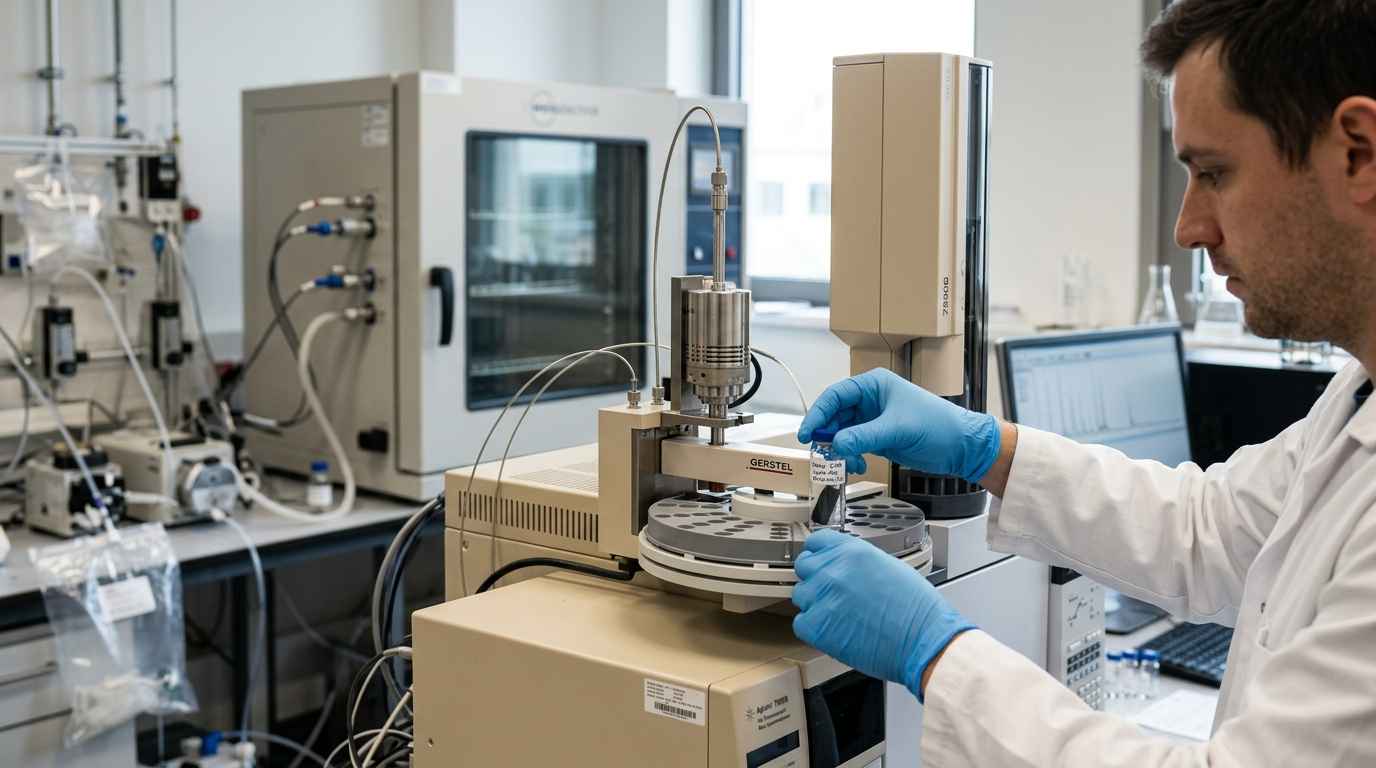
Technician analyzing samples to detect contamination in industrial processes

What is contamination in industrial processes? Contamination in industrial processes refers to the unwanted presence of substances, particles, or external agents that alter the behavior, quality, or functionality of a product or process. This phenomenon can manifest in multiple forms, ranging from imperceptible chemical traces to visible particles or microbiological contamination. Its impact depends not

Lithium battery failures analysis in industrial environments

Close-up of lithium battery cells used in industrial systems and energy storage applications

What does failure in lithium batteries imply? Lithium battery failures should not be interpreted as isolated events, but rather as the final manifestation of a series of cumulative processes that affect performance, stability and system safety. In industrial applications, where operating conditions are often variable and demanding, these failures become critical due to their impact

Evaluation of the quality of industrial components in real environments

Crack in industrial plastic component detected during quality control

What is the quality of industrial components? The quality of industrial components refers to the degree to which a part, assembly, or material meets the technical requirements defined for its intended use. These requirements may include dimensions, mechanical properties, resistance to environmental conditions, in-service performance, or compatibility with other system elements. It is not only

Premature failures in industrial components causes and diagnosis

Rupture in an industrial pipe caused by wear or premature failure under service conditions

What are premature failures in industrial components? In any industrial system, components are designed to operate over a defined service life under specific conditions of load, temperature, environment, and maintenance. However, in many cases, failure occurs before reaching this expected operating period. When this happens, it is referred to as premature failures in industrial components,

How an industrial failure investigation is carried out step by step

Technician inspecting a facility to investigate a mechanical industrial failure

What is an industrial failure investigation? In any industrial system, products, components, or processes are subjected to complex operating conditions, including mechanical loads, thermal variations, chemical exposure, or prolonged usage cycles. In this context, an industrial failure investigation consists of a set of technical activities aimed at understanding why a product, component, or system has

Elemental analysis in materials to interpret their composition

Periodic table used as the basis for elemental analysis in materials and their chemical composition

What is elemental analysis in materials? Elemental analysis in materials encompasses a set of techniques aimed at identifying and quantifying the chemical elements present in a sample, providing a direct view of its composition. This type of analysis constitutes one of the strongest foundations for understanding the behavior of a material, as it makes it

How to select a material for an industrial application

Engineer inspecting metal components during the material selection process for an industrial application

What is material selection in engineering? In industrial product development, choosing the right material is a strategic decision that directly determines the performance, reliability, and durability of a component. Material selection in engineering consists of identifying which material provides the best balance between technical properties, in-service performance, cost, and manufacturability for a specific application. This

How to prevent failures in industrial products before they occur

Technician inspecting mechanical components to detect potential failures in industrial products

What does preventing failures in industrial products mean? In today’s industrial environment, the occurrence of product failures can have significant technical, economic, and reputational consequences. A failure not only implies the loss of functionality of a component or system, but it can also affect production continuity, generate customer complaints, or even lead to product recalls.

How to replicate a component when no technical drawings exist

Microscope analyzing the surface of a material to characterize a part before replicating a component

What is material identification and why is it important? In industrial environments it is relatively common to encounter situations where it becomes necessary to replicate a component for which no drawings, technical specifications or manufacturing documentation exist. This often occurs in machinery that has been operating for many years, in imported equipment whose manufacturer no

How to identify a material when no technical documentation exists

Engineer performing 3D scanning of a component for materials analysis and identification

What is material identification and why is it important? In industrial environments, materials largely determine product performance, system reliability, and component durability. However, clear information about the material being used or analyzed is not always available. It is relatively common to encounter parts without traceability, components supplied by external vendors, legacy products with no technical