


Our customers
We are your trusted partner in industrial engineering






















































Forensic engineering
Forensic engineering is a specialized technical service that at INFINITIA is applied to rigorously investigate the origin of failures in materials, components and industrial systems, enabling a precise understanding of the causes that have led to an incident in production, in the product, or following a market claim.
In our materials forensic engineering laboratory, we combine advanced characterization techniques, experimental testing and failure analysis and root cause methodologies to study everything from composition and microstructure to real operating conditions. This approach allows the analysis of variables related to design, manufacturing processes, assembly or final use, generating objective technical evidence based on tests and verifiable data.
The objective is to provide a solid technical diagnosis that enables companies to correct deviations, establish responsibilities when necessary, and define effective actions to prevent recurrence. This service is particularly relevant in industrial environments where product quality, safety and reliability cannot tolerate uncertainty, thus avoiding future conflicts and potential incidents.
Talk to a specialist
Request a free initial consultation; contact a consultant from our team of specialists

What does forensic engineering consist of?
what is it?
Forensic engineering is the branch of engineering that investigates failures in industrial products, components or systems by analyzing their causes and consequences, with the aim of identifying their origin and preventing recurrence. This process involves studying material behavior, usage conditions and manufacturing processes, defining hypotheses and evaluating critical variables that may have contributed to the failure.
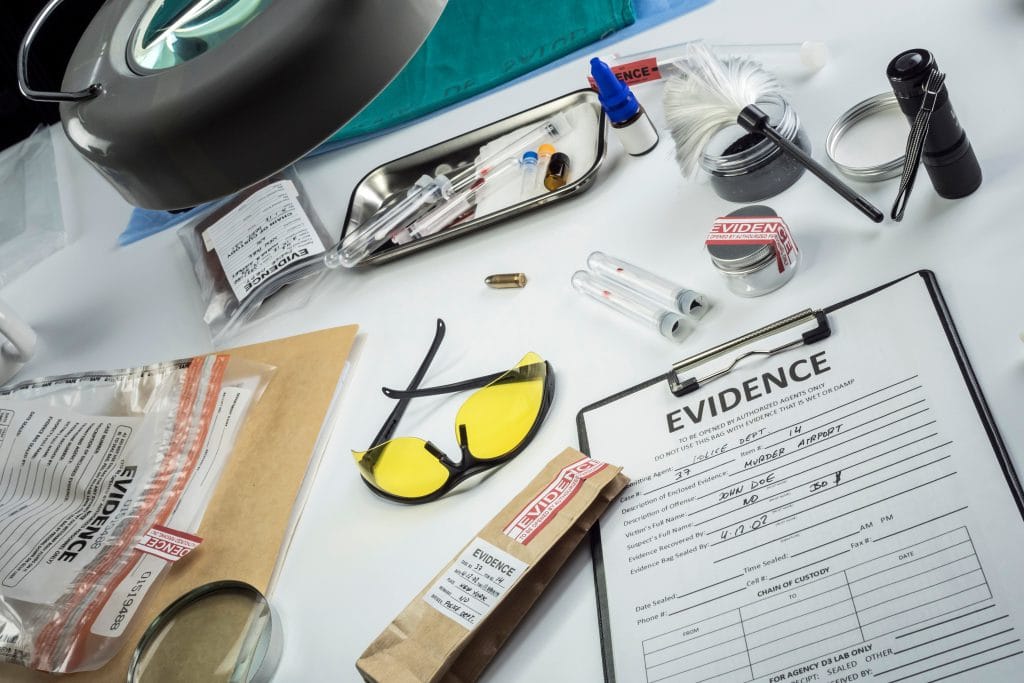
Unlike approaches based solely on visual inspection or technical documentation, materials forensic engineering relies on results obtained through testing and laboratory analysis. This makes it possible to identify evidence that is not visible to the naked eye, especially in cases where multiple factors are involved or where small deviations in materials or processes can lead to significant failures in final performance.
At INFINITIA, forensic engineering is approached through structured methodologies that combine characterization techniques, experimental testing and simulation of real conditions. This approach allows reconstruction of the failure context, analyzing everything from material microstructure to variables associated with design, manufacturing, assembly or service use.
As a result, it is possible not only to determine what has failed, but to understand why it has occurred and under what conditions, facilitating well-founded decision-making. This analysis allows correction of deviations, establishment of responsibilities when necessary, and definition of effective actions to prevent recurrence in industrial environments where quality and reliability are critical.
Benefits of applying forensic engineering in industry
benefits
Forensic engineering makes it possible to address complex industrial problems through the technical analysis of failures whose origin is not evident, providing a solid basis for decision-making. This process involves identifying critical variables related to materials, design, manufacturing or use, evaluating their impact on aspects such as product quality, operational costs or safety.
Unlike approaches based on assumptions or partial information, industrial failure investigation relies on evidence obtained through testing and laboratory analysis. This enables precise identification of the origin of failures such as fractures, deformations, corrosion or degradation, as well as detection of deviations in raw materials or components that may not be evident in technical specifications.
At INFINITIA, this type of analysis is carried out using structured methodologies that combine forensic failure analysis, materials characterization and experimental validation of hypotheses. This approach allows not only evaluation of whether a material or component meets requirements, but also understanding of the technical causes that explain its behavior under real conditions.
As a result, materials forensic engineering makes it possible to resolve discrepancies between involved parties, establish responsibilities when necessary, and reduce uncertainty in decision-making or in legal investigations. It also facilitates validation within root cause analysis processes, contributing to the definition of effective corrective actions and preventing recurrence of failures in demanding industrial environments.
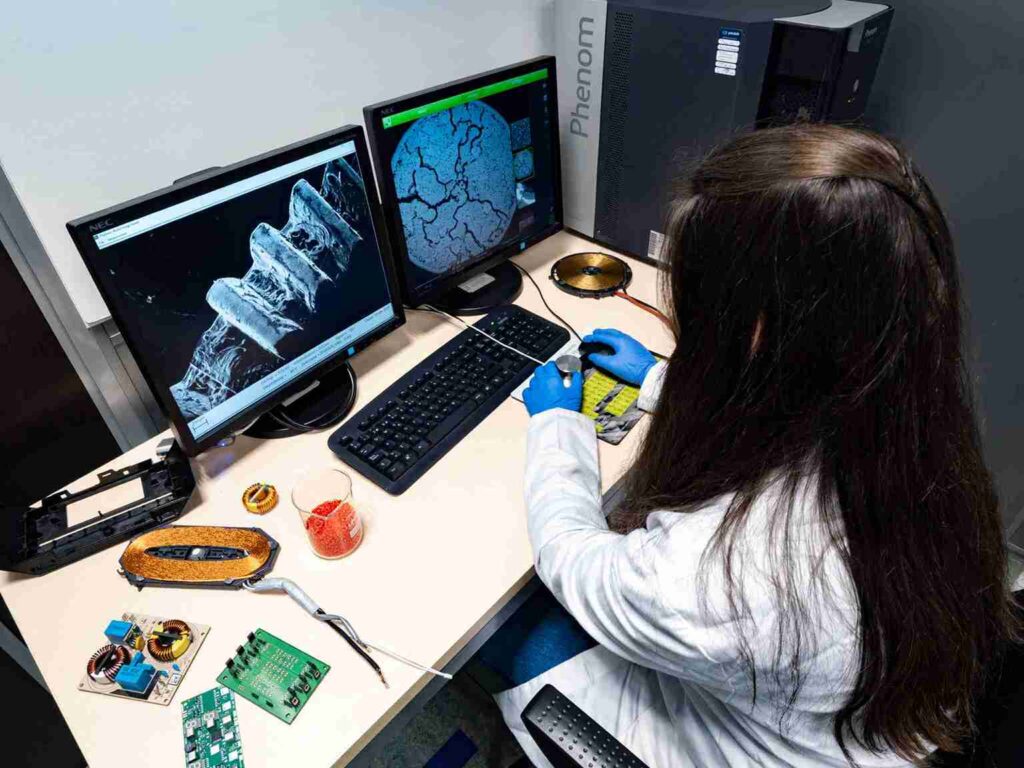
What benefits does Infinitia provide through Forensics Engineering?
At INFINITIA, we approach each forensic engineering project with a decision-oriented mindset, transforming analysis results into clear technical criteria applicable to quality, production or product development.
Our experience across different industrial environments allows us to prioritize the critical variables in each case and act as an integrated technical support, ensuring that conclusions are translated into concrete and actionable solutions.
- We develop concrete and actionable technical solutions, based on expertise, testing and experimental analysis, ensuring reliable decisions tailored to each industrial problem.
- We develop concrete and actionable technical solutions, based on expertise, testing and experimental analysis, ensuring reliable decisions tailored to each industrial problem.
- We work cross-functionally with quality, production, procurement and R&D departments, providing a global view of the problem and its impact on the product.
- We apply a methodology based on industrial experience, combined with advanced characterization and failure analysis techniques, ensuring consistent results.
- From isolated incidents to complex failures, we adapt the level of analysis and the techniques used to clarify the causes and effects of each situation.
Services
How do we apply forensic engineering in each project?
The application of materials forensic engineering at INFINITIA is based on the combination of different technical capabilities and methods, activated depending on the problem to be analyzed.
This modular approach allows adaptation of the study depth and selection of the most appropriate tools in each case, from failure identification to solution definition.
Below are the main approaches integrated into a forensic engineering project.
-
Forensic engineering
Failure Analysis
Infinitia conducts failure analyses to identify the root causes of issues in industrial materials, components, and systems. Using forensic engineering techniques and specialized testing, it…
-
Forensic engineering
Quality control and testing
This approach makes it possible to identify deviations, defects, or limitations before they become a problem. In industrial practice, it is key to validate materials, ensure…
-
Forensic engineering
Reverse Engineering
Infinitia Research offers reverse engineering services to analyze and break down systems or products, understand how they work, and optimize designs, detect faults, and improve…
-
Forensic engineering
Technical Consulting
The technical consultancy service provides specialist support to address challenges in engineering, development and innovation. Through expert analysis and technical assessment, it helps to optimise…
Types of forensic engineering to analyze the origin of industrial failures
Types
In industrial failure analysis, not all problems have the same origin nor require the same technical approach. Forensic engineering is applied through different types of analysis depending on whether the failure is related to the material, the manufacturing process, the service conditions or the interaction between these factors.
At INFINITIA, we combine different forensic engineering approaches in materials, processes and in-service product behavior to adapt each study to the real problem. This approach allows not only the identification of the root cause of the failure, but also an understanding of the key variables involved and how to prevent recurrence in future applications.
Materials forensic engineering
This approach focuses on the analysis of failures in materials such as metals, polymers, ceramics, coatings or multi-material systems, evaluating their composition, microstructure and properties in relation to their behavior in service.
Through advanced characterization techniques, failure mechanisms such as fracture, fatigue, corrosion or degradation are investigated, identifying whether the origin of the problem lies in the material itself, its processing or its interaction with the environment.
At INFINITIA, materials forensic engineering forms the basis of failure analysis, providing objective technical evidence and enabling a precise understanding of the origin of the problem. It is especially critical in products where small variations can significantly affect functionality or durability.
Chemical forensic engineering
This approach focuses on the analysis of raw materials, formulations and chemical products when product performance depends directly on composition or chemical stability.
Using techniques such as chromatography, spectrometry or spectroscopy, it is possible to detect contamination, unwanted reactions, degradation or formulation deviations that may not be evident in technical specifications.
At INFINITIA, chemical forensic engineering allows the identification of causes related to composition or chemical interaction, making it particularly relevant in failures where the origin is not structural, but functional or related to material stability.
Manufacturing process forensic engineering
This approach focuses on analyzing failures that originate during the production process, even when the material or design appear to be correct.
Critical process parameters, manufacturing sequences and interactions between operations are evaluated to identify defects introduced during production that affect final product performance.
At INFINITIA, this approach allows the detection of non-obvious deviations, improving process stability and eliminating recurring failures that cannot be resolved through standard quality controls.
In-service product forensic engineering
This approach focuses on the analysis of products that fail under real operating conditions, where environmental and operational variables differ from laboratory testing conditions.
The failure context is reconstructed based on material evidence, evaluating the influence of load, environment, usage and maintenance on damage evolution.
At INFINITIA, this analysis makes it possible to explain why a product that meets specifications fails in the field, providing key insights to adjust design, validate real conditions and reduce in-service failures.
Industrial forensic engineering
This approach focuses on the analysis of failures in equipment, components and complete industrial systems, evaluating their behavior both during production and under real operating conditions.
Interactions between design, operation and maintenance are analyzed, identifying how system-level variables contribute to failure beyond the individual component.
At INFINITIA, industrial forensic engineering enables the analysis of complex incidents, including accidents, where multiple factors are involved, improving overall system reliability and transforming failures into opportunities for process optimization.
Forensic engineering for claims and technical expert reports
This approach is applied in contexts where it is necessary to determine technical responsibilities in failures or incidents affecting different stakeholders in the value chain.
It combines experimental analysis, materials characterization and process evaluation to generate objective evidence supporting technical conclusions.
At INFINITIA, this approach enables the development of robust and defensible technical reports, providing clarity in conflict situations and supporting data-driven decision-making.
Experimental validation and failure reproduction
This approach is based on the controlled reproduction of failures through tests designed to simulate real operating conditions. It allows validation of hypotheses, isolation of critical variables and confirmation of the root cause through experimental evidence.
At INFINITIA, failure reproduction is a key tool to ensure that proposed solutions are effective, especially in complex or multifactorial problems where conclusions cannot be drawn through theoretical analysis alone.
Industrial sectors where forensic engineering is key to improving quality, reliability and decision-making
sectors
Forensic engineering has key applications across a wide range of industrial sectors, as it enables failure analysis, root cause identification and performance improvement of products and systems in environments where reliability and quality are critical. However, materials, production processes and usage conditions vary significantly between sectors, making it essential to adapt the analysis approach to obtain relevant and actionable results.
At INFINITIA, we apply forensic engineering by combining materials characterization, experimental analysis and evaluation of real operating conditions, integrating failure analysis and root cause methodologies. Our objective is to generate technical evidence that allows each problem to be understood in its real context, identify improvement opportunities and support decision-making, contributing to enhanced product quality, reliability and performance across different industrial environments.
Forensic engineering in defense: components subjected to critical conditions, fatigue, and extreme environments
In the defense sector, materials and components must meet demanding requirements for structural integrity, reliability, and performance under critical operating conditions involving dynamic loads, aggressive environments, and stringent safety requirements. Material analysis makes it possible to study advanced alloys, composite materials, coatings, and multi-material systems to understand the variables that determine their in-service performance.
- Evaluation of high-performance materials: analysis of composites, specialty alloys, and systems designed for critical applications.
- Analysis of behavior under extreme conditions: study of fatigue, impact, vibration, and degradation in severe environments.
- Validation of integrity and reliability: evaluation of components subjected to demanding operating conditions and strict safety requirements.
At INFINITIA, we apply this approach to analyze components and systems used in defense applications, identify deviations, and define improvements aimed at maximizing reliability and robustness in highly demanding environments. This analysis helps reduce risks, optimize design, and support decision-making based on reliable technical data.
Forensic engineering in the automotive industry: evaluation of components subjected to fatigue, cyclic loads, and real operating conditions
In the automotive industry, materials must meet demanding requirements for safety, reliability, and resistance to cyclic mechanical stresses under real operating conditions. Material analysis makes it possible to study steels, light alloys, engineering polymers, and joints to understand the variables that determine their structural and functional performance.
- Optimization of joints and assemblies: analysis of welds, adhesive joints, and fastening systems to ensure structural integrity.
- Reduction of in-service failures: identification of fatigue, crack initiation, and failures caused by repeated dynamic loads.
- Validation of critical components: evaluation of parts subject to functional safety requirements, such as shafts, brackets, and fastening systems.
At INFINITIA, we apply this approach to analyze automotive components, identify differences, and define improvements aimed at increasing vehicle safety and reliability. This analysis helps reduce failures, optimize costs, and support decision-making based on reliable technical data.
Forensic engineering in the energy sector: materials exposed to corrosion, high temperatures, and harsh operating environments
In the energy sector, materials must withstand demanding conditions involving high temperatures, pressure, and exposure to aggressive chemical environments, requiring the expertise of forensic engineering specialists. Material analysis makes it possible to study steels, superalloys, protective coatings, and multilayer systems to understand the variables that determine their in-service performance.
- Assessment of in-service degradation: analysis of corrosion, oxidation, and aging under prolonged real operating conditions.
- Optimization of protection systems: study of coatings, inhibitors, and surface treatments for harsh environments.
- Failure analysis of critical equipment: evaluation of pipelines, heat exchangers, and structures operating under extreme conditions.
At INFINITIA, we apply this approach to analyze energy assets, identify differences, and define improvements aimed at increasing system durability and reliability. This analysis helps reduce critical failures, optimize maintenance, and support decision-making based on reliable technical data.
Forensic engineering in electronics: materials and assemblies subjected to thermal cycling, miniaturization, and functional sensitivity
In the electronics industry, materials must meet demanding requirements for stability, conductivity, and performance under varying thermal and environmental conditions. Material analysis makes it possible to study solder joints, packages, circuits, and functional materials to understand the variables that determine their performance.
- Interconnection diagnostics: analysis of solder joints, electrical contacts, and failures in critical connections.
- Assessment of thermal effects: study of thermal cycling, heat dissipation, and material degradation.
- Analysis of manufacturing defects: identification of porosity, delamination, and failures in assembly processes.
At INFINITIA, we apply this approach to analyze electronic systems, identify differences, and define improvements aimed at increasing product stability and reliability. This analysis helps reduce field failures, optimize design, and support decision-making based on reliable technical data.
Forensic engineering in construction: analysis of failures, structural materials, and long-term degradation
In the construction industry, materials must ensure structural strength and long-term durability under environmental conditions and sustained loads. Material analysis makes it possible to study concrete, steel, mortars, and coatings to understand the variables that determine their in-service performance.
- Assessment of structural defects in buildings: analysis of cracking, settlement, and progressive degradation.
- Analysis of environmental interaction: study of moisture, carbonation, and exposure to aggressive agents.
- Construction quality assessment: identification of construction defects and deviations in the materials used.
At INFINITIA, we apply this approach to analyze structures, identify differences, and define improvements aimed at increasing the safety and durability of infrastructure. This analysis helps prevent failures, optimize interventions, and support decision-making based on reliable technical data.
Forensic engineering in consumer goods: evaluation of materials subjected to intensive use and varying conditions
In the consumer goods industry, materials must meet demanding requirements for quality, durability, safety, and stability throughout their service life. Material analysis makes it possible to study plastics, elastomers, technical textiles, coatings, and packaging materials to understand the variables that determine their performance.
- Optimization of materials and formulations: analysis of additives, fillers, and manufacturing processes to improve performance.
- Assessment of in-use performance: identification of wear, aging, and aesthetic degradation.
- Market product benchmarking: analysis of differences between commercial solutions and suppliers.
At INFINITIA, we apply this approach to analyze commercial products, identify differences, and define improvements aimed at increasing the quality and durability of finished products. This analysis helps reduce product issues, optimize costs, and support decision-making based on reliable technical data.
Forensic materials engineering at INFINITIA to identify failures and optimize decision-making
Value
Forensic materials engineering makes it possible to transform failures into applicable technical knowledge by accurately identifying the root cause of issues in industrial products, components, and systems. At INFINITIA, this service is approached from an evidence-based perspective, where we not only determine what failed, but also why it happened and under what conditions.
By combining failure analysis, material characterization, and experimental validation, we investigate complex incidents involving design, manufacturing, and usage variables. This approach allows us to identify damage mechanisms, isolate critical variables, and anticipate recurring problems, facilitating the definition of improvements in both the product and the process.
Furthermore, forensic engineering has a direct impact on resource optimization. By accurately identifying the root cause, costs associated with rework, claims, or incorrect decisions based on unverified assumptions are reduced. The integration of testing, laboratory analysis, and evaluation under real-world conditions improves operational efficiency and enhances product reliability.
In contexts where decisions have technical, economic, or legal implications, this approach provides objectivity and traceability. At INFINITIA, evidence is interpreted from a rigorous technical perspective, enabling us to coordinate different areas of the organization and define solutions tailored to each case. In this way, forensic engineering becomes a strategic tool for reducing risks and improving industrial decision-making.
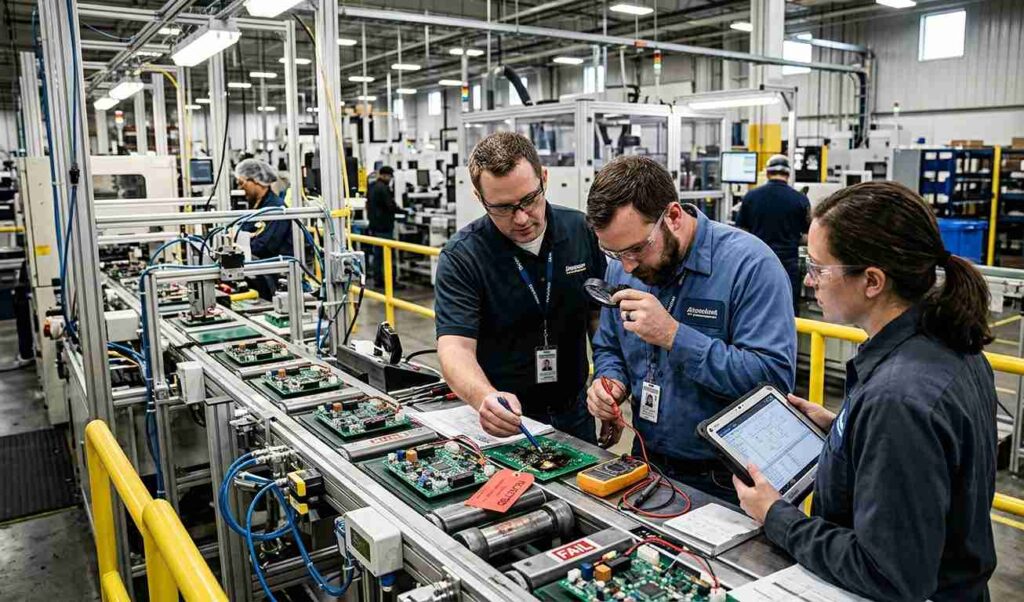
Projects
Works done in Forensic Engineering
-

 3D printing – MVP – MLPForensic engineering
3D printing to detect design flaws in leak-tight parts
-
 Food – microorganims – disinfection
 Forensic engineering
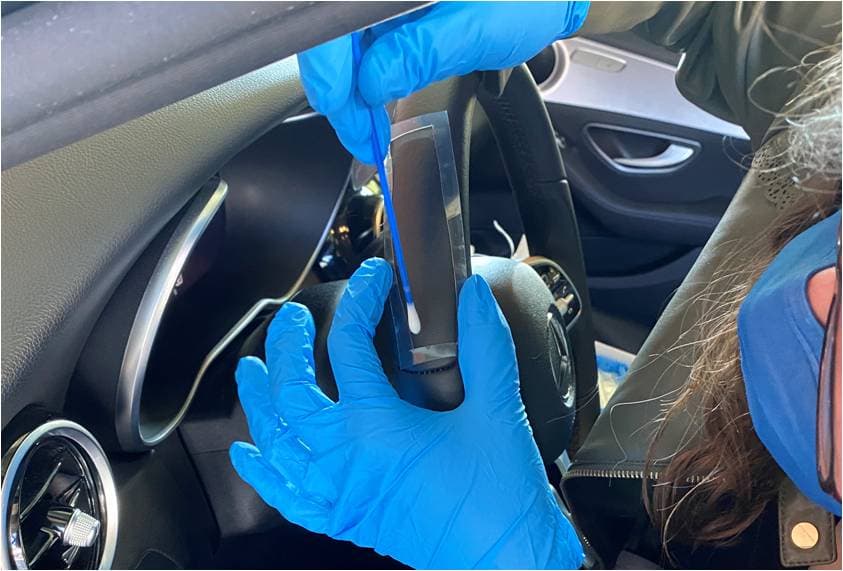
Hygiene map. Study of microorganisms in cars
-
 Volatiles – gases – pollutants
 Forensic engineering
Chemical analysis of heavy metals in tobacco
-
 Life tests – accelerated tests – homologationForensic engineering
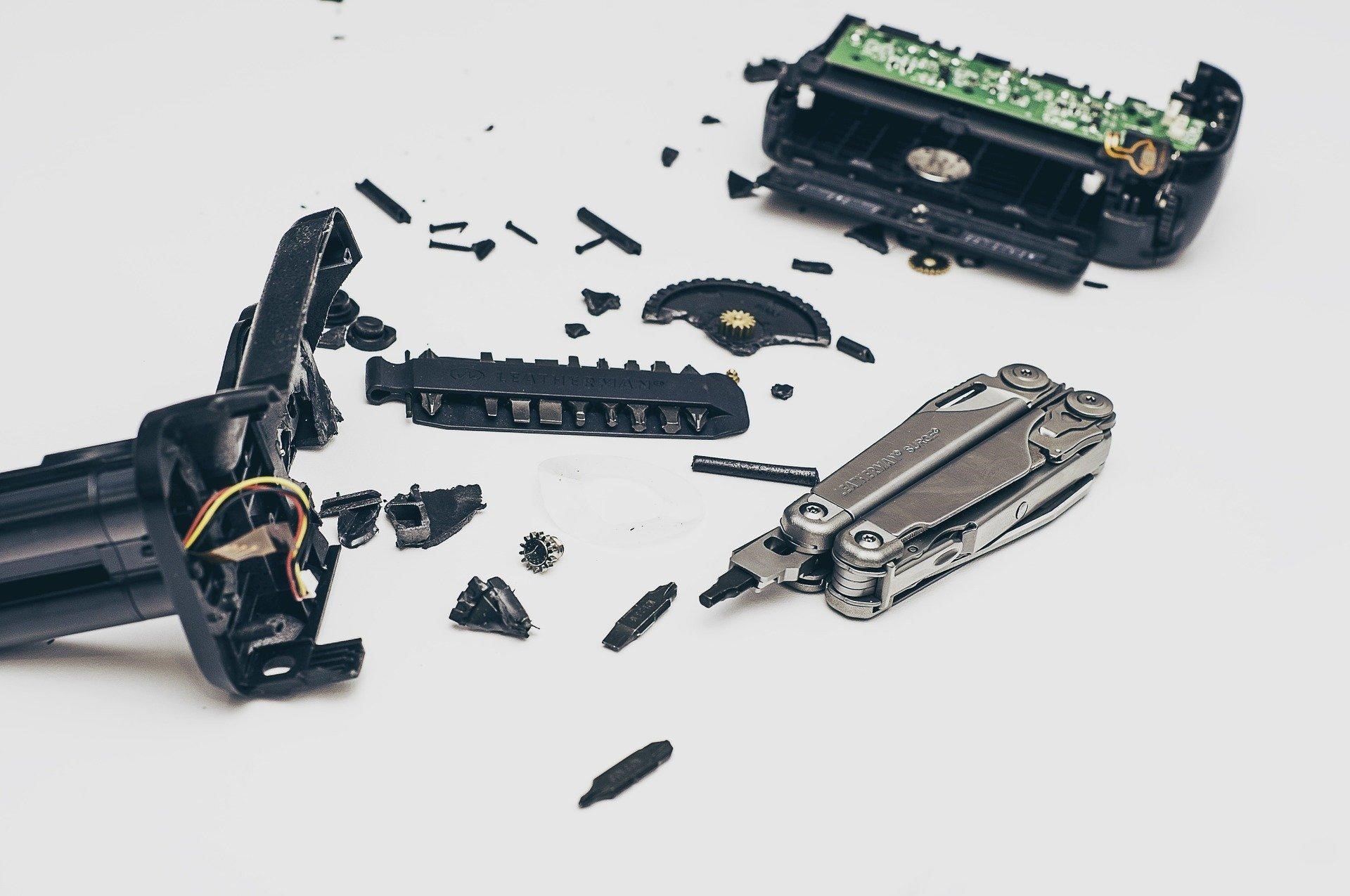
Analysis of defective materials, prospecting and validation of suppliers
-
 Textiles – fibers – packagingForensic engineering
Failure analysis, packaging design and validation
-
 Plastics – polymers – compositesForensic engineering
Reverse engineering of weather-resistant plastics
-
 Plastics – polymers – compositesForensic engineering
Fatigue analysis of materials and redesign of cracked components
-
 Life tests – accelerated tests – homologation
 Forensic engineering
Accelerated biofilm generation and life tests
-
 Metals – alloys – weldsForensic engineering
Chemical analysis of metallic components and evaluation of their toxicity
-
 Food – microorganims – disinfectionForensic engineering
Hygiene map. Detection of critical points of microorganisms and other residues
-
 Food – microorganims – disinfectionForensic engineering
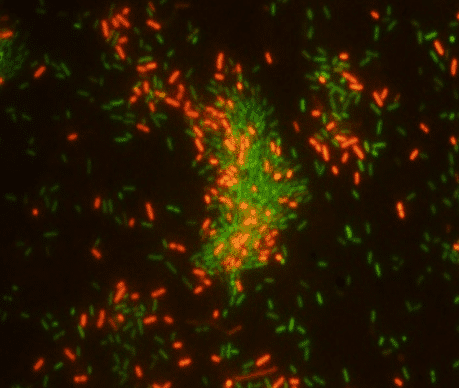
Characterization of the antibiofilm properties of surfaces
-
 Volatiles – gases – pollutantsForensic engineering
Analysis of odors and gases in a vehicle interior
-
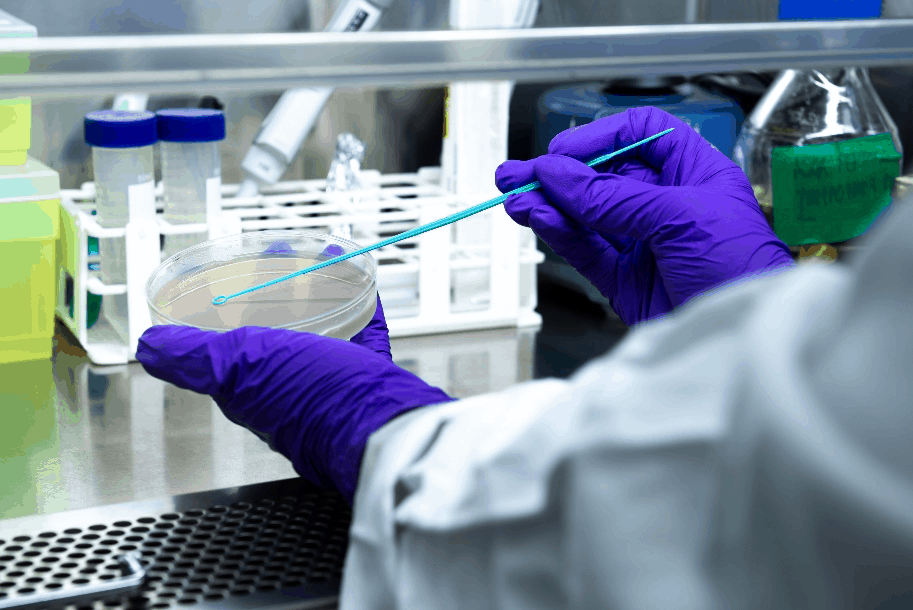 Food – microorganims – disinfectionForensic engineering
Characterization of antimicrobial properties of surfaces
-
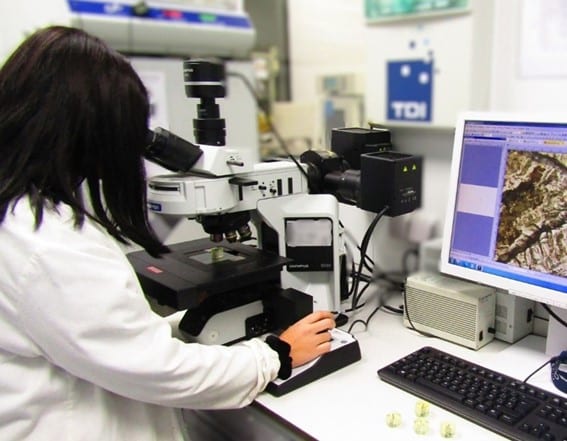 Adhesives – coatings – treatmentsForensic engineering
Coating analysis to resolve adhesion failures in production
-
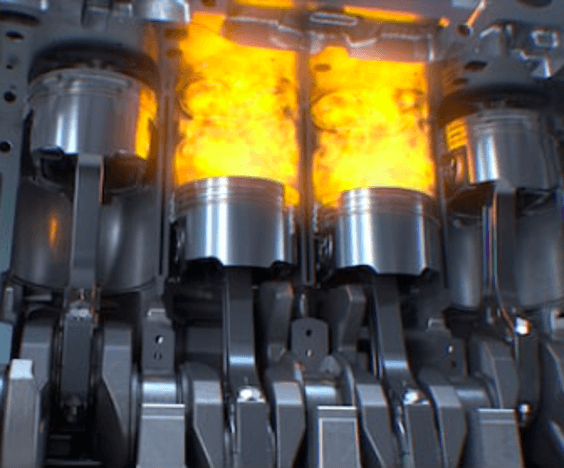 Volatiles – gases – pollutantsForensic engineering
Flue gas analysis
-
 Electrical – electronics componentsForensic engineering
Defect detection in electrical cables to improve quality and reliability
-
 Food – microorganims – disinfectionForensic engineering
Quality control of a processed food
-
 Plastics – polymers – compositesForensic engineering
Detection of defects in fiberglass reinforced polyamide components
-
 Volatiles – gases – pollutantsForensic engineering
Analysis of air purification filter efficiency
-
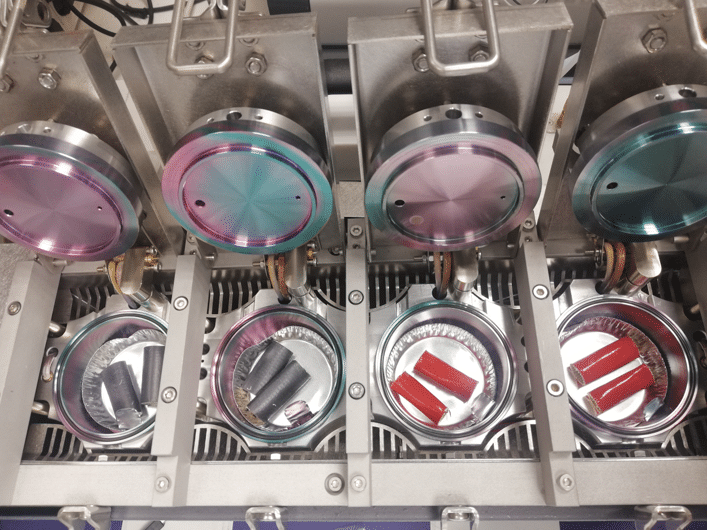 Volatiles – gases – pollutantsForensic engineering
Gas and silicone analysis for REACH compliance
Frequently asked questions about forensic engineering and industrial failure analysis
Faqs
What exactly is forensic engineering and how does it differ from a conventional technical analysis?
Forensic engineering is the discipline that investigates the origin of failures in materials, components and industrial systems through experimental evidence, not assumptions. Unlike a conventional technical analysis, which may be limited to visual inspection or documentation, forensic engineering integrates the full context of the product: design, manufacturing, conditions of use and environment.
At Infinitia we act as a specialised external technical partner, applying structured methodologies that combine materials characterisation, experimental testing and root cause analysis. The result is an objective and defensible technical diagnosis, not a hypothesis.
→ Find out how we identify the failure mode and cause in each project.
In what situations is it necessary to hire a forensic engineering service?
Hiring forensic engineering is necessary when the origin of a failure is not evident and decisions based on assumptions generate repeated costs or legal risks. The most common situations are:
- Recurring failures in production that cannot be resolved with conventional controls.
- Market claims or returns where responsibilities need to be established.
- In-service incidents where the product met specifications but failed in real use.
- Disputes between manufacturer, supplier or customer requiring objective technical evidence.
- Judicial or expert proceedings where a solid technical report is needed as a basis for the expert’s work.
At Infinitia we have addressed all these scenarios. You can see real examples in our forensic engineering case studies.
What types of failures can industrial forensic engineering investigate?
Industrial forensic engineering can investigate fractures, fatigue, corrosion, plastic deformation, chemical degradation, delamination, adhesive failure, manufacturing defects and failures due to interaction between components. It also covers phenomena such as premature ageing, loss of mechanical properties or contamination in raw materials.
At Infinitia we apply the most appropriate approach depending on the failure mechanism and the material involved, metals, polymers, composites, ceramics or multi-material systems, adapting characterisation techniques to each case.
→ Explore our capabilities in comparative failure characterisation.
How is a forensic engineering analysis carried out step by step?
A forensic engineering analysis follows a structured sequence that starts from the available evidence and culminates in actionable technical conclusions:
- Initial diagnosis: collection of information about the failure, component history and conditions of use.
- Inspection and documentation: visual, photographic and dimensional analysis of the samples.
- Technical hypotheses: formulation of possible causes based on the available data.
- Testing and characterisation: selection of analytical techniques (microscopy, chemical analysis, mechanical testing, etc.) to validate or rule out hypotheses.
- Confirmed root cause: identification of the variable or variables determining the failure.
- Technical report: document with evidence, methodology and conclusions, which can serve as a basis for an expert’s work if the case requires it.
At Infinitia this process is adapted to the complexity of each case. Discover how we approach initial failure diagnosis.
What techniques are used in forensic materials engineering?
Forensic materials engineering uses techniques such as scanning electron microscopy (SEM), energy dispersive spectroscopy (EDS/EDX), infrared spectroscopy (FTIR), chromatography, standardised mechanical testing (tensile, hardness, impact), thermal analysis (DSC, TGA) and non-destructive testing (NDT).
At Infinitia we combine these techniques with root cause analysis methodologies and experimental validation. Unlike a conventional laboratory, our approach as an external technical partner goes beyond executing tests: it includes technical interpretation oriented towards decision-making and the definition of corrective actions.
→ Explore our capabilities in non-destructive testing (NDT) and fractography and microscopy testing.
Can the conditions of a failure be reproduced to confirm its cause?
Yes. Controlled reproduction of the failure is one of the most powerful tools in forensic engineering. It involves designing tests that simulate real conditions of use, load, temperature, environment, cycles, to replicate the product’s behaviour and experimentally validate the hypothesis about the origin of the failure.
At Infinitia we apply this approach when sample analysis is not sufficient to confirm the root cause, especially in multifactorial failures or when it is necessary to demonstrate that a proposed solution is effective before implementing it in production.
→ Find out about our preventive failure analysis service to anticipate future problems.
Why does a material meet the technical datasheet but the product still fails in the field?
A material can meet all the values on its technical datasheet and still fail in the field because specifications do not capture real behaviour under specific conditions of use. Variables such as the combination of loads, operating temperature, interaction with other components, assembly process or environmental conditions can generate damage mechanisms that standard tests do not detect.
At Infinitia we have resolved numerous cases of this type. As an external technical partner, we design tests adapted to the real conditions of the product to identify where theoretical and real behaviour diverge.
→ Explore our accelerated ageing and durability testing capabilities to replicate real service conditions.
Why does the failure keep appearing even though it has already been corrected?
Recurrence of a failure after a correction almost always indicates that action was taken on the visible symptom rather than the root cause. Partial solutions, such as changing a supplier or adjusting a process parameter without prior analysis, can temporarily alleviate the problem without eliminating it.
At Infinitia we do not consider a case closed until the proposed solution has been verified through testing. This criterion, combined with structured root cause analysis, allows us to break the cycle of recurring failures with solutions that work in the long term.
→ Read about recurring failures and how we address them in our article on repetitive production failures.
In which industrial sectors is forensic engineering most critical?
Forensic engineering is especially critical in sectors where a failure has serious consequences for safety, costs or legal liability:
- Automotive: components subject to fatigue, cyclic loads and functional safety requirements (ISO 26262).
- Energy: equipment exposed to corrosion, high temperatures and aggressive environments with impact on operational continuity.
- Electronics and components industry: failures in solder joints, encapsulants and circuits with high functional sensitivity.
- Construction and infrastructure: structural pathologies and materials under CTE or EHE regulations.
- Consumer goods: market claims, product safety and disputes between manufacturer and distributor.
- Defence and aerospace: high-performance components with strict structural integrity requirements.
At Infinitia we have proven experience across all these sectors. See real cases such as the corrosion evaluation in chemical reactors or the failure analysis in factory equipment.
Can forensic engineering help in supplier disputes or insurance claims?
Yes. Forensic engineering is a key tool in commercial disputes and insurance claims because it generates objective technical evidence that determines where and why the failure occurred, and who is responsible.
At Infinitia we produce detailed technical reports combining experimental analysis, materials characterisation and evaluation of the manufacturing process. These reports provide the expert responsible for the case with a solid, traceable and well-documented basis for issuing their opinion, with the rigour required for legal, contractual or insurance contexts.
→ Find out about our industrial benchmarking and comparative testing service when the case involves comparing your own product against external references or competitors.
What is the difference between working with Infinitia and going to a laboratory, technology centre or university?
Accredited laboratories, technology centres and universities are valuable resources and in many cases complementary. Their strengths lie in analytical capacity, regulatory accreditation or research depth. The differentiating factor of working with Infinitia as an external technical partner is different: orientation towards the specific industrial problem and decision-making.
At Infinitia we do not simply execute tests and deliver results: we interpret the evidence in the real context of the product, the process and the sector, and translate it into actionable conclusions. We work cross-functionally with the client’s quality, production, procurement and R&D teams, acting as an extension of the internal team so that the analysis translates into real improvement.
→ Find out how we integrate this approach in our industrial technical consultancy.
How long does an analysis take and how is it budgeted?
The typical timeframe for a forensic engineering analysis is between 1 and 4 weeks depending on the technical complexity of the case. For critical situations, production stoppages, claims with tight deadlines, there is an urgent quotation option that delivers results within 24-72 hours, prioritising the most decisive tests from the outset.
The budget depends on the scope: number of samples, techniques required and whether a formal technical report is needed. At Infinitia we do not carry out unnecessary analyses and always prioritise information with the greatest value for decision-making. After receiving the basic details of the case, we prepare a tailored proposal typically within 24 hours. The first contact is without obligation.
→ Tell us about your case and we will advise you without obligation.