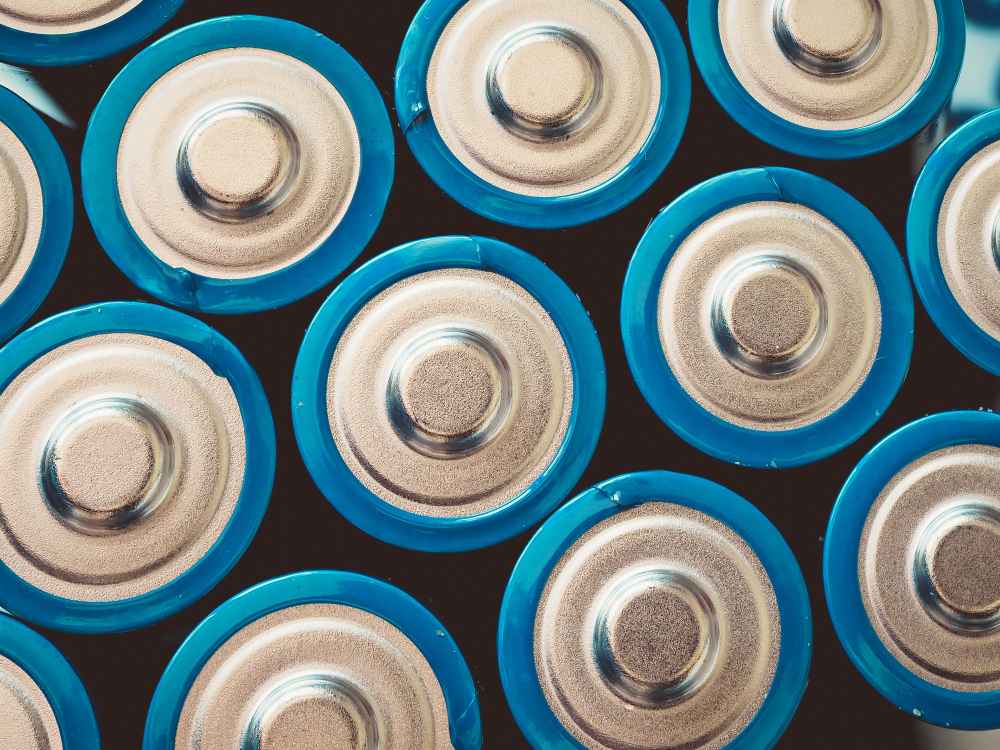

Lithium battery failures in industrial environments result from a complex interaction between electrochemical mechanisms, operating conditions and design factors. Identifying the root cause requires going beyond visible symptoms: it demands combining materials characterisation, electrochemical evaluation and knowledge of the actual operating context. At Infinitia, we analyse these failures through a multidisciplinary approach integrating engineering, chemistry and materials science to determine what failed, why, and how to prevent it.
What does failure in lithium batteries imply?
Lithium battery failure is the functional degradation or breakdown of the electrochemical cell caused by thermal, mechanical, electrochemical or design factors that exceed the system’s operational limits. In industrial applications, where operating conditions are variable and demanding, these failures become critical due to their impact on operational continuity and equipment integrity.
From a technical perspective, a lithium-ion battery is a highly sensitive electrochemical system. Factors such as temperature, charging current, depth of discharge or material uniformity can significantly influence its behavior. This means that failures are rarely caused by a single factor, but are typically the result of complex interactions between multiple variables.
Lithium battery degradation can be localized rather than homogeneous, creating internal critical points that are difficult to detect through global testing.
In many cases, failures develop progressively without clear symptoms in early stages. This makes early detection difficult and increases the likelihood of sudden failure at advanced stages of use. This characteristic introduces an additional challenge in industrial environments, where predictability is essential.
Furthermore, failure does not always imply complete loss of functionality. In many cases, the system continues to operate, but with degraded performance or increased operational risk. Misinterpreting this state can lead to incorrect technical decisions.
Electrochemical degradation mechanisms in lithium batteries and their evolution
Electrochemical degradation mechanisms are the fundamental drivers of aging in lithium batteries. During charge and discharge cycles, reactions occur that progressively alter the structure and composition of active materials, directly impacting capacity and system efficiency.
One of the most relevant processes is the evolution of the SEI layer on the anode. While this layer stabilizes the electrode-electrolyte interface, its continuous growth increases internal resistance and reduces available lithium. This seemingly controlled phenomenon can accelerate under certain temperature or voltage conditions.
At the same time, the cathode may undergo structural degradation, especially in nickel-rich materials. These changes can lead to capacity loss, chemical instability and oxygen release, increasing the risk of unwanted side reactions.
Another critical mechanism is lithium dendrite formation, particularly under overcharge or low-temperature conditions. These structures can penetrate the separator and cause internal short circuits, turning gradual degradation into sudden failure with safety implications.
Causes of lithium battery failure due to operational and environmental conditions
In industrial environments, lithium battery failure is strongly influenced by external factors interacting with internal degradation mechanisms. Temperature is one of the most critical parameters, as it directly affects electrochemical reaction kinetics and material stability.
Lithium battery failure causes rarely act independently. The combination of temperature, load conditions and design accelerates degradation.
High temperatures accelerate side reactions, while low temperatures can promote lithium plating. Both scenarios increase the risk of accelerated degradation and premature failure. As a result, thermal management becomes a key factor in battery system design and operation.
Charging strategy also plays a decisive role. Fast charging or aggressive usage profiles can introduce internal stresses that affect electrode integrity. Similarly, deep discharge can cause irreversible damage to active materials.
In addition, manufacturing defects such as separator irregularities can act as initiation points for internal failures. While relatively rare, their impact can be significant when combined with unfavourable operating conditions. When a manufacturing origin is suspected, elemental analysis and chemical composition testing of the active materials can identify contaminants or deviations from the original specification.
Safety implications of lithium battery failures
The impact of lithium battery failures in industrial environments goes beyond capacity loss. These failures can compromise system safety, increase operational costs and reduce overall process reliability.
In critical applications such as electric vehicles or energy storage systems, battery failure may lead to service interruptions or hazardous situations. This requires not only performance optimisation, but also robustness and failure anticipation capabilities.
From an economic standpoint, premature degradation reduces expected service life, increasing replacement and maintenance costs. Undetected failures can also damage other system components, amplifying the overall financial and operational impact.
Additionally, there are regulatory and reputational implications. In highly regulated sectors, battery-related incidents can lead to legal consequences and loss of market trust. In these situations, having a rigorous and well-documented technical failure analysis report is essential: this type of report provides the technical foundation that an expert witness can use to issue their formal expert opinion in claims, litigation or liability proceedings between manufacturer and supplier.
Thermal runaway in lithium batteries as a critical safety event
Thermal runaway is one of the most critical failure scenarios in lithium batteries. It is characterized by a chain reaction where temperature increase triggers exothermic reactions, which in turn generate more heat, leading to an uncontrolled process.
This type of failure can be initiated by internal short circuits, overcharging or mechanical damage. Once triggered, it is difficult to stop and may propagate to adjacent cells, especially in modules or battery packs.
Thermal runaway can propagate between cells, significantly amplifying the impact beyond the initial failure point.
Consequences include the release of flammable gases, internal pressure increase and, in extreme cases, explosion. This risk requires specific design measures such as ventilation systems, thermal insulation and early detection mechanisms.
However, even with these measures, risk cannot be completely eliminated due to the complexity and variability of operating conditions.
Lithium battery testing under real operating conditions
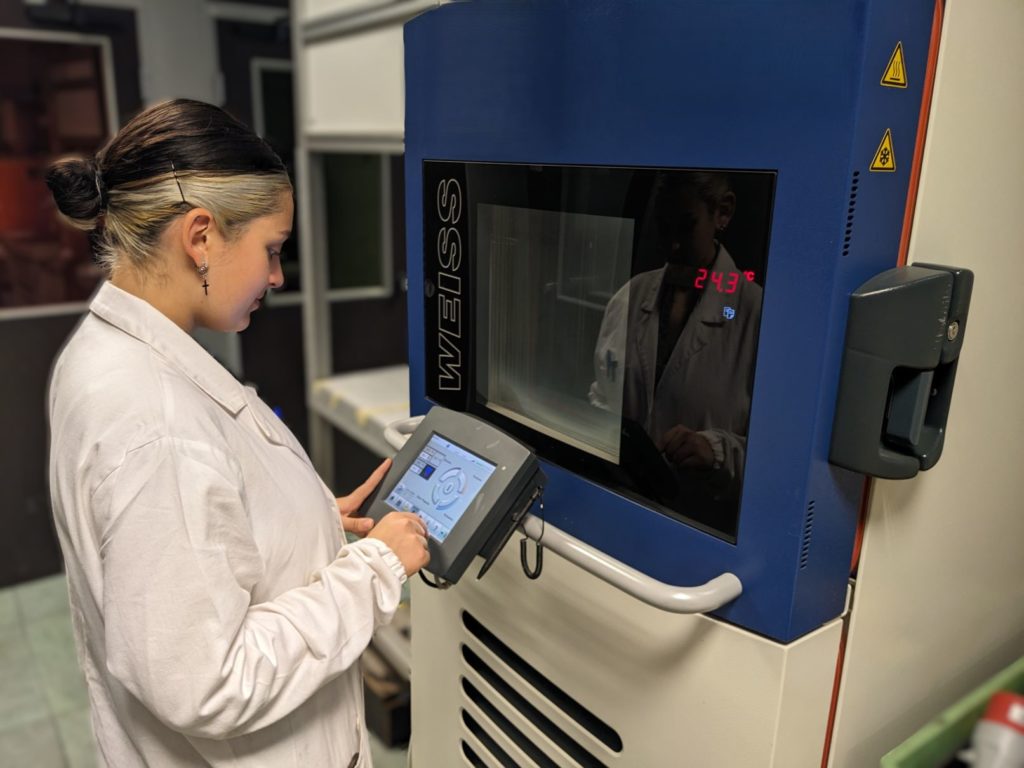
Lithium battery safety is governed by international standards such as IEC 62133 and UN 38.3, the latter applicable to transport, which define design, manufacturing and testing requirements. These include thermal, electrical and mechanical abuse tests aimed at evaluating system response under extreme conditions. Within the chemical safety regulatory framework, flammability and explosivity testing is relevant for characterising the behaviour of gases released during a failure event.
These tests help validate design robustness and identify weaknesses prior to commercialization. However, they have a key limitation: they are performed under controlled conditions that do not fully represent real-world complexity.
Standard battery tests do not always replicate real operating conditions, potentially masking failures until later stages.
In industrial environments, batteries may be exposed to combinations of factors not covered by standard testing, such as variable charge cycles, fluctuating environmental conditions or system interactions.
This means that regulatory compliance, while necessary, is not sufficient to guarantee failure-free operation. Additional analysis adapted to real application conditions is required.
Failure analysis in lithium batteries in industrial environments
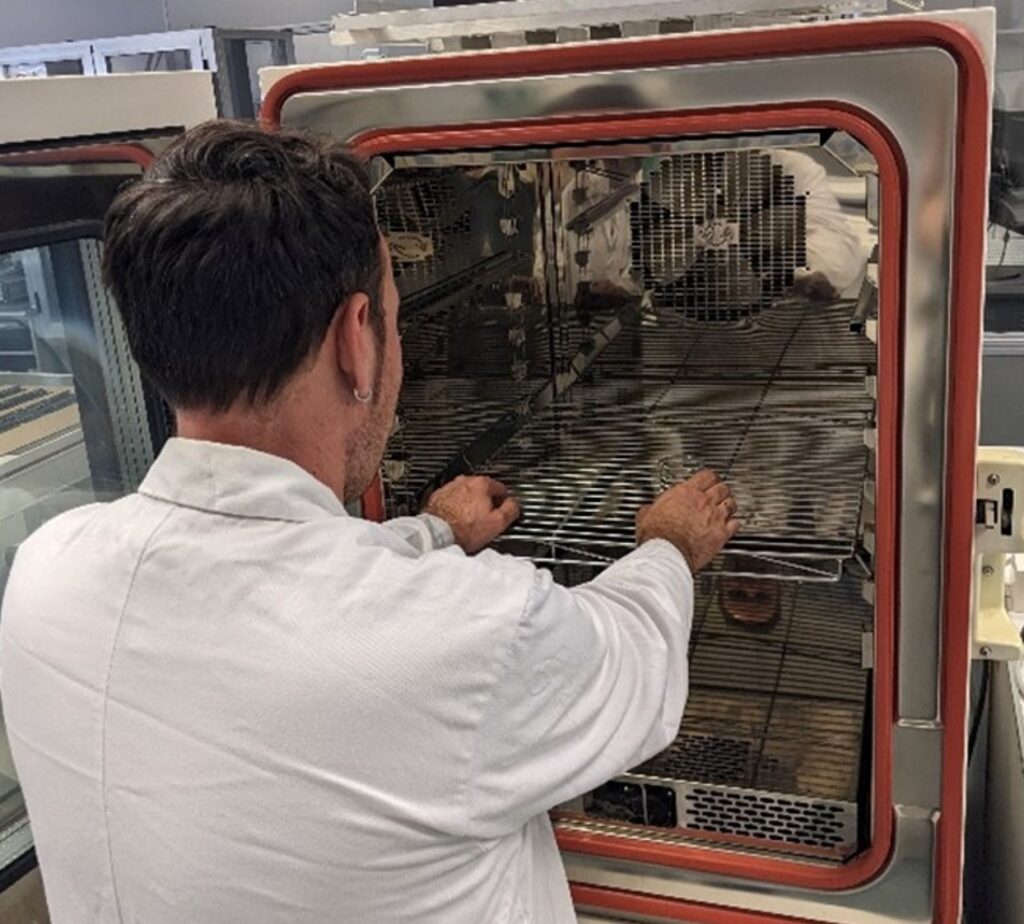
Failure analysis in lithium batteries requires a systematic approach combining multiple techniques and methodologies. The objective is not only to identify the failure symptom, but to understand the underlying mechanism.
The process typically begins with an initial inspection to assess visible aspects such as deformation, swelling or external damage. However, in many cases, the root cause lies within the cell, requiring advanced analytical techniques.
The complexity of these systems demands a multidisciplinary approach integrating electrochemistry, materials science and thermal analysis. This increases the likelihood of identifying the root cause.
Additionally, usage history must be considered, as operating conditions provide essential context for accurate diagnosis. Without this, conclusions may be incomplete or misleading.
Materials characterization applied to lithium battery failures
Failure analysis relies on characterization techniques that allow the study of material structure and composition at different scales. Common methods include electron microscopy, spectroscopy and electrochemical testing.
These techniques help identify phenomena such as cathode degradation, lithium deposition or electrolyte alteration. However, interpretation requires expertise, as results may be influenced by multiple interacting factors.
A key aspect is the comparison between functional and failed samples, which helps identify relevant differences and narrow down possible failure causes.
In some cases, destructive analysis is required, making careful planning essential to preserve critical information.
Accelerated testing in lithium batteries for failure validation
Lithium battery testing enables the reproduction of controlled conditions to validate hypotheses about failure origins. These tests may include accelerated cycling, exposure to extreme temperatures or electrical stress testing.
At Infinitia, we have addressed cases where batteries integrated into industrial control systems showed unexpected reductions in service life that did not appear in standard validation tests. The diagnostic approach combined electrochemical impedance spectroscopy (EIS) to evaluate the electrode-electrolyte interface condition, EDX elemental analysis of cathode active materials, and laboratory reproduction of the actual charge profile documented by the client. In the cases analysed, the determining factor was not the cell in isolation, but the interaction between the battery management system (BMS) and operating conditions not accounted for during initial validation. You can explore some of our completed projects in component and electronic system analysis.
This approach not only helps identify failure causes, but also supports the definition of evidence-based corrective actions: optimising charging strategies, improving the BMS, or adapting the design to real operating conditions.
Analysis techniques used in lithium battery failures
| Technique | What it detects | Destructive? | Reference standard |
|---|---|---|---|
| SEM/EDX | Electrode morphology, lithium metal deposits, contaminants | Yes | ASTM E2015, ISO 22309 |
| EIS (electrochemical impedance) | SEI layer degradation, internal resistance, state of health | No | IEC 62660 |
| Accelerated calorimetry (ARC) | Thermal runaway onset threshold, heat generated | Yes | IEC 62133 |
| GC-MS | Electrolyte decomposition gases in pre-failure stages | Yes | — |
| XRF / elemental analysis | Cathode and anode composition, impurity detection | No | ASTM E1621 |
| Accelerated cycle testing | Capacity degradation under real charge profiles | No | IEC 62660-1 |

Diagnostic criteria for lithium battery failures
Lithium battery failures result from complex interactions between electrochemical mechanisms, operating conditions and design factors. Understanding them requires in-depth analysis beyond visible symptoms.
In industrial environments, where reliability and safety requirements are high, a rigorous evaluation approach is essential. This involves combining testing, characterization and contextual analysis to obtain a complete understanding of the problem.
It is also necessary to question the sufficiency of standard testing and consider real-world scenarios that introduce additional variables. Ignoring this complexity may lead to incomplete diagnoses and ineffective solutions.
Finally, failure analysis should not be seen only as a reactive tool, but as a key element for continuous improvement. Understanding failure mechanisms enables optimization of design, operation and risk reduction in lithium battery systems. For specific case analysis or technical evaluation, it is possible to contact the team.
Frequently asked questions about lithium battery failures
What techniques are used to analyse the inside of a defective battery?
Analysing a defective battery typically combines SEM/EDX electron microscopy to study electrode morphology and detect lithium deposits, electrochemical impedance spectroscopy (EIS) to evaluate the interface condition without destroying the cell, and GC-MS chromatography to identify electrolyte decomposition gases. Where contamination or a manufacturing defect is suspected, XRF elemental analysis is added to the investigation.
Can thermal runaway be predicted before it occurs?
Yes, under certain conditions. Accelerated rate calorimetry (ARC) allows characterisation of the temperature threshold at which the cell enters a self-sustaining exothermic reaction. Monitoring gases generated in prior stages via GC-MS can also serve as an early indicator. These techniques are particularly useful during design validation or following incidents in the field.
When is a technical battery failure report useful in a legal context?
When a battery failure leads to litigation between manufacturer and supplier, high-value warranty claims, insurance investigations following a fire, or civil or criminal liability proceedings, having a rigorous technical report is a key asset. At Infinitia, we produce technical failure analysis reports that document the methodology applied, the results obtained and the sample chain of custody — providing the analytical foundation an expert witness needs to issue a well-supported formal opinion.
What is the difference between a battery qualification test and a forensic analysis?
A qualification test validates that a design meets the requirements of a specific standard, such as IEC 62133 or UN 38.3, prior to commercialisation, under controlled and standardised conditions. Forensic analysis determines why a battery already in use has failed, by reconstructing real operating conditions and comparing the defective unit against reference samples.
Does regulatory compliance guarantee the absence of failures in the field?
No. Standard tests evaluate the product under defined and reproducible conditions, but cannot replicate every possible combination of real-world factors: variable charge profiles, thermal fluctuations, BMS interactions or accumulated degradation. Regulatory compliance is necessary but not sufficient; analysis of the actual operating context is essential for a complete risk assessment.