

Electrochemical tests
If your business is in the automotive, energy or aeronautics sector, you may be interested in our electrochemical testing service. At INFINITIA Industrial Consulting we offer advanced electrochemical testing services, which are essential for evaluating the behaviour and properties of materials in various industrial applications.
By combining cutting-edge techniques and a highly qualified team, these industrial electrochemical tests make it possible to increase the durability and performance of industrial components. We optimize the performance of materials in the face of phenomena such as the corrosion resistance,We improve its electrical and chemical properties and analyze the interaction of materials with its surroundings.
Talk to a specialist
Request a free initial consultation; contact a consultant from our team of specialists

What are electrochemical tests?
What is it?
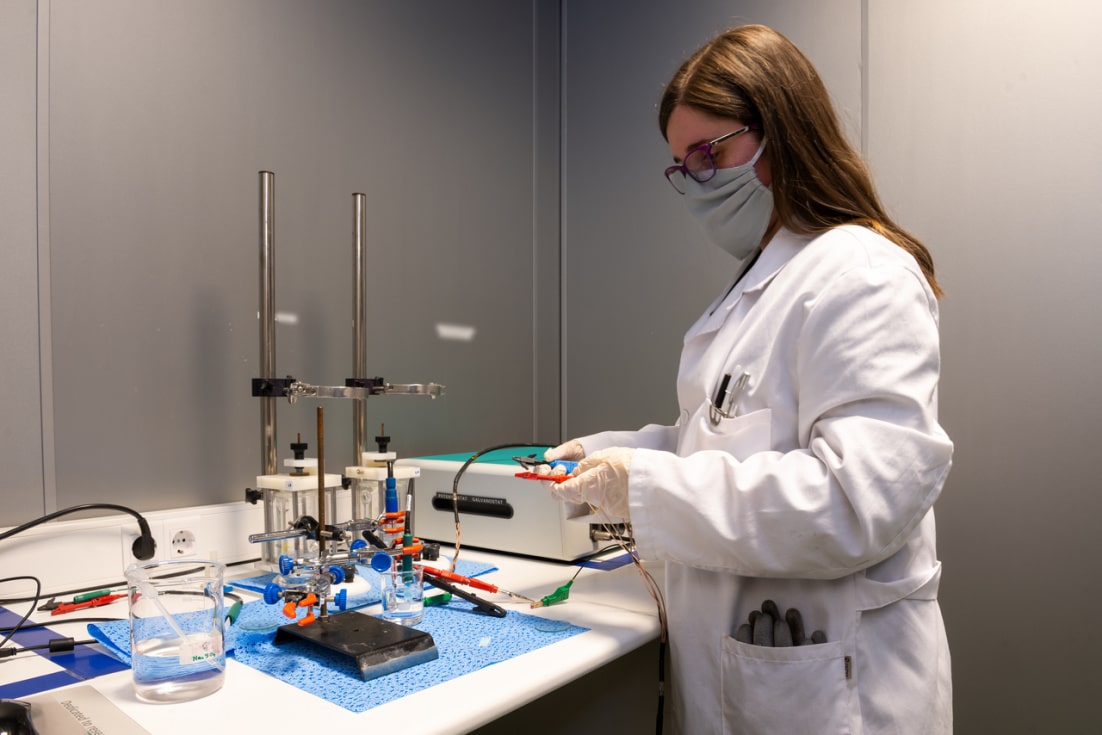
Electrochemical testing is a set of experimental techniques used to study the electrical interactions and electrochemical reactions that take place on the surface of materials. They are used to carry out corrosion analyses, such as the corrosion resistance of stainless steel or aluminium, and to evaluate the effectiveness of coatings and the use of chemical catalysts. These tests are common in the research and development of new materials and in the evaluation of electrochemical systems such as batteries, fuel cells and protective coatings.
At INFINITIA we carry out these tests, as they are a guarantee that the materials maintain optimal performance in adverse or extreme conditions, providing accurate data on their long-term behaviour.
Benefits of electrochemical testing at INFINITIA
Benefits
Trust INFINITIA to carry out electrochemical tests and get a series of advantages for your project that will make the difference:
- Accurate and reliable results: We have state-of-the-art equipment, such as potentiostats and automated analysis systems, and we use advanced techniques to ensure that the results obtained are highly accurate and replicable. We thus make decisions based on the results of the analyses. In addition, they are informed and can be directly applied in the design and improvement of products.
- Customized analysis and design of custom setups: We tailor each test to the specific needs of each client, as we understand that every project is unique. From the early stages of design to post-production analysis, we provide tailored solutions that maximize the value of our services.
- Improved product service life: By early identification of potential problems related to corrosion or electrochemical instability, our electrochemical tests they help to extend the useful life of products, reducing operating costs and improving safety.
- Compliance with international regulations: We make sure that all our tests follow the international regulations and standards, such as ISO or ASTM, ensuring that the products and materials evaluated meet the requirements of the global market and the demands of the most regulated sectors.
Types of electrochemical tests
Types
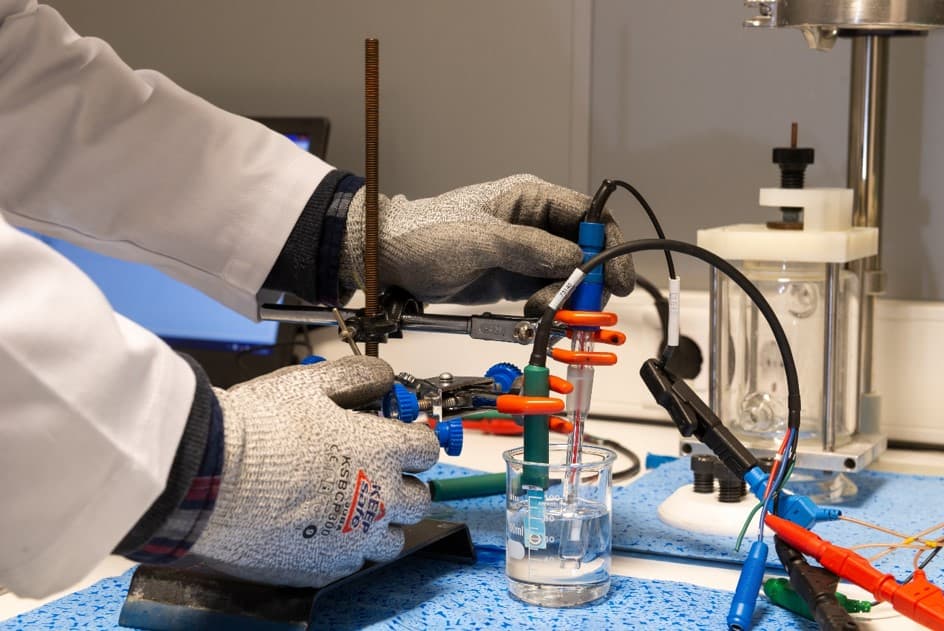
At INFINITIA we apply different electrochemical techniques depending on the material, its service environment and the information each project requires.
Each technique provides a complementary reading of how the material behaves, from corrosion resistance to the stability of coatings and energy storage systems.
Electrochemical Impedance Spectroscopy (EIS)
Electrochemical Impedance Spectroscopy (EIS) is one of the techniques we carry out at INFINITIA. It allows us to analyze the electrochemical properties of materials by measuring their response to an electrical signal applied through a electrode. It is especially useful for evaluating the corrosion resistance of materials and the performance of protective coatings applied in various industries.
Through impedance analysis, data can be obtained on the resistances and capacitances involved at material interfaces, providing detailed information on protective barriers and their integrity. In addition, EIS allows the study of coating degradation over time, offering a long-term perspective on the durability of anticorrosive solutions.
Potentiometry and galvanostatics
Did you know that the techniques of potentiometry and galvanostatics are essential for the evaluation of the efficiency of protective coatings, battery characterization, and fuel cell research?
On the one hand, potentiometry measures the electric potential in an electrochemical cell without applying current, which allows the analysis of the electrochemical stability and the corrosion tendency of a material.
Galvanostatics, on the other hand, focuses on applying a constant current and measuring the response of the system, providing information about the ability of materials to withstand extreme electrical load conditions. These techniques are essential to ensure the reliability and performance of electronic and energy devices that depend on the electrochemical stability of materials.
Potentiodynamic polarization
At INFINITIA we also carry out tests of potentiodynamic polarization. Potentiodynamic polarization is another key electrochemical technique, mainly used to measure the susceptibility of materials to corrosion in specific environments. During this test, a potentiostat to monitor the electrical potential of the material, identifying the conditions under which corrosion begins.
This technique is essential in the automotive industry and in marine applications, where materials are exposed to high humidity, salinity and other corrosive agents. The data obtained allows for improved material selection and optimised protective coatings, reducing the risk of structural failure and improving product safety throughout their life cycle.
Industrial sectors where we apply electrochemical testing
Sectors
These applied electrochemistry tests are used across a wide range of industrial sectors, with the aim of producing efficient, durable and safe products.
The approach of each test is adapted to the service environment of the material and to the regulatory demands of the sector in which it will operate.
Electrochemical testing in the automotive industry: durability against corrosion
Electrochemical testing is essential for assessing the corrosion resistance of metal components such as chassis, engines and exhaust systems. This is essential for ensuring the safety and longevity of vehicles, reducing the need for costly maintenance and avoiding premature failures.
- Continuous exposure to corrosive agents: Moisture, de-icing salts and combustion residues accelerate the degradation of chassis and exhaust systems.
- Combination of dissimilar materials: Joining steels, aluminium and coatings encourages galvanic corrosion at the interfaces.
- Service life and warranty requirements: Manufacturers must demonstrate how components behave over years of service.
Using potentiometry, potentiodynamic polarization and EIS, we assess how well coatings and surface treatments actually protect the part, and guide material selection before industrialisation.
Electrochemical testing in the aeronautical sector: integrity under extreme conditions
In the aerospace industry, electrochemical testing allows measuring the performance of special alloys and composite materials under extreme conditions of temperature and pressure. In this way, materials used in aircraft and satellites maintain their structural integrity during flight and in hostile space environments.
- Severe service conditions: Materials withstand extreme temperature and pressure cycles during flight.
- Special alloys and composite materials: Their electrochemical behaviour determines the durability of the whole structure.
- Certification requirements: The sector demands documented evidence of how the material behaves against degradation.
Electrochemical testing anticipates degradation mechanisms in aircraft and satellites, providing objective data for the qualification of materials and coatings.
Electrochemical testing in the energy industry: characterising storage systems
Electrochemical testing is critical for the characterization of materials used in fuel cells, batteries, and other energy storage devices. These tests allow us to optimise energy efficiency and extend the life of cells, ensuring that energy systems operate reliably and sustainably.
- Active materials in cells and batteries: Their electrochemical response determines the capacity and efficiency of the system.
- Degradation through cycling: Loss of performance over thousands of cycles conditions the service life of the device.
- Aggressive environments in generation and transport: Components are exposed to corrosive media and high electrical loads.
Electrochemical characterisation of fuel cells, batteries and plant components makes it possible to optimise energy efficiency and plan maintenance on technical criteria.
Electrochemical testing in surface treatments and industrial infrastructure
The evaluation of protective coatings by electrochemical testing is crucial to ensure that materials maintain their resistance to corrosion. In sectors such as shipbuilding and industrial infrastructure, surface protection using efficient coatings can prevent structural failures and improve the durability of components.
- Protective coatings: Their integrity determines the corrosion resistance of the complete component.
- Shipbuilding and infrastructure: Permanent exposure to salinity and moisture calls for verified protection systems.
- Control of finishing processes: Anodising, galvanising and painting require electrochemical validation before roll-out.
We assess the effectiveness of surface protection systems through EIS and potentiodynamic polarization, identifying barrier failures before they turn into structural failures.
INFINITIA: specialists in electrochemical testing for the development of new products
Value
At INFINITIA we support our clients in the development process of new products, applying electrochemical tests in the early stages of the material life cycle. We identify potential improvements in design and manufacturing, optimizing the selection of materials and surface treatments.
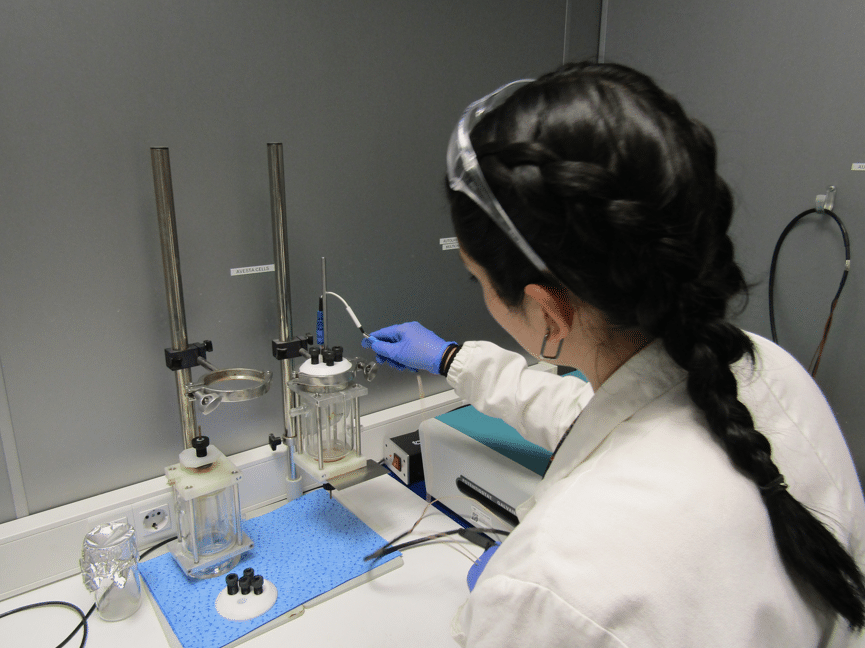
Implementing electrochemical testing early in product development significantly reduces development times, improves product durability and reliability, and ensures optimal performance in harsh environments.