
Detecting contamination in industrial processes at the right time is the difference between a manageable deviation and a service failure with economic and reputational consequences. Yet most industrial contaminants are not visible, produce no immediate signal, and in many cases originate from the process itself: equipment wear, batch carryover, secondary reactions, or material degradation.
This guide covers the technical fundamentals of industrial contamination detection, the analytical techniques applicable by contaminant type, FTIR, GC-MS, SEM-EDX, XRF, ICP-MS, and the diagnostic methodology applied by Infinitia’s team in sectors including automotive, pharmaceutical, food processing, and packaging.
What is contamination in industrial processes?
Contamination in industrial processes is the unwanted presence of substances, particles, or external agents that alter the behaviour, quality, or functionality of a product or process. This phenomenon can manifest in multiple forms: from imperceptible chemical traces to visible particles or microbiological contamination. Its impact depends not only on the quantity present, but also on its nature, location, and the stage at which it appears within the production process.
In sectors with demanding technical requirements —automotive, pharmaceutical, food, aerospace, or packaging— small contaminations can compromise critical properties such as mechanical strength, chemical stability, or end-product safety. In many industrial environments, contamination is not a one-off event but a progressive phenomenon that accumulates or is introduced intermittently. This makes identification difficult, as its effects may appear downstream when the product has already been processed or even partially validated.
Another critical aspect is that contamination does not always originate from external sources. In the majority of industrial contamination cases analysed by Infinitia, the origin lay within the process itself: material degradation, equipment wear, secondary reactions, or carryover between batches. This means that controlling the environment alone is not sufficient; a deep understanding of the interaction between materials, operating conditions, and process design is required.
From an industrial perspective, the relevance of this phenomenon lies in its capacity to generate quality deviations, economic losses, product rejections, and in-service failures.
How to detect contamination in an industrial process: a 5-step methodology
Effective detection of contamination in industrial processes requires a structured protocol, not a one-off visual inspection. This is the workflow applied by Infinitia’s team:
- Comparative sample collection. Samples of the affected material against reference samples from the same batch or process, to isolate the deviation and establish a clear analytical baseline.
- Initial FTIR screening. Fourier-transform infrared spectroscopy identifies functional groups and determines whether the contaminant is organic in nature (polymer, lubricant, residual solvent, additive). It is fast, non-destructive, and applicable to solids, liquids, and gases.
- Elemental analysis by SEM-EDX or XRF. If FTIR points to inorganic or metallic contamination, scanning electron microscopy with EDX locates and quantifies the elements present with spatial resolution. XRF enables fast, non-destructive elemental analysis, particularly useful for trace control under REACH or RoHS regulations.
- Quantitative analysis by GC-MS or ICP-MS. Gas chromatography-mass spectrometry identifies and quantifies volatile and semi-volatile compounds —residual solvents, reaction by-products, additive migration. ICP-MS is used for metallic traces at ppb level in pharmaceutical or food industry applications.
- Correlation with the process map. Analytical results are cross-referenced with the production flow to pinpoint the exact point of contaminant introduction and implement verifiable corrective actions.
This approach avoids the most common mistake in industrial contamination management: treating the symptom —the non-conforming product— without identifying the introduction mechanism.
Contamination detection through comparative characterisation
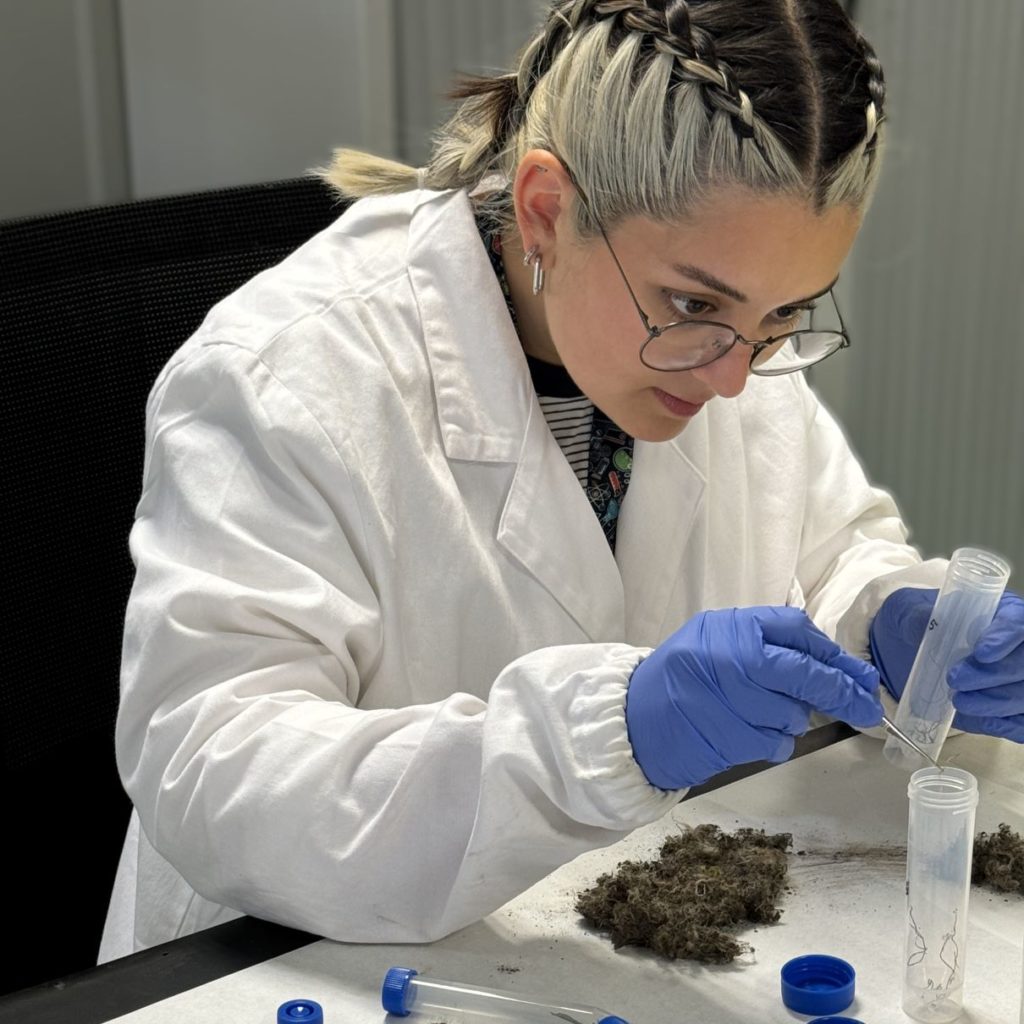
Laboratory analysis of contaminants and impurities cannot rely solely on direct observation. In most cases, contaminants are not visible and do not produce an immediately evident effect, making it necessary to use characterisation techniques that identify differences between materials or seemingly equivalent conditions.
A common strategy involves comparing affected samples with reference samples, looking for deviations in composition, structure, or behaviour. This approach is particularly useful when the type of contaminant is unknown in advance, as it allows anomalies to be detected without defining a closed hypothesis from the outset.
The techniques used vary according to the nature of the problem. The key lies not in the specific technique but in the combined interpretation of results: the same deviation may have multiple possible causes. It is also important to bear in mind that detection does not always mean directly identifying the contaminant. In many cases, indirect effects are detected, property changes, abnormal behaviour, that point to contamination being present. This indirect approach requires technical experience to avoid misinterpretation.
Analytical techniques for detecting industrial contaminants
Selecting the correct technique depends on the type of contaminant and the material being analysed. The following table summarises the most widely used laboratory methods:
| Technique | Type of contaminant detected | Typical industrial application |
|---|---|---|
| FTIR | Organics, polymers, additives, solvents | Contamination in plastics, coatings, lubricants |
| GC-MS | Volatile and semi-volatile compounds | Residual solvents, reaction by-products, additive migration |
| SEM-EDX | Particles, metals, inorganic inclusions | Contamination on metallic, ceramic, and electronic surfaces |
| XRF | Elemental composition, heavy metals | REACH/RoHS control, fast non-destructive in-line analysis |
| ICP-MS | Metallic traces at ppb level | Pharmaceutical, food, process water industries |
| HPLC | Non-volatile compounds, active ingredients | Chemical contamination in formulations and raw materials |
Process factors that promote industrial cross-contamination
Industrial cross-contamination is one of the most frequent and, at the same time, most complex mechanisms to manage. It occurs when materials, residues, or agents present in one stage of the process are unintentionally transferred to another, causing interference or alterations in the final product.
The main factors that promote it are:
- Reuse of equipment without adequate cleaning verification. Even in seemingly independent processes, small amounts of residual material can be enough to generate significant contamination, particularly in sensitive products such as pharmaceutical or food items.
- Interaction between incompatible or unvalidated materials. The coexistence of certain compounds can trigger unwanted reactions or the formation of by-products that act as contaminants.
- Out-of-range operating conditions. Variables such as temperature, pressure, or flow rate can promote compound volatilisation, particle mobilisation, or material degradation, increasing contamination risk.
- Equipment design with dead zones or high-roughness surfaces. These configurations are critical points where contamination can be generated and persist without being easily detected, particularly in sectors requiring certified cleanliness.
- Carryover between batches or process stages. Especially relevant in industries with high material turnover or frequent product changeovers on the same line, such as chemical or pharmaceutical manufacturing.
Risks associated with contamination in production environments
The impact of contamination in industrial processes is not limited to the presence of an unwanted agent: it translates into altered system behaviour. This can manifest as deviations in physical properties, changes in functional performance, or complete product failure under service conditions.
In many cases, contamination acts as a trigger for failure mechanisms. Particle presence can initiate wear processes; chemical contaminants can accelerate material degradation or compromise coating adhesion. These effects are cumulative and may not be detected until advanced stages of the product lifecycle, when the cost of intervention is at its highest.
From an economic standpoint, contamination can generate product rejection, rework, unplanned production downtime, or market recalls. When the root cause is not correctly identified, it is common to implement ineffective solutions that fail to address the underlying problem and lead to recurrence. Another relevant aspect is traceability: in complex processes, contamination may be introduced at one point and manifest at another entirely different location, making origin identification difficult and delaying decision-making.
For all these reasons, contamination management should not be treated as an isolated issue but as a structural element within process control.
Failures caused by contamination and their operational impact
Failures rooted in industrial process contamination are typically characterised by variability and difficulty in reproduction. Unlike more deterministic failures, contamination can produce inconsistent behaviour: intermittent deviations affecting only certain batches or operating conditions. This commonly leads to misinterpretation, attributing the problem to process variability rather than to a specific, treatable cause.
Contamination can also modify critical material properties, mechanical strength, electrical conductivity, chemical stability, generating failures not detected in standard testing and calling into question the adequacy of conventional validation protocols. A contaminant with no impact under normal conditions may become critical under prolonged thermal or mechanical stress.
Infinitia’s team has resolved cases of solid contaminant analysis in high-performance components where intermittent failures caused by impurities compromised both mechanical integrity and compliance with process cleanliness requirements, developing the appropriate analysis method for the specific production type and material.
Residue control through cleaning verification
Industrial cleaning verification is a key tool for preventing and detecting contamination, particularly in processes where different materials or products are handled within the same facility. This process should not be understood solely as a visual check, but as a technical evaluation ensuring that residues are removed to acceptable levels through laboratory analysis.
One of the main challenges is defining what “clean” means in each context: the criterion depends on the type of process, the product, and the associated contamination risks. Thresholds must be established based on technical criteria, not purely operational ones, and the cleaning procedures must be periodically validated to confirm they consistently achieve those thresholds.
Apparently adequate cleaning does not guarantee the absence of contamination if it is not properly validated. This reinforces the need to combine hygiene maps and critical contamination point analysis with analytical protocols capable of detecting traces below the visibility threshold, especially in food and pharmaceutical sectors.
Technical approaches to contamination detection
Addressing contamination in industrial processes requires a combination of techniques that allow both the detection of contaminants and an understanding of their origin and evolution within the process. There is no single method applicable to all cases: tool selection must be adapted to the nature of the problem, the type of material, and the analytical sensitivity required.
Two main approaches are generally distinguished: point analysis, based on laboratory sample characterisation, and continuous monitoring, aimed at detecting deviations in real time during production. Both are complementary, and their combination provides a more complete view of the phenomenon.
Laboratory methods for identifying industrial contaminants
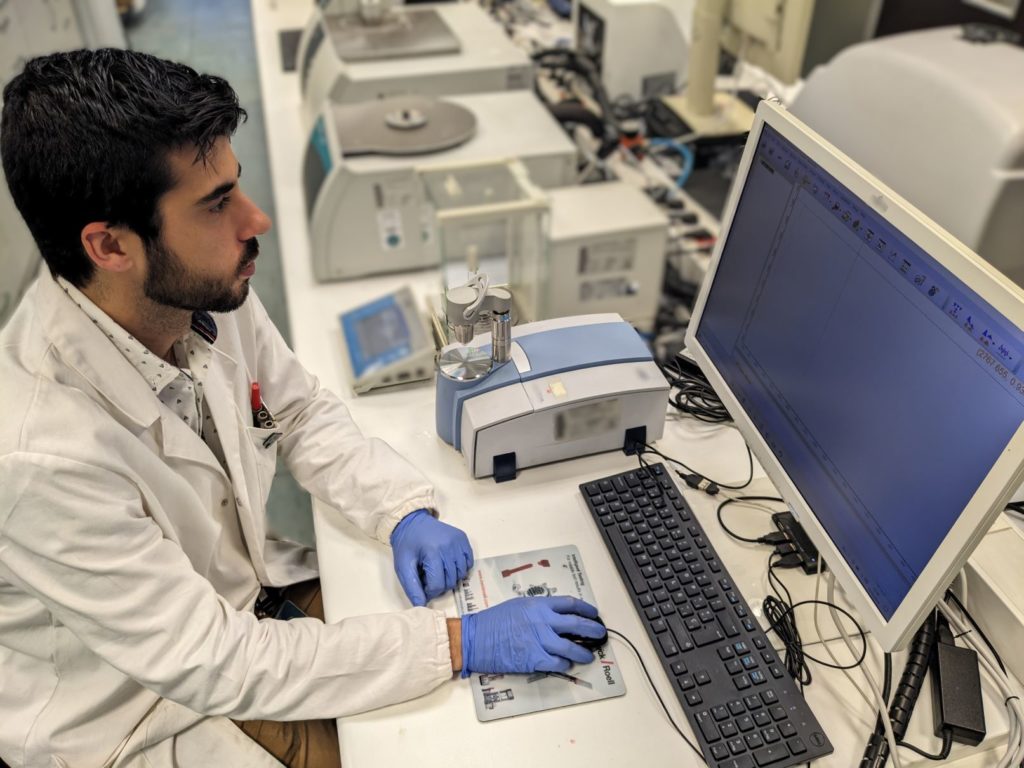
Laboratory-based methods allow contaminants to be identified and quantified with high precision. They are essential when a detailed failure mode diagnosis is required or when contamination is not evident through other methods.
One of their main advantages is the ability to provide quantitative information, allowing the magnitude of the problem to be evaluated and compared against normative acceptance criteria (ASTM, EN, REACH/RoHS, European Pharmacopoeia). However, they are typically point analyses that may not reflect temporal process variability, so they should be complemented with statistically representative sampling covering different shifts, batches, and operating conditions.
Sample preparation and testing conditions can also influence results: contamination at ppm or ppb levels requires strict chain-of-custody control to avoid cross-contamination during the analysis process itself.
In-line sensors for real-time contaminant monitoring
In-line sensors enable real-time contaminant monitoring strategies, providing continuous information on process status. This approach is particularly useful for early detection of deviations and reducing the economic impact of contamination before it affects finished product.
These systems can be based on different measurement principles: physical properties such as turbidity, conductivity, or viscosity; detection of specific compounds via process spectroscopy; or particle monitoring through optical counters. Selection depends on the contaminant type, the relevant concentration range, and the physical process conditions (temperature, pressure, fluid nature).
A key advantage of in-line sensors is their capacity to detect transient events, short-duration contamination peaks, that would go completely unnoticed in a point laboratory analysis. This enables identification of temporal patterns and correlations with process variables that facilitate diagnosis. However, not all contaminants are detectable with commercially available sensors, and implementation requires validation against laboratory reference methods to ensure measurements are reliable and representative.
Strategies for controlling industrial contamination
Effective contamination management in industrial processes cannot be approached solely from a reactive standpoint. It requires a deep understanding of the generating mechanisms and their impact on system behaviour. A structured approach combines three levels of action:
- Prevention at process design stage. Eliminating dead zones in equipment, selecting construction materials compatible with process fluids, and defining validated cleanliness specifications prior to production start-up. This is the highest-return stage: the cost of preventing contamination is always lower than diagnosing and correcting it in production.
- Detection and diagnosis. Implementing a sampling and analysis protocol combining laboratory techniques (FTIR, GC-MS, SEM-EDX) with in-line monitoring where process criticality justifies it. The protocol must define sampling frequencies, acceptance criteria, and alert thresholds.
- Correction and verification. Once the root cause has been identified, implementing corrective measures and verifying their effectiveness through post-correction comparative analysis against initial results. Without this verification, it is not possible to confirm that the action taken has eliminated the problem rather than merely displacing it to another process stage.
One of the most common errors is assuming that the absence of visible evidence implies absence of contamination. In many cases, effects only become apparent under certain stress conditions or at advanced stages of the product lifecycle. It is therefore essential to integrate detection, monitoring, and verification strategies into routine process control, without waiting for failures to appear.
Ultimately, contamination management should be understood as a continuous improvement tool: identifying and understanding the underlying mechanisms not only resolves existing problems but also prevents their recurrence and optimises process design and operation. Having a technical team specialised in expert reports and root cause diagnosis enables precise, analytically grounded decision-making throughout the entire process.
Frequently asked questions about detecting contamination in industrial processes
What technique is used to identify a completely unknown contaminant?
The standard workflow starts with FTIR as an initial screening to determine whether the contaminant is organic or inorganic. Based on the result, GC-MS is applied for volatile or semi-volatile organic compounds, SEM-EDX for particles or inorganic contaminants, and ICP-MS for metallic traces. In cases involving multiple contaminants or combined mechanisms, all three techniques are applied in parallel on the same reference and affected samples.
What is the difference between cross-contamination and process contamination?
Cross-contamination occurs when a material or residue from a previous stage or product is transferred to another, generally due to inadequate cleaning or shared equipment. Process contamination originates within the production process itself: material degradation, equipment component wear, or uncontrolled secondary reactions. Both can coexist in the same incident, and distinguishing between them is key to applying the correct corrective measure and preventing recurrence.
When is a technical contamination report needed for legal proceedings?
A specialist technical report becomes essential when there is a dispute between manufacturer and customer over non-conforming product, when analytical documentation is required for a formal supplier claim, or when contamination has generated an incident with regulatory implications (REACH directive, food safety regulation, European Pharmacopoeia). Infinitia issues rigorous technical reports, including detailed analytical methodology, results with measurement uncertainty, and a reasoned root cause conclusion, that a court-appointed or party-appointed expert witness can use as the evidential basis for their expert opinion. We do not issue expert witness reports ourselves, but we provide the technical and analytical evidence that underpins them.
Does industrial contamination always lead to product rejection?
Not necessarily. In many cases, contamination is present at levels that do not exceed standard product acceptance limits, but can compromise service behaviour under thermal, mechanical, or chemical stress over time. For this reason, acceptance criteria must be established based on the product’s end use and real service conditions, not solely on standard normative analytical limits.