
Diagnosis of the root cause of failure
Root cause failure diagnosis is an essential service for industrial companies looking to precisely identify the origin of problems in materials, equipment, or processes.
At INFINITIA Industrial Consulting, we approach this activity with a technical and methodological approach that makes it possible not only to detect the failure, but also to understand its causes and apply effective solutions to prevent it from recurring.
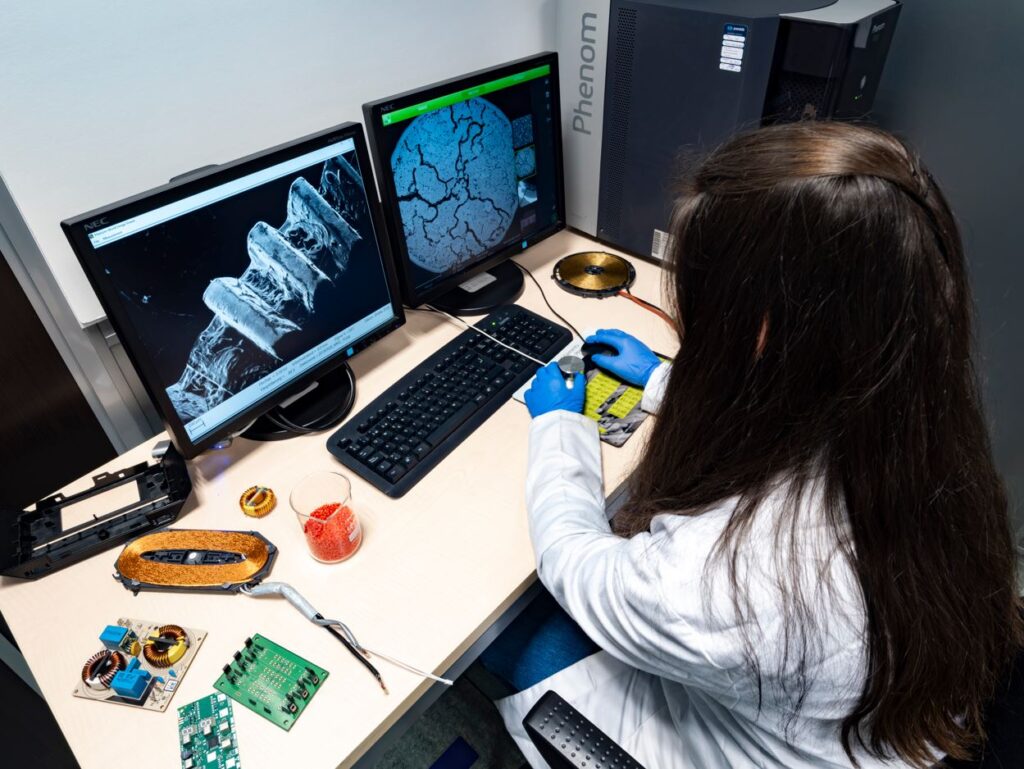
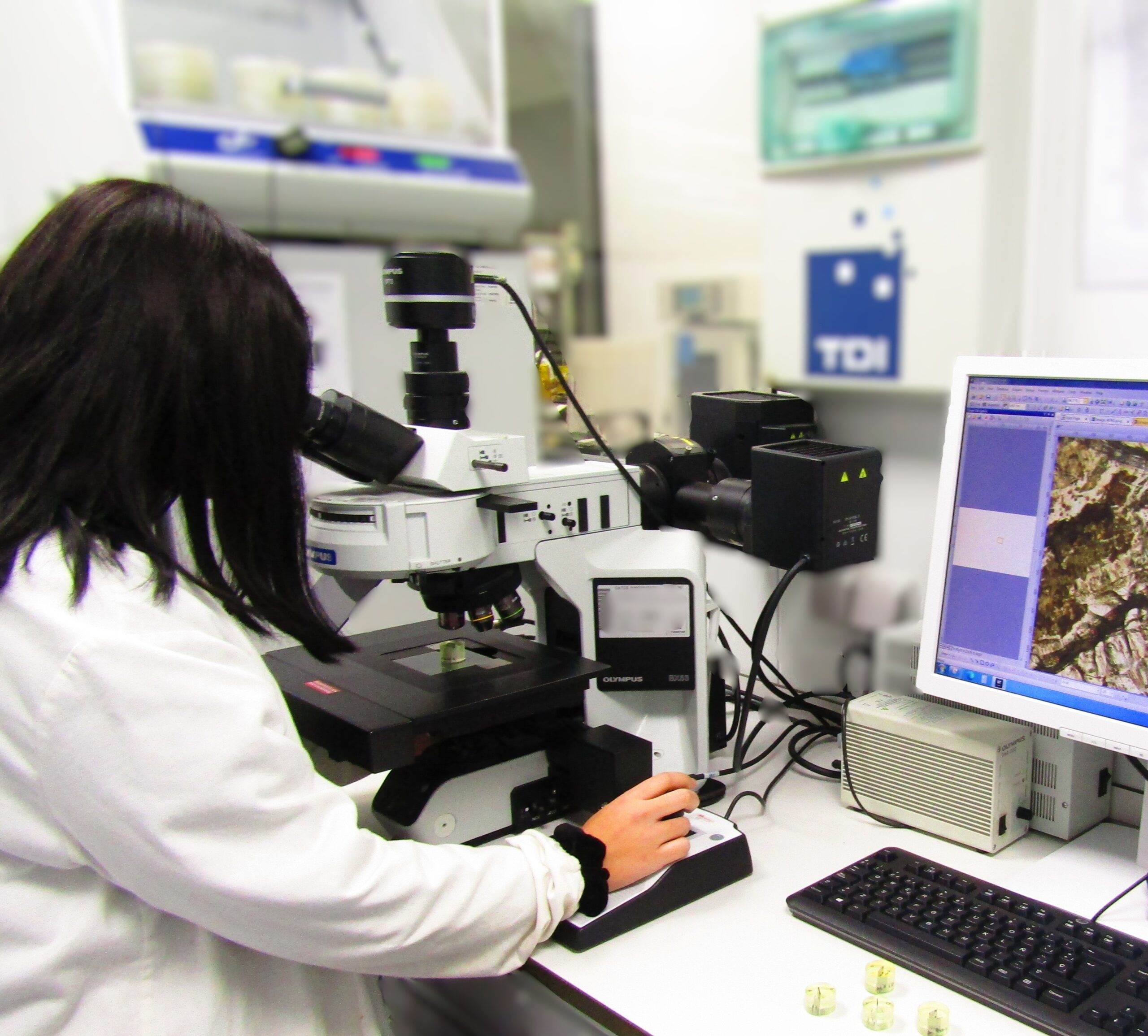
In our industrial laboratory, we have specialists in forensic engineering and failure analysis who work with the latest technologies to carry out thorough, rigorous, results-oriented studies, integrating techniques such as comparative sample analysis, failure simulation, and hypothesis validation through specific testing.
Talk to a specialist
Request a free initial consultation; contact a consultant from our team of specialists

What is root cause failure diagnosis?
What is it?
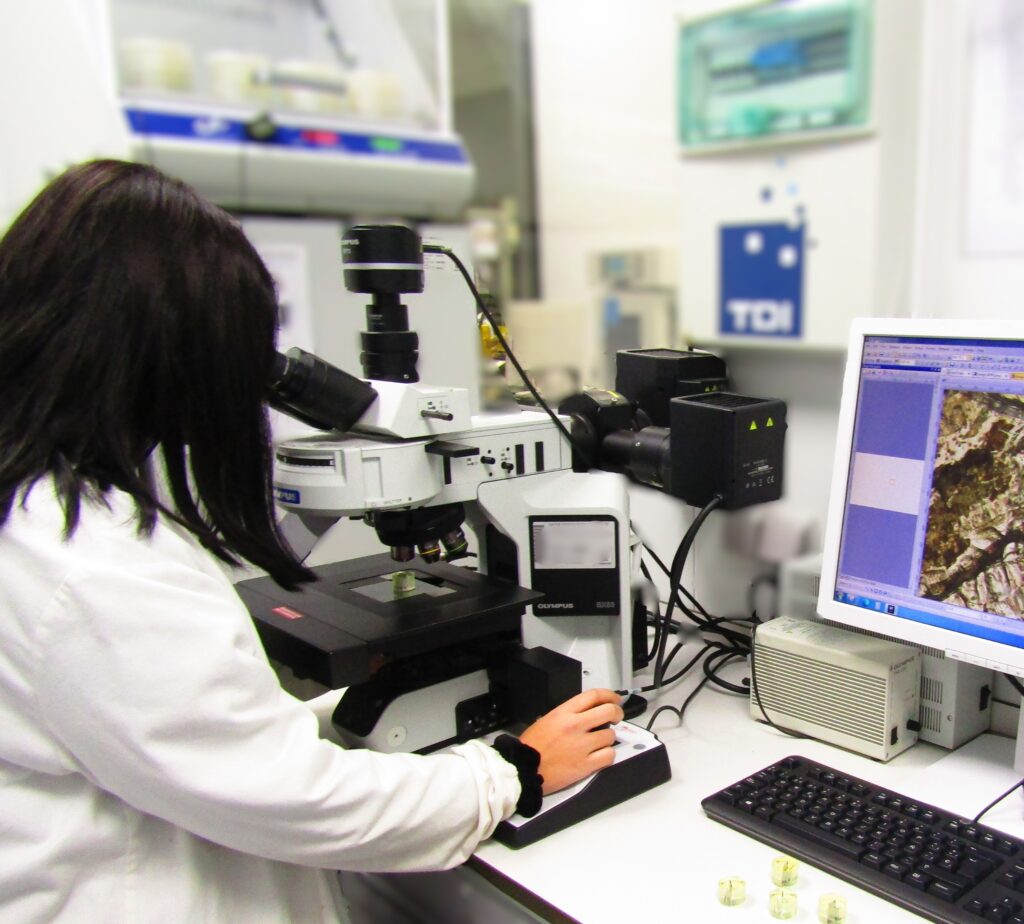
Root cause failure diagnosis, also known as Root Cause Analysis (RCA), is a structured process for investigating and determining the underlying factors that cause a given failure in components, systems, or industrial processes.
At INFINITIA, we use tools such as the Ishikawa diagram to establish hypotheses, which are then subjected to testing and laboratory analysis, prioritizing the most likely ones. This approach makes it possible to develop a deep understanding of how and why the failure originates, and provides a solid technical basis for making corrective decisions.
The process can include both NOK material analysis against OK samples and specific failure simulations under controlled conditions, ensuring accurate identification of the problem.
Root cause failure diagnosis at INFINITIA
At INFINITIA, we approach industrial failure diagnosis from a comprehensive perspective. We start from an initial hypothesis based on the functional analysis of the affected component or system, and from there, we design a validation plan that includes materials characterization techniques, simulation testing, and comparative sample analysis.
We work with advanced technologies in spectroscopy, microscopy, thermal and mechanical analysis, which allows us to detect even failures not visible to the naked eye. We can also repeat testing with different raw materials or equipment configurations to propose robust technical solutions. Our approach is centered on the client and their specific problem, adapting to each case with tailored solutions.
Benefits/Advantages of root cause failure diagnosis
Benefits
One of the main benefits of root cause analysis is the prevention of recurring failures, which translates into significant savings in time, production costs, and quality losses. For example, an automotive company managed to avoid unplanned line stoppages thanks to a root cause failure diagnosis on some components carried out in our laboratory.
Another relevant case was the identification of material incompatibilities in a production machine, which was resolved through diagnosis, problem simulation, and testing of viable alternatives.
At INFINITIA, we add value not only by resolving the current failure, but by anticipating its recurrence, supporting continuous improvement and decision-making based on objective data.
Types of root cause failure diagnosis
types
At INFINITIA, we develop different diagnostic approaches to precisely analyze the causes of failure in components, materials, and industrial systems.
We apply structured methodologies such as RCA, 8D, or Ishikawa, combined with technical testing, to validate hypotheses and propose specific solutions. Our goal is to identify the origin of the failure and prevent its recurrence, by optimizing processes, materials, and technical decisions.
Diagnosis using the Ishikawa diagram and hypothesis formulation
This approach starts with a collaborative assessment with the client to build a cause-and-effect diagram (Ishikawa), which categorizes the possible sources of the failure (materials, methods, machinery, manpower, environment, measurement). From there, hypotheses are formulated and a technical validation plan is established.
At INFINITIA, we have used this approach with various clients and industrial sectors to identify the interaction between metal coatings and certain chemical products that were causing premature corrosion.
Diagnosis through hypothesis-validation testing
Once the possible causes have been identified, we design and carry out laboratory testing (thermal, chemical, mechanical, etc.) to validate or rule out hypotheses. This methodology makes it possible to refine the diagnosis in an empirical, objective way.
A typical example at INFINITIA is the analysis of cracks in plastic parts through impact and aging testing, which has made it possible to reformulate materials in consumer products to increase their durability.
Failure simulation under controlled conditions
When the failure is complex or does not occur systematically, the industrial process conditions are replicated in the laboratory to induce the failure in a controlled way. This makes it possible to observe the real failure mechanism and assess critical factors.
In a project for industrial machinery, INFINITIA simulated humidity and friction conditions that made it possible to reproduce failures in some components, optimizing the design of the sealing system.
Comparison between OK and NOK samples
This comparative analysis between defective samples (NOK) and conforming ones (OK) makes it possible to detect critical variations in physical, chemical, or structural properties that explain the failure.
For example, for a client in the industrial sector, we identified a difference in the degree of cure of a resin between OK and NOK parts that was causing structural failures in the housings after assembly.
Diagnosis using the 8D methodology and corrective action follow-up
In cases where the diagnosis is part of a structured quality process (for example, in response to customer claims or audits), INFINITIA applies the 8D methodology, documenting each stage and establishing verifiable corrective actions.
We have worked with automotive companies on 8D analysis to resolve series production defects, with hypothesis validation and solution finding through pilot testing before implementation.
Applications of root cause failure diagnosis
sectors
The future of failure prevention starts with a good diagnosis
Value
Root cause failure diagnosis is an essential strategic tool for industrial companies looking to ensure quality, reduce costs, and optimize their processes.
Through a structured technical approach based on methodologies such as RCA, 8D, or the Ishikawa diagram, it is possible to identify the real origin of a failure, validate it through specific testing, and apply effective corrective solutions. This ability to understand the problem in depth is key to preventing its recurrence, improving decision-making, and increasing product reliability.
At INFINITIA Industrial Consulting, we offer a complete diagnostic service that integrates expertise in forensic engineering, materials analysis, and failure simulation. Our experience allows us to address complex problems in sectors such as automotive, food, electronics, or medical devices, tailoring each study to the client’s requirements.
We have a laboratory equipped with advanced technologies and a specialized technical team, capable of formulating hypotheses and validating solutions through customized testing.
We are also seeing a growing trend toward the automation and digitalization of failure analysis, the integration of predictive models, and the automation of validation processes.