×

How to identify fatigue fracture in materials

What is fatigue fracture and why is it relevant?

Fatigue fracture is one of the most common failure mechanisms in components subjected to repeated loading over time. Unlike overload failure, where rupture occurs immediately after exceeding a critical threshold, fatigue damage accumulates progressively, even under relatively low stress levels. This behavior makes it a particularly critical phenomenon from an industrial perspective, as it can develop without visible signs until advanced stages.

In many mechanical systems, cyclic loads are inherent to their operation: vibrations, rotations, pressure pulses, or thermal variations generate fluctuating stress states that promote this type of degradation. As a result, components that appear to operate within their design limits may fail after a certain number of cycles, making prediction difficult without appropriate models or data.

Fatigue fracture does not depend on a single overload event, but on the progressive accumulation of damage under repeated loading.

Furthermore, the progressive nature of fatigue means that final failure is often sudden. This has direct implications for safety and operability, especially in sectors such as automotive, energy, or industrial machinery, where unexpected failure can lead to significant damage or service interruptions.

On the other hand, correctly identifying this mechanism is essential to avoid misdiagnosis. In some cases, fatigue fracture can be mistaken for brittle or overload failure if the evidence is not properly analyzed, leading to incorrect solutions and recurrence of the issue.

Crack initiation and growth mechanisms in fatigue fracture

From a technical standpoint, fatigue fracture begins with crack initiation in localized areas where stress concentrations exist. These areas may be associated with geometric discontinuities, surface defects, or microstructural heterogeneities in the material. Crack initiation is not always immediate and may require a significant number of cycles before becoming detectable.

Once initiated, the crack enters a stable propagation phase, growing progressively with each load cycle. This growth is not uniform and depends on factors such as stress amplitude, loading frequency, and environmental conditions. During this phase, localized plastic deformation promotes crack advance.

Finally, when the remaining load-bearing section is insufficient to withstand the applied load, final fracture occurs, usually in a sudden manner. This final event is often the only visible one, which may lead to incorrect interpretations if the full damage history is not considered.

This process is closely related to fatigue life, which represents the number of cycles required to reach failure, as well as to the evolution of cumulative damage in the material.

Factors influencing fatigue causes in industrial materials

The causes of fatigue in materials cannot be attributed to a single factor, but rather to the interaction of multiple variables affecting both crack initiation and propagation. Among the most relevant factors are stress concentrators, which generate significant local increases in stress.

Surface conditions play a critical role. Processes such as machining, heat treatment, or corrosion can introduce defects that act as crack initiation sites. Even small irregularities can significantly reduce a component’s fatigue resistance.

The operating environment also has a direct influence. The presence of corrosive agents, humidity, or elevated temperatures can accelerate damage mechanisms through processes such as corrosion fatigue or oxidation. In these cases, the interaction between mechanical and chemical phenomena increases the complexity of the problem.

Finally, material properties such as microstructure, grain size, or inclusions condition its behavior under cyclic loading. In industrial applications, the combination of these factors with mechanical failures due to cyclic loads makes fatigue a highly context-dependent phenomenon.

Engineer analyzing fatigue fracture surface using SEM electron microscopy

Effects of fatigue fracture on system reliability

Fatigue in industrial components has a significant impact on system and equipment reliability. Its cumulative and progressive nature means that damage can develop over long periods without detection, increasing the risk of unexpected failures during operation.

From an economic standpoint, such failures can lead to high costs associated with production downtime, component replacement, and loss of efficiency. In highly demanding sectors, even minor interruptions can have relevant consequences in terms of productivity.

Mechanical failures due to cyclic loading can develop without visible signs until final fracture.

Furthermore, fatigue does not only affect individual components but can compromise the overall behavior of the system. The degradation of one element may alter load distribution, generating overloads in other parts and accelerating chain damage processes.

Another relevant aspect is the difficulty of early detection. Unlike other failure mechanisms, fatigue does not always present clear signs until advanced stages, making it necessary to rely on specific inspection and monitoring techniques.

Influence of cyclic loading on component failure

Mechanical failures due to cyclic loading appear in a wide range of industrial applications, from structural components to elements subjected to continuous vibrations. In many cases, these failures occur in critical design areas where stresses are higher.

Operationally, the occurrence of such failures often results in unplanned maintenance interventions. This not only increases costs but also reduces equipment availability and affects production planning.

Additionally, fatigue failure of a component can have indirect consequences. For example, the release of fragments or loss of functionality may damage other components or create hazardous situations.

From a technical perspective, these failures highlight the need to properly consider cyclic loads during the design phase and to implement condition-based maintenance strategies.

Role of fatigue testing in material design and validation

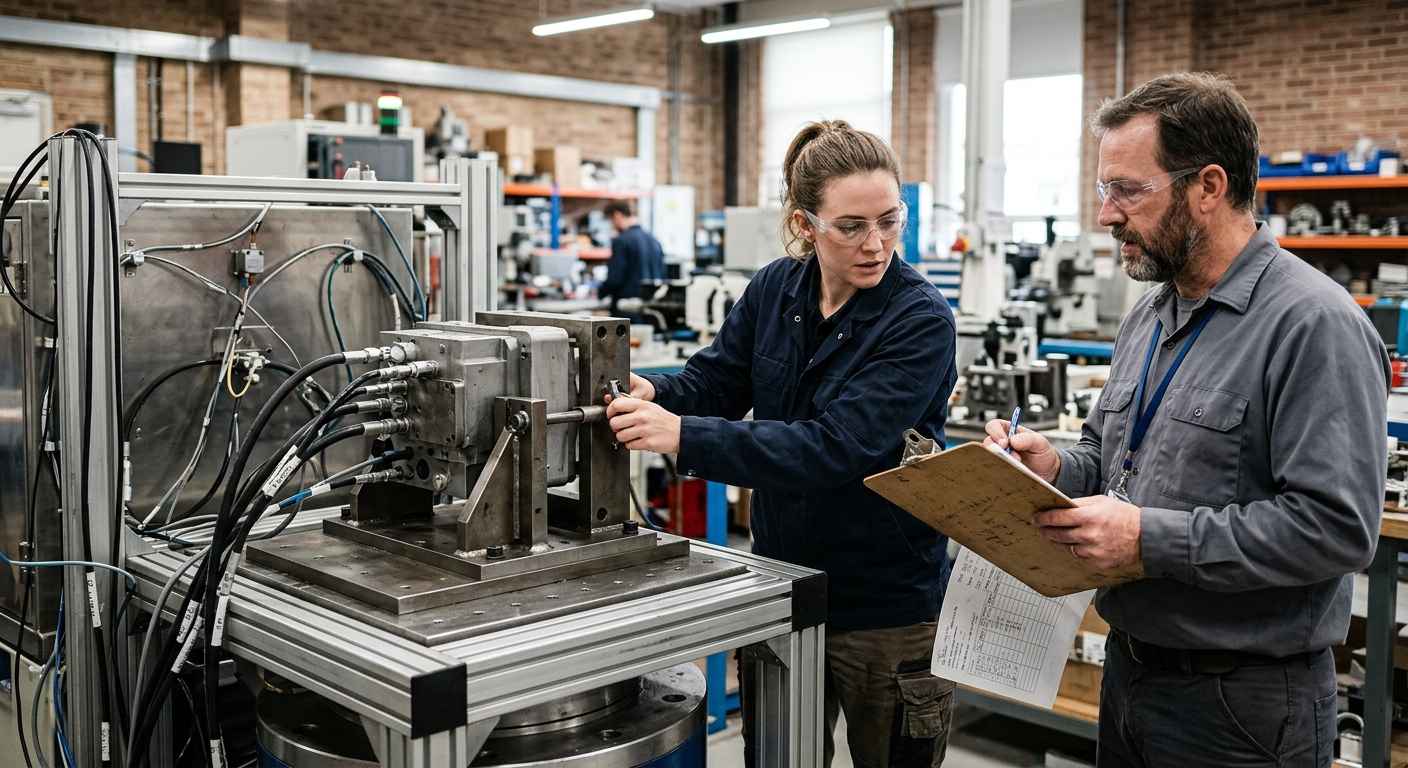
Fatigue testing of materials is a fundamental tool for evaluating material behavior under repeated loading conditions. These tests provide experimental data that serve as a basis for component design and validation.

Through these tests, it is possible to determine the relationship between stress amplitude and the number of cycles to failure, typically represented by S-N curves. This information allows the establishment of design limits and appropriate safety factors.

Additionally, fatigue testing enables comparison between different materials or surface treatments, facilitating the selection of more fatigue-resistant solutions. Its application is not limited to the design phase but is also useful in improvement and optimization processes.

In industrial environments, these tests are complemented by in-service analysis, allowing validation of whether real component behavior matches theoretical expectations.

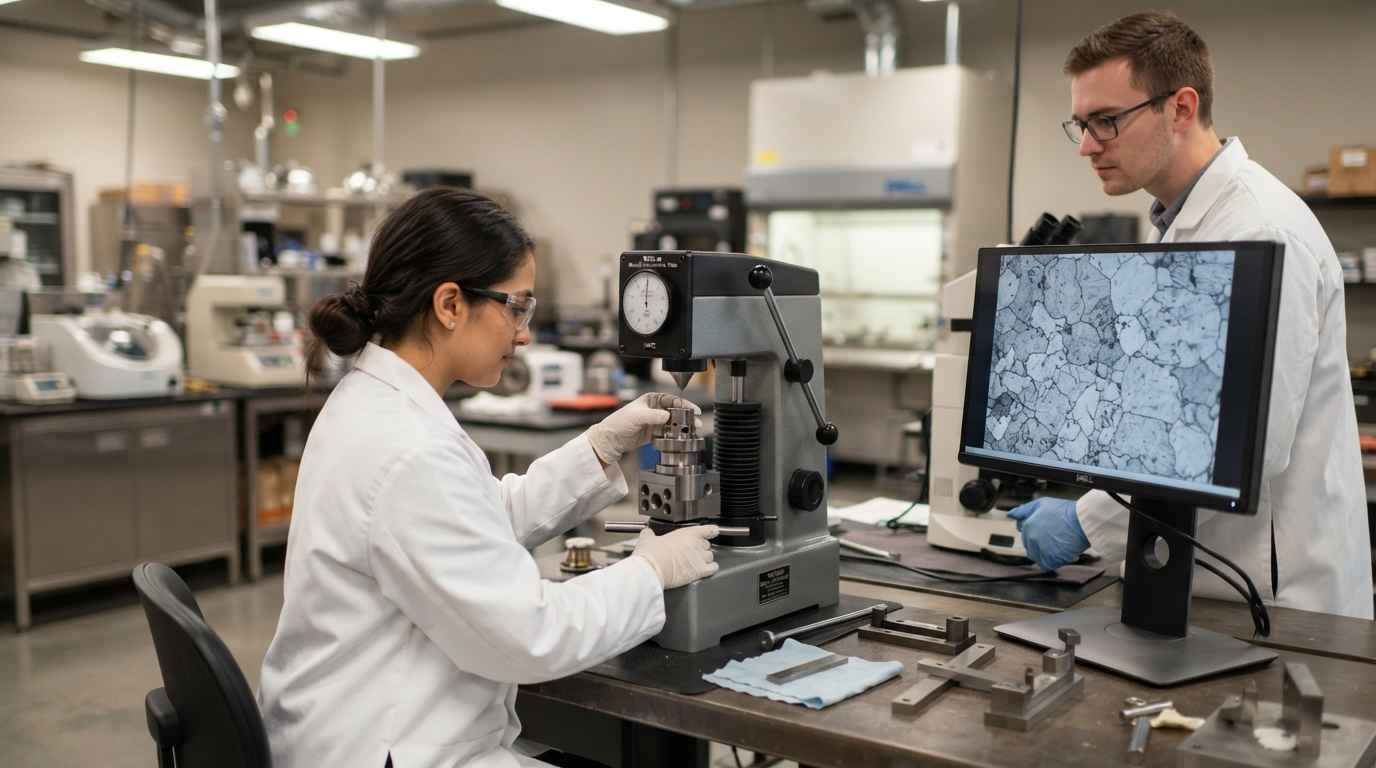
Technician observing fatigue cracks in material using laboratory microscope

Fatigue fracture diagnosis methods

Identifying a fatigue fracture requires a structured approach combining macroscopic observation, microscopic analysis, and evaluation of service conditions. This process allows differentiation of fatigue from other failure mechanisms and supports evidence-based conclusions.

In this context, fracture surface analysis is one of the most relevant tools. Interpreting surface patterns provides direct insight into the origin and evolution of damage. However, observation alone may be insufficient. It is necessary to integrate this information with data on design, material, and operating conditions to achieve a complete understanding of the problem.

Fracture analysis allows identification of failure origin based on physical surface evidence.

Additionally, considering the load history and traceability of the component in service is critical. Lack of this information may lead to incomplete or even incorrect interpretations, especially in systems where real conditions differ from design assumptions. Therefore, analysis should incorporate operational, maintenance, and anomaly data whenever possible, enabling correlation between physical evidence and actual service conditions.

Identification of fatigue fracture surfaces and characteristic patterns

Fatigue fracture surfaces exhibit distinctive features that allow identification of this failure mechanism. At the macroscopic level, it is common to observe different zones corresponding to the stages of fracture.

One of the most representative features is fatigue beach marks, which appear as concentric or semicircular bands reflecting the progression of the crack front over time. These marks are often visible to the naked eye or under low magnification.

At the microscopic level, fatigue striations are key evidence. These striations represent the incremental advance of the crack with each load cycle and provide strong confirmation of fatigue as the failure mechanism.

Correct interpretation of these patterns is essential to avoid diagnostic errors, particularly in cases where multiple failure mechanisms coexist.

Analysis of fatigue crack propagation in real industrial contexts

Studying fatigue crack propagation allows reconstruction of damage evolution and understanding of the conditions that led to failure. Analyzing crack growth direction, rate, and trajectory variations provides key insights into component behavior in service.

In industrial applications, this analysis is complemented by evaluating factors such as applied loads, environmental conditions, and material characteristics. This integration enables identification not only of the failure mechanism but also of its root causes.

Fatigue crack propagation reflects the load history and real service conditions of the component.

In this context, forensic engineering plays a key role by providing a multidisciplinary approach combining different analysis techniques. This approach supports evidence-based conclusions and the definition of corrective actions to prevent recurrence.

Additionally, analyzing crack growth rates can provide quantitative insights, especially when correlated with theoretical models or experimental data. This allows estimation of the component’s life stage at failure and assessment of whether crack growth was accelerated by unforeseen factors such as overload events or aggressive environmental conditions.

Section of metal component showing fatigue fracture and crack propagation zones

Understanding fatigue failure in materials

Fatigue fracture is a complex phenomenon resulting from the interaction between cyclic loads, material properties, and service conditions. Its progressive and silent nature makes it a particularly critical failure mechanism in industrial environments.

Identifying this type of fracture requires detailed analysis combining fracture surface observation, pattern recognition, and evaluation of the operational context. Features such as beach marks and microscopic striations are key evidence for diagnosis.

From a technical perspective, understanding this phenomenon enables not only failure identification but also anticipation. Integrating experimental data, material analysis, and service condition evaluation is essential to improve system reliability.

In cases where fatigue indicators are detected or diagnosis validation is required, conducting a specialized technical analysis can be decisive in establishing reliable conclusions and defining appropriate corrective actions, with the possibility to request further information or technical consultation through the contact page.