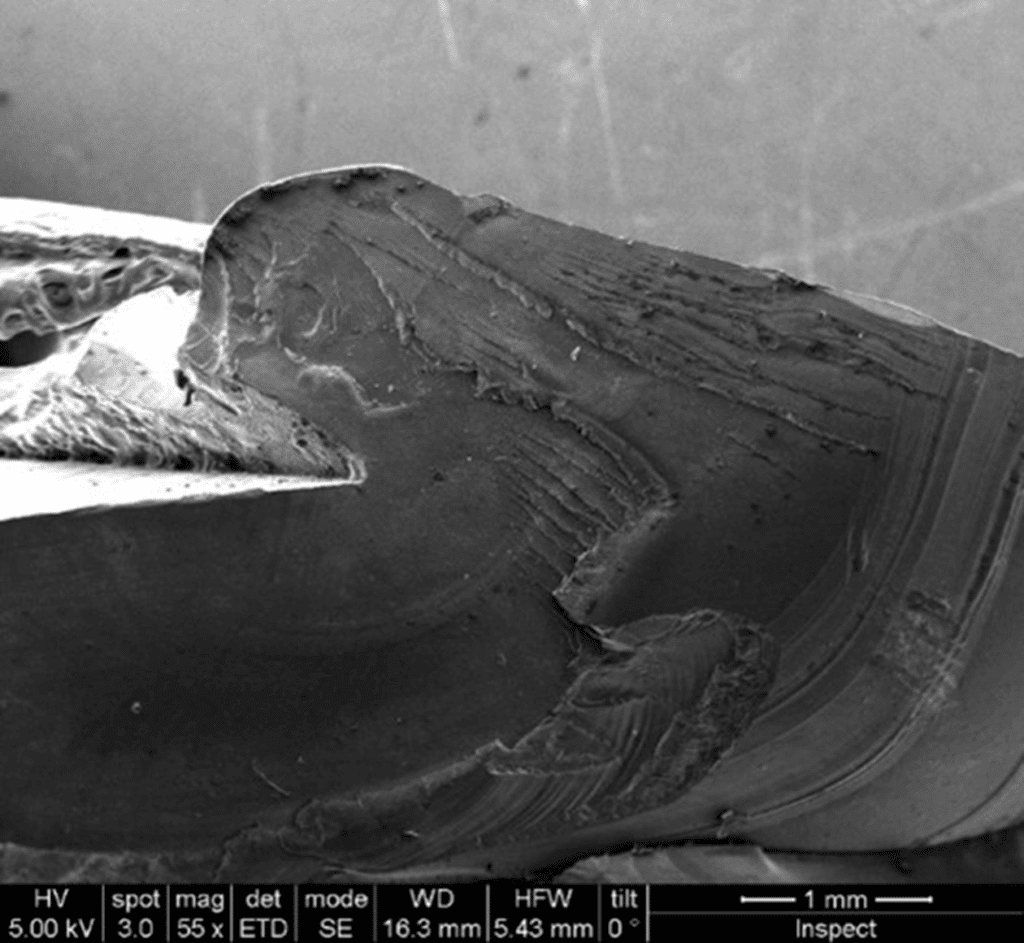
Surface texture and microstructure analysis
Surface texture and microstructure analysis is a key service provided by the INFINITIA laboratory to understand and optimize the functionality of surfaces in industrial materials.
Through our Forensic Engineering and Materials Characterization services, we carry out detailed studies to accurately assess the morphology, composition and functional behavior of all types of materials.
This type of analysis is used in quality-validation processes, failure investigations, the development of new materials and functional surfaces, and the assessment of surface treatments.
INFINITIA specialists use the latest microscopy, metallography and surface-testing technologies to obtain key data and provide tailored solutions for every client.
Talk to a specialist
Request a free initial consultation; contact a consultant from our team of specialists

What does surface texture and microstructure analysis involve?
What is it?

The Microstructure and surface texture analysis consists of the study of Internal and external characteristics of a sample on a microscopic scale.
In the case of microstructure, elements such as are analyzedSize and distribution of grains, phases, defects, crystalline orientation or inclusions in Metallic materials, ceramic or polymeric. To do this, techniques such as are used optical microscopy, the Scanning electron microscopy (SEM), EBSD analysis or the EDX spectroscopy.
In parallel, the surface texture is characterized by techniques such as profilometry, the Roughness analysis or the Contact angle, which allow Evaluate critical parameters in functional surface performance.
These studies are essential for Understand the impact of manufacturing processes, heat or mechanical treatments on the properties of the final product. In INFINITIA, We adapt these analyses according to the type of sample, its intended function and the technical objectives of each project.
How does INFINITIA do it?
At INFINITIA we address the Surface texture analysis and microstructures in an integral way. We start from a Accurate sample preparation (by cutting, polishing or etching) and we apply techniques such as SEM-EDX, Metallography, Hardness analysis or Contact angle measurement.
We also developed microstructured surfaces using technologies like Injection molding (IMM), Laser engraving in Plastics, polymers, steels and aluminium alloys.
Our laboratory has advanced equipment and Experience in standardized and tailor-made testing.
Also, We analyze the usability of surfacesfrom the expected final functionality: Cleanability, Antibiofilm Hydrophobic or hydrophilic properties.
All with a Customized, technical and rigorous approach, tailored to each industrial client.
Benefits of Microstructure and Surface Texture Analysis
BENEFITS
One of the main advantages of this type of analysis is the Ability to predict the functional behavior of the material and anticipate failure mechanisms.
For example, a Poor phase distribution can compromise the Mechanical resistance, while a inadequate roughness may affect adhesion, the cleanability or fluid behavior.
In INFINITIA we have applied this service for sectors such as the Automotive, equipment, electronics or food, developing surfaces with antimicrobial, self-cleaning and wear-resistant properties, among other functionalities.
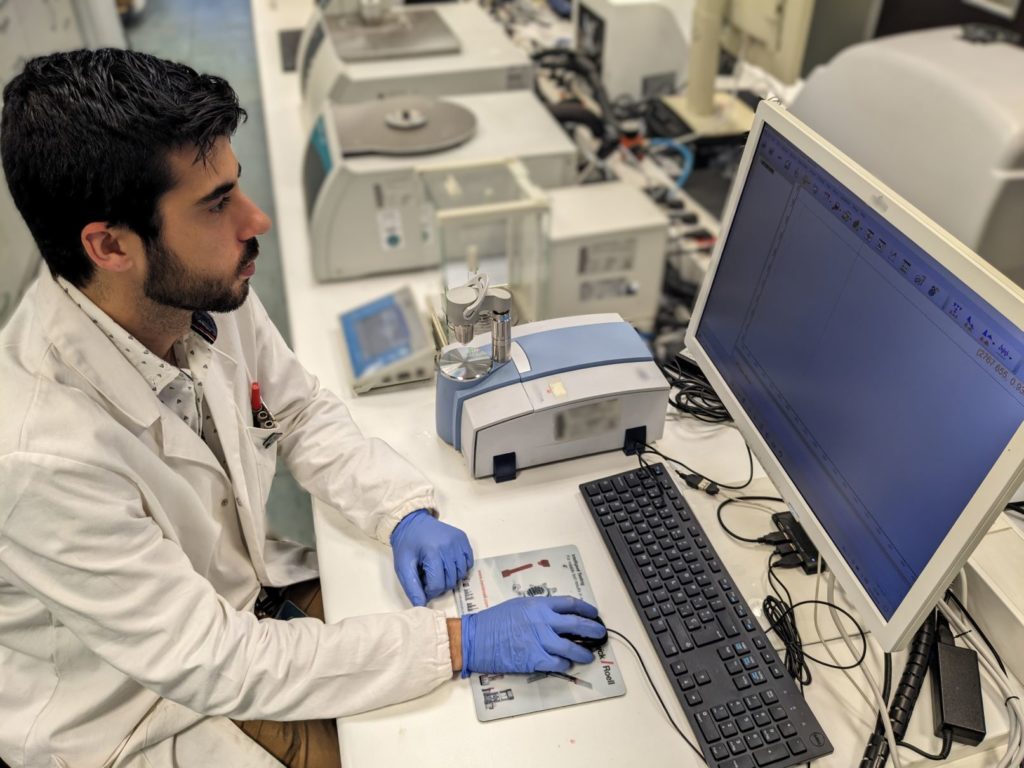
Types of Surface Texture and Microstructure Analysis
types
In INFINITIA, we perform different types of analysis oriented to the Study of internal microstructures and surface texture of industrial materials.
Our goal is Understand in depth how these features affect product functionality, durability, and behavior, both in the development and validation of advanced technical solutions.
Microstructural analysis by microscopy
This Analysis allows Observe the internal structure of microscopically scaled metal, ceramic or polymeric materials. We use optical microscopy for initial analysis, and Scanning electron microscopy (SEM) combined with EDX and EBSD to study Crystalline phases, grain orientation, segregations and presence of inclusions.
An example applied in INFINITIA is the Evaluation of microcracks in stainless steel welding zones to guarantee their structural reliability.
Metallographic analysis
Through techniques metallographic (cut, assemble, polish and chemical attack), We prepare samples that are subsequently analyzed to characterize their microstructure. This technique is essential in Heat treatment validation or defect detection processes in machined pieces.
In INFINITIA, for example, we have used this analysis to Validate the correct manufacture and approval of steels.
Surface texture characterization
Surface texture is evaluated with techniques such as Optical profilometry, contact profilometry or laser interferometry. These studies allow Quantify parameters such as roughness, ripple and microtexture, which affect properties such as Friction, adhesion or tribological behavior.
In INFINITIA we have analyzed the texture of Injection molds to ensure proper replication microstructured details in technical plastics.
Contact angle measurement
This test measures the Interaction of a liquid with the surface, indicating its Hydrophobic or hydrophilic character. is essential in studies of Cleanability, antibiofilm and moisture behavior.
We have applied This technique to Validate antimicrobial coatings on food contact surfaces, verifying their Ability to repel fluids and prevent buildup of waste.
Functional tests of microstructured surfaces
On surfaces functionalized by Laser or injection, we assess their Behavior against specific functions: Water repellency, cleaning efficiency, biofilm resistance or interaction with contaminants.
In INFINITIA we develop technical surfaces for food applications and applications with high hygiene requirements, validating their performance by methods such as JIS assay for antimicrobial activity or cleaning simulations.
Applications of Microstructure Analysis and Surface Texture
sectors
Microstructural and surface analysis has Essential applications in various industrial sectors.
In INFINITIA we work closely with the teamsQuality, R&D and production from our customers for Select the most appropriate techniques and extract critical information for decision making.
Automotive
In the automotive sector, microstructural and surface texture analysis is Key to ensuring component reliability subjected to Fatigue, friction or environmental exposure. this type of studies allows Optimize heat treatments, validate coatings and Anticipate critical failures in prolonged use.
- Failure analysis in components to identify Thermal fatigue wear mechanisms.
- Benchmarking of surface treatments to reduce wear and its evaluation under operating conditions.
- Microcrack verification in welded components, securing their Durability to thermal cycles.
Food
In food environments, surfaces must Prevent residue build-up, Facilitate cleaning and Prevent microbial proliferation. Analysis allows Validate materials and treatments used in processing equipment, complying with Hygiene regulations such as HACCP or JIS.
- Contact angle measurement to validate non-stick treatments.
- Cleanability assessment using Roughness and simulation of cleaning cycles.
- Validation of stainless steel components for high temperatures.
Medical devices
In the health field, the surface microstructure affects the Biocompatibility, cell adhesion or biofilm formation. Analysis allows to develop devices Safe, hygienic and functional.
- Characterization of non-stick coatings using Contact angle and SEM.
- Analysis of the anodizing of aluminium alloys that had detachments.
- Antimicrobial testing of some New materials in accordance with JIS Z 2801.
Technical packaging
In technical packaging, the Surface texture influences adhesion, barrier behavior or thermal compatibility. surface Analysis allows Develop more efficient and sustainable materials.
- Roughness and thickness measurement in multilayer films.
- Validation of textures in polymers to extend the shelf life of food.
- Strip resistance assessment plastics subjected to Intensive manipulation.
Electronics and energy
In electronics and energy, microstructures determine the Thermal behavior, electrical conductivity and mechanical reliability. analysis ensures the performance and safety of Encapsulates, substrates and refrigeration systems.
- SEM analysis of PCB boards and temperature sensors to verify Uniformity and absence of failures.
- Measurement of roughness on metal surfaces for Optimize thermal transfer.
- Evaluation of microstructures to avoid Delamination failures.
Microstructure and surface texture: base for continuous improvement of materials
Value
Surface texture and microstructure analysis is a strategic tool for optimizing the design, functionality and durability of industrial materials and components. From validating surface treatments to detecting critical defects or assessing functional properties such as hydrophobicity and antimicrobial resistance, this type of characterization provides high-value technical information for making informed decisions in R&D, quality and production.
At INFINITIA, we apply a comprehensive approach ranging from sample preparation to final functional analysis, combining advanced techniques such as microscopy, profilometry, contact-angle testing, metallography and structural analysis. Our industrial laboratory is equipped to provide specific solutions both in highly regulated sectors —such as automotive, food and medical devices— and in industries where competitiveness requires surfaces optimized for each application.
A deep understanding of internal microstructure and surface topography makes it possible not only to prevent failures, but also to develop more efficient, safer products with better technical performance. In addition, current trends in functionalized surfaces, advanced microtextures and laser manufacturing open up new possibilities that INFINITIA is already exploring with its clients.