
A premature failure in an industrial component is one that occurs before the component reaches its expected service life under the operating conditions for which it was designed. The most common causes include manufacturing defects, mechanical overload, corrosion, material fatigue, and assembly errors. Identifying which of these factors, or which combination of them, has caused the damage is the starting point for preventing the problem from recurring.
What are premature failures in industrial components?
In any industrial system, components are designed to operate over a defined service life under specific conditions of load, temperature, environment, and maintenance. However, in many cases, failure occurs before reaching this expected operating period. When this happens, it is referred to as premature failures in industrial components, a situation that often leads to production downtime, replacement costs, and, in some cases, significant impacts on safety or final product quality.
A premature failure does not necessarily mean that the component was poorly designed or manufactured. In many cases, it results from the interaction of multiple factors: operating conditions more severe than expected, material incompatibilities, hard-to-detect manufacturing defects, or even assembly issues. For this reason, simply observing the damage rarely explains why a component has failed earlier than expected.
A premature failure occurs when a component stops performing its function before reaching its expected service life under normal operating conditions.
From a technical perspective, understanding these failures requires analyzing the full application context. This includes not only the condition of the component but also the actual operating conditions, load cycles, chemical or thermal environment, and system tolerances. Only through this holistic approach is it possible to determine whether the issue is related to design, material, or operating conditions.
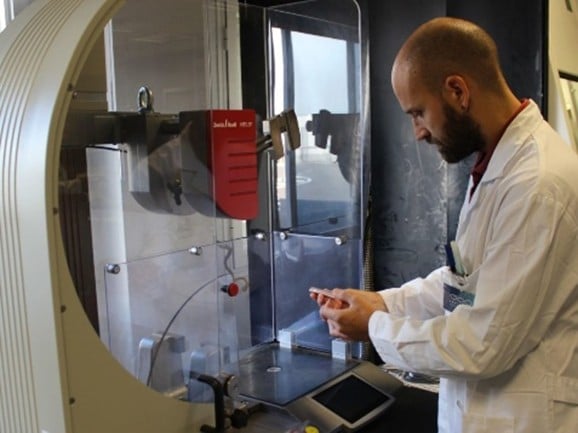
At Infinitia we approach these cases from a multidisciplinary perspective that combines scanning electron microscopy (SEM) with EDX analysis to identify compositional changes in the fracture zone, mechanical testing to compare real properties against those specified in the brief, and load history reconstruction when the client does not have complete records. This approach has allowed us to resolve cases where conventional laboratories had concluded “failure due to improper use” without sufficient technical evidence to support that conclusion.
Moreover, premature failures can manifest in very different ways. In some cases, they appear as sudden fractures, while in others they present as accelerated wear, progressive deformation, or gradual loss of functionality. These differences are critical, as each type of damage is typically associated with different physical mechanisms that require specific analysis methods.
How service life of industrial components is defined in design
The service life of industrial components is defined as the period during which a part can perform its function without its performance dropping below an acceptable level. This concept is typically based on load models, material fatigue estimations, environmental conditions, and safety factors established during design.
In practice, however, real operating conditions rarely match the assumptions used during initial design. Variations in temperature, unexpected vibrations, environmental contaminants, or changes in operating regimes can significantly alter material behaviour. As a result, degradation may accelerate and the actual service life may be reduced.
The service life of industrial components is typically calculated under design assumptions. Changes in load, temperature, or environment can significantly reduce it.
Another relevant aspect is that many components do not fail due to a single dominant mechanism. In complex industrial applications, multiple degradation processes often act simultaneously. For example, a component may be subjected to cyclic loads causing fatigue in industrial components, while also experiencing corrosion or friction-related wear. The combination of these effects can significantly reduce the expected service life.
For this reason, service life estimation should be interpreted as an approximation based on reference conditions. When a component fails earlier than expected, it becomes necessary to investigate which factors have altered those initial conditions and how they have influenced the material’s degradation mechanism.
Factors that can lead to premature failures in industrial components
Among the most common causes of premature failures are manufacturing and assembly defects, which can introduce weaknesses into a component even before it enters service. These defects can take many forms, from inclusions or porosity in the material to errors in heat treatments, incorrect tolerances, or uncontrolled residual stresses.
In complex manufacturing processes, small variations in parameters such as processing temperature, cooling rate, or chemical composition can significantly alter the mechanical properties of the material. Although these variations may seem minor, in applications subjected to repeated loads or aggressive environments they can become critical points where damage initiates.
Assembly issues can also have a considerable impact. Misalignment, incorrect tightening torque, or excessive interference between components can generate stress concentrations that were not considered in the original design. Over time, these localized stresses may lead to cracks, deformation, or premature fracture.
For this reason, analyzing premature failures often requires a comprehensive review of the component’s history, including manufacturing, transport, storage, and assembly. This approach helps determine whether the root cause lies in the material or in an earlier stage of the product lifecycle, as demonstrated in this fracture analysis of thermoplastic components where the root cause was a manufacturing process defect invisible to the naked eye.
Effects of premature failures on industrial reliability
Premature failures in industrial components have implications that go far beyond simply replacing a defective part. In industrial environments, unexpected failures can lead to production interruptions, significant economic losses, and reliability issues across the entire system.
When a component fails earlier than expected, uncertainty also arises regarding the behaviour of other parts operating under similar conditions. This may require reviewing entire inventories, implementing additional inspections, or modifying maintenance programmes to prevent further incidents.
Replacing a prematurely failed component may solve the immediate issue, but it does not necessarily eliminate the root cause of the failure.
Furthermore, the impact of these failures is not limited to internal operations. In sectors such as automotive, energy, aerospace, or industrial machinery, a premature failure can affect the supply chain, lead to claims between suppliers and manufacturers, or even result in warranty or technical liability processes. In these contexts, having a rigorous technical report that accurately documents the failure mechanism, root cause, and material evidence is essential: this type of report provides the expert witness with the objective technical foundation needed to issue a well-grounded expert opinion.
For this reason, understanding the real causes of failure is essential to prevent recurrence. Simply replacing the damaged component without investigating its origin may temporarily resolve the issue, but it does not eliminate the underlying failure mechanism.
Premature wear of components in industrial systems
Premature wear of components is one of the most common failure mechanisms in industrial systems. This phenomenon occurs when surfaces in contact experience faster-than-expected material loss, ultimately affecting system performance.
There are multiple wear mechanisms, such as abrasion, adhesion between surfaces, surface fatigue, or erosion caused by suspended particles. Each of these processes depends on factors such as material hardness, lubrication, contact pressure, and environmental conditions.
In many cases, premature wear is not solely due to a material issue. It may also be related to changes in operating conditions, such as increased load, more intensive working regimes, or the presence of contaminants. Even small variations in component alignment can alter stress distribution and accelerate degradation.
For this reason, identifying the wear mechanism is a key step in failure diagnosis. Understanding how and where material loss has occurred allows reconstruction of the damage evolution and identification of contributing factors.
Standards and reliability requirements in industrial components
In many industrial sectors, component reliability is governed by applicable standards and reliability requirements that establish criteria for design, testing, and validation. These standards, including ISO, ASTM, and UNE-EN specifications depending on the sector and component type, aim to ensure that products maintain adequate safety and performance levels throughout their expected service life.
These include standards related to fatigue testing, mechanical strength, accelerated ageing, and resistance to corrosive environments. Such tests allow evaluation of how materials and components respond under prolonged or extreme service conditions.
However, even when a component complies with all applicable standards, premature failures may still occur in real applications. This typically happens when operating conditions exceed the assumptions considered during validation or when unaccounted factors are involved.
For this reason, compliance with standards should be considered necessary but not always sufficient to guarantee long-term reliability. Operational experience and detailed analysis of real failures often provide additional insights to improve component design and usage conditions.
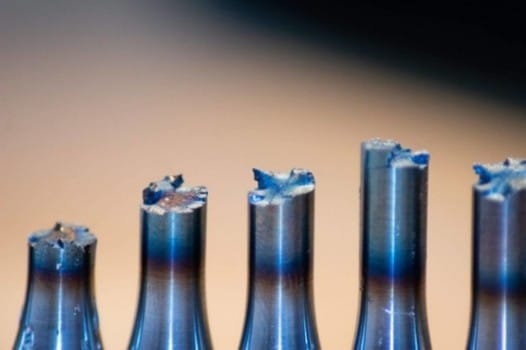
Analysis of premature failures in industrial components
| Failure mechanism | Typical visual indicator | Diagnostic technique | Most affected sectors |
|---|---|---|---|
| Fatigue | Beach marks, progressive fracture with defined initiation zone | SEM fractography, load cycle analysis | Automotive, aerospace |
| Abrasive wear | Surface material loss, oriented scratching | Profilometry, optical microscopy, particle analysis | Industrial machinery, construction |
| Stress corrosion cracking | Branched cracks, localised pitting | EDX/XRF analysis, chemical environment study | Chemical industry, energy |
| Hydrogen embrittlement | Intergranular fracture without prior plastic deformation | Metallographic analysis, comparative mechanical testing | Petrochemicals, welds |
| Mechanical overload | Visible plastic deformation, ductile fracture | Tensile and hardness testing, applied load reconstruction | Construction, capital goods |
When a premature failure occurs in an industrial component, the goal of technical investigation is to identify the mechanism that caused the damage and determine the factors that triggered it. This process requires combining different analytical techniques to study both the material and the operational context.
A rigorous investigation typically begins with visual inspection of the damaged component and the collection of data regarding its usage history. This includes operating conditions, load cycles, maintenance records, and any previous incidents related to the system.
Subsequently, material characterisation techniques may be applied to evaluate mechanical properties, microstructure, chemical composition, or the presence of internal defects. These analyses help determine whether the material presents anomalies that may have contributed to the failure.
However, material characterisation is only part of the process. In many cases, failure results from complex interactions between design, material, and service conditions. Therefore, the analysis must integrate multiple sources of information to reconstruct the sequence of events leading to the damage. A common example is fatigue fracture in metallic materials, where the crack initiation and propagation sequence is only visible through detailed fractography.
Failure analysis in industrial components to identify damage mechanisms
Failure analysis in industrial components is a discipline that combines materials engineering, mechanics, and industrial processes to understand why a component has ceased to perform its function.
Failure analysis in industrial components aims to identify the mechanism that caused the damage, not just describe the final condition of the component.
This analysis typically begins by documenting the component’s condition after failure. Identifying fractures, deformations, or wear zones can provide clues about the underlying mechanism, a process that at Infinitia we formalise through the failure mode study as a prior step to root cause diagnosis. For example, certain fracture morphologies may indicate fatigue phenomena, while others suggest overload or material brittleness.
Further studies are then conducted using techniques such as microscopy and fractography, chemical analysis, or mechanical testing. These methods allow observation of the material microstructure, detection of internal defects, and identification of property changes that may have contributed to the failure. This is the approach we applied in this fatigue analysis and redesign of components with cracks carried out for a client who needed to understand why their parts were developing cracks in service before any corrective solution could be proposed.
The ultimate goal is not only to describe the damage but to understand the mechanism that caused it. This information is essential to prevent recurrence in similar components or future product iterations.
Root cause of a premature failure and how it is determined
Determining the root cause of a premature failure involves identifying the fundamental factor that triggered the problem. This requires going beyond damage description and analysing how different variables interact within the system.
In many cases, the root cause is not a single isolated factor but a combination of elements that together create critical conditions for the component. For example, a material with slightly lower-than-expected properties may perform adequately under normal conditions but fail prematurely when combined with higher loads or corrosive environments.
To identify these interactions, structured methodologies such as cause-and-effect diagrams or systematic investigation processes are often used, especially when the failure is not an isolated incident but a repetitive failure in production affecting multiple components from the same batch or line.
Once the root cause is correctly identified, effective preventive measures can be defined. These may involve design changes, selection of more suitable materials, modifications in manufacturing processes, or adjustments to operating conditions.
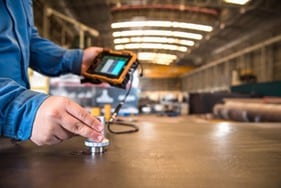
How to prevent premature failures in industrial components
Premature failures in industrial components represent one of the most significant challenges in managing the reliability of technical systems. Although often perceived as isolated incidents, they are typically the visible result of progressive degradation processes developing under specific operating conditions.
Understanding these failures requires a multidisciplinary approach integrating materials science, mechanical design, manufacturing processes, and in-service behaviour. Only through this global perspective is it possible to reconstruct the sequence of events leading to failure and identify the factors that reduced component life.
Moreover, failure analysis should not be limited to solving the immediate issue. Each failure represents an opportunity to improve product design, optimise industrial processes, and enhance the reliability of complex systems. The information obtained during these investigations helps identify vulnerabilities that might otherwise remain hidden until further incidents occur.
If a component has failed prematurely and you need to determine whether the cause lies in the material, the design, or the operating conditions, at Infinitia we carry out a technical diagnosis with a root cause report that includes failure characterisation, identification of the degradation mechanism, and, where appropriate, failure reproduction and verification in the laboratory to validate the hypothesis. Submit your case with no obligation.
Frequently asked questions about premature failures in industrial components
What is the difference between a root cause analysis and a failure mode study?
A failure mode study identifies how the component has failed (fracture, wear, deformation) and at which point the damage initiated. Root cause analysis goes one step further: it determines why that mechanism occurred, linking it to design, manufacturing, material, or operating condition factors. Both are complementary and form part of the technical investigation process we apply at Infinitia.
Can it be determined whether a failure is the responsibility of the manufacturer or the user?
In many cases, yes. Technical analysis can distinguish whether the origin of the failure lies in the material or manufacturing process, composition outside specification, internal defect, incorrect heat treatment, or whether it stems from operating conditions that exceed those anticipated in the design. This distinction is particularly relevant in warranty claims or technical liability disputes between supplier and client. At Infinitia we produce technical reports that document the evidence, failure mechanism, and root cause with analytical rigour: a solid foundation on which an expert witness can build their formal opinion.
What types of industrial components are most susceptible to premature failure?
Components subjected to cyclic loads (fatigue), corrosive environments, or contact with aggressive fluids are the most commonly affected. In our experience, the most frequent cases involve metallic parts in automotive and industrial machinery, plastic components in packaging and chemical applications, and structural connections in construction and energy.
When is a technical report required for a component failure?
A specialised technical report is advisable when the failure generates a dispute between parties, manufacturer, supplier, client, or insurer, that requires technically grounded support. Also when the failure affects the safety of the final product, or when the investigation needs to be documented to modify specifications or qualification processes in accordance with applicable standards (ISO 9001, ASTM, UNE-EN). Although Infinitia does not issue expert witness reports, our technical reports are structured so that an expert witness can use them directly as the basis for their formal opinion.