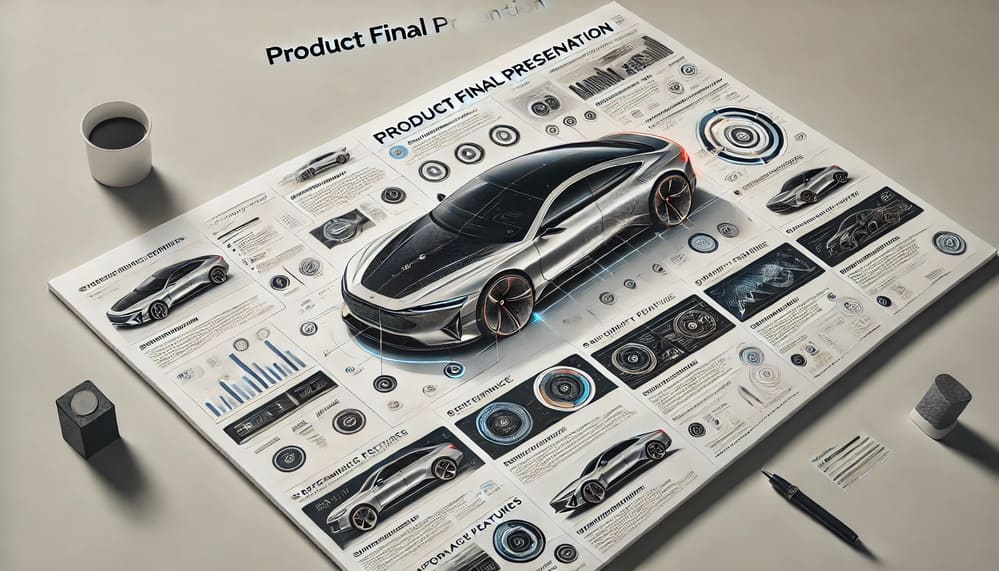

Final presentation and infographics
Find out more about our final presentation and infographics service, powered by Infinitia. We generate and adapt all kinds of graphic material for our clients’ benefit. An optimal symbiosis between image and text, ideal for communication and pre-sales projects.
Discover what we can do for you. Our team of engineers and Product Development specialists will create the best compositions to increase your product’s sales.
Talk to a specialist
Request a free initial consultation; contact a consultant from our team of specialists

What are infographics?
What is it?
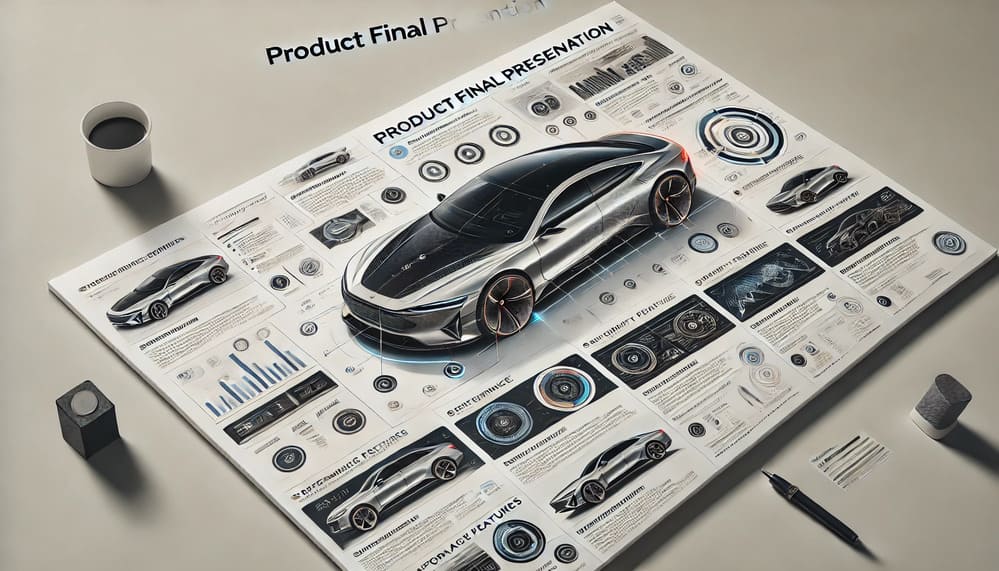
When we talk about infographics at Infinitia, we mean all informational-commercial graphic material that helps our clients present a product and its features at a single glance.
In other words, infographics combine image, photography, video, render and accompanying informational text. A fusion that makes it possible to include both the product’s aesthetic idea, as well as its sequence of use or even point out its materials and mechanisms.
Infographics, thanks to the use of photorealistic images, exploded views combined with text or extra information help us explain that product precisely and, therefore, help the user understand it clearly.
Applications of our final presentation and infographics service
Our infographics and final presentations become a genuine calling card for the object for both clients and potential investors. It’s an explanatory poster, material with a commercial purpose that, as a result, improves the sales process.
As such, at Infinitia we carry out our presentations and infographics in different settings such as trade fairs. They’re also an essential marketing resource, both offline with catalogs or flyers, and online with ads. If you’d like to know more about our final presentation and infographics service, at Infinitia we answer all your questions. Contact us!
Benefits of infographics
BENEFITS
The main benefit of the infographics and final presentations we carry out at Infinitia is that they are images that make it possible to sell a product visually. Along with quality information about the product itself or the function of each part, our infographics are highly visual. This way, we capture the user’s attention quickly, directly and clearly. Your product will be visible, as will your brand. A unique, precise medium of communication that leaves no user indifferent.
Another quality of this final presentation and infographics service is its high versatility. Regardless of the type of company or sector, it’s extremely useful for any organization involved in selling its products. At Infinita, we simulate real products for their subsequent sale.
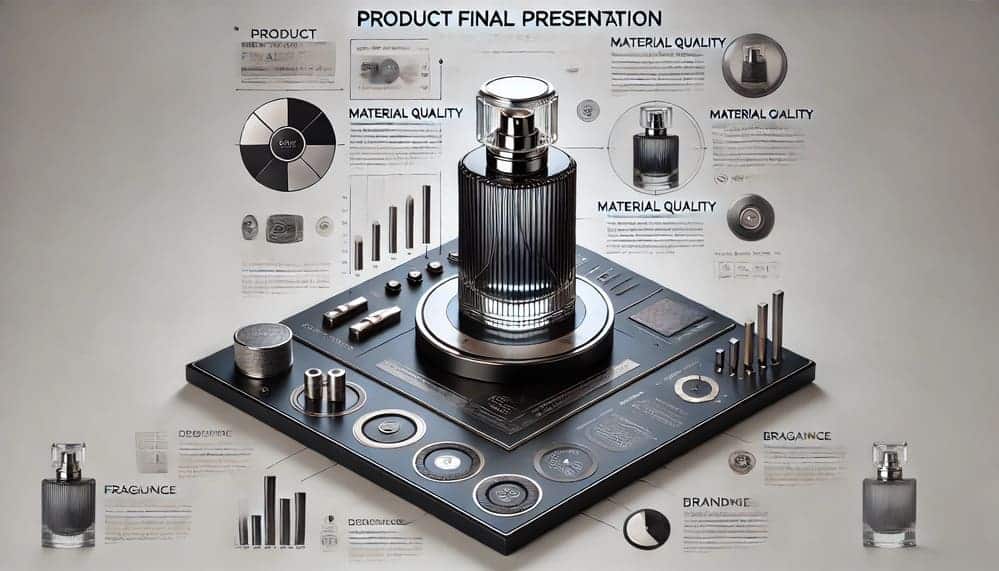
Applications of technical product infographics for documenting and communicating decisions
Applications
Final presentation and infographics apply at any point in the product lifecycle where there’s a gap between what engineering knows and what the audience understands. That gap appears in concept approval, in the transfer to production, in training line operators, in the technical catalog, in client approval processes and in diagnosing a field incident. In all these scenarios, the problem isn’t a lack of information, but its format.
INFINITIA approaches these applications by selecting the deliverable based on the decision it must support, not visual taste. An exploded view resolves an assembly question; a render resolves a finish question; an animation resolves a functionality question. Defining the question first and the format second is what separates a useful technical infographic from a pretty but useless image.
Photorealistic product renders from CAD models
A photorealistic product render is the calculated representation of a three-dimensional model applying physical optical properties (roughness, refractive index, reflectance, translucency) and simulated lighting, so that the resulting image reproduces how the manufactured part would actually look. It’s generated from the native CAD file (SolidWorks, CATIA, STEP), which guarantees that edges, fillet radii, thicknesses and parting lines are the real ones. Common materials represented include filled thermoplastics, anodized aluminum, stainless steel with different polish grades, elastomers and technical coatings.
This application makes it possible to decide on finish, color, texture and product perception before committing to tooling. Comparing an etched texture against a bead-blasted one, or an anodized finish against powder coating, no longer requires physical samples of each variant. INFINITIA, as an external technical partner, brings a criterion here that a graphic supplier doesn’t have: it knows whether the represented finish is manufacturable with the planned process and whether its unit cost is compatible with the project’s target.
Photorealistic rendering on real CAD geometry turns a finish decision — traditionally resolved with physical samples and weeks of lead time — into a direct comparison on the definitive part. When the image comes from the model rather than a recreation, what gets approved is exactly what gets manufactured.
Exploded views and technical breakdowns of assemblies
An exploded view is the representation of an assembly with its components separated along their assembly axes, maintaining real spatial relationships and assembly order. It’s built from the model’s assembly tree, not by manually repositioning parts, which ensures the sequence shown is a feasible one. Each component is numbered and linked to the bill of materials, incorporating reference, name and quantity according to the documentary identification principles of ISO 7200.
The breakdown makes it possible to make assembly, procurement and maintenance decisions without access to the physical product. The line operator identifies the correct order; the after-sales technician locates the exact spare part; purchasing verifies which reference corresponds to which part. INFINITIA builds these breakdowns by integrating the project’s manufacturing knowledge: which joints are irreversible, which component dictates the order, and which subassembly is supplied pre-assembled.
A correctly built technical breakdown is the permanent answer to the question “what part is this and where does it go.” It reduces line assembly errors, speeds up spare part identification, and sustains the product’s documentation throughout its entire service life, long after the engineering project has closed.
Infographics for use, assembly and maintenance sequences
A use-sequence infographic breaks down a product’s operation or assembly into discrete steps represented graphically, with the mechanism’s state at each phase and the callouts needed to identify the acting element. It applies to mechanisms with movement (latches, dispensers, actuation systems), to assembly operations with a critical order, and to maintenance routines where a reversed step damages the component. This information’s structure follows the criteria of IEC/IEEE 82079-1 on the preparation of information for use.
This application makes it possible to decide whether the product is understandable without in-person instruction, something decisive for products distributed or installed outside the manufacturer’s control. It also makes it possible to detect, before launch, sequences that only make sense to whoever designed the part. INFINITIA contributes the analysis of the real mechanism (what moves, what it rests against, what clearance exists) so that each step represented is physically correct.
When an assembly sequence is represented step by step on the real geometry, the number of technical support inquiries drops and the margin for incorrect handling narrows. The sequence infographic doesn’t describe the intended use: it makes it evident.
Visualization of materials, finishes and textures before manufacturing
Material visualization consists of representing on the product model the real optical behavior of each candidate material and surface treatment, allowing them to be compared directly under equal lighting and framing conditions. It works on measurable properties: specular gloss, surface roughness, polymer translucency, and how metallic coatings behave under grazing light. Common cases include plastic parts with visible flow lines, metal surfaces with different finish grades, and assemblies where materials with differential aging coexist.
This application makes it possible to rule out unviable combinations before ordering tooling or samples. Detecting in an image that two adjacent parts from different suppliers won’t match in tone, or that a glossy finish will highlight surface defects that are unavoidable in the process, avoids late redesigns. INFINITIA links this assessment to material knowledge, drawing when appropriate on experimental characterization of surface behavior.
Visualizing the finish on the definitive geometry makes it possible to anticipate perception and process problems that would otherwise only appear in the first production run. It’s the application with the best ratio between execution cost and avoided cost of the entire service.
Infographics from 3D scanning and reverse engineering
When the product physically exists but there’s no digital model, the infographic is built from digitizing the real part. Scanning generates a point cloud that’s converted into a mesh and, if the project requires it, into surfaces and solids. This route is common for discontinued spare parts, undocumented supplier components and products inherited from older developments, and it relies on the work of reverse engineering for product development.
This application makes it possible to graphically document products that never had documentation, and to do so with dimensional accuracy rather than approximation. The company regains the ability to explain, catalog and maintain parts whose technical knowledge had been lost. INFINITIA manages the complete process, from capture to the final graphic material, without breaking the data chain; an example of this approach is the component design through reverse engineering and 3D scanning project.
Digitization turns a physical object with no drawings into a documentable, representable model. From there, the breakdown, the render and the maintenance infographic are direct consequences: the product becomes communicable again.
Technical product presentation for trade shows, committees and documentation
A technical product presentation is the set of composite graphic material (sheets, panels, sequences and integrated renders) designed to explain a complete product on a single, at-a-glance readable medium. It’s applied in scenarios where attention time is limited and the audience is diverse: sector trade fairs, approval committees, industrial client presentations and technical catalog documentation. The composition prioritizes what’s seen first, what’s explained at a second level, and what’s reserved for detail.
This application makes it possible for the decision about the product to be made with real technical information rather than a superficial impression. A panel showing the product, its functional cross-section, its breakdown and its use sequence answers in thirty seconds questions that would otherwise require a meeting. INFINITIA builds these pieces from an engineering standpoint: what’s highlighted is what technically differentiates the product, not what looks most striking.
The final presentation is the point where the engineering work becomes visible to those who didn’t do it. A technically sound development that’s poorly communicated gets evaluated as a mediocre development; that avoidable risk is exactly what this service eliminates.
Sectors where final presentation and infographics enable communicating complex products
SECTORS
Final presentation and infographics is a cross-sector service because the problem it solves — the gap between technical data and its comprehension — exists in every industry where the product is complex, hidden from view or requires correct handling. The audience, regulations and required level of detail change, but the need to accurately represent something the drawing doesn’t communicate doesn’t.
INFINITIA’s approach adapts to the sector through three variables: which regulations shape the graphic documentation, what level of confidentiality the represented assembly requires, and what specific decision the material must support. In medical devices, illustrated instructions have regulatory consequences; in aerospace, configuration control governs; in machinery, spare-part identification takes priority. The deliverable is defined from there.
Final presentation and infographics at INFINITIA to close the product development cycle
Value
Final presentation and infographics is the last phase of product development and the first thing everyone sees except the engineering team. A technically correct development that can’t be explained gets evaluated as an incomplete development, and no drawing corrects that evaluation. INFINITIA approaches this service for what it is: an engineering operation on existing data, not a cosmetic layer added at the end.
The impact on industrial decisions is immediate and verifiable. A correct breakdown reduces assembly error; an illustrated sequence reduces technical support inquiries; a render on real geometry makes it possible to rule out an unviable finish before the mold. In every case, the decision improves because the information arrives complete and in the format suited to the audience. The approach is preventive: the graphic material is generated while the product can still be changed, not when it can only be justified. INFINITIA’s collection of projects completed features projects where the graphic phase closes out complete product developments.
This service’s economic optimization comes from two paths. The first is avoidance: comparing variants in an image costs a fraction of comparing them in a physical sample, and detecting a finish or sequence problem before tooling eliminates a late modification. The second is reuse: the material generated from the model simultaneously feeds the catalog, manual, line training, after-sales documentation and client presentation, instead of being commissioned five separate times from five different suppliers. Integrating the service within the technical ecosystem of the industrial engineering laboratory also makes it possible to chain it with digitization, testing or prototyping without information transfers between organizations.
In regulated sectors, where graphic documentation forms part of the product’s file, the traceability criterion stops being a methodological preference and becomes a requirement. INFINITIA positions itself as a strategic technical partner for that demand: an external technical partner that generates defensible graphic material because it knows the model, the material, the process and the applicable regulations. The relevant question isn’t who produces the most attractive image, but who is accountable for what’s represented being accurate. That’s the ground on which INFINITIA operates.