
Chemical analysis
Chemical analyses are a key step in understanding the quality and composition of materials, as well as in developing new materials and complying with current regulations. At Infinitia Industrial Consulting, our team of specialists draws on its expertise to provide the most appropriate solution for each case.
Chemical analyses can be carried out at any stage of the industrial process, from the receipt of raw materials through the entire manufacturing process to the end of the value chain, should a market claim arise.
Talk to a specialist
Request a free initial consultation; contact a consultant from our team of specialists

What a chemical analysis of materials involves
What is it?
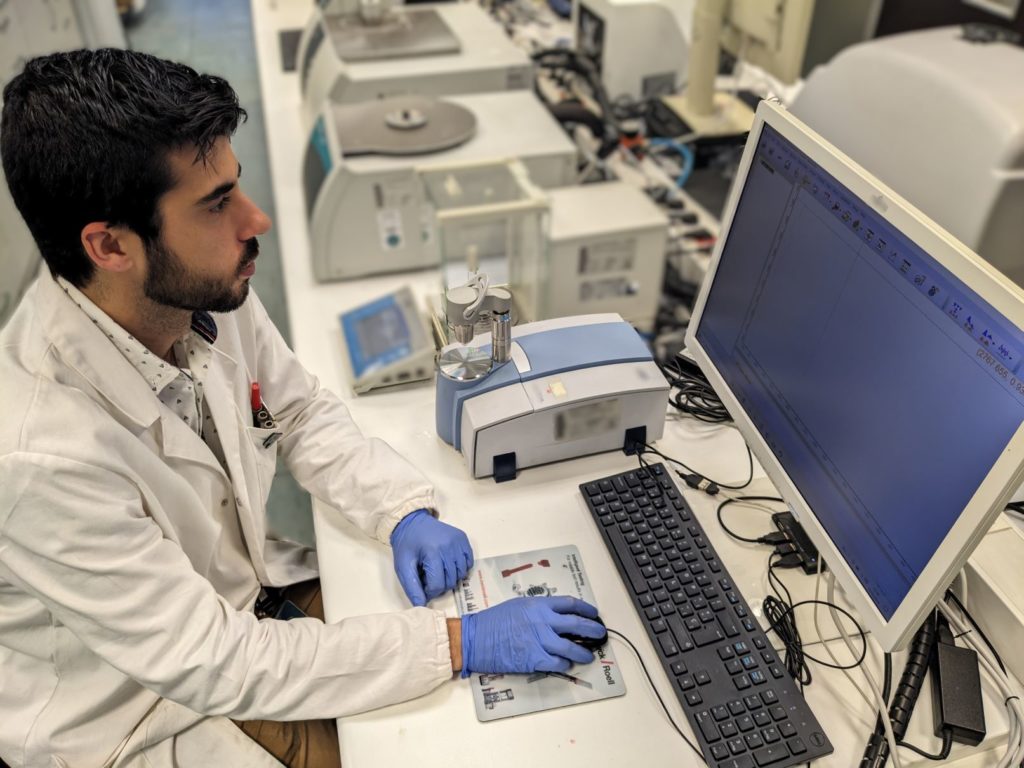
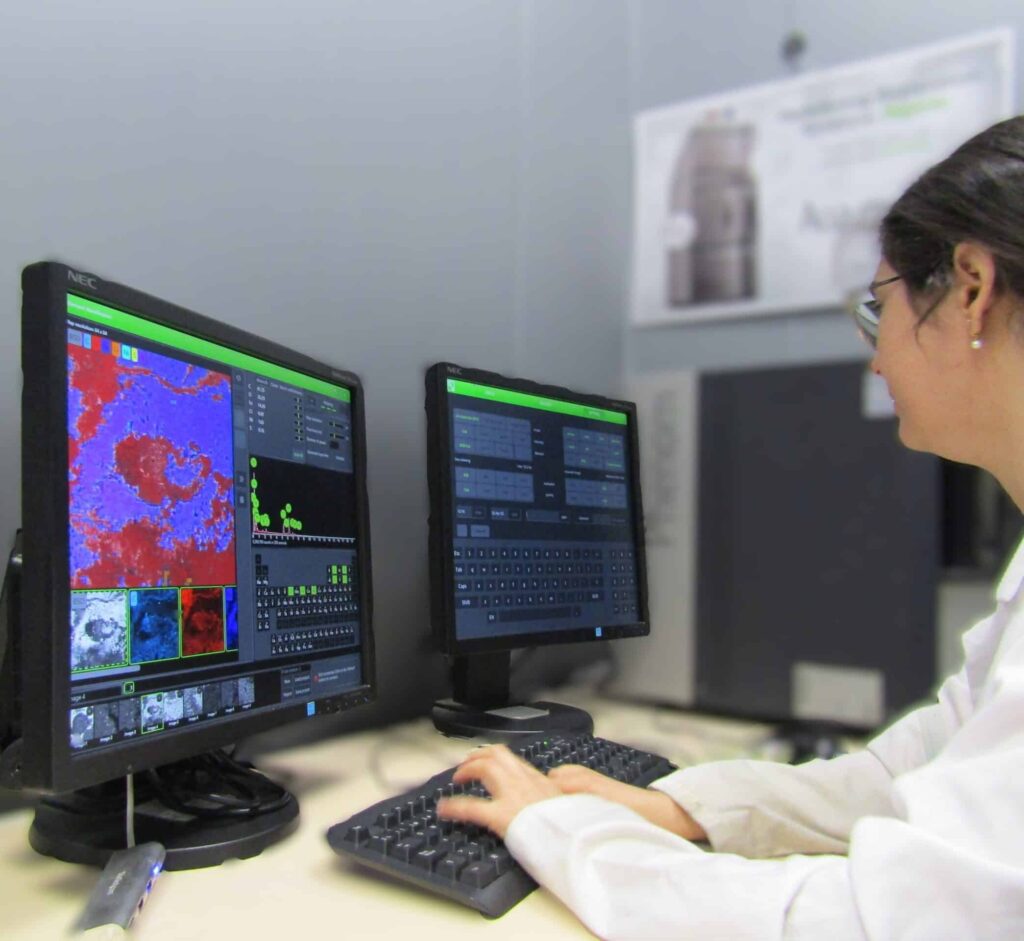
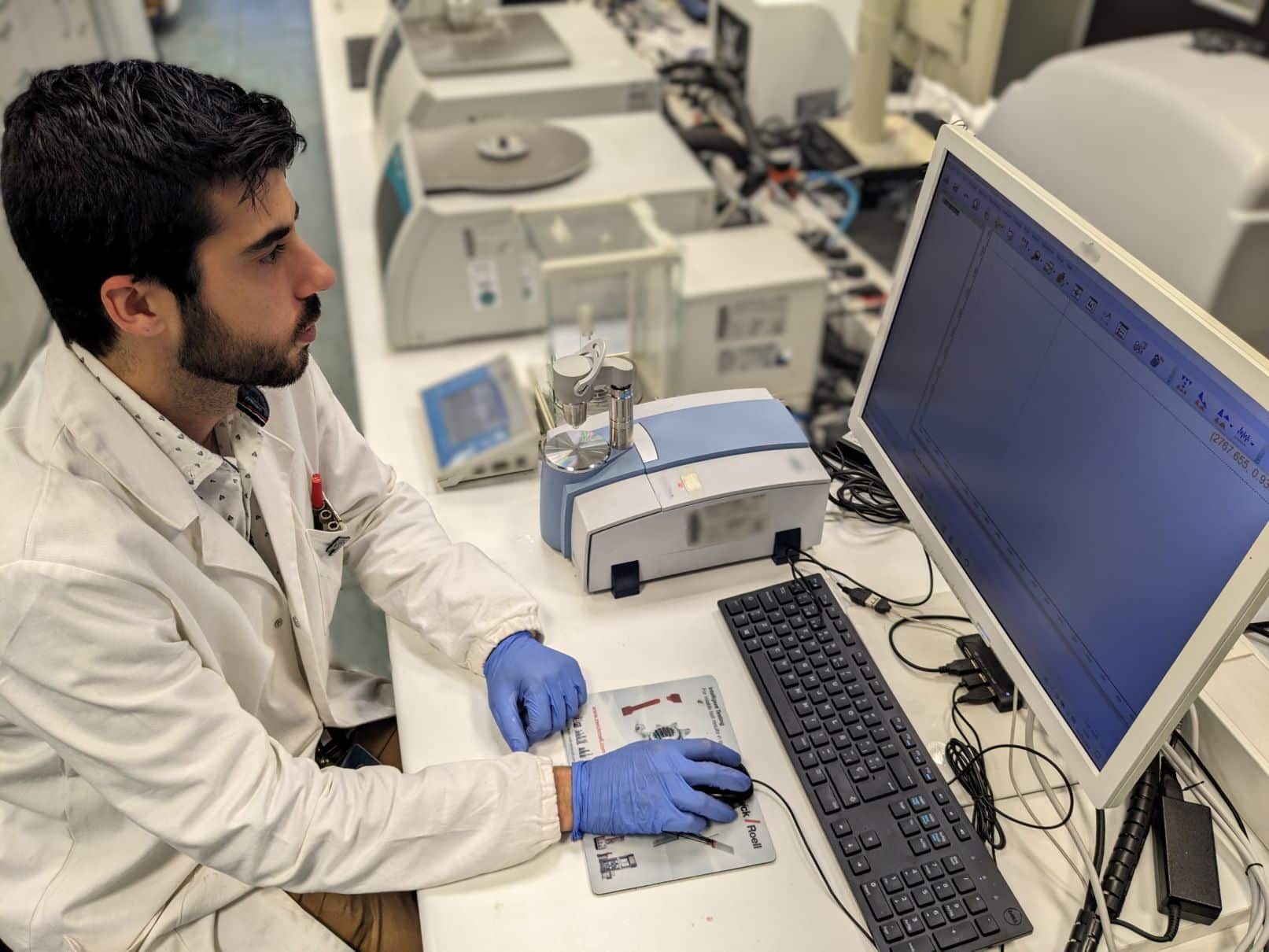
Chemical analysis of materials encompasses a wide range of techniques aimed at determining the quality, composition and characteristics of specific products. At Infinitia, we use equipment including infrared spectrophotometers, gas chromatographs and high-performance liquid chromatography (HPLC) systems, among others, providing a comprehensive laboratory for materials analysis.
As product manufacturing and design involve the development of new composite materials, polymers, coatings and alloys, accurately identifying the materials involved is essential at every stage of production.
A practical example of the application of chemical analysis in materials innovation can be found in the optimisation and additive treatment of plastics and elastomers with antimicrobial agents, although this step is highly valuable in many other applications.
Applications of chemical analysis
Specialist industry knowledge and experience in applying the most appropriate methodology are key to successful chemical testing. Advanced techniques and analytical instrumentation are required to solve problems or determine composition. Some of the applications of chemical analysis include:
- Product characterisation: provides specific information about product composition.
- Residue analysis: determines the causes of discolouration, stains and corrosion deposits.
- Defect analysis and identification.
- Comparison of conforming and non-conforming material batches.
- Failure analysis.
- Method development.
- Regulatory compliance.
- Analytical and technical consulting services.
Benefits of chemical analysis for industrial quality and reliability
BENEFITS
Chemical analysis objectively verifies that a material meets the specified composition before it is incorporated into a product or process. Out-of-specification alloys, incorrectly formulated coatings or polymers containing unexpected additives can produce components that fail despite passing visual or dimensional inspection. Confirming composition with data prevents these deviations from reaching serial production and supports technically sound acceptance or rejection decisions.
Detecting contaminants and impurities directly reduces the cost of poor quality. Traces of oils, salts, metal particles or cleaning residues interfere with welding, bonding and coatings, and identifying them makes it possible to pinpoint the exact stage of the process where they are introduced. Addressing the cause rather than the symptom prevents rework and recurring rejects, while strengthening upstream control when combined with the analysis of raw material parameters.
Controlling regulated substances safeguards market access and protects product approval. Exceeding the limits for heavy metals, phthalates or restricted substances in regulated markets prevents commercialisation and creates exposure to penalties and product recalls. Objective chemical analysis provides the evidence and documentary traceability required by customers and auditors, turning a regulatory obligation into systematic technical control.
Identifying the chemical origin of a failure improves product reliability in service. Determining which contaminant, impurity or degradation mechanism is involved makes it possible to design a lasting corrective action rather than a temporary solution. This benefit is greatest when chemical analysis is correlated with the microstructure and actual operating conditions, providing a complete explanation of the material’s behaviour.
Types of chemical analysis
types
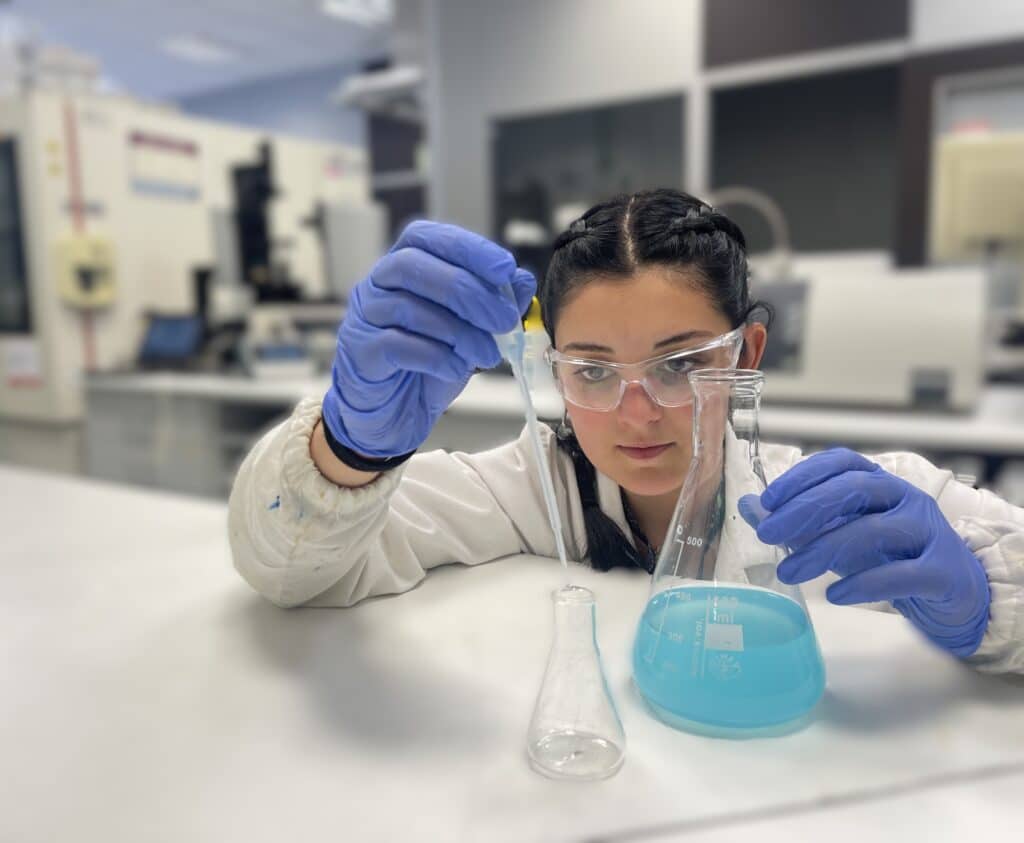
Industrial chemical laboratories perform tests and analyses including composition analysis, detection of trace contamination, metal testing and failure identification. These techniques are used for manufacturing quality control and reverse engineering, for example to determine physicochemical properties in a quality study of a processed food product.
These are some of the types of analysis that can be carried out in a chemical laboratory:
Chemical composition analysis
This determines the chemical quality, identity, composition and impurities of materials by elucidating molecular structure and confirming chemical structure.
Chemical trace analysis
Chemical trace testing includes the analysis of trace metals and organic compounds at trace and ultra-trace detection levels, while chemical residue testing covers residue analysis, detection and identification to resolve industrial problems.
Elemental analysis
Using a wide range of analytical techniques, laboratories identify and quantify the elemental composition of samples and chemical compounds. Sample types include organic and inorganic materials, aqueous and non-aqueous materials, and metals.
Contamination detection and analysis
Resolving chemical contamination requires a rapid response. Chemical analysis makes it possible to identify and address contamination problems quickly.
Materials testing and analysis
Chemical analysis of materials is essential in virtually every industrial sector, including speciality chemicals, nanomaterial development, materials innovation, petrochemicals, dyes and detergents, automotive products, agrochemicals, metals, polymers, plastics, ceramics, pharmaceuticals and consumer goods.
Chemical analysis of metal alloys
These analyses identify and quantify the elemental composition of a metal alloy. They are extremely useful for manufacturing quality control, reverse engineering and failure investigation.
Chemical regulatory compliance testing
These tests ensure that products comply with chemical substance regulations and are essential in sectors such as agrochemicals, including pesticides, and pharmaceuticals.
Sectors where chemical analysis helps ensure quality and safety
sectors
Chemical analysis is a cross-sector service that delivers value wherever material composition affects safety, reliability or regulatory compliance. Its application varies according to the requirements of each industry, but the principle remains constant: understand the chemistry of the material in order to control the product.
INFINITIA adapts its analytical strategy to the specific context of each sector, integrating applicable regulations, characteristic materials and common failure modes. This sector-focused approach delivers conclusions that can be applied directly to the client’s problem.
Chemical analysis at INFINITIA for industrial decision-making
Value
Chemical analysis delivers real value only when data is translated into a decision. At INFINITIA, every determination addresses a specific industrial question and concludes with an actionable technical recommendation. As an external technical partner, we turn material composition into a clear criterion for acceptance, rejection or corrective action, avoiding reports that merely accumulate figures without guiding action.
The impact on industrial decision-making is direct and largely preventive. Verifying the composition of a raw material before use, controlling regulated substances before placing a product on the market, or identifying a contaminant before it reaches serial production avoids far greater costs and risks. This data-driven approach makes chemical analysis a cornerstone of the quality system, supported by evidence rather than declarations.
Economic and operational optimisation is a logical outcome of this method. Resolving a problem at its chemical root cause prevents rework, recalls and recurring downtime; a targeted, well-interpreted analysis costs far less than repeated field failures. Identifying the impurity responsible for a series of rejects can eliminate rework that might otherwise continue for months.
In regulated sectors (automotive, aerospace, medical devices and energy), chemical analysis is also a requirement for market access and maintaining approvals. INFINITIA acts as a strategic technical partner, combining analytical rigour with industrial insight—an approach supported by extensive cross-sector experience and the 2025 ASTER Award for Digital Innovation from ESIC Aragón. The value lies not in an isolated test, but in the technical certainty needed to support decisions with real consequences.