

Chemical resistance tests
Chemical resistance testing enables rigorous assessment of how industrial materials, coatings and components respond to exposure to aggressive substances under real or simulated conditions. This type of analysis is essential in environments where chemical interactions can compromise material integrity, directly affecting product safety, durability and performance.
In industrial applications, materials are continuously exposed to agents such as acids, bases, solvents, fuels, cleaning products or electrolytes. These conditions can trigger progressive degradation processes that are not always apparent at an early stage but can eventually lead to critical failures. Validation through specific tests therefore becomes an essential tool for anticipating problems and ensuring in-service reliability.
The technical approach applied in chemical resistance testing of materials combines standardised methodologies with advanced characterisation techniques. This makes it possible not only to measure behaviour when exposed to chemical agents, but also to understand the degradation mechanisms, supporting decision-making in material selection, product design and approval processes.
Talk to a specialist
Request a free initial consultation; contact a consultant from our team of specialists

What do chemical resistance tests and trials involve?
What is it?
Chemical resistance testing involves exposing materials to chemicals under controlled conditions in order to assess their response to degradation processes. These tests may involve full immersion, surface exposure or intermittent contact, depending on the type of material, application and chemical agent involved.
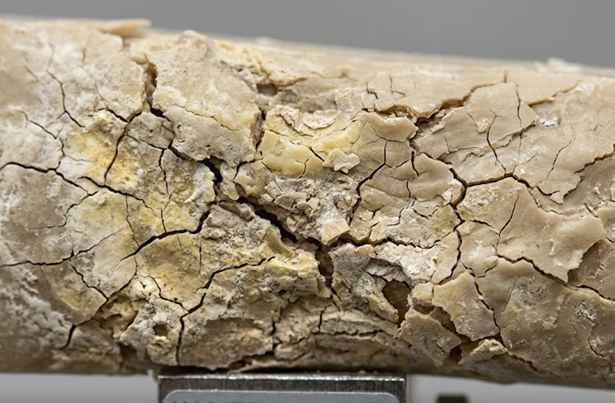
From a technical point of view, chemical resistance refers to a material’s ability to retain its physical, mechanical and chemical properties without undergoing significant changes when it comes into contact with potentially aggressive substances, such as corrosive liquids. This interaction can give rise to phenomena such as absorption, dissolution, chemical reactions, swelling or structural degradation, the progression of which must be characterised precisely.
Certain tests are carried out in accordance with international standards such as ISO 175 or ASTM D543 for polymers, ISO 2812 for coatings, or EN ISO 374 for protective materials. These standards define test conditions, exposure times, types of reagents and evaluation parameters, enabling comparable and reproducible results to be obtained. Furthermore, they guarantee the validity of the data in type-approval and industrial conformity processes.
During the test, a range of variables are analysed to quantify the impact of the chemical agent on the material, including plastics, their strength and tensile properties. These include changes in mass, dimensional changes, loss of hardness, surface alterations and changes in optical properties. However, the assessment is not limited to these parameters; it is complemented by advanced techniques such as electron microscopy or FTIR/EDX spectroscopy, which enable the identification of degradation products and an understanding of the chemical mechanisms involved.
This comprehensive approach transforms testing into a diagnostic and validation tool, capable of providing critical information during development phases as well as in fault analysis and quality control.
Chemical resistance tests and trials at INFINITIA
The analysis of the chemical resistance of materials is a strategic element in industrial development, as it helps to reduce the uncertainty associated with the behaviour of materials under real-world conditions of use. In many cases, failures are not related to mechanical loads, but to chemical degradation processes that progress silently until they lead to a critical failure.
Carrying out chemical tests on industrial materials makes it possible to validate the viability of a solution at an early stage, thereby avoiding costly iterations in later stages of development. This validation is particularly important in situations where new materials are introduced, formulations are modified or suppliers are changed, as even small variations can lead to significant changes in chemical resistance.
Furthermore, these tests make it possible to correlate laboratory conditions with in-service behaviour, which helps to define operating limits, maintenance protocols and safe conditions of use. This information is key to ensuring the reliability of the systems and reducing the risks associated with unexpected failures.
From a technical perspective, the unique value of this analysis lies in the combination of testing and characterisation to assess the strength of materials. Not only is the effect of the chemical agent measured, but the mechanisms responsible for the deterioration are also identified, enabling action to be taken to address the root cause of the problem. This approach is particularly useful in processes of continuous improvement, the development of new materials or the resolution of incidents in the field.
In this context, the laboratory serves not only as a testing environment, but also as a tool for applied engineering that generates knowledge, reduces uncertainty and facilitates well-informed technical decision-making.
Benefits and advantages of chemical resistance testing
Benefits
Chemical degradation of materials is one of the most complex and frequent causes of failure in industrial environments, particularly in applications where components are in continuous contact with aggressive substances. Without adequate validation, premature failures may occur, compromising system functionality and generating high costs.
One of the most common problems is chemical incompatibility between the material and its operating environment. In polymers and elastomers, this results in phenomena such as swelling, loss of mechanical properties or dimensional changes, which can affect the seal’s integrity and cause leaks. In the case of coatings, degradation can manifest as a loss of adhesion, blistering or surface deterioration. The ageing of materials can reduce their ability to protect against chemicals and increase the effects of wear or abrasion.
Another critical aspect is the onset of progressive degradation, which is difficult to detect in its early stages. Microcracks, embrittlement or changes in the material’s internal structure can develop over time, eventually leading to fractures or functional failures. This type of deterioration is particularly significant in applications subject to cleaning cycles, intermittent exposure to chemicals, or varying temperature and concentration conditions.
Furthermore, chemical interactions can trigger secondary reactions that affect the stability of the material or its compatibility with other components in the system. This is particularly critical in sectors such as the automotive, food and energy industries, where the reliability of the assembly as a whole depends on the behaviour of multiple interacting materials.
Chemical resistance testing on industrial materials makes it possible to identify these problems in a controlled manner, replicate real-world conditions of use and assess the impact of different variables. As such, it is a key tool for preventing failures, optimising materials and ensuring the reliability of the final product.

Types of chemical resistance tests and trials for industrial materials
Types
Chemical resistance testing plays a cross-cutting role in a wide range of industrial applications where materials are exposed to harsh environments. It enables materials to be validated, solutions to be compared and designs to be optimised on the basis of their chemical behaviour.
In practice, these tests are used during both the development and product validation phases, as well as in failure analysis, enabling real-world operating conditions to be replicated and the behaviour of the material over time to be assessed. The ability to combine chemical exposure with advanced characterisation techniques provides a comprehensive understanding of the material’s behaviour.
Chemical immersion tests on materials
Immersion tests involve subjecting samples to specific chemical solutions for controlled periods of time, whilst assessing how their properties change. This type of test enables the analysis of phenomena such as the absorption of substances, swelling, loss of mass or dimensional changes, providing quantitative information on chemical interaction.
Based on the results obtained, it is possible to establish acceptance criteria, select more suitable materials or identify limitations on their use. Furthermore, subsequent analysis using techniques such as FTIR or microscopy makes it possible to identify degradation products and understand the mechanisms involved, thereby facilitating the optimisation of materials and processes.
Testing of coatings and paints
In the field of coatings, chemical resistance testing focuses on assessing the ability to provide protection against aggressive agents. Phenomena such as loss of adhesion, blistering, discolouration or loss of gloss – which may compromise the functionality of the protective system – are analysed to evaluate the material’s resistance.
These tests enable formulations to be validated, solutions to be compared and the durability of surfaces exposed to demanding conditions to be ensured. Furthermore, they facilitate the selection of coatings based on the specific chemical environment, thereby optimising their long-term performance.
Testing of polymers and elastomers
Polymers and elastomers are highly sensitive to chemical interactions, which makes it essential to evaluate them under conditions representative of their intended use. These tests enable the analysis of changes in mechanical properties, dimensional stability and behaviour when exposed to specific fluids, as well as resistance to aggressive chemicals.
The information obtained is key for applications where leak-tightness, flexibility or resistance to fluids are critical, helping to prevent premature failure and optimise the choice of materials.
ISO and ASTM standard tests
The application of international standards enables testing procedures to be standardised and ensures the comparability of results. This is essential in product approval, certification or validation processes in regulated markets.
The use of standardised methodologies ensures technical rigour, facilitates communication with clients and certification bodies, and guarantees the validity of the results across different industrial contexts.
Comparative tests between materials
Comparative trials enable the evaluation of different materials or formulations under the same exposure conditions, facilitating the selection of the most suitable solution. This approach is particularly useful in optimisation processes, when changing suppliers, or when validating new solutions.
Direct comparison of results makes it possible to identify differences in behaviour, reduce uncertainty and make technical decisions based on experimental data.
Industrial sectors where chemical resistance tests and trials are applied
Sectors
Chemical resistance tests are used across a wide range of industrial sectors where materials are exposed to corrosive substances that may compromise their integrity, functionality and safety. These tests enable the selection of appropriate materials, the validation of solutions and the definition of control strategies based on the actual chemical conditions of each application.
The assessment of materials’ chemical resistance is incorporated into the development, validation and operational phases, making it possible to anticipate degradation, optimise formulations and ensure the product’s performance when exposed to agents such as acids, bases, solvents, fuels or cleaning products.
Chemical resistance in the automotive sector: validation of materials against service fluids and demanding operating conditions
In the automotive sector, materials are continuously exposed to fluids such as fuels, oils, coolants and urea solutions (AdBlue), which can cause progressive chemical degradation. This exposure, combined with varying temperature and pressure conditions, accelerates phenomena such as swelling, embrittlement or loss of mechanical properties, compromising the functionality of the components.
- Compatibility with service fluids: The materials must withstand prolonged contact with chemicals without suffering significant degradation.
- Critical components: Elements such as joints, tanks and pipes require dimensional and mechanical stability to prevent leaks or failures.
- Demanding operating conditions: Thermal and chemical variations that accelerate material degradation.
Chemical resistance testing in the automotive sector enables the evaluation of polymers, elastomers and coatings under simulated service conditions, facilitating the selection of suitable materials and reducing the risk of failure in critical systems.
Chemical resistance in food and packaging: chemical safety and compatibility with cleaning agents
In the food industry, materials are subjected to intensive cleaning processes using detergents, disinfectants and caustic solutions, as well as coming into direct or indirect contact with food. This combination of demands requires that materials offer both chemical resistance and the absence of any migration that could affect food safety.
- Exposure to cleaning agents: CIP (Cleaning in Place) processes involving harsh chemical solutions.
- Food safety requirements: Materials that must not release any compounds or degrade when in contact with food.
- Stability over repeated cycles: Resistance to multiple cleaning cycles without any loss of properties, particularly in plastic containers holding chemical reagents.
These tests enable the validation of films, packaging, coatings and machinery components, ensuring their chemical behaviour and regulatory compliance in highly demanding environments.
Chemical resistance in coatings and construction: durability against aggressive chemicals
In construction and infrastructure applications, coatings are exposed to fertilisers, industrial cleaning products, acidic solutions or alkaline environments that can degrade their protective properties. Loss of adhesion or surface degradation can compromise the durability of structures, metals and surfaces, particularly in the case of plastics exposed to adverse conditions and ageing.
- Protection against harsh environments: Metal coatings exposed to chemicals in outdoor or industrial settings.
- Surface degradation: Phenomena such as blistering, whitening, loss of lustre or cracking.
- Service life of structures: The need to maintain protection in the long term.
Chemical resistance testing of coatings enables the evaluation of paints, varnishes and anti-corrosion systems, facilitating the selection of more durable solutions and optimising their performance under real-world conditions.
Chemical resistance in the chemical and pharmaceutical industries: safety and material compatibility in corrosive environments
In this sector, materials come into direct contact with concentrated reagents, organic solvents and highly corrosive substances. Chemical degradation can affect both the safety of operators and the integrity of equipment, which requires rigorous monitoring of the behaviour of the materials.
- Exposure to corrosive substances: Strong acids and bases, lubricants and solvents that can cause materials to deteriorate rapidly.
- Protective and conduit equipment: Gloves, hoses or pipes, which must retain their integrity and protective function.
- Safety requirements: Failures that may have critical consequences in industrial processes.
These tests enable the validation of equipment materials, PPE and fluid transport systems, ensuring their chemical compatibility and reliability under demanding operating conditions, including plastic materials.
Chemical resistance in the medical and healthcare sector: the stability of materials during sterilisation processes
The materials used in medical devices and healthcare settings must be able to withstand chemical sterilisation processes and exposure to disinfectants without losing their functional properties. Degradation may affect patient safety or the effectiveness of the device.
- Exposure to sterilising agents: Alcohols, peroxides, chlorine-based solutions or sterilising gases.
- Integrity requirements: Materials that must retain their mechanical and optical properties.
- Repeated cycles of use: The need for stability following multiple cleaning and sterilisation processes.
Chemical resistance testing of healthcare materials enables the validation of devices, packaging and coatings, ensuring their performance under real-world hospital conditions.
Chemical resistance in the energy and electronics sectors: material reliability in complex chemical environments
In sectors such as energy and electronics, materials are exposed to electrolytes, solvents and chemicals used in maintenance or operational processes, including high-temperature-resistant plastics. Chemical degradation can affect the electrical performance, safety and service life of systems.
- Exposure to specific electrolytes and chemicals: Particularly in batteries and electronic systems.
- Advanced materials: Encapsulants, resins and composites sensitive to chemical interaction.
- Long-term reliability: The need to maintain properties under demanding conditions, particularly in thermoplastics.
These tests enable the validation of encapsulants, coatings and electronic components, ensuring their chemical stability and performance in critical applications, particularly in the presence of aggressive liquids.
INFINITIA as your partner for chemical resistance testing
Value
Chemical resistance testing is a strategic tool for any company operating in environments where materials are exposed to aggressive agents and demanding conditions. This analysis has shown how these tests help anticipate the behaviour of materials, coatings and components, significantly reducing the risk of in-service failure and ensuring the reliability of the final product.
By providing objective experimental data, these tests enable materials to be compared, solutions to be validated and designs to be optimised on a sound technical basis. This analytical capability facilitates informed decision-making, minimising the uncertainty associated with theoretical approaches or tests carried out under uncontrolled real-world conditions. Furthermore, they contribute directly to improving product quality, ensuring that materials meet the chemical resistance requirements demanded by their application and increasing their durability in critical environments.
In this context, its role in type-approval and regulatory compliance processes is particularly significant. The application of international standards makes it possible to objectively demonstrate how materials behave when exposed to chemical agents, facilitating their validation across different markets and industrial sectors. This approach instils confidence not only during the development phase, but also when new products or materials are launched.
The future of this type of testing lies in greater integration with advanced techniques for characterisation, failure prevention, deterioration modelling and simulation of service conditions. Combining experimental data with predictive tools will enable us to anticipate the behaviour of materials more accurately, optimising their design and further reducing the risks associated with their use.
Having a technical approach such as INFINITIA’s means having a partner capable not only of assessing chemical resistance, but also of understanding the mechanisms of degradation and proposing solutions tailored to each application. This expertise enables us to drive continuous improvement, optimise materials and ensure that products not only fulfil their intended function but also maintain their performance throughout their entire service life.
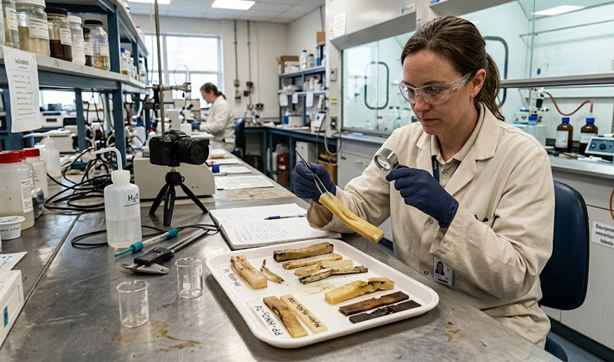
Frequently asked questions about chemical resistance testing
Faqs
What is a chemical resistance test and what is it used for?
A chemical resistance test is a controlled test that assesses how a material, coating or component responds when exposed to aggressive substances (acids, bases, solvents, fuels, detergents or electrolytes) under simulated or real-world conditions of use. The aim is to verify whether the material retains its functional properties (mechanical, dimensional, surface or chemical) following such contact, and to quantify the extent of any deterioration that may occur.
At INFINITIA, these tests are not limited to measuring the effect of the chemical agent: they are combined with advanced characterisation techniques such as FTIR, EDX or electron microscopy to identify the degradation mechanisms involved. This makes the test a genuine diagnostic tool, useful both during product development and for failure analysis or quality control in production.
Which materials can be tested for chemical resistance?
Chemical resistance tests can be carried out on a wide variety of industrial materials. Each family of materials exhibits different degradation mechanisms; therefore, the test design must be tailored to the material and the chemical agent involved:
- Polymers and thermoplastics: embrittlement, loss of mechanical properties or dimensional changes due to absorption of the chemical agent.
- Elastomers and rubbers: swelling, softening or loss of elasticity on contact with solvents or service fluids.
- Coatings and paints: loss of adhesion, blistering or discolouration that compromises protective performance.
- Metals and alloys: surface degradation, pitting or intergranular corrosion in the presence of acids, bases or electrolytes.
- Composite materials: delamination or degradation of the polymer matrix due to interaction with aggressive agents.
- Adhesives and sealants: loss of cohesion or bond failure upon contact with solvents or cleaning products.
At INFINITIA, we work with the full spectrum of industrial materials, including plastics, polymers and composites. This breadth enables us to tackle multi-material problems, which are common in systems where several components interact with the same aggressive fluid. If you are unsure whether your material is suitable for this type of test, please contact us and we will assess it without obligation.
What are the most commonly used standards in chemical resistance testing?
The most commonly used standards in chemical resistance testing are ISO 175 and ASTM D543 for polymers, ISO 2812 for coatings and paints, and EN ISO 374 for personal protective equipment against chemicals. These standards define the exposure conditions, reference reagents, immersion times and evaluation parameters, ensuring reproducible and comparable results across laboratories.
The selection of the appropriate standard depends on the sector, the type of material and the purpose of the test – whether for internal validation, type approval or certification. At INFINITIA, we apply these standardised methodologies when requested by the client, but we also design bespoke tests when the actual conditions of use are not covered by any existing standard. This enables us to obtain data that truly reflects the material’s behaviour in service.
When is it necessary to carry out a chemical resistance test?
A chemical resistance test is required when a material or component is to come into contact with potentially corrosive substances and it is necessary to verify that it behaves safely and stably under those conditions. The most critical stages are:
It is also a valuable preventive tool within quality control programmes, particularly in regulated sectors such as the automotive, food, pharmaceutical and energy industries. Taking action before a problem arises in production or in the field is always more efficient – and less costly – than dealing with a critical failure after the event.
What is the difference between a chemical resistance test and a corrosion test?
Chemical resistance tests assess a material’s overall response to aggressive agents such as acids, bases, solvents or detergents, by measuring variables such as changes in mass, dimensional changes or mechanical alterations. Corrosion tests, on the other hand, focus specifically on the electrochemical degradation of metallic materials in the presence of electrolytes, and employ techniques such as electrochemical impedance spectroscopy, cyclic voltammetry or salt spray testing.
Both methodologies are complementary. At INFINITIA, we combine chemical resistance testing with corrosion assessment and protection when the client works with metals exposed to aggressive environments, as degradation can result from both physico-chemical and electrochemical mechanisms simultaneously.
What techniques are used to analyse chemical damage to a material following a test?
Following chemical exposure, damage analysis is carried out using a combination of macroscopic and advanced characterisation techniques. At the macroscopic level, changes in mass, dimensional variations, loss of hardness and alterations in surface appearance are assessed. At the microscopic and chemical levels, FTIR spectroscopy (to detect changes in molecular structure), EDX (to identify incorporated or lost elements), scanning electron microscopy (SEM) and fractography are used to study the initiation and propagation of internal damage.This combination allows us not only to quantify the damage, but also to understand the mechanism that caused it, which is essential for addressing the root cause of the problem. At INFINITIA, we systematically integrate post-test characterisation, transforming experimental data into actionable knowledge for the client.
Is it possible to simulate real-world conditions in the laboratory in order to assess chemical resistance?
Yes, it is possible to design tests that replicate the most relevant variables of the service environment: concentration of the chemical agent, temperature, exposure time, immersion and drying cycles, or a combination with other degradation factors such as UV radiation or mechanical stress. Where these conditions are not covered by any standard, bespoke set-ups are designed to provide data directly relevant to the specific application.
Simulating real-world conditions is particularly useful when seeking to correlate laboratory behaviour with the expected service life in the field, or when investigating a failure that has occurred under specific conditions which must be reproduced in a controlled manner. At INFINITIA, this type of testing is a regular feature of our material characterisation and failure analysis projects.
How are chemical resistance tests related to the ageing of materials?
Chemical resistance tests and ageing tests are closely related because exposure to aggressive agents is one of the main mechanisms of ageing in industrial materials. Chemical degradation is frequently combined with thermal, mechanical or radiation factors, which synergistically accelerate the deterioration of the material and, in many cases, lead to failure modes that are difficult to anticipate without experimental testing.
Accelerated ageing tests allow the material to be subjected to intensified conditions in order to predict its long-term behaviour within a shorter timeframe. At INFINITIA, we combine both methodologies when the aim is to assess the product’s actual durability, particularly in applications where chemical exposure occurs cyclically or cumulatively over its service life.
In which industrial sectors is the chemical resistance of materials most critical?
Chemical resistance is critical in any sector where materials are in continuous or intermittent contact with aggressive substances. The sectors with the greatest demand for this type of testing are:
- Automotive: exposure to fuels, oils, coolants and brake fluids that can degrade seals, pipes and tanks.
- Food and packaging industry: intensive cleaning cycles using caustic detergents and disinfectants, combined with strict food safety requirements.
- Chemical and pharmaceutical industry: direct contact with concentrated acids, bases and solvents in equipment, PPE and fluid transport systems.
- Medical and healthcare sector: exposure to sterilising agents (alcohols, peroxides, chlorinated solutions) which must be compatible with the functional integrity of the device.
- Energy and electronics: advanced materials (encapsulants, resins, composites) subjected to specific electrolytes and chemicals under highly demanding conditions.
At INFINITIA, we have proven experience in all these sectors, having carried out projects involving defect detection in rubbers and elastomers, the validation of industrial coatings and chemical compatibility analysis of automotive components.
What sets INFINITIA apart from other chemical resistance testing services?
INFINITIA is neither a run-of-the-mill testing laboratory nor a generalist technology centre: it is an external technical partner specialising in materials engineering, with in-house capabilities to design tests, interpret results and propose specific solutions to the client’s problem. This sets us apart from other options, such as accredited laboratories that provide results without an engineering context, universities or technology centres with slower response times and a more academic focus, or in-house company services that lack the necessary equipment or cross-sector experience.
At INFINITIA, test results are not delivered as an isolated data report, but as part of a technical process that includes designing the test setup, selecting the most appropriate methodology and translating the results into actionable decisions. Our multidisciplinary approach — which integrates materials engineering, analytical chemistry and forensic engineering — enables us to tackle complex cases where failure or degradation results from the interaction of various factors. If you’d like to find out more about the team and the way we work behind each project, please visit the ‘About Us’ section.
Can INFINITIA help identify the cause of a fault caused by chemical degradation?
Yes. Identifying faults caused by chemical degradation is one of the most common applications of our work as an external technical partner. When a component fails in the field or in production and an unexpected chemical interaction is suspected to be the cause, the process combines the controlled reproduction of exposure conditions with advanced characterisation techniques to identify which agent was involved, how the damage progressed and what the failure mechanism was.
This approach forms part of our methodology for diagnosing the root cause of the failure. The result is a rigorous and traceable technical report that the expert can use as a basis for issuing their expert report, should the matter have legal or liability implications. If you are facing a failure of this kind, please tell us about the case: an initial, no-obligation technical discussion can go a long way towards guiding the diagnosis.
How long does it take to get the results of a chemical resistance test?
The turnaround times for a chemical resistance test depend primarily on the technical complexity of the case, the type of material, the chemical agent involved and the level of characterisation required. Generally speaking, standard projects are completed within 1 to 4 weeks from receipt of samples and definition of the scope of the test.
For more urgent situations, INFINITIA offers an express quotation service that provides preliminary results within 24–72 hours. If you have a tight deadline or an ongoing production issue, please let us know when you contact us and we will take this into account from the outset. You can do this via the form on this page or by calling us directly.