
Design for manufacturing
Using advanced techniques, at INFINITIA Industrial Consulting we achieve optimal products for your project. Discover everything we can offer you through this service.
We understand that design for manufacturing is essential to ensure that products can be made efficiently, to high quality standards and at optimized costs. Through our design for manufacturability, we adapt and optimize each part so that its production is profitable and effective, making sure every component is ready for assembly and series manufacturing.
Talk to a specialist
Request a free initial consultation; contact a consultant from our team of specialists

What is design for manufacturing in product development?
What is it?
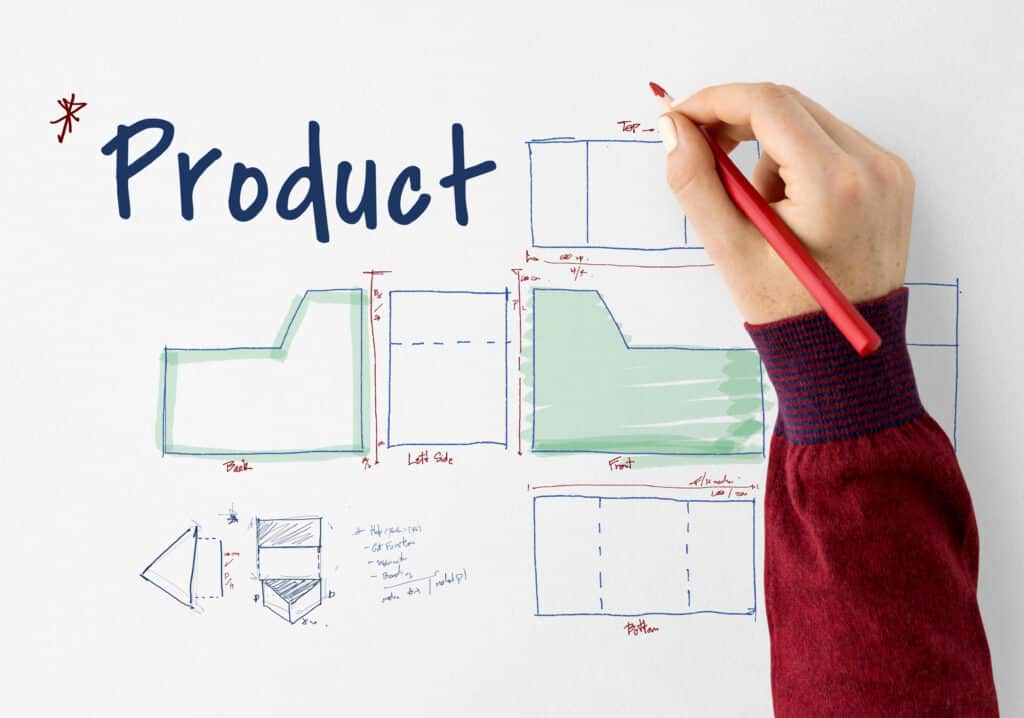
Design for Manufacturing (DFM) is a methodology that optimizes products so they can be manufactured efficiently, quickly and at the lowest possible cost. At INFINITIA we apply design-for-production optimization strategies that reduce the time and resources required during the manufacturing phase.
It is an approach to design that not only improves the product’s manufacturability but also lowers the risk of production failures, enabling faster and more profitable launches. Want to know more? These are the main objectives of design for manufacturing.
Objectives of design for manufacturing
- Minimize costs. We optimize the use of materials as well as production processes.
- Reduce assembly complexity. This helps us simplify series production.
- Ensure the quality of the final product. How? Through a robust, well-structured design.
- Avoid rework and waste, right from the initial design phase.
- Maximize manufacturing efficiency. We use parts compatible with modern production processes.
Benefits of design for manufacturing in component industrialization
Benefits
Design for manufacturing reduces the unit cost of the component by acting on the items that weigh most in production, optimizing the manufacturing cost. Geometric simplification lowers machine cycle time, uniform wall thickness shortens cooling time in injection molding, and removing secondary operations eliminates complete stages from the manufacturing route. These decisions are made while changing them still costs engineering hours and not the manufacture of a new mold.
DFM reduces the risk of dimensional rejection in series production. Most dimensional non-conformities do not come from an uncontrolled process, but from a tolerance specified below the real capability of the chosen process. A tolerance chain analysis makes it possible to identify which dimensions are functionally critical, which ones can be opened up and where the datum should be relocated so that the assembly fits repeatably. The result is a specification consistent with what the machine can sustain in a stable way.
Design for assembly reduces the number of assembly operations and, with it, the probability of human error. Fewer parts mean fewer references to source, fewer different fasteners, less assembly tooling and fewer opportunities for misalignment. Integrating functions into a single part and incorporating self-positioning geometries remove alignment steps that, on the line, translate into time and variability.
DFM shortens the interval between functional validation and stable production, optimizing the design process. When process constraints are incorporated from the CAD model onward, the transition to series production stops being a correction phase and becomes a confirmation phase. Linking manufacturability analysis with prototyping makes it possible to physically verify design hypotheses before committing investment in tooling, reducing the late iterations that concentrate most of the cost overrun in an industrial development.
Applications of design for manufacturing for component optimization
Applications
Design for manufacturing is cross-cutting to any production process, because every manufacturing technology imposes geometric constraints that the design must recognize. What changes between plastic injection molding, machining by chip removal (CNC) and additive manufacturing is not the existence of those rules, but their nature: wall thickness and demolding in one case, tool accessibility and workholding in another, layer orientation and supports in the third. Identifying the dominant rule in each component is the first step of the analysis.
INFINITIA approaches these applications from the specificity of the process and not from a generic list of best practices. Before proposing a geometric modification, the specialist team establishes which process is technically and economically viable for the expected volume, which material goes with it and which functional requirements allow no concession. That framing, close to technical feasibility analysis, avoids optimizing a part for a process that should never have been selected.
- Design for manufacturing in injection molding
- Design for manufacturing in CNC machining
- Design for additive manufacturing and functional validation
- Design for assembly (DFA): reducing parts and assembly operations
- Tolerance management and dimension chains
- Redesign of industrial parts and optimization of components for manufacturing
Sectors where design for manufacturing ensures production viability
Sectors
Design for manufacturing is decisive in every sector where the component must be produced repeatably under strict functional requirements, regardless of series volume. What varies between industries is not the need for manufacturability, but the factor that conditions it: in high-volume series, cycle time and process capability dominate; in short, high-value runs, traceability and the absence of rework; in regulated sectors, the documentary demonstrability of every design decision.
INFINITIA adapts the DFM analysis to the logic of each sector. An automotive component demands proven process capability over millions of units under the IATF 16949 framework; an aeronautical part works with hard-to-machine materials and AS9100 traceability requirements; a medical device operates under ISO 13485 with biocompatibility and sterilization demands that restrict materials and finishes. As an external technical partner, INFINITIA adjusts the manufacturability criterion to those conditions rather than to a generic standard, because the same geometry can be acceptable in one sector and inadmissible in another.
Design for manufacturing at INFINITIA to ensure the transition from prototype to series
Value
Design for manufacturing translates a component’s functional requirements into a geometric, material and dimensional definition that a real industrial process can sustain repeatably. It is not a formal review or an administrative stage of the project: it is the technical decision that determines the unit cost, the rejection rate and the product’s reliability throughout its entire manufacturing life. A design validated functionally but not validated against its process is an incomplete design.
The impact on the industrial decision is direct and made in advance. Knowing beforehand which tolerance the process can sustain, which wall thickness determines cycle time or which joint conditions the assembly sequence makes it possible to commit tooling investment on a technical basis and not on an expectation. This preventive approach, supported by material data, simulation and testing, is what separates a project that enters series production in a controlled way from one that gets corrected on the line. When the component is already in production and the problem is recurrent, the same criterion is applied to process improvement, identifying whether the origin lies in the process or in the definition of the part.
Economic optimization does not come from reducing the component’s quality, but from eliminating what adds no function: unnecessarily tight tolerances, machining operations that can be removed, redundant fasteners, material over-thickness with no structural justification. Each of those removals is backed by verifiable technical analysis. Product improvement through DFM acts simultaneously on direct cost, on rejection and on the dimensional stability of the assembly, three items that in production are linked and are rarely addressed together.
In regulated sectors (automotive under IATF 16949, aeronautics under AS9100, medical devices under ISO 13485), every design decision must be technically justifiable and documented. INFINITIA works as a strategic technical partner on that terrain, providing the materials and process engineering criteria that back the specification and make it defensible before production, before purchasing and before the certification body. The component that results from that process is manufacturable because it has been proven to be.