
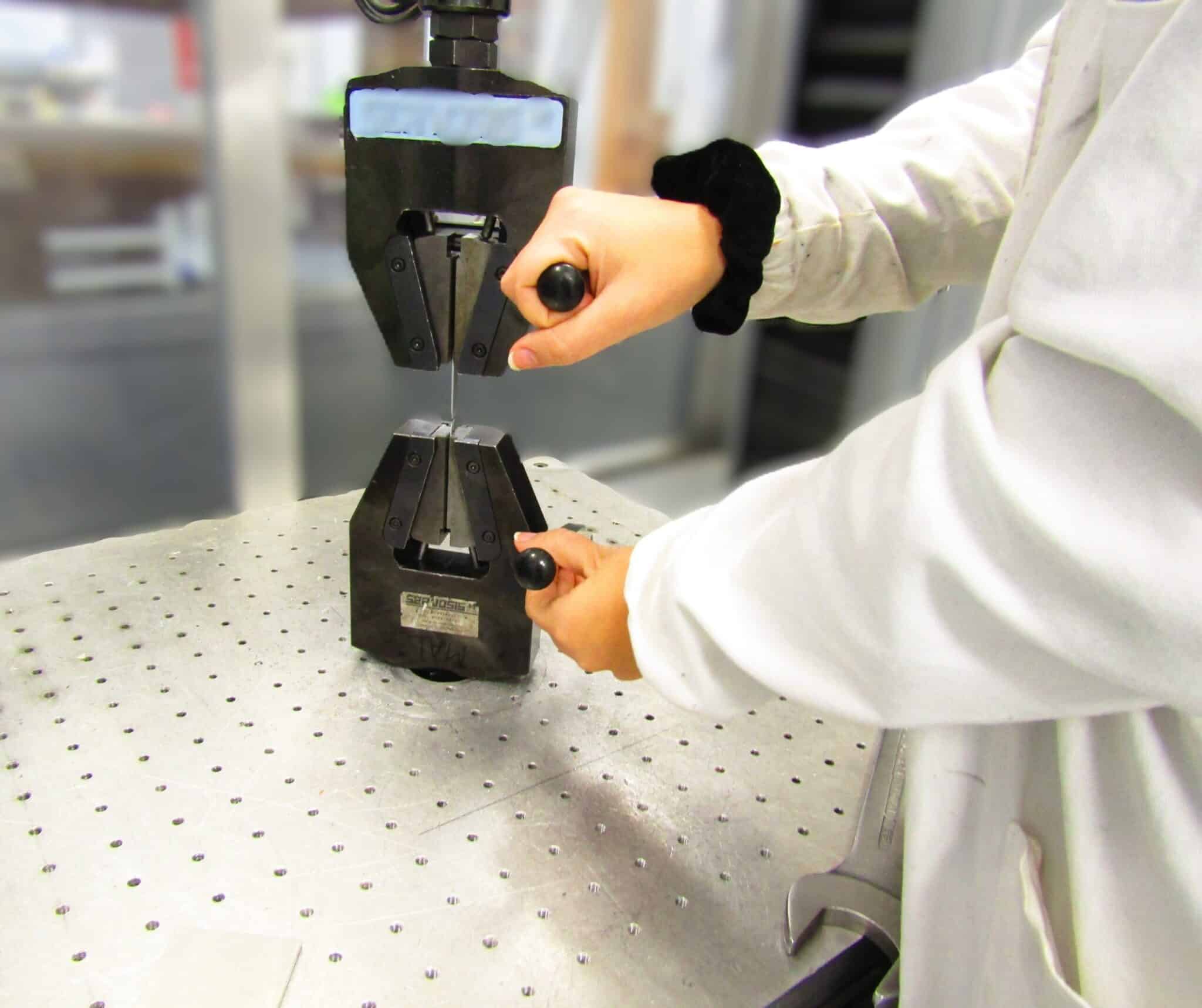

Mechanical properties
The mechanical properties of a material describe its behaviour under forces, loads and deformation, and determine whether it will withstand the stresses it will face throughout its service life. The tests used to measure these properties translate that behaviour into objective values (strength, hardness, ductility, toughness and stiffness) that underpin material design, selection and validation decisions.
These tests use standardised tensile, hardness, flexural, impact, fatigue and compression methods to characterise metals, polymers, ceramics and composite materials under controlled conditions. As an external technical partner, INFINITIA supports engineering and quality teams in planning tests, interpreting results and translating them into specific industrial decisions.
In environments where a material failure compromises product safety, cost or reliability, understanding actual properties is no longer optional. Rigorous material characterisation makes it possible to anticipate in-service behaviour and eliminate risks before they reach the production line or the field.
Talk to a specialist
Request a free initial consultation; contact a consultant from our team of specialists

What are mechanical property tests?
What is it?
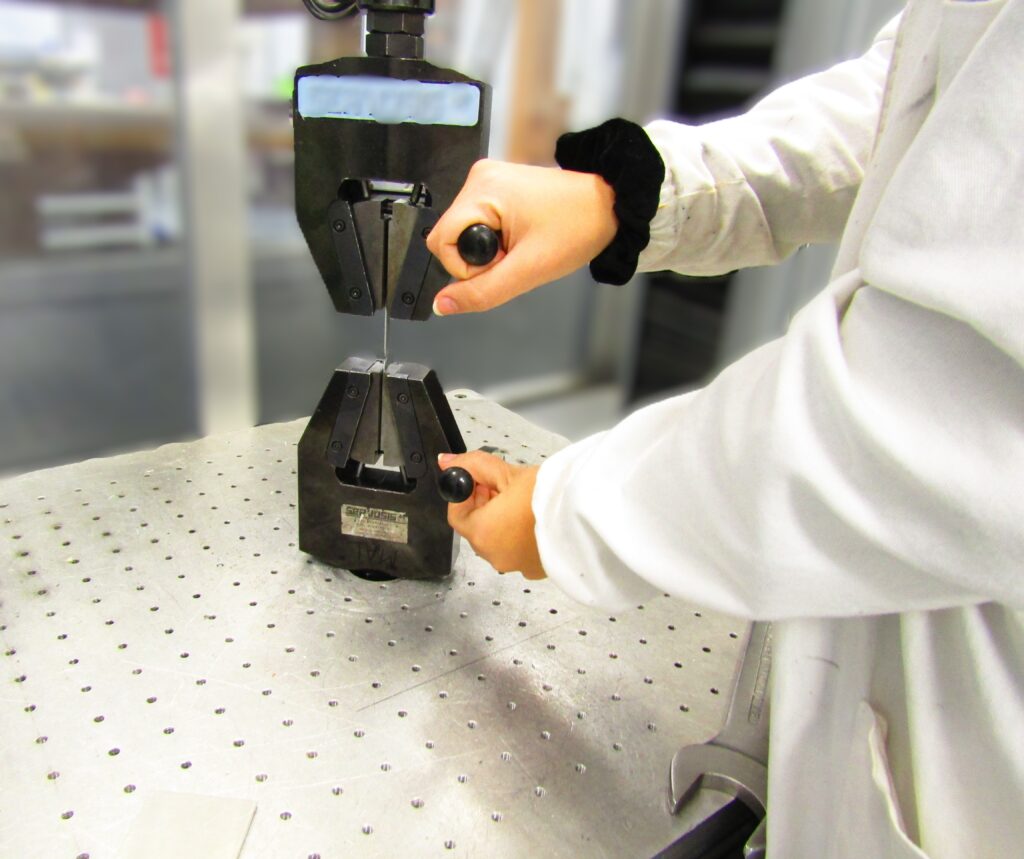
Mechanical property tests are technical procedures that measure how a material responds to external stresses and determine its ability to withstand loads without failure. They are used to predict in-service behaviour, select the right material for each application and verify that it meets functional requirements before industrial use.
Each test isolates a specific property under standardised conditions. International standards define specimen geometry, load application rate and acceptance criteria: tensile testing is governed by ISO 6892 and ASTM E8, hardness by the ISO 6506/6507/6508 and ASTM E10/E18/E384 series, and impact strength by ISO 148 and ASTM E23. This standardisation ensures that results are comparable across suppliers, plants and projects.
The properties studied include yield strength, tensile strength, modulus of elasticity, elongation at break, surface hardness and impact energy absorption. Interpreting these parameters together, often supported by metallic material and alloy testing, provides a complete picture of the component’s mechanical behaviour.
INFINITIA approaches these tests as an industrial technical consultant, not merely as a data provider. Its distinctive value lies in connecting the test result with the engineering decision: which material to choose, what safety margin to apply or which design modification will prevent failure, taking the capabilities of the specific material into account. This industrial interpretation of the data is what turns a number into a sound decision.
Mechanical property testing at INFINITIA. Analytical rigour backed by engineering judgement
The technical value of a mechanical test lies not only in the data, but in its correct interpretation within the context of the actual component. INFINITIA plans each test programme around the component’s intended use, the loads it will withstand and its most likely failure mechanisms, ensuring that every measurement answers a specific engineering question.
The techniques used include tensile, compression, flexural, hardness, impact and fatigue testing on standardised specimens or samples taken from actual components. Many of these tests are performed using a universal testing machine, which makes it possible to characterise material behaviour under different loading modes with full traceability of the test conditions.
Mechanical characterisation becomes more precise when combined with other disciplines. Correlating test results with microstructural analysis and chemical composition reveals why a material behaves as it does, not merely how it behaves. This integrated approach is particularly valuable in material qualification testing, where the final decision depends on a coherent body of evidence.
INFINITIA’s distinctive approach combines analytical rigour with industrial insight. Its specialist team does more than certify whether a value passes or fails: it identifies critical material parameters, anticipates failure modes and proposes viable alternatives when a result does not meet the requirement. This engineering judgement is what turns a test into an informed business decision.
Industrial challenges addressed by mechanical property analysis
Benefits
A material that does not achieve the specified strength will fail prematurely in service. When yield strength or tensile strength falls below the design requirement, the component deforms or breaks under loads it should withstand, directly affecting product safety and the cost of associated claims.
Fatigue is the most common failure mechanism in components subjected to cyclic loading. Shafts, springs, supports and joints accumulate microstructural damage cycle by cycle until a crack propagates without warning. Without fatigue testing to characterise material behaviour under repeated loading, this failure remains invisible until it occurs in the field. Failure analysis makes it possible to reconstruct the origin of the problem and translate the findings into more robust selection criteria.
Insufficient or unevenly distributed hardness causes accelerated wear and loss of function on contact surfaces. Gears, guides and tools depend on the correct surface treatment; any deviation in the hardness profile reduces component service life and compromises the reliability of the mechanical assembly.
Undetected brittleness represents one of the most severe risks, particularly at low temperatures. A material with adequate strength but insufficient toughness may fracture catastrophically without prior deformation. Verifying impact energy absorption reduces the risk of brittle fracture under demanding service conditions.
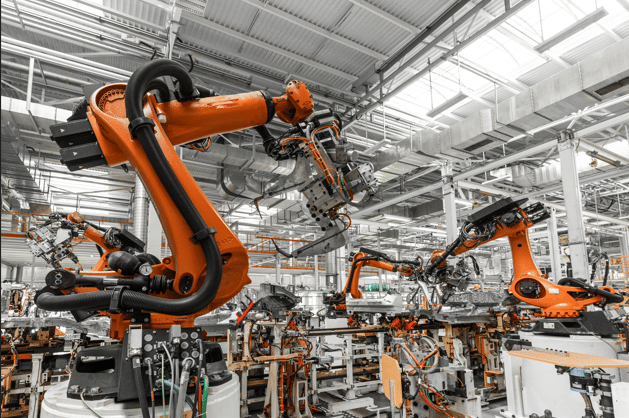
Applications of mechanical property testing to control in-service behaviour
types
Mechanical property testing covers the entire life cycle of an industrial material, from initial selection to diagnosing a field failure. Each type of test isolates a specific property and provides a different part of the overall picture of material behaviour under load, including its resistance to sliding.
INFINITIA selects the combination of tests according to the specific industrial challenge. The aim is not to accumulate data, but to generate the minimum evidence needed to make a design, validation or improvement decision with the lowest possible residual risk.
Tensile testing and yield strength determination
A tensile test subjects a specimen to an increasing axial load until fracture and records the relationship between stress and strain. The resulting curve provides yield strength, tensile strength, modulus of elasticity and elongation at break, which form the basis for sizing any structural component. It is the most widely used test for metals, polymers and composites, and often the starting point for any characterisation programme. The principles of tensile testing explain why it is essential before committing a material to a demanding application.
These data make it possible to determine whether a material will withstand design loads with the required safety margin, compare supplier alternatives and validate more cost-effective substitutions without compromising performance. As an external technical partner, INFINITIA relates the values obtained to the actual loads on the component, so the decision is based not on an isolated number but on its in-service significance.
Tensile testing turns an abstract property into a measurable acceptance criterion: it precisely defines the load up to which a material behaves elastically and the point at which permanent deformation begins.
Hardness and wear-resistance testing
Hardness measures a material’s resistance to localised plastic deformation and is determined using standardised methods such as Brinell, Vickers and Rockwell. It is a key reference property because it correlates with mechanical strength and wear behaviour, and can be measured quickly and often non-destructively. It is assessed on heat-treated metals, coatings, welds and functional surfaces subjected to contact and friction.
A hardness profile makes it possible to verify surface treatments, detect decarburised or overheated areas and validate that a component will withstand the expected wear. INFINITIA uses hardness mapping as an early indicator of process anomalies, preventing an undetected manufacturing deviation from reaching the final product and thereby ensuring the mechanical properties of the materials.
A simple hardness test provides a reliable indication of a component’s metallurgical quality and its ability to maintain function under contact and abrasion conditions.
Fatigue testing and service-life estimation
Fatigue testing subjects a material to repeated cyclic loads to determine how many cycles it can withstand before fracture. It reproduces the most common failure mechanism in components exposed to variable loading (shafts, springs, bolted joints or vibrating structures) and makes it possible to build behaviour curves against the number of cycles. It is a critical test because fatigue causes fractures at stress levels far below the material’s static strength.
The results make it possible to estimate a component’s service life, define inspection intervals and redesign geometries that create stress concentrations. INFINITIA focuses these tests on prevention: identifying the crack initiation point and proposing material or design modifications that delay its onset.
Characterising fatigue turns an apparently random failure into a predictable phenomenon that can be addressed before it compromises product safety.
Impact testing and toughness assessment
Impact testing, usually in the Charpy configuration in accordance with ISO 148, measures the energy absorbed by a material as it fractures under a sudden load. It assesses toughness—the ability to deform and absorb energy before fracture—which is critical for preventing brittle failure. Testing is often performed at different temperatures to identify the ductile-to-brittle transition in steels.
Understanding toughness makes it possible to rule out materials that would fracture catastrophically in cold conditions and to select suitable alloys for low-temperature service. INFINITIA incorporates these results into the overall failure-risk assessment, particularly for components subjected to dynamic loads or severe thermal environments.
Impact energy answers a question that static strength cannot: whether the material will provide warning before failure through visible deformation, or fail suddenly with no time to react.
Flexural and compression testing
Flexural and compression tests characterise material behaviour under loading modes other than tension. Flexural testing measures stiffness and flexural modulus and is particularly useful for brittle materials or rigid polymers, where it simplifies specimen preparation. Compression testing assesses how a material responds to loads that tend to crush it, which is relevant to supports, coatings and structural elements.
These tests make it possible to size components subjected to bending or compression and detect anomalous behaviour that tensile testing does not reveal. INFINITIA selects the loading mode that accurately reproduces the actual stresses on the component, ensuring that the test represents the service scenario rather than a theoretical condition and provides insight into the mechanical properties of the material used.
Testing under the correct loading mode ensures that the measured property corresponds to the stress the component will actually withstand, rather than to a potentially misleading approximation, which is essential for preventing permanent deformation.
Mechanical characterisation of polymers and composite materials
Polymers and composite materials exhibit mechanical behaviour that depends on temperature, loading rate and fibre orientation, requiring specific test protocols. Their characterisation combines tensile, flexural and impact testing with strict control of environmental conditions, since the same material may behave in a ductile or brittle manner depending on the scenario. Composite material testing requires the interaction between the matrix and reinforcement to be taken into account.
This characterisation makes it possible to validate engineering plastics and composites for structural applications, compare formulations and anticipate performance loss due to ageing or temperature. INFINITIA adapts the protocol to the nature of the material, recognising that a test designed for metals does not accurately describe a composite.
Characterising polymers and composites with industrial judgement prevents oversizing through lack of knowledge or, conversely, relying on performance that the material cannot maintain under actual operating conditions.
Sectors where mechanical property analysis helps prevent failures
Sectors
Mechanical property testing applies across every industry that manufactures or integrates load-bearing components. Critical materials, dominant loads and priority failure modes vary from sector to sector, but all share the need to understand actual mechanical behaviour.
INFINITIA adapts each test programme to the requirements of the sector: demanding operating conditions in automotive applications, material integrity in defence, traceability in medical devices and thermal resistance in energy. The criterion is not to apply a standard test, but to select the one that addresses the component’s specific risk.
Mechanical property testing at INFINITIA for reliable industrial decisions
Value
Mechanical property testing turns technical uncertainty into a sound decision about a material’s ability to withstand applied forces. Accurate knowledge of a material’s strength, hardness, toughness and fatigue behaviour makes it possible to size components with the correct safety margin, select the most suitable alternative and eliminate risks before they arise in service. Mechanical data provide the objective basis for robust product engineering.
The greatest impact of these tests is preventive. Characterising a material before committing it to a design avoids field failures, claims and product recalls, whose cost far exceeds that of the test programme. INFINITIA focuses its analysis on anticipating failure modes, using an evidence-based approach that enables action on the material or design before the problem arises. Supplier validation through mechanical testing provides objective control over incoming raw materials.
Mechanical characterisation also optimises cost and operations. Validating more cost-effective alternative materials that maintain performance, setting the safety margin to the level strictly required and extending service life through correct material selection all generate a direct return. INFINITIA’s industrial engineering services integrate this assessment into technical and financial decision-making.
In regulated sectors such as automotive, aerospace, medical devices and energy, there is no room for approximation in material reliability. INFINITIA acts as a strategic technical partner that combines analytical rigour with industrial insight: it provides not only a test result, but the interpretation needed to make a decision. This engineering-led reading of the data is what turns mechanical characterisation into a tangible industrial advantage when evaluating material properties.
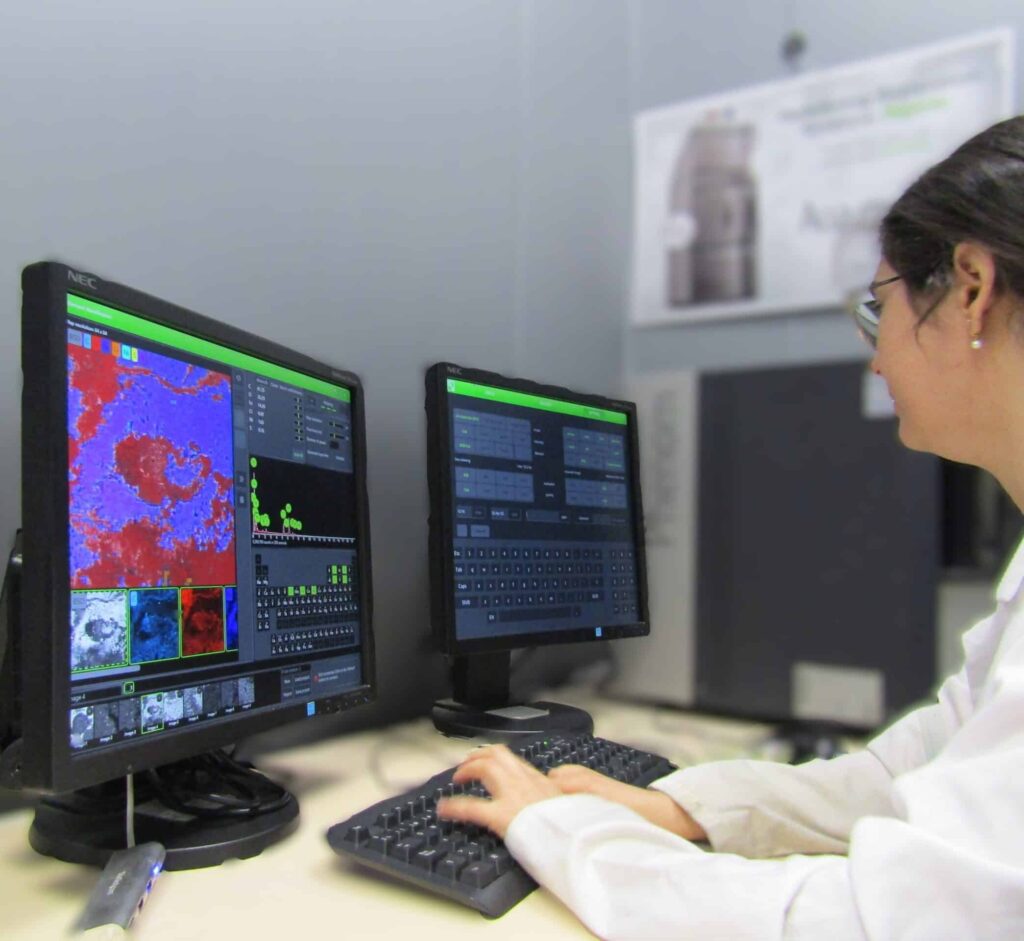
Frequently asked questions about mechanical properties
FAQs
What are mechanical property tests?
Mechanical property tests are standardised technical procedures that measure how a material responds to external forces and loads. They determine properties such as strength, hardness, ductility, toughness and fatigue behaviour, making it possible to predict whether the material will withstand the loads of its actual application.
These tests are performed in accordance with international standards such as ISO 6892 for tensile testing, ISO 148 for impact testing and the ISO 6506/6507/6508 series for hardness testing, ensuring comparable and traceable results. INFINITIA uses this characterisation as an objective basis for material design, selection and validation decisions in demanding industrial environments.
What happens if a material’s mechanical properties are not tested?
Without these tests, material behaviour remains unverified and the product is exposed to premature in-service failures. A material that does not achieve the required strength, toughness or fatigue life may break under loads it should withstand, with direct consequences for safety, cost and reputation.
Many failure modes, such as fatigue or brittle fracture, cannot be detected through visual inspection or document checks. Only mechanical testing reveals these weaknesses before the component reaches the field. INFINITIA focuses its analysis on early detection of these risks to prevent them from arising in production.
What is the difference between strength, hardness, ductility and toughness?
Strength, hardness, ductility and toughness describe different mechanical responses of the same material. Mechanical strength is resistance to deformation or failure under load; hardness is resistance to localised plastic deformation at the surface; ductility is the ability to deform permanently without fracturing; and toughness is the energy the material absorbs before breaking. A material can be very strong yet brittle, so these properties are tested separately.Confusing these properties leads to incorrect material decisions: a high-strength steel with low toughness fractures suddenly despite exceeding the load requirement. INFINITIA assesses each property using the corresponding standardised test (tensile, hardness and impact) and interprets them together, ensuring that material selection addresses the overall behaviour required by the application rather than a single isolated parameter.
What is the difference between standardised and custom tests?
Standardised tests follow protocols defined by ISO, ASTM or UNE-EN standards, with standardised specimen geometry, loading rate and acceptance criteria, ensuring comparability across suppliers and projects. They are the benchmark for material validation and qualification.Custom tests reproduce specific service conditions not covered by standards, such as particular combinations of load, temperature or environment. INFINITIA applies the standardised approach when traceability and comparability are required, and designs specific protocols when the component’s actual scenario requires conditions that a standard test does not reproduce.
What does a mechanical test provide compared with verifying supplier documentation?
A mechanical test provides direct physical evidence of material behaviour, whereas document verification only confirms the supplier’s claims. The certificate states nominal values, but testing verifies the actual properties of the batch or specific component that reaches the production line.This difference is decisive when a material fails despite appearing compliant on paper. INFINITIA combines the analytical rigour of testing with the industrial insight needed to interpret the result, complementing the work of accredited laboratories, technology centres and universities. The resulting specialist technical reports may provide documentary support for a court-appointed expert, although responsibility for the expert opinion always rests with the authorised expert.
Can actual failure conditions be reproduced in a controlled environment?
Yes. Mechanical tests can recreate the loads and stresses that caused a failure under controlled conditions, allowing hypotheses about its origin to be verified. Reproducing fatigue, impact or static loading on specimens or actual components confirms whether the material or design caused the problem.This reproduction is essential to avoid correcting a failure on the basis of assumptions. INFINITIA reconstructs the relevant service conditions and transfers them to the test, ensuring that the proposed solution addresses the actual cause rather than a symptom. This approach is directly connected with failure diagnosis in industrial components.
How do mechanical property tests help reduce costs?
These tests reduce costs by preventing failures, validating more cost-effective alternatives and refining design margins. Detecting a material weakness before production prevents claims, recalls and production-line stoppages, whose cost far exceeds that of the test programme.
Mechanical characterisation also makes it possible to replace a material with a more cost-effective alternative that maintains performance, or to reduce oversizing to the level strictly required. INFINITIA focuses its analysis on this return, using data-driven material decisions that optimise cost and reliability simultaneously.
How much does mechanical property testing cost?
The cost depends on the type and number of tests, the nature of the material and whether standardised or custom protocols are required, taking into account the mechanical properties of the materials involved. A hardness test programme on a single component has a very different scope from a full characterisation combining tensile, fatigue and impact testing at several temperatures.
INFINITIA therefore begins by defining the technical problem and the purpose of the decision, and then determines the scope of the test programme required to assess the component’s physical properties. Requesting an initial assessment makes it possible to align the scope with the actual risk to be controlled, without unnecessary tests or significant information gaps.
How long does it take to obtain the results?
A mechanical test programme usually takes between one and four weeks, depending on its complexity, the number of specimens and the required test conditions. Tests involving long cycles, such as fatigue testing, naturally determine the overall analysis time.
For critical situations, such as a production failure or line stoppage, INFINITIA offers an urgent service with preliminary results in approximately 24 to 72 hours. Prioritising the analysis enables rapid decisions without compromising the technical rigour required to interpret the data.
How is a new material or alternative supplier validated before production?
Prior validation of a material or supplier involves characterising its mechanical properties and comparing them with the component requirements before committing it to production. Tensile, hardness, fatigue and impact tests verify that the alternative matches or exceeds the performance of the reference material, allowing decisions to be based on physical evidence rather than the nominal values in a catalogue or certificate.
This control is critical when replacing a material with a more cost-effective alternative or onboarding a second supplier, because any undetected deviation transfers directly to the final product. INFINITIA characterises the incoming material and correlates its properties with the actual performance required, ensuring that the substitution does not introduce a hidden risk. Requesting this prior validation reveals failures on the test bench that would otherwise emerge in the field.
Why does a mechanical failure recur even after an attempted correction?
A recurring mechanical failure almost always indicates that the correction addressed a symptom rather than the root cause. If the real problem is material selection, a stress concentration in the design or an unsuitable treatment, any superficial adjustment will leave the underlying weakness unresolved.
INFINITIA addresses these cases through mechanical characterisation focused on identifying the critical parameter that causes the failure. Determining whether the cause lies in the material, process or design makes it possible to propose a definitive correction instead of repeating partial solutions that reproduce the problem.
Why does the product work in controlled tests but fail in actual use?
This discrepancy usually occurs because actual service conditions are more severe or variable than those of the initial test. Cyclic loads, temperature, vibration or combinations of stresses not reproduced in the original test reveal material weaknesses that remain hidden under controlled conditions.
INFINITIA designs tests that accurately represent the actual operating scenario, including the combined stresses the component withstands in the field. Requesting a technical assessment makes it possible to define a protocol that reproduces these conditions and anticipates material behaviour before the component enters service.