
Minimum Viable Prototype (MVP)
A minimum viable prototype is the first physical, functional version of a product and incorporates only the critical features required to verify whether the technical solution meets the requirement for which it was conceived. Its purpose is not to represent the finished product, but to generate experimental evidence for design hypotheses that have yet to be confirmed.
Developing an MVP combines functional scope definition, CAD modelling, manufacturing by 3D printing, CNC machining or low-volume moulding, and performance testing under representative operating conditions. INFINITIA Industrial Consulting acts as an external technical partner at this stage, focusing on interpreting results and supporting the subsequent industrial decision, rather than simply producing the part.
In demanding industrial environments, moving on to tooling, certification or production without experimentally verifying critical functions pushes errors into the most expensive stage of the project. Building a minimum viable prototype brings this verification forward and links it to the preceding technical feasibility analysis , ensuring that every design decision is supported by measured data.
Talk to a specialist
Request a free initial consultation; contact a consultant from our team of specialists

What is an MVP or minimum viable prototype?
What is it?
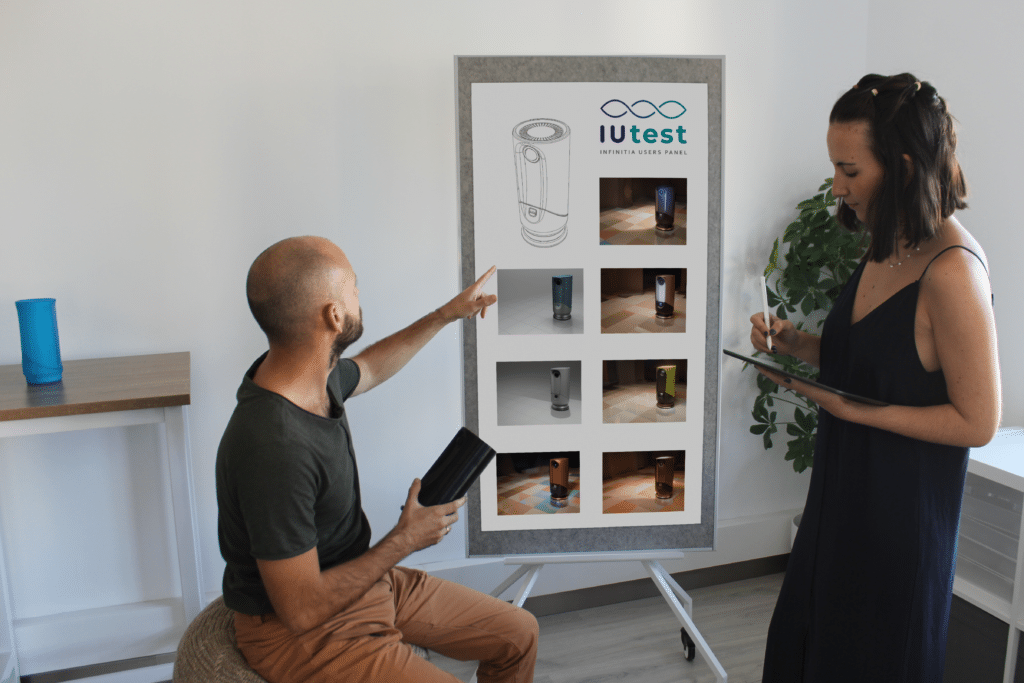
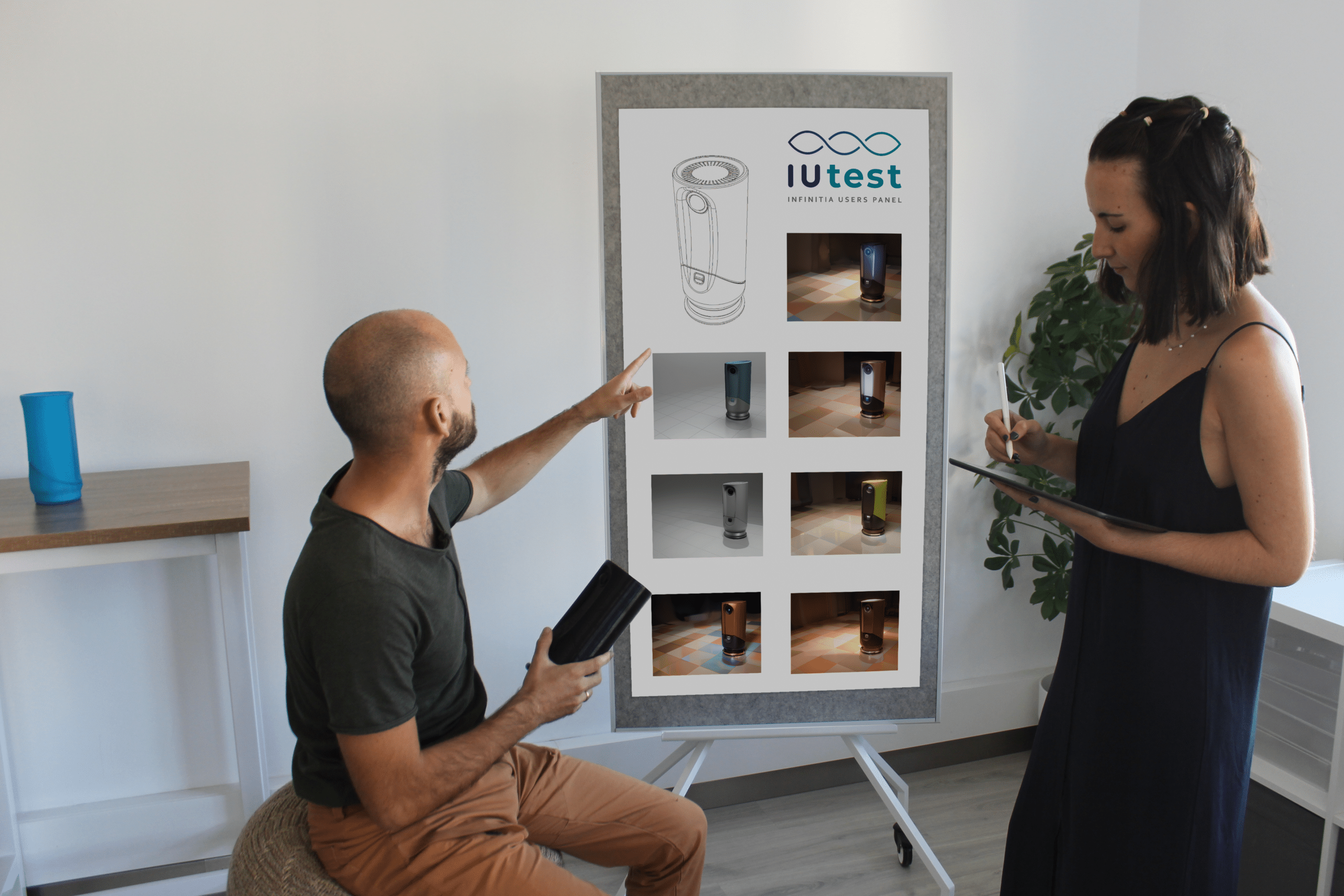
If you are unfamiliar with the role of an MVP in product development and improvement projects, here is a clear overview. In product development, a minimum viable product (MVP) is a basic version of the product that includes the essential features needed to be tested in a real-world environment. It enables developers and companies to quickly validate the product’s viability in the market.
As such, developing an MVP for product validation is an effective strategy for gathering direct market feedback and verifying that the product meets users’ needs and expectations. This phase enables us to validate key aspects of the product and make adjustments before investing in full-scale development; by using agile design and rapid prototyping techniques, we can produce a working prototype within a short period of time.
Furthermore, our focus on prototyping ensures that the MVP is an accurate and functional representation of the product’s core concept, maximising quality and the user experience right from the start.
At INFINITIA, we specialise in designing minimum viable prototypes. We ensure the product meets key functional requirements, whilst testing it through user studies to gather crucial feedback for further development. Would you like to find out more? Please get in touch with us.
What is the product validation process like when using an MVP prototype?
Product validation using a minimum viable product (MVP) involves gathering information from users and the market regarding the product’s functionality and acceptance. Proof-of-concept testing is carried out using the MVP to obtain direct feedback, identify potential improvements and refine the design based on user feedback. In other words, this proof-of-concept testing with a minimum viable prototype serves to make iterative adjustments to the design and enhance the product’s value proposition.
The MVP for market validation is a powerful tool for minimising risks, as it gauges the market’s response before moving on to full-scale production. We identify areas for improvement and maximise the product’s potential for success before it is launched onto the market.
Why develop an MVP for your company with INFINITIA?
Benefits
Developing an MVP is a key step in product validation. At INFINITIA, we carry out this minimum viable product (MVP) development phase to ensure that your product is not only functional but also ready for market validation. Discover the comprehensive approach that enables our clients to obtain optimised, market-ready products in record time. Here are the benefits of designing a minimum viable prototype with us:
- Early validation and minimal risks: Our process for developing an MVP (minimum viable product) or prototype enables us to gauge the market’s acceptance of the product at an early stage, thereby reducing risks and optimising resources.
- Gathering real-world market feedback: By testing the MVP with end users, our clients can gain valuable insights to make improvements and ensure that the product meets market expectations.
- An agile, results-focused strategy: Our focus on rapid prototyping and continuous validation enables the product to be developed in an agile and flexible manner, maximising its potential for success in the market.
MVP Development Process: An Agile, Results-Oriented Strategy
Process
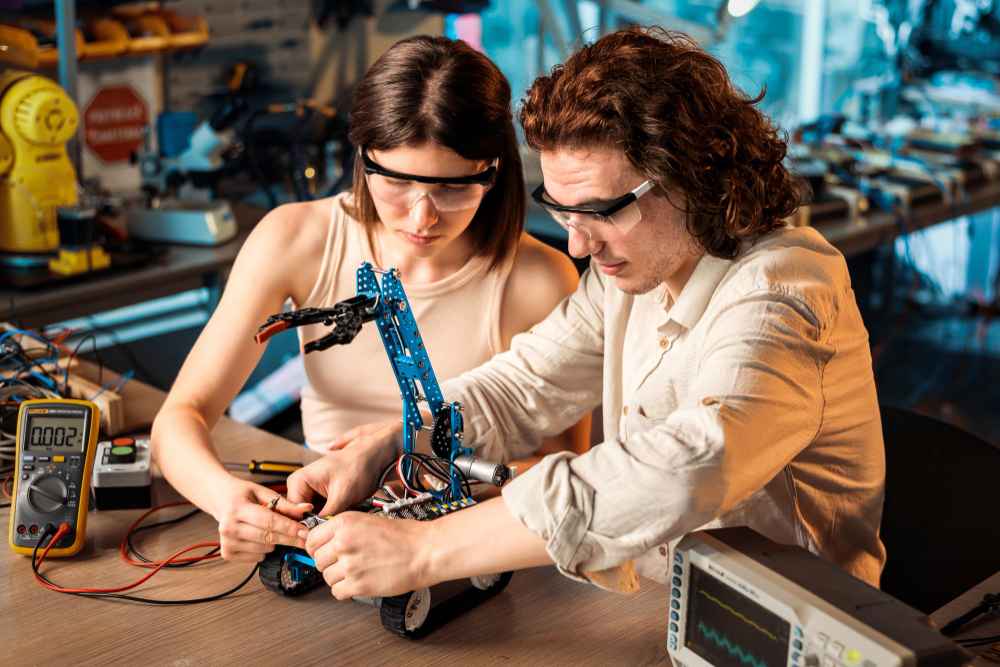
For its part, the MVP development process at INFINITIA is based on agile design principles and prioritising essential features. During this phase, our experts work alongside the client’s team to define the key features and create an MVP prototype for product innovation that enables effective testing to be carried out in the shortest possible time. This agile, results-oriented approach ensures that the MVP is ready for testing in a short space of time, optimising resources and ensuring rapid validation.
MVP design for new products is a flexible process that allows for adjustments and improvements as information is gathered. This adaptability ensures that the MVP is continuously refined until it becomes a model that meets user expectations and is aligned with the client’s vision.
Sectors where a minimum viable prototype enables product validation before industrialisation
Sectors
MVP development is applied across a range of industrial sectors where the cost of a design error detected too late is disproportionate to the cost of verifying it in good time. In all these sectors, the working prototype fulfils the same technical function: to replace assumptions with measurements before committing to tooling, certification or the supply chain.
Operating conditions, regulatory frameworks and production volumes differ substantially between sectors, and the design of the prototype itself varies accordingly. INFINITIA tailors the scope of the MVP and the test protocol to the specific requirements of each industry, taking into account the applicable regulations and the failure modes characteristic of each environment.
Minimum viable prototyping at INFINITIA: ensuring product viability before industrialisation
Value
A minimum viable prototype brings something to an industrial project that no other phase can provide: physical evidence of how the proposed solution actually performs. Neither simulation nor document review can replace the information generated by a manufactured and tested part. The MVP turns design hypotheses into measured results and provides a verifiable basis for deciding whether to proceed, correct or rethink the solution.
The impact on industrial decision-making is direct. The results of the test determine whether the design proceeds to pre-production, whether a material needs to be replaced, or whether the architecture requires revision. This preventative approach shifts the focus to the stage where change is feasible and avoids reactive corrections, which are always more costly. An example of this approach can be found in the technical feasibility and design project for a minimum viable product, where prior verification shaped the product’s definition.
Economic and operational optimisation is achieved through three specific channels: reducing modifications to tooling that has already been manufactured; minimising redesign iterations thanks to traceability between versions; and improving the technical specifications provided to suppliers, which reduces deviations in the first production runs. It is the integration of the MVP into a structured product development process that enables these benefits to be capitalised on systematically.
In regulated sectors, where every verification must be documented and reproducible, the minimum viable prototype also takes on evidential value: the evidence generated is incorporated into the technical file and supports design decisions during audits and before certification bodies.