
Ideation and concepts
We turn ideas into viable, market-appealing concepts. At INFINITIA Industrial Consulting we are experts in design and innovation, so we’re with you throughout the entire ideation and concept process.
We bring a creative, strategic approach to your project. We make sure initial ideas respond to real market needs. With a structured approach and the use of product brainstorming techniques, we develop solid concepts that chart the course toward innovation. This is how we approach ideation and product conceptualization.
Talk to a specialist
Request a free initial consultation; contact a consultant from our team of specialists

What ideation and conceptualization involve in product development
What is it?
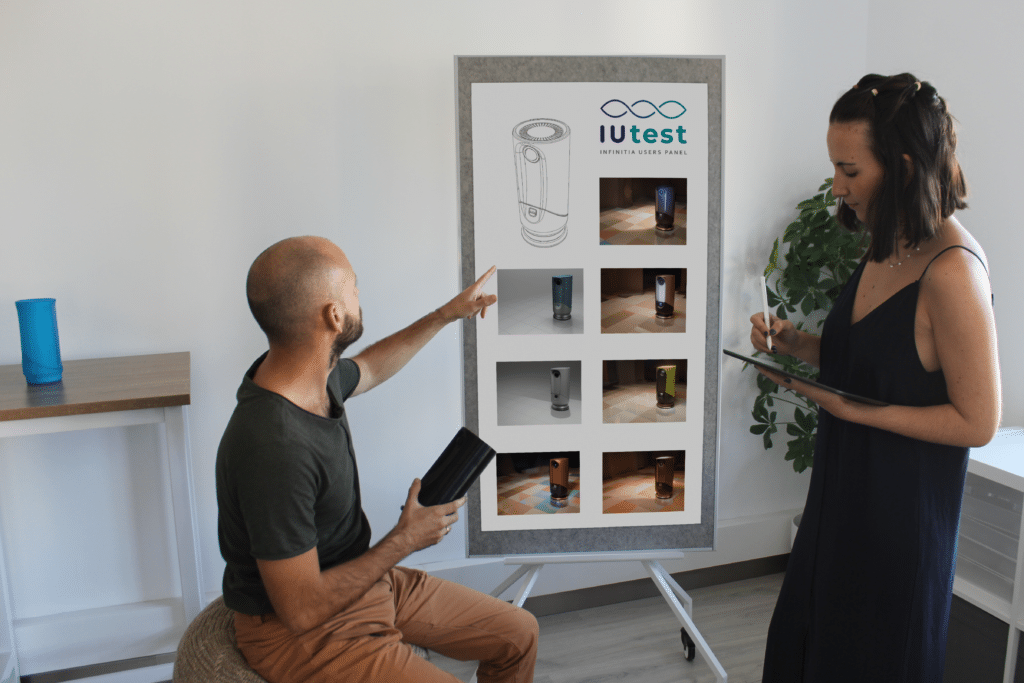
The ideation phase in product development consists of generating ideas for creating new products, as well as turning them into specific concepts that reflect the client’s value proposition and business objectives.
We explore different approaches and carry out the conceptualization of innovative products, which allows us to define the product’s essential characteristics. Discover how, starting from initial ideas, we ensure a product is innovative, viable and aligned with the market.
What are brainstorming and creativity techniques?
Brainstorming and creativity techniques are key to turning ideas into products. These range from idea storms to divergence and convergence methodologies, allowing teams to explore original solutions and build a clear vision of the desired product.
We find innovative solutions and optimize the potential of every concept. Structured creativity makes it possible to identify distinctive features and improve the product’s adaptability in a competitive market, ensuring the design and value proposition respond to specific consumer needs. Find out more!
Benefits of product ideation and conceptualization for industrial development
BENEFITS
A structured ideation phase directly reduces the technical and economic risk of product development. Understanding ideation as a rigorous technical process, not an informal creative stage, makes it possible to identify and resolve definition problems before they turn into redesign costs in later phases. Every well-founded conceptual decision avoids subsequent iterations whose cost is exponentially higher than if they had been addressed in the project’s initial phase.
The conceptualization of industrial products with clear objectives and explicit technical criteria ensures that engineering teams work from complete, coherent specifications from the outset. Without this foundation, design teams operate with apparent freedom but no solid technical reference, leading to solutions that are technically possible but commercially unviable or difficult to manufacture at a competitive cost. Defining product requirements and specifications is, precisely, one of the critical stages INFINITIA works on in parallel with ideation, ensuring that the concept moving toward detailed design has a solid documentary foundation that reduces ambiguity throughout the development cycle.
A methodology for generating and filtering ideas based on technical and business criteria makes it possible to solve prioritization problems that, in organizations without structured idea management, paralyze decision-making. Applying systematic evaluation tools (Pugh matrices, technical value analysis, evaluation against functional specifications) results in a justifiably narrowed set of alternatives, where only concepts meeting the minimum thresholds of technical feasibility, manufacturability and market potential move forward. This rigorous filtering is the difference between an ideation process that generates actionable technical decisions and one that accumulates partial concepts with no operational value.
Involving an external product development consultant with industrial experience provides the objective perspective needed to identify, from the outset, the gap between the project sponsor’s idea and the organization’s real technical and production capabilities. INFINITIA establishes a shared technical framework that aligns project objectives with real manufacturing, regulatory and market constraints, avoiding the costly misunderstandings that, without this external conceptualization phase, are rarely resolved before committing significant resources to detailed engineering, prototyping and industrialization.
Phases of developing product ideas
Phases
The ideation and conceptualization of innovative products requires several work phases. Let’s look at them below:
1. Ideation process or idea generation for new products
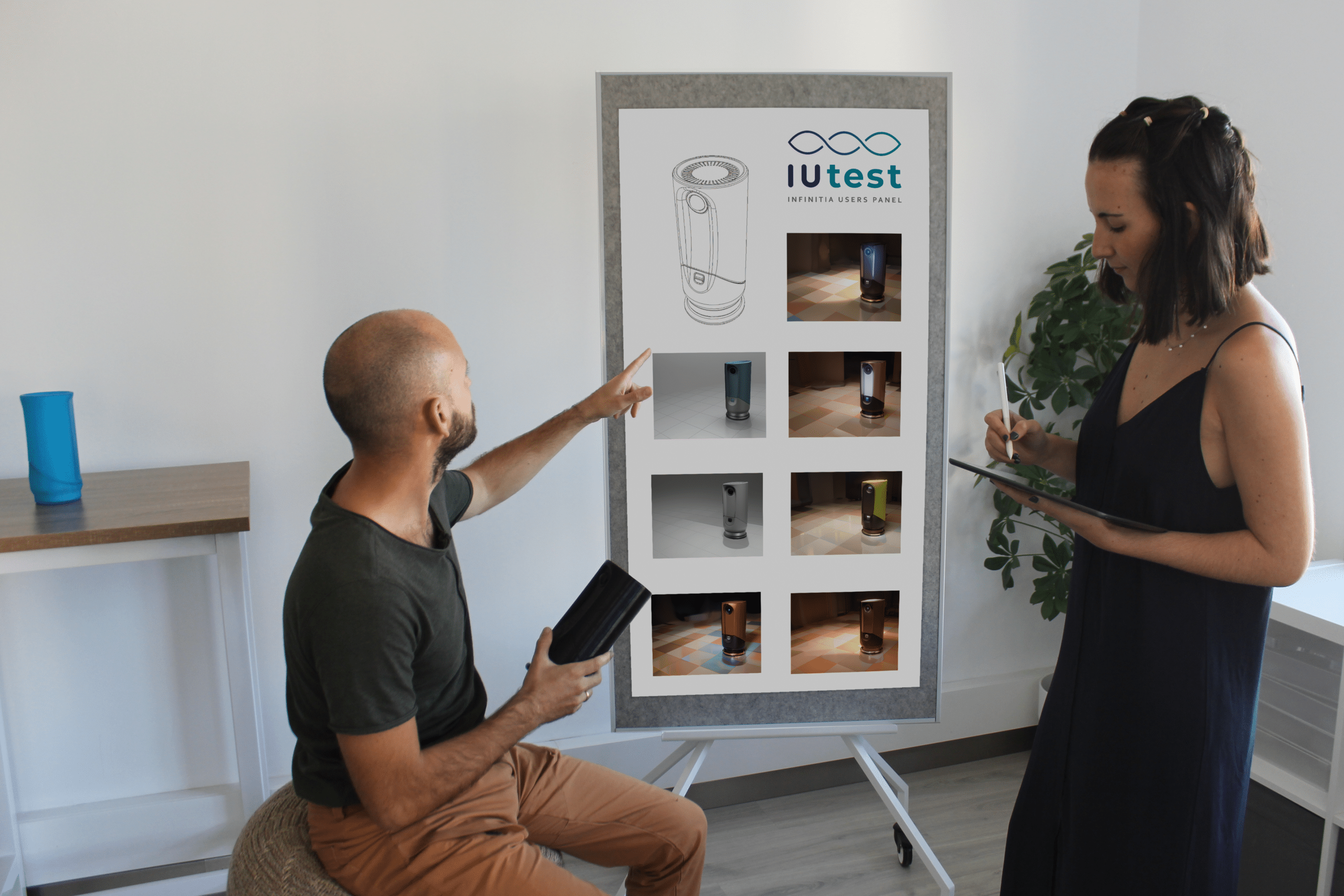
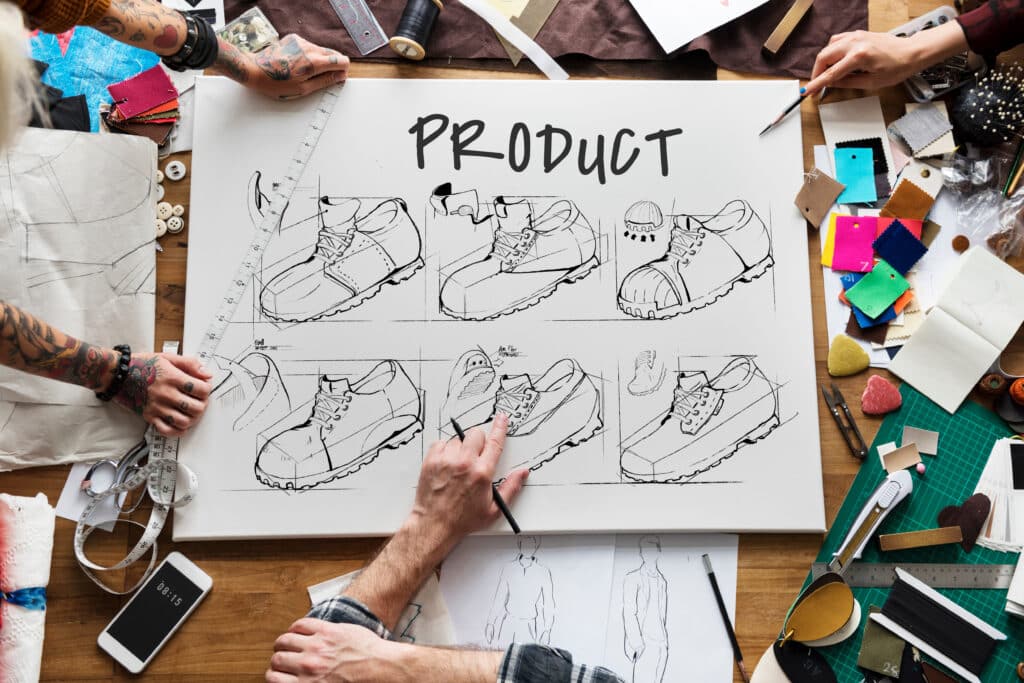
The product ideation process refers to concept definition. It’s a creative phase in which multiple ideas are generated to explore new possibilities and approaches. At INFINITIA we work with brainstorming techniques and creativity tools that foster the generation of innovative concepts.
We identify opportunities for improvement, incorporate trends and explore the features that add value to the product in the market. During this stage we collaborate closely with our clients to ensure all ideas are aligned with the project’s vision and objectives.
2. Product concept design
We turn ideas into tangible solutions. Once proposals have been generated, we move on to product concept design. We define the characteristics, purpose and approach of each one, turning initial ideas into structured, functional solutions that can be evaluated and validated.
At INFINITIA we develop each concept by defining key aspects such as functionality, design, user experience and differentiating value. This aligns client and market expectations, creating a solid foundation for prototype development and the product’s final design.
3. Creating conceptual prototypes
We turn ideas into reality through the creation of conceptual prototypes, which make it possible to visualize and evaluate the product in its earliest versions. A conceptual prototype is a physical or digital representation used to identify strengths and areas for improvement before starting full development.
At INFINITIA’s laboratory we are experts in prototyping and prototype manufacturing. We fine-tune the design, functionality and ergonomics to develop a product tailored to both the client’s needs and those of the end user.
4. Validating ideas in product development
The final phase of the ideation process is idea validation, an essential step for ensuring the selected concept is viable and has market potential.
We analyze factors such as relevance, differentiation, appeal, and technical and economic feasibility to identify necessary adjustments before proceeding with development. For this, we use analysis tools and user feedback, reducing risks and increasing the product’s chances of success.
Sectors where product ideation and conceptualization enables the development of viable technical solutions
sECTORS
Product ideation and conceptualization applies broadly across all industrial sectors where the development of new products, or the improvement of existing ones, requires a technical phase of concept generation and evaluation before committing detailed engineering resources. The nature of the service makes it especially relevant in sectors with high technical demands, where the need to generate technically viable new ideas and drive product innovation combines with tight development cycles and regulatory requirements that must be integrated from the conceptual phase.
INFINITIA adapts its ideation process to the technical, regulatory and market conditions of each sector. Experience accumulated across product development projects in diverse industrial environments makes it possible to apply conceptualization techniques based on real sector-specific criteria, not generic approaches. This sector-specific adaptation ensures that every innovative concept generated is evaluated against each industry’s own demanding parameters, not generic criteria disconnected from the real technical context.
Ideation and concepts at INFINITIA for product development with a solid technical foundation
Value
The ideation and conceptualization of industrial products is the technical investment with the highest return in the product development cycle: every euro invested in correctly defining the concept avoids multiple euros of redesign in later phases. INFINITIA offers this service from an integrated industrial engineering perspective, combining concept generation and evaluation methodologies with real experience in materials, manufacturing processes and product analysis. The result is that the ideas generated throughout the process become a technically solid, documented product concept, ready to move toward detailed design, prototyping or functional validation with managed technical risk.
The impact of rigorous conceptualization on subsequent industrial decisions is direct and quantifiable in terms of project efficiency. A well-defined concept reduces the number of iterations in detailed design, limits the scope of prototyping, defines validation criteria from the start, and avoids the changes of direction that, in projects without a structured conceptual phase, systematically appear during the prototyping or validation stages. This preventive approach based on early technical evaluation is consistent with the initial diagnosis for product development process that INFINITIA applies at the start of every development project.
INFINITIA works with its clients to correctly size the investment in conceptualization relative to the project’s technical risk and complexity: not every project requires the same level of conceptual exploration, but all benefit from a rigorous technical evaluation process that, before committing detailed engineering resources, lays the groundwork for a sustainable competitive advantage in time-to-market, technical product quality and development risk management.
In regulated sectors (medical devices, automotive, agri-food, aerospace), the conceptualization of industrial products is not just good engineering practice: it is an implicit requirement of the regulatory frameworks that demand traceability between requirements and design decisions from the earliest phases of the project. INFINITIA positions itself in these environments as a strategic technical partner that brings both the ideation methodology and knowledge of the applicable regulatory framework, ensuring the conceptualization process generates the technical documentation needed to support the product’s development file. The question isn’t whether an industrial product can be developed without a structured ideation phase; the question is how much it will cost to correct conceptual errors when they surface in later phases.