
Optimisation and simplification of parts
Part optimization and simplification in product design is essential for improving efficiency, reducing costs and streamlining manufacturing processes. We turn complex designs into simpler, easier-to-produce components. We ensure every part meets the highest standards of quality and functionality.
Using advanced design-for-manufacturing techniques, at INFINITIA Industrial Consulting we work on improving component design and reducing the number of parts required, creating more efficient, cost-effective and sustainable products. Find out more today!
Talk to a specialist
Request a free initial consultation; contact a consultant from our team of specialists

What is part optimization and simplification in product development?
What is it?
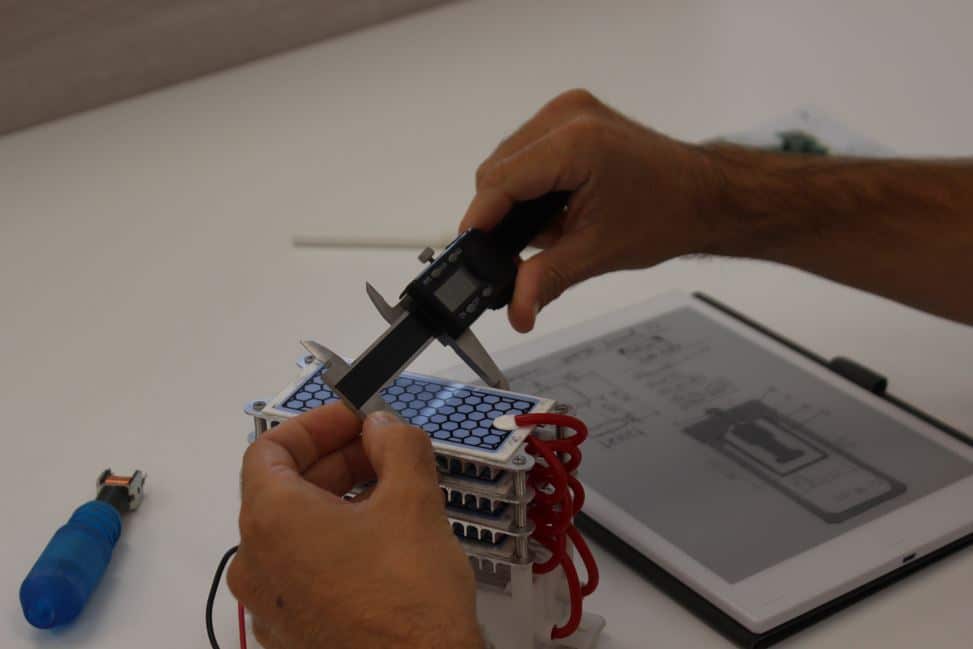
Part optimization and simplification consists of analyzing, adjusting and redesigning components to maximize their efficiency and reduce the complexity of their manufacturing and assembly. At INFINITIA we use advanced design and simulation tools to optimize part geometry and minimize the total number of components in a product.
This process not only lowers production costs, but also improves the quality and reliability of the final product, making it more competitive in the market. As such, its benefits are clear:
- We reduce production times. We eliminate unnecessary processes.
- We lower costs. We use fewer materials and more efficient processes.
- We achieve better structural performance. We ensure every part is strong and functional.
- We achieve lower assembly complexity. We reduce the likelihood of failures.
- We make maintenance and repair easier. We extend the product’s service life.
Benefits of part optimization and simplification at INFINITIA
BENEFITS
Our goal is to deliver high-quality, efficient products with optimized costs for our clients. To achieve this, we support you in simplifying and optimizing parts during product development. Here are the main benefits you’ll find by trusting INFINITIA:
- Fewer cuts and shorter manufacturing times, thanks to a more efficient design.
- Improved efficiency and ease of assembly, by minimizing the number of parts.
- Greater strength and durability, as failure points are reduced.
- Savings on materials and resources, by optimizing input use.
- Greater sustainability, since it reduces the environmental impact of production.
This approach makes it possible to create more competitive, affordable products, without compromising quality or functionality.
Applications of part optimization and simplification to reduce cost and complexity
applications
Part optimization and simplification is a cross-cutting discipline that applies to any industrial product where the number of components, weight or manufacturing complexity affects cost or reliability. Its applications range from consolidating assemblies to adapting geometry to the production process, and they apply both to newly developed parts and to components already in production.
In each of these applications INFINITIA acts as an external technical partner, providing the engineering judgment that determines what to simplify and how to do so without compromising function. Below are the applications with the greatest industrial impact.
Reducing the number of parts in assemblies
We achieve simplified, efficient products. One of the key strategies in design simplification is reducing the number of parts in assemblies. To do this, we evaluate each component to determine its function and eliminate unnecessary parts without compromising the product’s performance.
The product becomes easier to assemble, lighter and less costly to manufacture, while remaining just as functional and durable. Consequently, this approach has multiple benefits:
- We achieve fewer failure points. We increase the product’s reliability and strength.
- We reduce assembly times. We simplify the assembly process.
- We save on material and production costs. We reduce the amount of resources used.
We achieve a lower environmental impact. We reduce material waste and manufacturing complexity.
Part optimization for 3D printing
Discover flexibility and precision in your product’s design through part optimization for 3D printing. This way, we make the most of the technology’s flexibility, achieving lighter, stronger and more functional products.
At INFINITIA we adapt designs for additive manufacturing, ensuring each part has the best possible structure for its printing process. This is what we achieve:
- We reduce part weight. We use optimized internal structures.
- We use less material. We optimize geometry to minimize waste.
- We produce complex shapes. Or shapes impossible to manufacture with traditional methods.
- We adapt and customize parts. We create parts specific to each application.
As a result, industrializable design for 3D printing helps us manufacture components at a lower cost and with greater flexibility, adapting them to different industrial applications.
What is design optimized for manufacturing?
Design optimized for manufacturing seeks to ensure a product can be made efficiently and with controlled costs. Our approach includes optimizing prototypes for manufacturing, ensuring every design is validated before mass production and avoiding costly rework and manufacturing failures.
That’s why at INFINITIA we carry out a thorough analysis of each part to adapt it to the most suitable manufacturing processes, such as CNC machining, injection molding or 3D printing.
These are the advantages of design optimized for manufacturing:
- We waste less material. We use efficient geometries.
- We reduce manufacturing processes. We minimize production time.
- We provide greater ease of assembly. We ensure suitable tolerances.
We improve the final product quality. Manufacturing defects and failures become minimal.
Design simplification to reduce costs
At INFINITIA we deliver cost-effective, competitive products. Design optimization makes it possible to reduce the production budget without compromising the product’s quality. To do this, we use component design simplification strategies, aimed at lowering manufacturing and material costs, making the final product more affordable without losing functionality.
As for the methodology, it’s worth noting that at INFINITIA we carry out various actions to support the product’s cost-effectiveness and competitiveness. Here are some of them:
- We eliminate redundant parts. This reduces the number of components.
- We optimize materials. We choose lighter, more cost-effective options.
- We design for automated manufacturing. We minimize manual intervention.
- We reduce intermediate processes. We simplify manufacturing.
Sectors where part optimization and simplification reduces cost and weight
SECTORS
Part optimization and simplification adds value in any sector where manufacturing cost, weight or component reliability are critical. Its cross-sector nature makes it applicable both to large production runs and to high-unit-value components, adapting the approach to each industry’s regulatory and functional requirements.
INFINITIA adapts the methodology to each sector’s real conditions, prioritizing in each case the factors that most impact the product’s cost, safety or performance. Below are the sectors of greatest application.
Part optimization and simplification at INFINITIA for a cost-effective industrial decision
Value
Part optimization and simplification delivers direct, quantifiable technical value: fewer components, less material and less manufacturing complexity translate into a lower unit cost and a more reliable product. Simplifying design with engineering judgment isn’t a cosmetic improvement — it’s an industrial decision with measurable impact on the production line. Reducing parts, lightweighting structures and standardizing elements act in combination on the product’s cost and robustness.
This approach has a direct effect on industrial decisions. By grounding each simplification in geometric analysis and structural simulation, redesign stops relying on intuition and starts resting on technical evidence. This preventive, data-driven character makes it possible to anticipate the effects of each change before manufacturing, avoiding late and costly redesigns. Validation through prototyping closes the cycle, confirming that the simplified part behaves as designed.
Optimization also has a clear effect on the project’s economics. Eliminating redundant parts reduces purchasing, assembly and maintenance costs; lightweighting components reduces material consumption and improves performance; standardizing elements simplifies procurement and inventory. These savings aren’t one-off: they propagate throughout the product’s entire lifecycle and the production line, structurally improving competitiveness.
In regulated sectors such as automotive, aerospace, medical devices or energy, where simplification must respect strict regulatory requirements, INFINITIA positions itself as a strategic technical partner that combines analytical rigor with an industrial outlook. The goal isn’t to deliver a lighter model on paper, but a component that’s demonstrably more cost-effective to manufacture and more reliable in service. That’s the criterion guiding every optimization project: turning simplification into a real competitive advantage, verifiable on the shop floor and sustained over time.