

Preliminary study and maturation of idea
The preliminary study and idea maturation is the initial phase of product development in which an idea is analyzed, evaluated and structured before committing technical or financial resources to its execution. This stage is not an administrative formality or a procedural step: it is the technical intervention that determines whether an idea has real conditions to become a viable, manufacturable and successful product in its application sector. Without this preliminary analysis, development projects move forward on untested hypotheses, which multiplies the risk of investing in the wrong direction.
INFINITIA acts in this phase as an external technical partner whose role is to transform an initial proposal, often ambiguous or incomplete, into a structured project with a verifiable technical foundation. To achieve this, the specialized team applies concept analysis, requirements definition and risk assessment methodologies that cover every critical dimension of the product: technical feasibility, manufacturing constraints, material availability and alignment with the end client’s requirements. The result is a set of actionable technical criteria that make it possible to move forward confidently into the subsequent stages of product development.
The need for this service is especially critical in industrial environments where development cycles are costly and margins for error are small. Companies operating in highly demanding technical sectors (automotive, medical devices, industrial machinery or electronics) cannot afford to start development without first having tested the soundness of the idea. A well-executed preliminary study reduces uncertainty, guides decision-making and improves the efficiency of every subsequent phase.
Talk to a specialist
Request a free initial consultation; contact a consultant from our team of specialists

What is the preliminary study and idea maturation, and what technical need does it address?
What is it?
The preliminary study and idea maturation is the technical process through which a product idea is analyzed to determine its feasibility, define its fundamental requirements and establish the conditions needed to move forward with its development. Its purpose is to turn an initial concept, which may stem from a market need, an identified technical problem or a strategic opportunity, into a structured proposal with a solid technical foundation. This analysis answers a central question: does this idea have the technical, functional and strategic conditions needed to become a real product?

In the context of industrial development, this phase fits within structured innovation processes and product lifecycle management. Methodologies such as Design Thinking, functional requirements analysis or technical feasibility studies provide the framework on which the preliminary study is built. This phase does not operate in a vacuum: it draws on market information, client requirements, sector regulatory constraints and technical parameters of the product’s intended environment of use.
The preliminary study involves a thorough analysis of technical variables ranging from preliminary material and manufacturing technology selection to the analysis of usage conditions, performance requirements and cost constraints. Development risks, critical points in the concept and available technical alternatives are also evaluated. At this stage, the results are integrated with the work of defining product requirements and specifications to ensure subsequent development starts from well-defined criteria.
INFINITIA approaches the preliminary study and idea maturation as a strategic technical consulting service, not a documentary audit. The specialized team evaluates the idea with an industrial outlook: it analyzes not only what is intended, but also what is technically possible, what the market can accept, and whether the client’s expectations are achievable within real manufacturing constraints. This differentiating approach allows industrial companies to make well-founded decisions from the outset, avoiding investment in developments with compromised feasibility.
Preliminary study and idea maturation at INFINITIA: technical approach, strategic vision and a roadmap for development
The value of the preliminary study and idea maturation at INFINITIA lies in its ability to combine technical rigor with strategic industrial insight, enabling companies to innovate with well-founded criteria and controlled risk. It’s not just about assessing whether an idea is technically possible, but about determining under what conditions, with what technologies, under what constraints and at what level of risk it can be carried out. This comprehensive approach gives industrial companies a solid foundation for making development investment decisions based on objective, tested criteria.
The methodology INFINITIA applies at this stage combines functional requirements analysis, evaluation of candidate technologies and materials, identification of technical risks and preliminary manufacturability analysis. The work starts from the available product information (client briefing, usage specifications, market references) and is cross-checked against the team’s accumulated experience in mechanical development projects and in highly demanding technical sectors. When the idea requires it, preliminary simulation tools or exploratory concept testing are also incorporated.
The complementarity between conceptual analysis and experience in later development phases is one of the most relevant differentiators of INFINITIA’s approach. The team carrying out the preliminary study understands in detail the technical implications of every concept decision, because it has worked through the design, prototyping, validation and manufacturing phases that follow. This continuity of vision prevents the preliminary study from generating recommendations that are theoretically correct but difficult to implement in industrial practice. The study’s results are integrated directly with the work of defining raw material quality parameters when the project involves material selection from the initial phase.
INFINITIA’s differentiator at this stage is the combination of analytical rigor and industrial pragmatism. The preliminary study doesn’t conclude with a descriptive report: it concludes with clear decision criteria, a well-founded assessment of the concept’s feasibility and a technical roadmap for the following phases. This outcome allows industrial teams to move forward with confidence, knowing that the decisions made at the conceptual stage have been evaluated by a specialized team with real experience in developing complex industrial products, and aligned with the project’s technical and strategic goals.
Benefits of the preliminary study and idea maturation for industrial product development
BENEFITS
The preliminary study and idea maturation allows industrial companies to act on development risk factors at the point when doing so has the lowest cost and the greatest impact. Intervening at the conceptual stage is crucial to prevent unresolved potential risks from carrying over into stages of the process where correcting them costs between five and ten times more. The direct result is a more efficient development project, with fewer iterations, clear technical criteria from the outset, and a solid basis for making well-founded investment decisions.
A first concrete benefit is the rigorous technical definition of the starting concept. The preliminary study translates an idea framed in functional or commercial terms into verifiable technical criteria: suitable materials identified, manufacturing constraints known and minimum performance parameters established. With this foundation, the development team works from a tested concept instead of unvalidated assumptions, eliminating the costly iterations, redesigns and launch delays caused by starting from an incomplete technical definition.
A second benefit is the early alignment between the concept and the real requirements of the client and the market. In B2B industrial environments, products must meet very specific technical specifications derived from sector regulations, usage conditions or end-client requirements. A business idea that has tested these requirements in the preliminary study reaches the approval phase, client validation and certification testing with a coherent technical foundation, avoiding the blockages and redesigns caused by discovering misalignments in advanced development phases. The initial diagnosis for product development service complements this evaluation with a broader view of the project’s starting point.
A third benefit is the early incorporation of manufacturing constraints into the conceptual design. When a concept is developed considering, from the outset, the available manufacturing processes, materials accessible at industrial volume and target production costs, the result is a product that is viable both as a prototype and in mass production. The preliminary study introduces these constraints at the conceptual stage, where adapting the design is still possible without jeopardizing the work already done, avoiding one of the most frequent failure patterns in industrial product development projects.
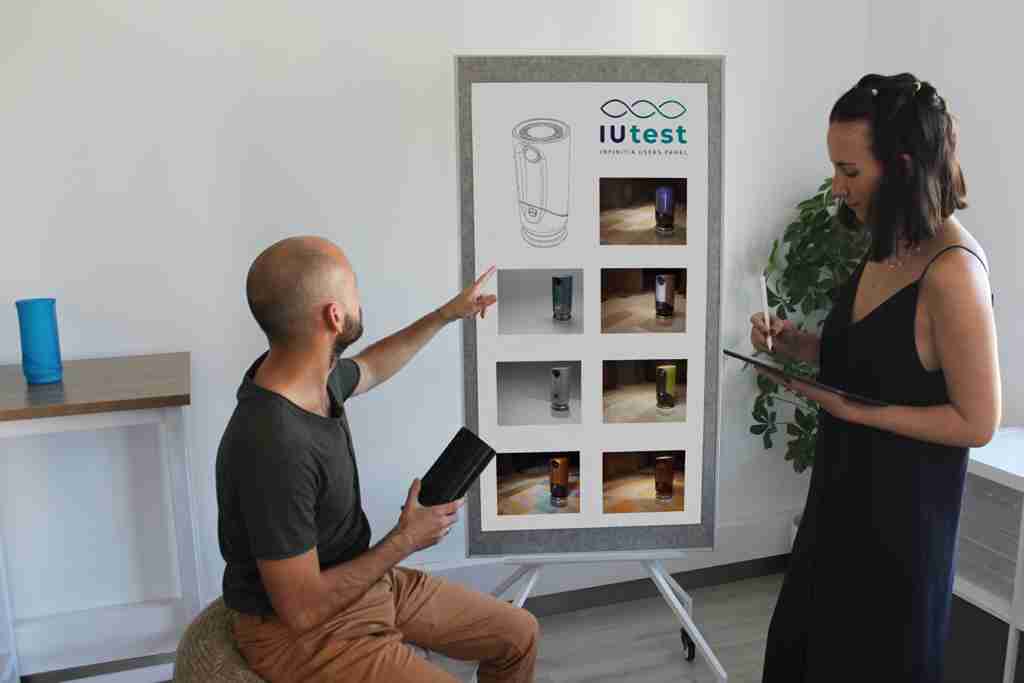
Applications of the preliminary study and idea maturation for technical decision-making in product development
APPLICATIONS
The preliminary study and idea maturation applies directly to any industrial project in which a product idea must be evaluated before committing resources to its development. This phase’s broad relevance is not limited to radical innovation projects: it also covers the redesign of existing products, the adaptation of established solutions to new markets or usage conditions, and the evaluation of technical alternatives in response to regulatory or supply changes. In all these contexts, structured preliminary analysis reduces uncertainty and improves the quality of development decisions.
INFINITIA applies the preliminary study with a focus on actionable outcomes. Each analysis is adapted to the idea’s stage of maturity, the sector of application and the project’s specific constraints: development timelines, available budget, regulatory demands or manufacturing requirements. The goal is not to produce generic technical documentation, but to generate the precise criteria the development team needs to move confidently into the next phase.
Technical feasibility analysis: concept evaluation before development
The technical feasibility analysis in the preliminary study consists of determining whether a product idea can be realized with the available technologies, materials and manufacturing processes, within the cost and performance parameters defined by the client. The concept’s operating principles, required material properties, possible dimensional tolerances and applicable manufacturing processes are evaluated. This analysis also considers constraints arising from the environment of use: temperature conditions, mechanical stresses, chemical exposure or service life requirements.
A well-executed technical feasibility analysis makes it possible to identify, before starting development, which aspects of the concept are technically sound and which present risks or incompatibilities. This information guides design decisions from the outset: technology selection, choice of candidate materials, tolerance definition and manufacturing strategy. INFINITIA, as an external technical partner, provides an independent, objective evaluation that isn’t conditioned by the client team’s internal preferences or prior commitments to suppliers.
Technical feasibility analysis at the preliminary study stage is the intervention with the highest return relative to its cost, because it acts when the cost of change is minimal. Identifying a critical technical risk at the conceptual stage has a radically smaller impact than detecting it during prototyping or, in the worst case, in production.
Product requirements definition: technical specification from the concept stage
The product requirements definition in the preliminary study consists of translating client needs, usage conditions and market demands into measurable, verifiable technical specifications that reflect the end user’s real operating conditions and will guide the entire development process. This application is fundamental because it establishes the reference framework against which the product will be evaluated at every phase: if requirements are poorly defined from the start, no stage of development can guarantee that the final product will be correct. Tools such as functional requirements analysis or technical benchmarking studies are used.
A solid technical specification developed during the preliminary study stage allows the development team to work with objective criteria and avoid divergent interpretations that create inconsistencies between disciplines. INFINITIA structures requirements definition as an iterative process between the client and the technical team, validating each specification against real manufacturing constraints and available technological capabilities. This work is directly integrated with the product requirements and specifications definition services.
Rigorous requirements definition at the conceptual stage is the factor with the greatest influence on the efficiency of subsequent development stages. A project that starts from clear, verifiable specifications aligned with real constraints significantly reduces the number of iterations, cross-discipline conflicts and rework in advanced phases.
Evaluation of technical alternatives: selecting the optimal product concept
The evaluation of technical alternatives is the preliminary study application aimed at comparing different conceptual approaches to solving the same design problem or meeting the same product need. Multiple concepts are generated and analyzed (variations in operating principle, combinations of materials and processes, different product architectures) and evaluated against feasibility, cost, performance, manufacturability and strategic alignment criteria. This structured evaluation prevents development from moving forward on the first concept generated without checking whether better alternatives exist.
Evaluation of technical alternatives makes it possible to make concept decisions based on technical evidence, not subjective preferences or organizational inertia. INFINITIA applies weighted evaluation matrices, technical-economic analysis and structured concept reviews that ensure the selected alternative is the most suitable for the project’s requirements. This process also identifies the critical hypotheses of each alternative, establishing the proof-of-concept tests that must be carried out before committing to full development.
Having an objective evaluation of technical alternatives at the preliminary study stage ensures that subsequent development is built on the concept with the greatest potential, having ruled out options with unacceptable technical or economic risks. This early decision has the greatest impact on the total cost and timeline of the development project.
Identification of technical risks: anticipating problems at the conceptual stage
The identification of technical risks in the preliminary study consists of systematically detecting the points in the product concept that present technical uncertainty, critical dependencies or potential incompatibilities with the project’s requirements. Risks associated with the selected materials, the planned manufacturing processes, the product’s functional interfaces and the extreme usage conditions it will be subjected to are analyzed. This assessment doesn’t just list risks: it establishes their probability, their potential impact and the mitigation actions that must be incorporated into the development plan.
Early identification of technical risks allows the development team to design mitigation strategies before the problems become costly to resolve. INFINITIA brings to this analysis its accumulated experience in forensic engineering and failure analysis projects: knowledge of the real failure modes documented in similar products (under comparable load, temperature, wear or chemical exposure conditions) makes it possible to build, at the conceptual stage, a list of technical risks grounded in empirical evidence rather than design assumptions. This empirical foundation is what distinguishes a well-founded risk analysis from a purely theoretical evaluation.
Anticipating technical risks at the preliminary study stage is one of the applications with the greatest direct impact on the final product’s reliability. Failures that are identified and managed at the conceptual stage never end up manifesting in the product, which improves development quality and reduces the cost of poor quality in later stages.
Preliminary manufacturability analysis: production-oriented design from the start
The preliminary manufacturability analysis assesses, at the preliminary study stage, whether the product concept can be efficiently produced with the available manufacturing processes and within the project’s production cost targets. Aspects such as the design’s geometric complexity, the accessibility of manufacturing tooling, the planned production volumes and their impact on process selection, and the required dimensional tolerances versus the real capabilities of the candidate processes are analyzed. This analysis also includes an assessment of material availability and cost at industrial volume.
Preliminary manufacturability makes it possible to steer the conceptual design toward solutions that are productive from the outset, avoiding the common mistake of developing a technically correct product that turns out to be difficult or excessively costly to mass-produce. INFINITIA integrates this analysis with knowledge accumulated in product manufacturing projects, allowing manufacturability to be assessed with criteria drawn from real industrial production experience, not just a theoretical design perspective.
Incorporating manufacturability as an evaluation criterion at the preliminary study stage is what allows a product to move from prototype to mass production without requiring significant redesigns. This consistency between the concept and manufacturing requirements is one of the most decisive factors in the efficiency of the entire development cycle.
Strategic alignment of the concept: technical validation of an innovative approach against business objectives
The strategic alignment of the concept is the dimension of the preliminary study that assesses whether the product idea is consistent with the company’s strategic objectives, its available internal capabilities and the conditions of its target market. This analysis goes beyond technical feasibility: it examines whether the product fits with the existing product portfolio, whether development timelines are compatible with the identified market windows, and whether the necessary resources are available or accessible. The concept’s position relative to the competition and potential barriers to market entry are also analyzed.
Strategic alignment of the concept makes it possible to detect mismatches between the technical idea and business reality before starting development, avoiding investment in products that, while technically viable, don’t have a clear fit within the company’s strategy or cannot compete under real market conditions. INFINITIA addresses this dimension from its role as an external technical partner with an industrial outlook, providing an objective perspective that complements the client’s internal knowledge of their own market and capabilities.
A technically sound, strategically aligned concept is the ideal starting point for a product development project. Strategic alignment validated in the preliminary study ensures that resources invested in development go toward projects with real returns and sufficient organizational backing to complete every stage of the product lifecycle.
Sectors where the preliminary study and idea maturation reduce risk and anticipate market demands in product development
SECTORS
The preliminary study and idea maturation is a broadly applicable service that adds value in any industrial sector where product development involves significant investment, demanding technical requirements or complex usage conditions. The need to validate an idea before developing it is not exclusive to regulated or high-tech sectors: it is a well-established trend in industrial technical management that is relevant in any industry where the cost of a poorly directed development exceeds the cost of a structured preliminary analysis.
INFINITIA adapts the preliminary study’s approach to the particularities of each sector: the regulatory constraints of medical devices are not the same as the lifecycle requirements of industrial machinery, nor do automotive manufacturing conditions correspond to those of technical consumer goods. This capacity for sector-specific adaptation, backed by the team’s accumulated experience in development projects across diverse industrial environments, is what allows INFINITIA to generate preliminary analyses with criteria that are genuinely applicable to each project.
Preliminary study and idea maturation for entrepreneurs: technical validation of the concept before committing resources to development
Entrepreneurs developing a new product face a critical asymmetry: they have limited resources and cannot afford to iterate on an unvalidated concept with the same margin as an established industrial company. A concept error detected during prototyping or the first production run can jeopardize the viability of the entire project. The preliminary study allows the entrepreneur to test the technical soundness of their idea before investing in development, identifying which aspects of the concept are viable, which present real risks, and which design decisions have the greatest impact on the product’s cost and manufacturability.
- Technical validation of the concept before investing in prototyping: technical feasibility analysis lets the entrepreneur know, before manufacturing any prototype, whether their idea’s operating principle is technically sound, which materials and manufacturing processes are most suitable, and which aspects of the design concentrate the greatest technical risk.
- Defining the minimum requirements for a viable product: establishing, through the preliminary study, which technical specifications the product must meet to be functional, manufacturable and acceptable to the end user helps direct development toward a technically sound MVP, avoiding over-engineering the initial development with requirements that aren’t essential at the early stage.
- Evaluating manufacturability and target production cost: analyzing, at the conceptual stage, whether the concept can be manufactured at a cost compatible with the expected market price is the most critical check for an entrepreneur, since a technically correct product with an unviable production cost has no commercial future.
For an entrepreneur, INFINITIA’s preliminary study acts as the project’s first rigorous technical filter: it doesn’t replace the entrepreneur’s vision or dictate their strategic decisions, but rather provides the objective technical criteria needed to move confidently into development, knowing the concept has real substance. Investing in a structured preliminary analysis before committing resources to prototyping is, in most new-product projects, the decision with the highest return of the entire initial phase.
Preliminary study and idea maturation for investors: a verifiable technical basis before committing capital to a development project
Investors evaluating product development projects need to check whether the idea they’re being asked to invest in has a solid technical foundation or is moving forward on unvalidated hypotheses that raise the project’s risk in an unquantified way. From an investor’s perspective, a product concept without a preliminary study is a project whose real feasibility is unknown: it hasn’t been verified whether the product can be manufactured, at what cost, under what regulatory constraints, or with what technical risks. The preliminary study turns that uncertainty into objective technical criteria that make it possible to rigorously evaluate the project before making the investment decision.
- Technical due diligence on the product concept: the preliminary study gives the investor an independent evaluation of the concept’s technical feasibility, identifying the project’s strengths, the real technical risks and the critical hypotheses that must be validated before moving toward development, with verifiable criteria not conditioned by the promoting team’s bias.
- Verifying consistency between the concept and the target production cost: checking whether the product can be manufactured at a cost compatible with the intended business model is one of the most relevant checks for an investor, since projects that haven’t carried out this analysis frequently discover in advanced development phases that their cost structure makes the proposed market price unviable.
- Identifying the technical risks that shape the development plan: knowing at the preliminary stage which aspects of the concept concentrate the greatest technical uncertainty allows the investor to assess whether the development plan presented by the promoting team is realistic, whether the timelines are achievable, and whether the development budget accounts for the project’s real risks.
For an investor, INFINITIA’s preliminary study works as an independent layer of technical verification that complements the project’s financial and market analysis. A promoting team that presents its idea backed by a structured preliminary study, with technical feasibility tested and risks identified, offers the investor a significantly stronger decision basis than a concept supported only by commercial projections. Technical due diligence at the conceptual stage provides the investor with the most information at the lowest cost of obtaining it throughout the entire project cycle.
Preliminary study and idea maturation in automotive and mobility: product concepts subject to intensive usage cycles, system integration and reliability under real conditions
The automotive industry and the mobility sector (light vehicles, electric propulsion systems, in-vehicle components, urban mobility equipment) share a fundamental technical requirement: products must operate reliably under real usage conditions that combine variable mechanical load, thermal gradients, continuous vibration and exposure to external agents over extended service lives. A concept that hasn’t been evaluated against these conditions at the preliminary study stage accumulates technical risks that only become visible once the product is already in advanced development or, in the worst case, in real use.
- Evaluating the concept’s behavior under real usage conditions: analyzing, at the conceptual stage, how the product will respond to the real mechanical, thermal and environmental stresses of its operating environment makes it possible to identify critical design points before they are locked into geometries, materials and manufacturing processes that are difficult to modify.
- Analyzing the concept’s integration with vehicle or platform systems: in automotive and mobility, new products rarely operate in isolation: they integrate with electrical systems, load-bearing structures, thermal management systems or user interfaces that impose design constraints that must be identified from the conceptual stage.
- Manufacturability and production cost at volumes compatible with the mobility market: production volumes and cost targets in automotive and mobility are decisive for the concept’s feasibility; assessing, from the preliminary study, whether the design is compatible with the available manufacturing processes at the project’s target costs avoids developing solutions that are technically correct but economically unviable in production.
In automotive and mobility, INFINITIA’s preliminary study focuses on testing the concept against real usage conditions before development has locked in fundamental design decisions. The team’s experience in product development projects for this sector makes it possible to identify, at the conceptual stage, the technical risks that most frequently generate costly redesigns in advanced phases: integration incompatibilities, unforeseen thermal behavior, fatigue or wear failure modes under real-cycle conditions, and mismatches between design tolerances and the real capabilities of the available manufacturing processes.
Preliminary study and idea maturation in electronics and technical equipment: functional integration, material compatibility and environmental conditions
Developing electronic products and technical equipment requires the preliminary study to assess the integration between electronic components, the mechanical structure and the enclosure materials, taking into account the operating environmental conditions: temperature, humidity, vibration and exposure to electromagnetic radiation. Electronic product concepts must be validated against thermal dissipation requirements, watertightness (IP ratings per IEC 60529), electromagnetic compatibility and component service life under the intended usage conditions.
- Compatibility between enclosure materials and thermal dissipation: evaluating the compatibility between the enclosure materials and the thermal dissipation requirements of the electronic components must be done at the preliminary study stage, since it shapes both the mechanical design and the selection of materials and sealing processes.
- Analysis of watertightness and environmental protection requirements: analyzing the concept’s watertightness and environmental protection requirements (target IP rating, exposure conditions to moisture or dust) determines the sealing solutions and gasket materials that must be considered from the conceptual design stage.
- Preliminary electromagnetic compatibility evaluation: a preliminary evaluation of the concept’s electromagnetic compatibility makes it possible to identify from the outset which design aspects may cause EMC problems during certification testing, reducing the risk of rework in advanced development phases.
In electronics and technical equipment, the value of INFINITIA’s preliminary study lies in its ability to integrate the mechanical, material and environmental perspectives at a stage when the client’s electronic design team tends to focus on circuit functionality. The decisions about enclosure, sealing, thermal dissipation and electromagnetic compatibility made at the conceptual stage are what determine whether the product will pass certification testing or require hardware redesigns in advanced phases.
Preliminary study and idea maturation in technical consumer goods: usability, durability and concept competitiveness
Technical consumer products (tools, household equipment, portable devices, garden or sports products with technical components) must pass, during the preliminary study, an analysis integrating usability requirements, durability under intensive and varied usage conditions, competitive manufacturing cost and compliance with directives such as RoHS, REACH or CE marking requirements. In this sector, pressure on production cost is especially intense, which makes preliminary manufacturability and material selection critical variables from the conceptual stage.
- Evaluating durability under real usage conditions: assessing the concept’s durability under real usage conditions (impacts, open-close cycles, exposure to extreme temperatures or humidity) makes it possible to identify weak points in the design before committing resources to prototype development.
- Manufacturability analysis oriented to cost targets: analyzing the concept’s manufacturability in relation to production cost targets is decisive in technical consumer goods, where tight margins require the design to be optimized for high-throughput manufacturing processes from the outset.
- Verifying compliance with applicable product directives: verifying compliance with applicable product directives (RoHS, REACH, CE marking) must be considered in the preliminary study to identify the material restrictions and conformity tests that shape development.
In technical consumer goods, INFINITIA’s preliminary study focuses on the tension between the product’s technical demands and its production cost targets: the concept must be durable and compliant with applicable directives, but also manufacturable at a cost that allows it to compete in the market. Resolving that tension at the conceptual stage, before detailed design has locked in the key decisions, is the concrete outcome the preliminary study delivers in this sector.
Preliminary study and idea maturation in the pharmaceutical and cosmetics sector: material compatibility, product stability and process constraints from the conceptual stage
Developing products in the pharmaceutical and cosmetics sector requires the preliminary study to assess, from the concept stage, a critical dimension that doesn’t appear with the same intensity in other sectors: the chemical compatibility between the formulated product and the materials it will come into contact with throughout its lifecycle, from the primary packaging to the process equipment. A concept that hasn’t been evaluated against these criteria at the initial stage can complete its development and present stability problems, substance migration or product degradation that invalidate the design, with no possibility of correction short of a structural redesign.
- Evaluating chemical compatibility between materials and formulation: analyzing, at the conceptual stage, whether the materials intended for the primary packaging, the closure or the elements in direct contact with the product are compatible with the formulation (pH, solvents, surfactants, active ingredients) is the most decisive feasibility criterion in this sector, since an incompatibility detected at an advanced stage means redesigning the entire packaging system.
- Analyzing product stability under storage and transport conditions: assessing, from the preliminary study, how the product will respond to temperature, humidity and light exposure conditions over its expected service life makes it possible to identify the packaging barrier requirements, the necessary storage conditions and the stability tests that will need to be carried out during development, steering the concept’s design toward solutions compatible with those requirements from the outset.
- Process constraints in controlled manufacturing environments: pharmaceutical and cosmetic manufacturing environments impose specific constraints on the product’s materials, surface finishes and geometries that must be considered at the conceptual stage; a design that isn’t compatible with cleaning, sterilization or cleanroom manufacturing processes will require modifications that are costly at advanced development stages.
In the pharmaceutical and cosmetics sector, INFINITIA’s preliminary study is aimed at identifying, at the conceptual stage, the chemical incompatibilities, process constraints and stability requirements that will shape all subsequent development. Early evaluation of these factors, before the concept has locked in material selection, packaging design or manufacturing process definition, is what makes it possible to structure a development project with a solid technical foundation and without the redesign risks that come from proceeding on untested compatibility assumptions.
Preliminary study and idea maturation at INFINITIA to reduce risk and improve efficiency in industrial product development
Value
The preliminary study and idea maturation is the technical intervention with the greatest impact on the overall efficiency of a product development project. Acting at the conceptual stage, when the cost of change is minimal and decisions are still reversible, makes it possible to steer development toward the solutions most likely to succeed, rule out alternatives with unacceptable risks, and establish the technical criteria that will guide every subsequent stage. INFINITIA offers this service as part of its comprehensive technical consulting capability in product development, bringing analytical rigor and an industrial outlook from the very first moment of the project.
The impact of the preliminary study on industrial decisions extends throughout the entire development cycle. A well-executed technical feasibility analysis reduces the number of iterations in detailed design, because the critical constraints have already been identified and factored into the concept. A solid requirements specification developed in the preliminary study eliminates the ambiguities that generate cross-discipline conflicts and rework in advanced phases. A technical risk assessment carried out at the conceptual stage makes it possible to design mitigation strategies that prevent problems during validation and approval. The preliminary study’s results integrate naturally with the supplier prospecting and validation services when the project requires identifying the supply chain from the earliest development phases.
The economic and operational optimization the preliminary study brings translates into a reduction of the total cost of the development cycle. Projects that start with a structured analysis of feasibility, requirements and risks complete their development with fewer iterations, fewer redesigns and fewer validation incidents. This improvement in process efficiency not only reduces project cost but also shortens time to product launch, which has direct strategic value in competitive markets. The preliminary study also optimizes resource allocation to the project: the development team works from a validated concept, with clear criteria, instead of simultaneously resolving technical and design uncertainties that should have been addressed at the initial stage.
In regulated sectors (medical devices, automotive, industrial machinery, agri-food)the preliminary study also has a regulatory risk management dimension. Identifying, at the conceptual stage, the applicable regulatory requirements, mandatory certification tests and material restrictions makes it possible to plan development with a coherent technical file from the outset, preventing regulatory compliance issues from blocking product launch in advanced phases. INFINITIA, as an industrial technical consultant with experience in development projects in regulated environments, provides the preliminary analysis companies need to approach the certification process with technical documentation and design criteria already validated from the conceptual stage. The preliminary study’s value proposition lies in turning initial uncertainty into verifiable technical criteria before the cost of change makes any correction unviable.

Frequently asked questions about the preliminary study and idea maturation
FAQs
What is the preliminary study and idea maturation in industrial product development?
The preliminary study and idea maturation is the initial phase of the product development process in which a concept is analyzed to determine its technical feasibility, define its fundamental requirements and establish the conditions needed to move toward design and production. This phase transforms an idea — which may stem from a market need, a technical problem or a strategic opportunity — into a structured proposal with verifiable technical criteria and a clear development roadmap.
Idea maturation isn’t limited to assessing whether the concept is technically possible: it also determines under what conditions it can be carried out, what risks it presents, and how the project should be structured to maximize the probability of success. INFINITIA carries out this analysis as an external technical partner, providing an independent evaluation that integrates technical feasibility, manufacturing constraints, market requirements and strategic alignment with the client’s objectives.
What happens if product development starts without a preliminary study?
Starting product development without a structured preliminary study means proceeding on untested hypotheses: concepts without feasibility analysis, imprecisely defined requirements and unidentified technical risks. The usual result is a development process with a high number of iterations and redesigns, higher-than-expected costs and missed launch deadlines. In the most severe cases, the product completes development and fails to pass client validation or certification testing, forcing a restart from a conceptual stage that was never properly addressed.
The cost of correcting a technical problem grows exponentially as the project progresses: what has a contained analysis cost at the preliminary study stage may require a complete redesign at the prototyping stage, and in production may mean launching a defective product or halting the production line. The preliminary study is the investment that avoids these scenarios by identifying problems while they are still solvable at low cost.
How is the scope of a preliminary study determined in a product development project?
The scope of the preliminary study is determined based on the idea’s stage of maturity, its sector of application and the project’s specific technical uncertainties. For a very early-stage concept, the preliminary study may include a broad analysis covering technical feasibility, requirements definition, evaluation of alternatives, manufacturability analysis and strategic alignment. For a more advanced project, the study can focus on the areas of greatest uncertainty or technical risk.
INFINITIA carries out an initial assessment of the idea’s status and the project’s needs to define the most appropriate scope for the preliminary study in each case. This tailored approach ensures the analysis is efficient and relevant: neither more extensive nor more superficial than the project requires. The result is a technical report with the criteria needed to make well-founded decisions about how, and with what priorities, to move forward with development.
What is the difference between the preliminary study and idea maturation and the initial diagnosis for product development?
The preliminary study and idea maturation focuses on evaluating the product concept before a defined development project exists: it analyzes the idea’s feasibility, defines the fundamental requirements and establishes the criteria for structuring development. The initial diagnosis for product development, by contrast, applies when a project is already underway, or a partially advanced development is facing difficulties, technical blockages or uncertainty about how to proceed.
Both services share the goal of generating solid technical criteria for decision-making, but they operate at different points in the project’s lifecycle. The preliminary study acts before development, at the conceptual stage; the initial diagnosis acts on development that has already begun, to identify its critical points and propose a plan for moving forward. In projects starting from scratch, the preliminary study is the natural entry point; in projects facing difficulties, the initial diagnosis provides the guidance needed to get back on track.
What methodologies are applied in a preliminary study and idea maturation?
The preliminary study integrates functional requirements analysis methodologies, evaluation of technical alternatives through weighted decision matrices, preliminary manufacturability analysis, identification and assessment of technical risks, and strategic alignment analysis of the concept. Depending on the project’s characteristics, tools such as potential failure mode analysis at the conceptual stage (preliminary design FMEA) or technical benchmarking studies against competing solutions may also be incorporated.
INFINITIA adapts the methodology to the specific project: not every preliminary study requires the same level of depth across all dimensions. Selecting the most appropriate methodological tools for each project is itself part of the value an external technical consultant brings, with experience in product development projects across diverse industrial environments. The outcome of the analysis is not a set of methodological documents, but actionable technical criteria that make it possible to move forward with confidence.
Can a preliminary study be carried out when the idea is very poorly defined or still highly conceptual?
Yes. The preliminary study and idea maturation is specifically designed to work with early-stage ideas, even when the concept’s definition is still very general or incomplete. In these cases, the analysis includes a phase of structuring the idea: identifying the needs the product must address, formulating the concept’s minimum requirements, and exploring the possible technical alternatives for bringing it to life. This maturation process transforms an ambiguous idea into a structured technical concept.
INFINITIA has experience working with companies in the earliest stages of the innovation process, where the idea exists as a technical intuition or a detected market opportunity but has not yet been translated into product design terms. Working with an idea at an embryonic stage is not a limitation: it’s precisely the moment when the intervention of an external technical consultant has the greatest impact, because the decisions made at that stage carry no cost of change yet and can steer all subsequent development toward the solution most likely to become a technically sound, production-viable product.
How does the preliminary study help reduce the total cost of a product development project?
The preliminary study reduces the total cost of the development project by acting on the factors with the greatest impact on cost overruns: design iterations, redesigns in advanced phases, and failures in validation or certification. By identifying, at the conceptual stage, the product’s technical constraints, risks and requirements, the preliminary study allows the development team to work from an already-tested concept, with clear criteria and critical uncertainties already resolved. This reduces the number of iteration cycles and the frequency of design changes at stages where they are costly.
The cost reduction isn’t limited to the development process: a well-executed preliminary study also reduces the cost of poor quality during the validation and launch phases, by anticipating problems that would otherwise be detected during certification testing or the first production runs. INFINITIA quantifies the value of the preliminary study not as an additional project cost, but as an investment that improves the efficiency of subsequent phases and reduces the risk of having to restart development from an incorrect technical foundation.
How much does a preliminary study and idea maturation cost?
The cost of a preliminary study varies depending on the scope of the analysis, the concept’s technical complexity and the sector of application. A basic technical feasibility and requirements definition analysis for a medium-complexity product costs significantly less than a full study that includes evaluation of alternatives, manufacturability analysis, risk management and strategic alignment in a regulated sector. The investment range can span from studies with a limited scope to comprehensive analyses for projects with greater technical or regulatory complexity.
To find out the investment required, INFINITIA carries out an initial, no-obligation assessment based on the project’s information (description of the idea, sector of application, the concept’s stage of definition and the study’s objectives) to provide a budget tailored to the actual scope required. The cost of the preliminary study should always be considered in relation to the total cost of the development project it supports: in most cases, the investment in the preliminary study is recovered in the early stages of development, by reducing the iterations and redesigns that an untested starting point would have generated. Contact us to request a personalized assessment.
How long does it take to complete a preliminary study and idea maturation?
The timeframe for a preliminary study depends on the scope of the analysis and the concept’s technical complexity. For a basic technical feasibility and requirements definition analysis on a medium-complexity product, the typical timeframe ranges from 2 to 4 weeks. For broader-scope studies (including evaluation of alternatives, manufacturability analysis, technical risk management and strategic alignment analysis), the timeframe can extend to between 4 and 8 weeks. In situations with justified technical urgency, INFINITIA can put together preliminary analyses within 1 to 2 weeks for the concept’s most critical aspects.
The preliminary study’s timeframe should be assessed in relation to the time saved in subsequent development phases. A 2-week preliminary analysis that avoids a redesign at the prototyping stage represents a significant net time gain in the project schedule, in addition to the associated cost reduction. INFINITIA informs clients at the start of each project of the estimated timeframe based on the agreed scope, so the client team can factor it into their development planning.
Why might a concept that appears technically viable in theory not be viable in industrial practice?
A concept’s theoretical technical feasibility — the operating principle being correct and the proposed materials or technologies existing — doesn’t guarantee the concept is viable in industrial practice. The constraints that keep a theoretically correct concept from working in industry are numerous: candidate materials may not be available in the volumes and grades needed for mass production, the required manufacturing processes may not achieve the design’s tolerances at industrial costs, or real usage conditions may exceed the parameters considered in the initial analysis.
The preliminary study exists precisely to cross-check the technical concept against real industrial constraints: available manufacturing capabilities, material availability, real production costs and usage conditions in variable industrial environments. INFINITIA brings to this analysis its experience in development projects and in forensic analysis of products that have failed in real use, providing a particularly valuable perspective for identifying the gaps between theoretical feasibility and real industrial feasibility.
Why can product development fail even when the internal technical team is competent?
Failure in product development isn’t always due to technical shortcomings in the internal team. Internal technical teams are often highly competent in their area of specialty, but the project fails for reasons outside that domain: unforeseen manufacturing constraints, misinterpreted client requirements, regulations not identified at the conceptual stage, or incompatibilities between technologies that are only detected when integrating subsystems. These gaps are characteristic of projects that have moved forward without a structured preliminary analysis that cross-checked every dimension of the concept.
The value of a preliminary study carried out by an external technical partner like INFINITIA lies precisely in the independent, cross-cutting perspective it provides, complementing the internal team’s deep expertise. The external technical consultant doesn’t replace the internal team: it identifies the project’s blind spots, unvalidated assumptions and constraints outside the team’s usual domain, bringing both analytical methodology and sector experience, knowledge of the competition, and technical capability in the project’s areas of uncertainty.
How can INFINITIA help move product development forward when the project is blocked by technical uncertainties at the initial stage?
When a development project is blocked by technical uncertainties at the initial stage — the team doesn’t know how to approach a critical aspect of the concept, there are technical alternatives with no clear selection criteria, or the client’s requirements aren’t sufficiently defined to move forward — INFINITIA’s preliminary study provides the analysis needed to unblock the project with well-founded criteria. The process begins with an assessment of the project’s current status, identification of the critical uncertainties, and definition of the minimum scope of analysis needed to generate the decision criteria the team requires.
In these cases, INFINITIA works as an industrial technical consultant that complements the internal team’s capabilities, bringing both analytical methodology and sector and technical experience in the project’s areas of uncertainty. The result isn’t a generic report: it’s a concrete technical response to the questions blocking the project’s progress, with verifiable criteria and actionable recommendations that allow development to resume with confidence. For projects facing technical blockage, an agile working arrangement with intermediate deliverables can be agreed with the team to enable progressive advancement. Contact us to discuss your project’s situation.