
Technology selection and testing
Discover how we help our clients during the technology selection and testing phase for product development. A fundamental stage through which we ensure a product that delivers efficient, cost-effective and sustainable technical solutions.
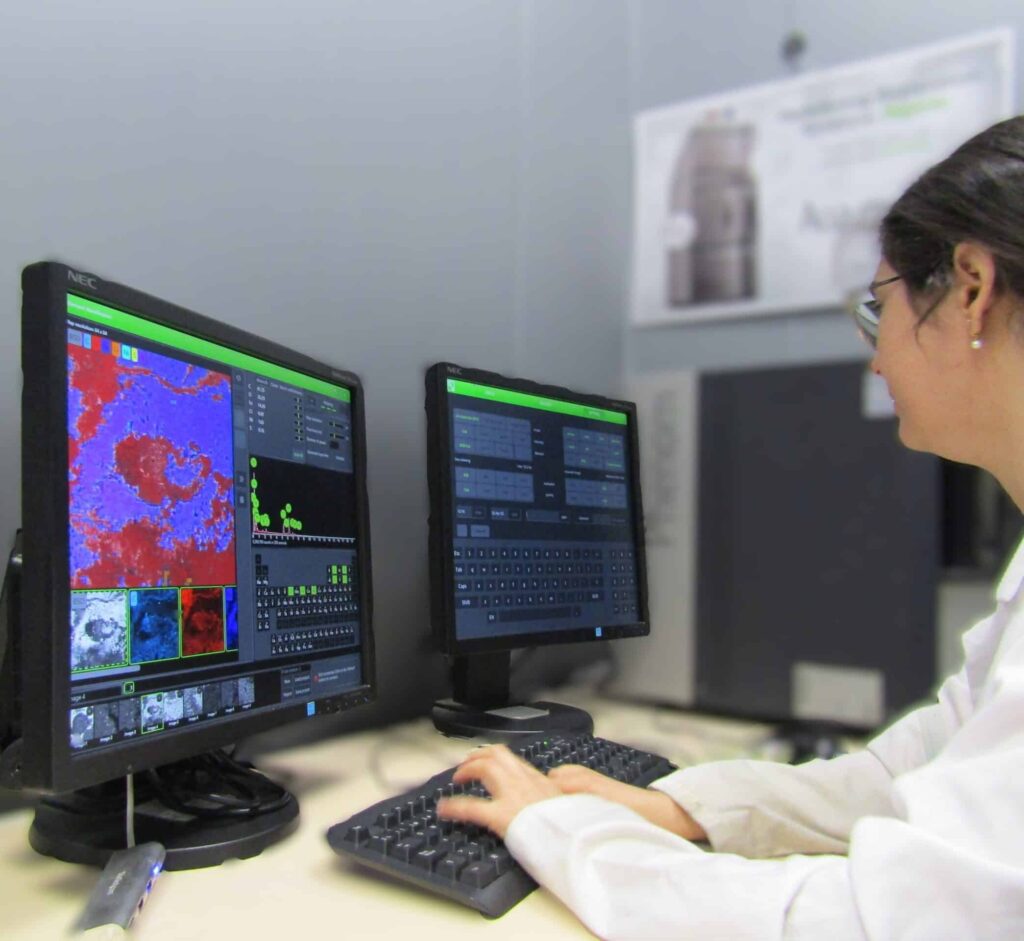
We minimize risks and optimize product performance. We meet the expected quality and functionality standards. During this phase, we carry out a technical feasibility analysis of the technologies, along with a thorough process of testing and comparison to select the technologies best suited to the product’s requirements. Want to know more? Get in touch with the INFINITIA team.
Talk to a specialist
Request a free initial consultation; contact a consultant from our team of specialists

What is technology selection and testing? Discover the different processes
What is it?
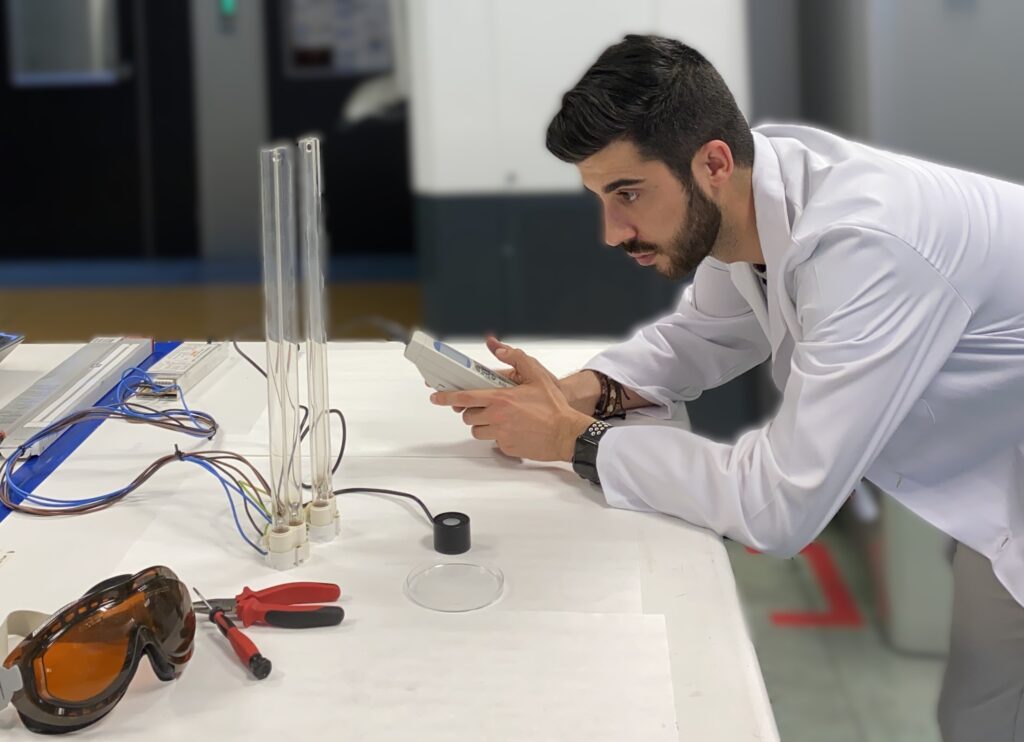
Technology selection and testing is a research and evaluation process that identifies, compares and validates the most suitable technologies for a specific product.
A comprehensive analysis ranging from evaluating innovative technologies to testing technologies at the prototyping stage. We carry out a detailed study of each technology, analyzing its technical feasibility, performance, durability and costs.
Benefits of technology selection and testing for industrial development
Benefits
Upfront technology evaluation reduces the risk of redesign in advanced project phases. Identifying early on that a technology doesn’t reach the required performance level prevents the problem from surfacing once tooling has already been manufactured or approval is underway. The cost of correcting a technology decision rises sharply as development progresses, and early experimental validation acts directly on that curve.
Comparative testing makes it possible to technically justify choosing one alternative over others. When the decision is documented with standardized testing on the candidate options, the traceability of the criterion is established. This proves decisive in regulated sectors, where the technical file must demonstrate why a specific material, coating or process was selected over an apparently equivalent alternative.
Technology validation makes it easier to substitute materials or processes without compromising performance. Comparative testing identifies which more accessible, locally available or lower-environmental-impact alternatives maintain the required behavior. The same approach applies to material approval and the validation of alternative suppliers, where equivalence must be demonstrated, not assumed.
Combined technical and economic evaluation avoids selecting technologies that are viable but not cost-effective. A solution can pass every performance test and still prove unviable due to implementation cost, production cadence or dependence on a single supplier. The analysis integrates both dimensions — performance and total implementation cost — so the selected technology remains sustainable throughout the product’s entire lifecycle.
Applications of technology selection and testing for validating technical decisions
applications
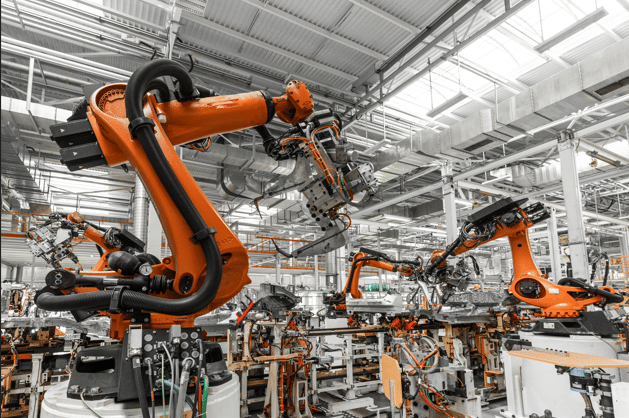
Technology evaluation applies at any point in the industrial lifecycle where more than one viable technical alternative exists. It appears in new product development, in the substitution of materials or suppliers, in improving the performance of an existing product, and in incorporating emerging technologies into already-established lines. In every case, the approach is the same: narrow down the candidates, define measurable criteria and resolve the comparison through testing.
INFINITIA structures these applications around the specific industrial problem, not the catalog of available tests. The starting point is the functional specification and the service conditions; from there, it determines which experimental campaign genuinely discriminates between alternatives and which would provide redundant data. This selection criterion optimizes the number of samples and tests needed to reach an unambiguous conclusion.
Technical feasibility analysis of technologies
This is the first step in selecting the most suitable technical solutions for a new product. We evaluate each technology’s compatibility with the project’s objectives and requirements, ensuring its correct integration into development and production. We anticipate potential limitations and select the technologies best suited to the product’s strategy.
We also carry out a cost-benefit analysis to verify that the chosen solutions are not only technically viable, but also cost-effective and sustainable in the long term.
Evaluation and comparison of technologies
By comparing different alternatives, we identify the technological solution best suited to the project’s needs. We analyze the strengths and weaknesses of each option, assessing aspects such as durability, efficiency and environmental impact.
We also evaluate the performance of innovative and emerging technologies to ensure the final product is functional, competitive and distinctive.
Technology testing under real conditions
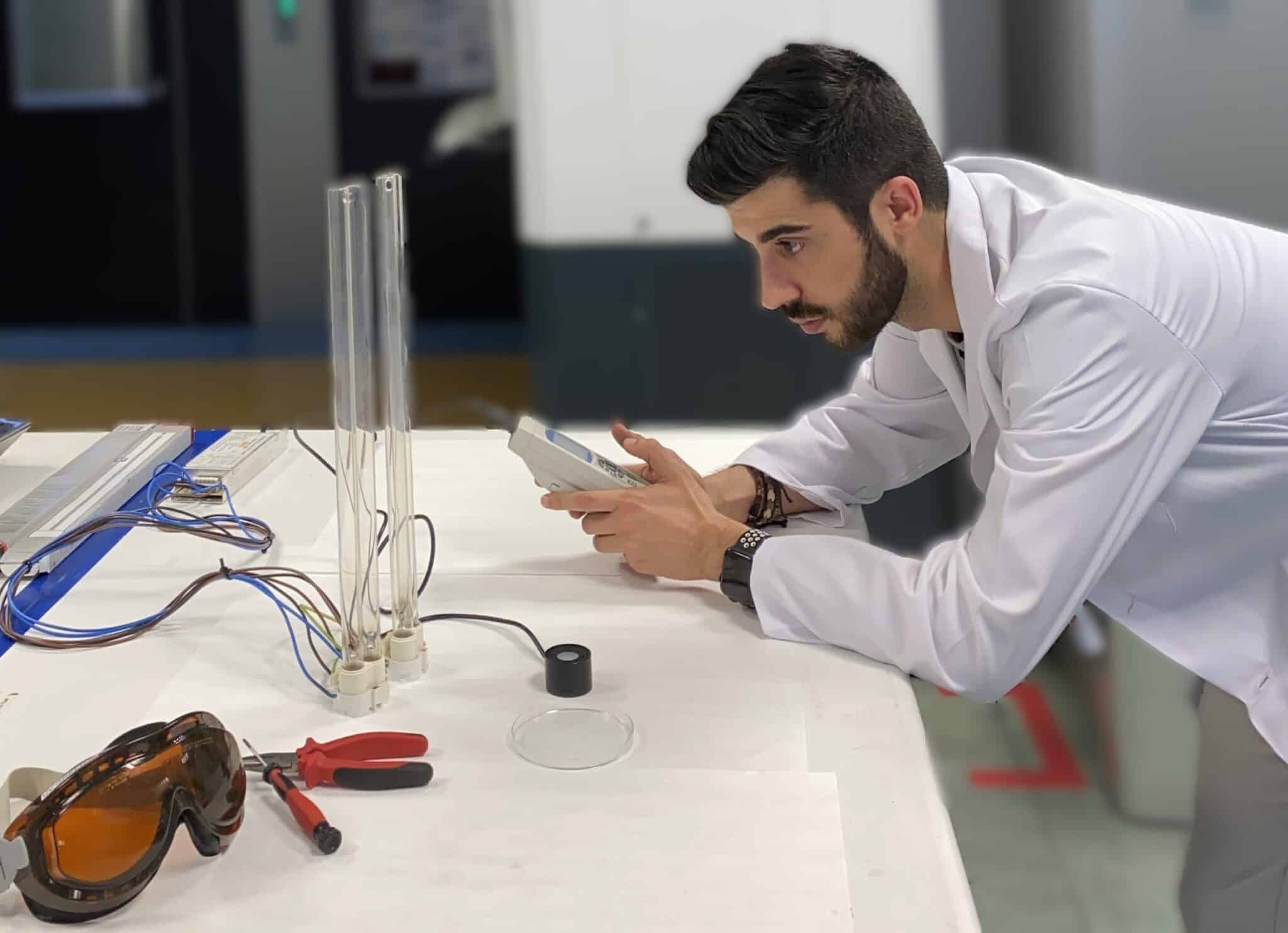
Once technologies have been selected, we carry out testing under usage conditions similar to the product’s final environment to evaluate its behavior, performance and durability. This testing makes it possible to detect opportunities for improvement and optimize the design from the earliest stages.
At INFINITIA we carry out intensive-use simulations, testing under extreme environmental conditions and durability testing to verify that the technologies meet performance expectations.
Testing new technologies in products
We validate the implementation of new technologies through prototypes, verifying that each solution works correctly and integrates efficiently with the product’s other components.
We analyze aspects such as energy efficiency, precision, strength or ease of maintenance to optimize the prototype’s design and maximize its performance.
Technical evaluation of emerging technologies
Incorporating emerging technologies can become a significant competitive advantage. We evaluate advanced materials, intelligent control systems and energy efficiency solutions that add value to the product and set it apart in the market.
This technology validation makes it possible to select the most innovative solutions to improve the product’s sustainability, efficiency and differentiation, while also ensuring compliance with regulations and user expectations.
¿En qué consiste la ingeniería forense?
Sectors
Technology evaluation applies broadly across industrial sectors where a component failure has consequences for safety, operational availability or regulatory compliance. Requirements vary from one sector to another, but the methodological approach remains the same: define acceptance criteria derived from service conditions and resolve the comparison through testing that reproduces those conditions.
INFINITIA adapts the experimental campaign to the regulatory framework and specific requirements of each sector. Testing conditions, acceptance criteria and the level of documentation required differ substantially between an automotive component and a medical device, even when the technology evaluated is the same. This sector-specific adaptation ensures the results can be used directly in the client’s technical file.
Technology selection and testing at INFINITIA to make industrial investment decisions based on evidence
Value
Technology selection and testing provides the experimental evidence needed to choose between technical alternatives with verifiable criteria. Its value lies not in running the test, but in building a valid comparison: acceptance criteria derived from service conditions, representative test conditions, and an interpretation that places each result within the client’s industrial context. The result is a well-argued recommendation, with its limits of validity clearly stated.
This approach shifts the technology decision from estimation to data. Instead of assuming a technology will work because its data sheet says so, its behavior is experimentally verified under the conditions it will actually face. This approach connects naturally with product design and innovation, where material, process and technology decisions irreversibly shape the final cost and performance.
Economic optimization happens along two paths. The first is avoiding redesign: detecting a technology’s incompatibility during the evaluation phase costs a fraction of what it costs to detect it after investment in tooling. The second is validating lower-cost alternatives that meet the requirements — something that can only be confirmed with data. Projects such as the development of a minimum viable product with verified technical feasibility show how early validation shapes subsequent development decisions.
In regulated sectors (automotive, aerospace, medical devices, energy), documented technology evaluation is part of the technical file and supports the justification of design decisions before audits and clients. INFINITIA positions itself as an external technical partner at this stage: providing its own analytical capability, independence from the technologies evaluated, and an industrial reading of the results. The goal is not to accumulate testing, but to have the minimum sufficient evidence to decide with confidence.