What was the challenge or problem to be solved?
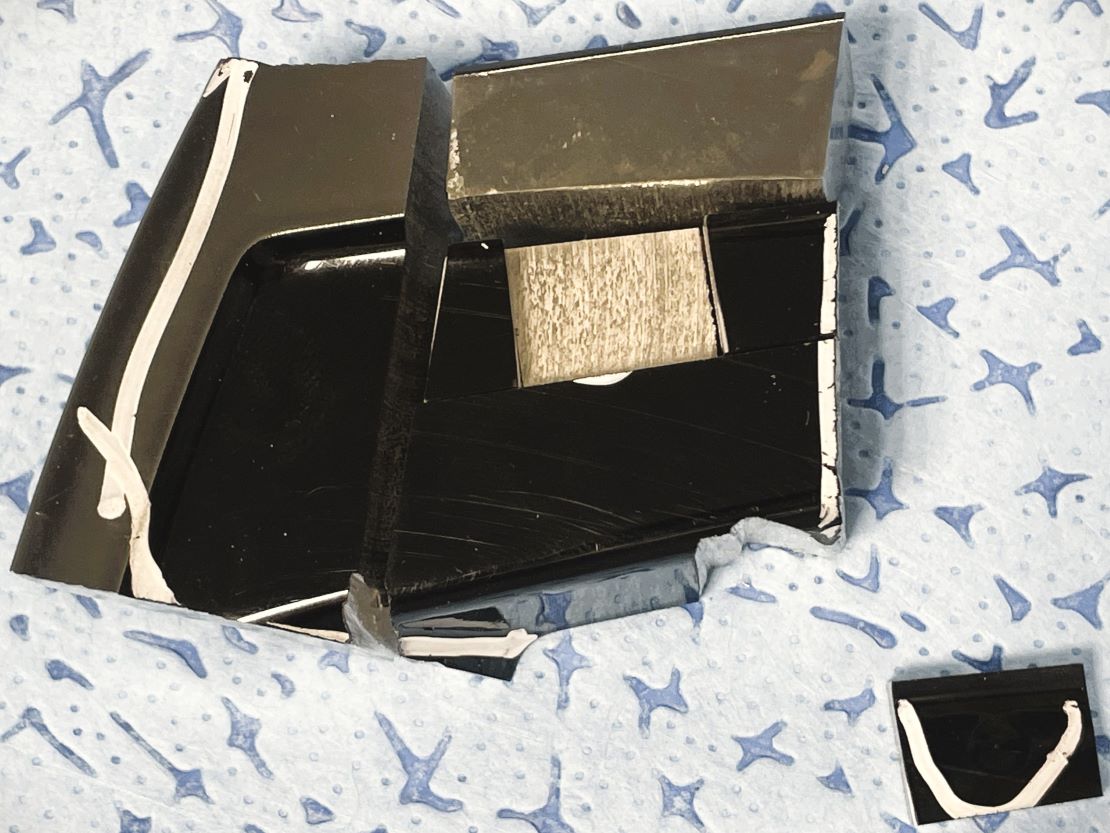
In certain industrial processes, the appearance of irregularities after painting metal parts can raise concerns about the stability of the production process and the quality of the base material. In the analyzed case, a manufacturer detected visible imperfections in aluminum parts once the coating stage was completed, raising questions about the true origin of the problem.
To avoid corrective actions based on assumptions, it was necessary to carry out a technical study to determine whether the imperfections were related to the painting process, the surface preparation of the parts, or the presence of contaminants in the material.
Paint defects in aluminum in industrial coating processes
Paint defects in aluminum can manifest in different ways depending on process conditions and the surface state of the material. The most common issues include irregular finishes, visible points beneath the paint layer, or variations in coating uniformity. Although these defects may sometimes appear to originate during paint application, their root cause is often found in earlier stages of the process.
Aluminum is widely used in industry due to its light weight, corrosion resistance, and good mechanical properties. However, its surface behavior can be influenced by multiple factors, such as residues from previous operations, contamination during handling, or variations in pre-treatment processes.
Visible defects after painting do not always originate during paint application. In many cases, they are caused by contamination or irregularities present on the aluminum surface prior to coating.
When these surface alterations are not detected before the painting process, they can become encapsulated beneath the paint layer and only become visible once the process is completed. For this reason, understanding the nature of these defects is essential to determine whether the issue is related to the coating itself or to prior material conditions.
Production rejects due to aesthetic defects
The presence of visible imperfections in painted parts can quickly lead to production rejects due to aesthetic defects, especially when the components are part of products with high visual or functional quality requirements. Even minor surface irregularities can be sufficient to discard entire parts or repeat finishing stages.
These issues have a direct impact on industrial process efficiency. Rejects result in material losses, increased energy consumption due to reprocessing, and potential delays in product delivery. Additionally, when defects appear intermittently, identifying their origin becomes particularly challenging without a detailed technical analysis.
Aesthetic defects can generate significant production costs due to reprocessing, part rejection, and reduced manufacturing efficiency.
In this context, the client needed to understand what was causing these defects and whether their origin was linked to surface preparation, the base material, or factors related to the painting process. Without this information, any process adjustment risked failing to solve the problem effectively.
Adhesion issues in coatings due to surface contamination
One of the most common factors behind surface defects in painted parts is the presence of adhesion issues in coatings. Proper adhesion between the coating and the metallic substrate largely depends on the chemical and physical condition of the material surface.
When the aluminum surface contains contaminants, residues from previous processes, or external particles, the interaction between the paint and the metal can be altered. These alterations may lead to visible defects after curing or create discontinuities in the coating layer that affect the final finish.
Identifying the cause of these issues requires a detailed analysis of both the surface morphology and the chemical composition of the elements present in the affected areas. Only through this type of study can it be determined whether the problem is due to surface contamination, external particles, or intrinsic material characteristics.
How was it addressed or what was the solution?
Once the problem context was defined, the study was designed to identify differences between areas where defects were observed and those where the surface finish was correct. This comparative approach is common in forensic engineering investigations applied to industrial processes, as it allows the detection of variations that may go unnoticed when samples are analyzed in isolation.
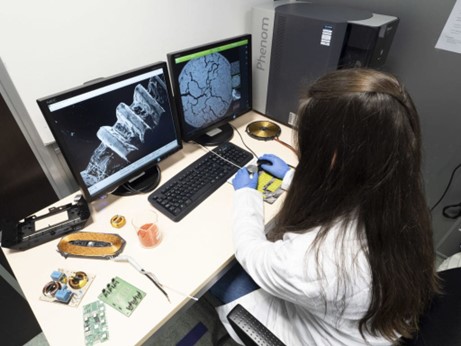
Based on this strategy, INFINITIA’s forensic engineering team developed an analysis focused on characterizing the surface of the parts and detecting potential contaminants or inclusions that could interfere with the painting process. Techniques capable of analyzing both surface morphology and the composition of particles present in the affected areas were employed.
This approach enabled a more precise evaluation of the material characteristics and helped identify the factors contributing to the observed defects after coating.
Surface analysis in industrial coating processes
Surface analysis was the first step in studying the areas where defects appeared after the painting process. This type of analysis allows detailed examination of the material’s topography and the detection of microscopic irregularities that may not be visible through conventional inspection.
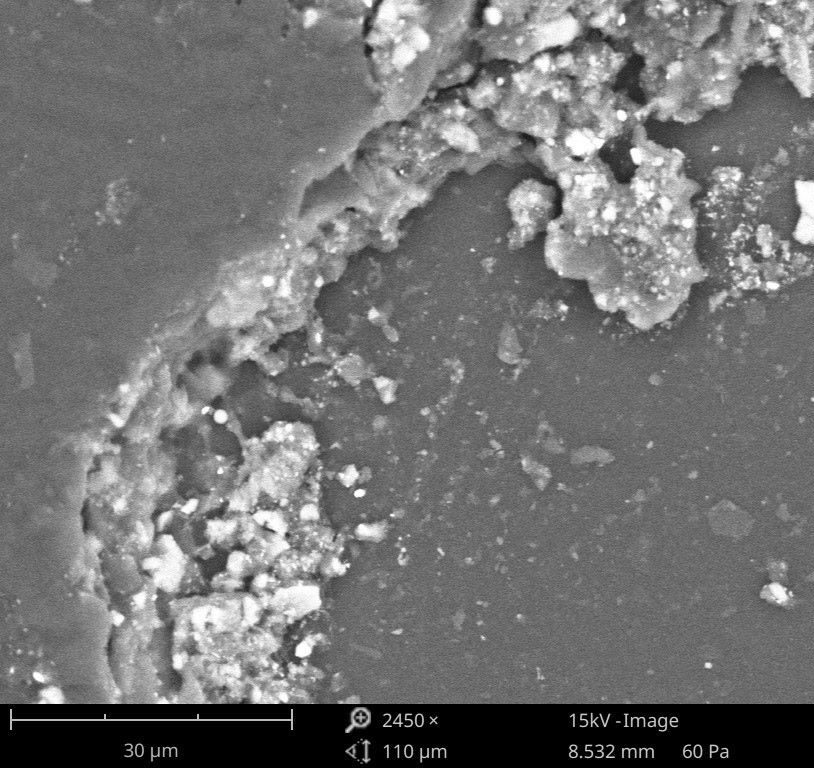
High-resolution observation techniques made it possible to analyze the morphology of the affected areas and detect the presence of particles or inclusions on the aluminum surface. These observations helped establish a clearer relationship between the presence of specific particles and the appearance of visible defects after coating.
Additionally, the study included a comparison between areas with acceptable finishes and those showing imperfections. This comparative analysis was key to identifying relevant differences in the material surface and guiding the investigation toward the root cause of the problem.
Failure analysis of aluminum parts in industrial environments
Failure analysis of aluminum parts focused on characterizing the particles present in areas where irregularities were observed after painting. For this purpose, analytical techniques capable of providing both morphological and chemical information about the elements present on the material surface were used.
Among the techniques employed were scanning electron microscopy (SEM), which allows detailed observation of the material surface, and EDX analysis, used to determine the elemental composition of particles detected in the affected areas.
The combination of electron microscopy and elemental analysis techniques enables the identification of microscopic contaminants that cannot be detected through conventional visual inspection.
The integration of these techniques provided precise information about the nature of the inclusions present on the aluminum surface. This type of characterization is particularly useful when investigating defects associated with surface contamination or the presence of external particles that may interfere with coating processes.
Root cause of paint defects in surface finishing
The results obtained during the study made it possible to identify the root cause of the paint defects observed in the analyzed parts. The analysis revealed that certain particles present on the aluminum surface were interfering with the painting process and generating visible imperfections in the final finish.
Identifying these particles made it possible to better understand the origin of the problem and rule out other hypotheses related to the coating application process. This type of information is especially valuable for guiding corrective actions within the production process.
Thanks to the results obtained, the client was able to rely on a solid technical basis to evaluate potential improvements in surface preparation and part handling stages prior to painting. This approach helped reduce uncertainty and supported the implementation of measures aimed at improving process stability.