×

Chemical analysis of metals

The chemical analysis of metals is an essential service to guarantee the quality, reliability, and safety of the materials used in industry. At INFINITIA, we offer this service to respond to the growing need to characterize and control the composition of metals and alloys, ensuring that they comply with technical specifications and current regulations.

In our industrial laboratory, we have a team of specialists who use advanced technologies such as ICP-OES, ICP-MS, SEM-EDX, and XRF, allowing us to analyze in detail the composition of steels, aluminum, copper, titanium, and other critical alloys for sectors such as automotive, construction, and energy.

Thanks to this analytical capability, at INFINITIA we support companies in the quality control of their raw materials, in the validation of suppliers, and in the resolution of incidents in finished products.

What does chemical analysis of metals and metallic materials involve?

The chemical analysis of metals consists of determining the elemental composition of a metallic material and evaluating the presence of impurities or trace elements that may affect its behavior.

At INFINITIA, we carry out this process using optical emission and inductively coupled spectrometry techniques (ICP-OES, ICP-MS) to achieve maximum precision in the quantification of elements, as well as X-ray fluorescence (XRF) for non-destructive analysis and electron microscopy with EDX to study surfaces and detect localized contamination.

In addition, we integrate complementary methods such as thermal analysis (TGA, DSC) and electrochemical corrosion testing with a potentiostat, which allows us to correlate the chemical composition with the functional performance of the material. In this way, chemical analysis of metals not only reveals which elements are present, but also provides key information to anticipate the behavior of the material in service.

Chemical analysis of metals

Benefits of chemical analysis of metals

Among the main benefits offered by this service at INFINITIA is the ability to ensure traceability and regulatory compliance of the metals used in a product. For example, in industrial projects, we have validated stainless steels intended for critical automotive parts, detecting deviations in composition that compromised their corrosion resistance.

Likewise, chemical analysis allows for the optimization of production processes, the identification of cross-contamination in manufacturing lines, and the verification of the homogeneity of batches of raw materials. Another key benefit is the reduction of costs associated with failures, since knowing the chemical composition with precision helps to avoid defects that could lead to claims or product recalls.

Thus, chemical analysis of metals is a strategic tool for decision-making in forensic engineering, material characterization, and approval testing.
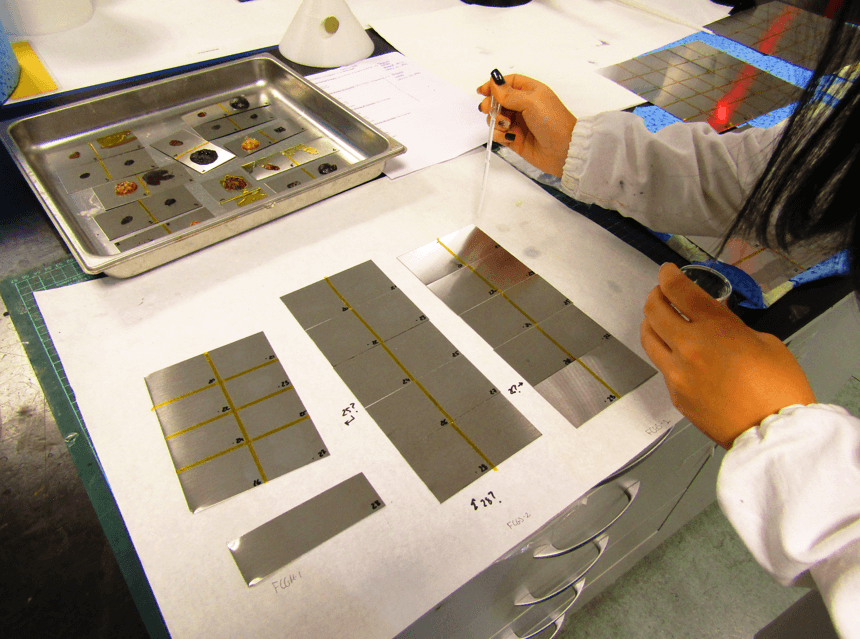
Chemical analysis of metals at INFINITIA. Metal analysis laboratory

At INFINITIA, we develop this service from an applied and multidisciplinary perspective. Our chemical analysis and metallurgy laboratory is equipped with state-of-the-art instrumentation, and our specialists design each test according to the technical requirements of the client.

We adapt the analysis to different needs: from verifying the composition of an aluminum alloy used in aeronautical components to studying the corrosion resistance of steels exposed to corrosive atmospheres or validating galvanized materials used in high-performance applications.

In addition, thanks to our experience in forensic engineering, we not only identify the elements present, but also interpret the data to provide useful conclusions for failure investigation and process improvement.

With this combination of scientific rigor, advanced equipment, and applied vision, INFINITIA positions itself as a strategic partner in chemical analysis of metals for companies in any industrial sector.

Chemical analysis of metals

Types of Chemical Testing and Analysis of Metals

At INFINITIA, we develop different chemical analyses of metals to determine their elemental composition, evaluate impurities, and validate the behavior of alloys used in multiple industrial sectors.

Our goal is to provide accurate information that allows for the optimization of material selection, ensures regulatory compliance, and anticipates possible failures in service.

Elemental chemical analysis using ICP-OES and ICP-MS emission spectrometry

These analyses allow us to determine the elemental composition of metals and alloys with high precision. ICP-OES is used to quantify major and minor elements, while ICP-MS is ideal for detecting traces with very low detection limits.

At INFINITIA, we apply these techniques to ensure the quality of stainless steels, aluminum, and titanium in biomedical applications, guaranteeing that they meet the most demanding standards in the industry.

X-ray fluorescence (XRF) and elemental composition

XRF is a non-destructive technique that identifies and quantifies elements in solid samples without altering their structure. In our laboratory, we use it to verify the composition of production batches and ensure the homogeneity of copper, aluminum, or their alloys.

For example, we have used XRF in electrical component quality control projects, guaranteeing the purity of metal conductors.

Scanning electron microscopy (SEM) coupled with energy dispersive spectroscopy (EDX) allows us to analyze surfaces and detect impurities or phases in metallic materials.

At INFINITIA, we use it to study non-metallic inclusions in steels and surface contamination in machined parts. A typical case is the identification of oxides or sulfides in welds, which helps to correlate microstructural defects with functional failures.

Thermal analysis (TGA and DSC) on metals and metal compounds

Using thermogravimetry (TGA) and differential scanning calorimetry (DSC), we evaluate the thermal stability and energy transitions of metals and coatings.

These analyses enable us to predict the behavior of materials at high temperatures. In the automotive industry, for example, we have used DSC to validate the stability of protective coatings against intensive thermal cycles.

Corrosion tests, electrochemical studies and chemical testing

Corrosion resistance is a critical factor in the performance of metals. At INFINITIA, we use potentiostats and electrochemical techniques to simulate service conditions and measure the susceptibility of alloys to aggressive environments.

A recent case involved the evaluation of galvanized steels exposed to corrosive atmospheres, which allowed us to recommend the most suitable coating to extend the service life of the components.

Applications of Chemical Analysis of Metals

The chemical analysis of metals has direct applications in multiple industrial sectors. At INFINITIA, we apply it to validate raw materials, optimize processes, and guarantee the safety and functionality of end products.

Automotive metal chemical analysis: quality control for component reliability and durability

Automotive manufacturers require highly reliable metallic materials, where chemical composition is key to ensuring performance against fatigue, vibration, and corrosion throughout the vehicle’s lifecycle.

  • Validation of stainless steels across different batches: verification of chemical composition to ensure consistency and avoid deviations between productions.
  • Evaluation of metallic coatings: analysis using XRF and electrochemical testing to determine corrosion resistance and in-service behavior.
  • Purity control in aluminum components: detection of impurities that may affect mechanical properties or manufacturing processes.

At INFINITIA, we collaborate with automotive suppliers to identify batch-to-batch variations that may lead to premature failures or supply chain rejections.

Aerospace and energy metal chemical analysis: material validation for extreme conditions

In these sectors, chemical analysis is essential to guarantee material safety under extreme conditions, particularly in response to variations in temperature, pressure, and oxidizing environments.

  • Detection of trace elements: analysis of impurities and their impact on mechanical resistance at high temperatures.
  • Evaluation of thermal stability of protective coatings: validation of their behavior under oxidation and thermal degradation processes.
  • Control of batch homogeneity: ensuring consistency in titanium and nickel alloys used in critical components.

At INFINITIA, we verify materials intended for demanding environments, reducing the risk of in-service failure and improving structural reliability.

Food and metal packaging chemical analysis: chemical safety and regulatory compliance

Metal packaging and coatings must comply with strict regulations. At INFINITIA, we perform chemical analyses and migration studies to ensure safety, preventing contamination and ensuring chemical stability during use.

  • Evaluation of how composition affects microwave heating: identification of potential degradation or undesirable behavior.
  • Corrosion resistance testing in cans: evaluation against food products and aggressive agents.
  • Verification of purity of internal coatings to prevent food contamination.

At INFINITIA, we carry out studies aimed at ensuring product safety and compliance with regulatory requirements.

Medical device metal chemical analysis: composition, biocompatibility and physiological corrosion resistance

In the medical sector, chemical composition determines biocompatibility and resistance to physiological corrosion, making it a critical factor for patient safety and device durability.

  • Validation of alloys for orthopedic implants using ICP-MS: ensuring composition and absence of critical contaminants.
  • Study of passivation in stainless steels for instrumental components: evaluation of resistance in physiological environments.
  • Evaluation of migration in special alloys: control of the release of potentially harmful elements.

At INFINITIA, we analyze critical materials to ensure their stability, safety, and regulatory compliance.

Construction and infrastructure metal chemical analysis: corrosion resistance and long-term durability

Metallic materials in construction must withstand loads, moisture, and chemical agents while maintaining their mechanical and structural properties over time.

  • Composition control of reinforcing steels: verification of compliance with technical specifications.
  • Accelerated corrosion testing in aggressive environments: simulation of harsh conditions to evaluate durability.
  • Verification of galvanizing to extend service life: analysis of coatings and their protective capacity.

At INFINITIA, we help validate materials and treatments that extend infrastructure lifespan and reduce maintenance costs.

INFINITIA as a strategic partner in chemical analysis of metals: quality, innovation, and reliability

Chemical analysis of metals is a fundamental pillar for ensuring quality, safety, and reliability in today’s industrial processes.
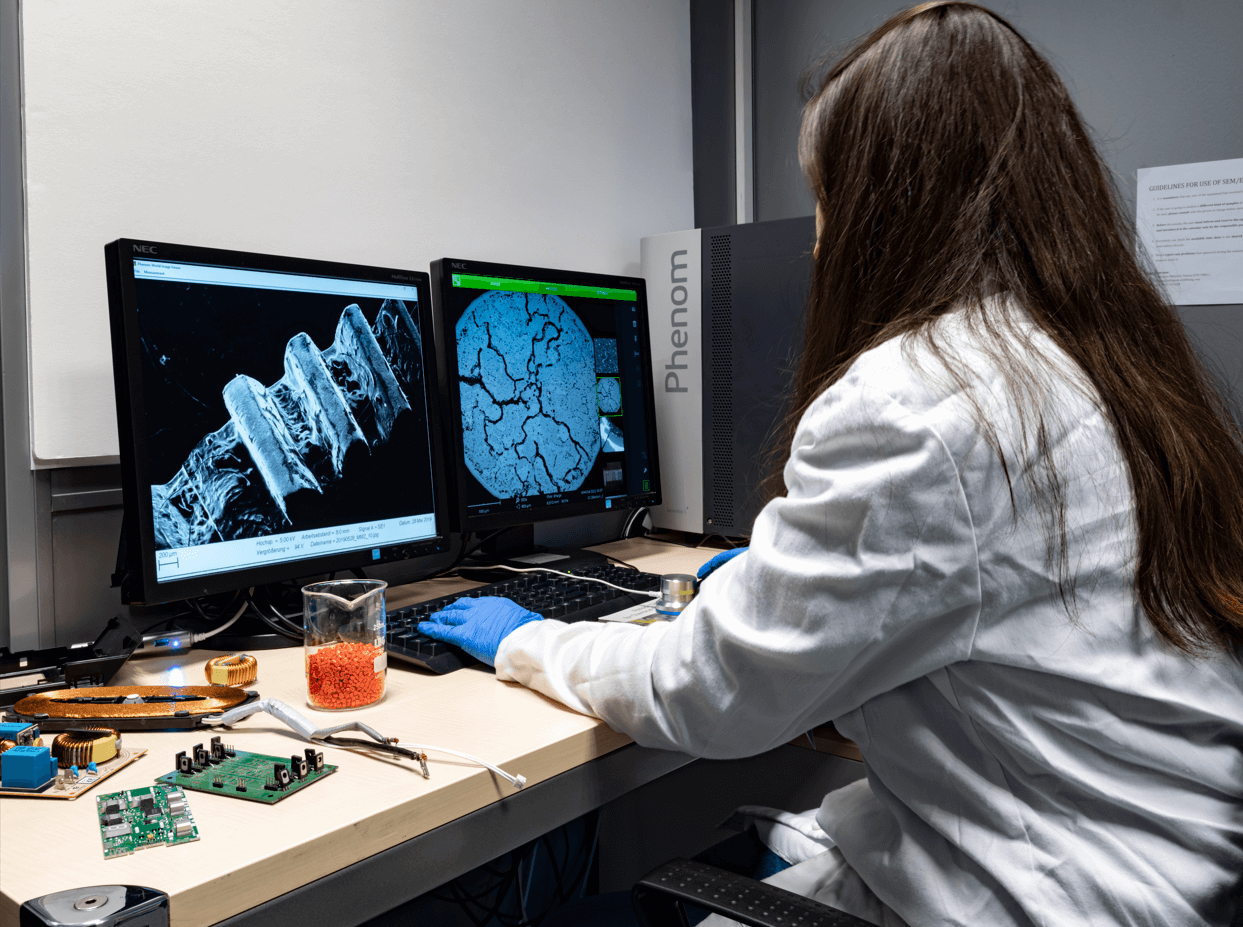
At INFINITIA, we approach this service from a scientific and applied perspective, using cutting-edge techniques such as ICP-OES, ICP-MS, XRF, SEM-EDX, TGA, and DSC, as well as electrochemical corrosion testing.

This combination allows us not only to determine the elemental composition of metals, but also to anticipate their behavior under real service conditions and prevent failures that could compromise the safety or efficiency of products.

Relying on INFINITIA for chemical analysis of metals means having a specialized technical partner that combines expertise in forensic engineering, material characterization, and approval testing.

Our laboratory is equipped to adapt to the specific needs of each customer, whether to validate a batch of structural steels, ensure alloy compatibility, evaluate the corrosion resistance of a metallic coating, or analyze the purity of components intended for the automotive or aeronautics industries.

Current trends in this field point towards greater use of hybrid analytical techniques, capable of delivering real-time results and integrating into digitized manufacturing processes. Likewise, the growing demand for sustainability is driving the need for chemical analyses that enable the optimization of raw material use, reduce waste, and improve the traceability of recycled materials. In this context, INFINITIA is at the forefront, providing knowledge, rigor, and customized solutions to meet the challenges of the industry.

In short, choosing INFINITIA for chemical analysis of metals means ensuring exhaustive control over raw materials, strengthening competitiveness in the market, and minimizing risks associated with production.

Our commitment is to offer reliable results, high-value technical interpretations, and close support so that each company can transform the data obtained into strategic decisions that enhance its innovation and guarantee its long-term success.

Chemical analysis of metals

Frequently asked questions about chemical analysis of metals

Chemical analysis of metals is the set of instrumental techniques used to determine the elemental composition of a metallic material: which elements it contains, at what concentrations, and whether undeclared impurities or contaminants are present. Its applications range from verifying conformity with standards such as EN, ASTM or ISO, to identifying the root cause of industrial failures, qualifying suppliers, or characterising unknown materials in reverse engineering contexts.

At Infinitia we apply chemical analysis of metals in projects across sectors as varied as automotive, capital equipment, industrial construction and food processing, always adapting the methodology to the client’s specific technical objective rather than following a standard protocol.

The choice of technique depends on the type of metal, the required level of precision and whether the analysis can be destructive or not. There is no universal technique: each method has different sensitivity, detection limits and applicability.

As a general guide:

  • Optical Emission Spectrometry (OES): fast quantitative analysis of steels, aluminiums and metal alloys, with good precision for major and minor elements.
  • X-Ray Fluorescence (XRF): non-destructive analysis, ideal for rapid alloy identification (PMI – Positive Material Identification) and in-situ verification.
  • ICP-MS / ICP-OES: essential for detecting traces and impurities at ppm or ppb levels.
  • SEM-EDX: localised analysis of inclusions, point contaminations or surface layers using electron microscopy.

At Infinitia we combine several techniques within the same project when the technical problem requires it, delivering an interpreted report rather than just a data table.

Chemical analysis of metals is necessary whenever a technical decision cannot be based solely on supplier documentation. Material certificates, even EN 10204 3.1 or 3.2 types, declare a nominal composition for the batch but do not guarantee that each individual part received complies with those values.

The most common cases where instrumental analysis is essential include: receipt of batches showing abnormal behaviour on the production floor, suspected material substitution or mixing, investigation of in-service failures, raw material quality audits and validation of materials in sectors with strict regulatory requirements (pressure, temperature, food, medical). In these contexts, having your own analytical data is what enables well-founded decisions.

Chemical analysis of metals is the broader concept: it covers the elemental determination of any metallic material, regardless of whether it is a complex alloy or a relatively pure metal. Alloy composition analysis is a specific case focused on identifying and quantifying the alloying elements that define the mechanical, thermal or corrosion behaviour of the material.

In practice, both share techniques and instrumentation, but the scope of the study varies: a chemical analysis may be limited to confirming the presence or absence of a contaminant element, whereas an alloy composition study typically includes comparison against a standard, interpretation of how each element influences the material’s properties and, frequently, correlation with mechanical or metallographic testing.

Yes, non-destructive analysis of metals is possible using portable X-Ray Fluorescence (XRF), which allows alloy identification and quantification of its main elements without altering the part. This is the basis of PMI (Positive Material Identification) testing, widely used in sectors such as oil & gas, petrochemicals or pressure vessel construction to verify materials before commissioning.

However, non-destructive analysis has sensitivity limitations that make it insufficient when traces, very low-concentration impurities or specific layer analysis are required. In those cases, techniques such as OES or ICP-MS offer greater precision. At Infinitia we select the method based on the objective of the test and, whenever possible, we preserve the integrity of the sample. You can find out more about our non-destructive testing NDT/END and when to apply each approach.

A material certificate reports the nominal composition declared by the manufacturer for a production batch. Working with an external technical partner allows independent verification of the actual composition of the specific part received or that has failed. These are two different things.

Instrumental analysis can reveal: variations in alloying elements versus the certificate, undeclared impurities (sulphur, phosphorus, lead, bismuth…) with an impact on weldability or embrittlement, cross-contamination from batch mixing or recycled materials, and discrepancies that hold technical and, where applicable, legal value in claims or expert report contexts. This independent verification is particularly relevant in counterfeit component detection processes and supply chain audits.

Chemical analysis is an essential part of diagnosing failures in metal parts, but it is rarely sufficient on its own. It makes it possible to rule out or confirm whether the material is correct, whether it contains impurities that explain the failure mode, and whether there is a correlation between the composition and the observed behaviour.

To reach the root cause, at Infinitia we integrate it with other techniques: metallographic testing for microstructure analysis, fracture surface analysis using SEM and, where applicable, study of heat treatments for metals or coatings present. This multi-technique approach is what allows us to answer the client’s real question: why it failed and how to prevent it from happening again.

Yes, chemical analysis of surface layers on metals is possible, but it requires techniques capable of discriminating between the base material and the layer. The most common are SEM-EDX for localised elemental analysis in cross-section, grazing-angle XRF and, in some cases, ICP after selective dissolution of the layer.

At Infinitia we carry out this type of analysis as part of our analysis of galvanised, anodised and coated materials service, including verification of thickness, uniformity and composition of the layer, and its correlation with corrosion behaviour. Surface layer analysis is critical in sectors such as automotive or capital equipment, where the coating is the primary protection mechanism for the base metal.

Recurring problems in specification-compliant metals almost always have a systematic origin that the material certificate does not detect: composition variations within the admissible range set by the standard, contamination from scrap mixing in the smelting process, internal segregation or inhomogeneities between heats from the same supplier. Documentary compliance does not equal real consistency between batches.

Without a systematic chemical analysis comparing affected batches against unaffected ones, corrective process actions that do not eliminate the root cause are commonly applied. At Infinitia we address these cases within our preventive failure analysis projects, cross-referencing analytical data from different batches to identify whether a systematic deviation exists in the supply before the problem escalates to the end customer or production line stoppage.

Chemical analysis of metals contributes to reducing industrial costs in two complementary ways: by detecting non-conforming materials before processing, when the rejection cost is minimal compared to an in-service or customer-facing failure; and by enabling specification optimisation, avoiding overpayment for premium alloys when a more economical alternative would fully meet the actual application requirements.

At Infinitia we have applied this approach in alternative supplier validation projects and industrial benchmarking exercises, where comparative chemical characterisation enabled purchasing decisions based on objective data rather than commercial references. See more cases in works done.

The cost depends on three factors: the analytical technique used (XRF, OES, ICP-MS, SEM-EDX…), the number and type of samples, and the scope of the study (elemental quantification only, or full characterisation including microstructure, mechanical properties, etc.).

A rapid XRF analysis to identify an alloy is not the same as a combined OES + ICP-MS + metallography study for root cause analysis. For this reason, at Infinitia we always size the analysis to the actual technical objective: we prioritise the most representative techniques for the problem, avoiding unnecessary testing and optimising the cost/value ratio for the client. If you would like an estimate tailored to your case, contact us and we will send you a technical and economic proposal.

Typical turnaround times range from 1 to 4 weeks depending on the technical complexity of the study: XRF or OES analyses for composition verification fall at the shorter end, while studies involving ICP-MS or incorporating surface texture and microstructure analysis may require the full timeframe.

For urgent cases with an impact on the production line, we offer an express quotation option that allows results to be delivered within 24–72 hours. If you need this option, write to us with a brief description of the material and context and we will prepare a tailored proposal.

Contact us

To receive a PREFERENTIAL ANSWER, please contact us using the form below.


    (*) Mandatory fields


    When do you need to receive the quotation? (*)

    What approximate investment do you expect for this service? (*)

    When do you need to receive the results of the contracted service? (*)

    If you prefer, you can send us your documentation:


    Allowed formats: PDF, DOC, XLS, PPT, JPG, PNG. Maximum size 10 MB total

    Or if your file is large, you can send it via a transfer platform and provide us with the link here:

    BASIC INFORMATION ON DATA PROTECTION:
    Responsible: INFINITIA RESEARCH, S.L. Purpose: to respond to queries raised by the user and send the requested information. Legitimation: user consent. Recipients: only transfers are made if there is a legal obligation. Rights: to access, rectify and delete, as well as other rights, as indicated in the Privacy Policy. You can find the complete information in our privacy policy.

    I agree with the  privacy policy.