
What was the challenge or problem to be solved?
In many industrial processes, coatings play a critical role both functionally and aesthetically. The proper application of paint or surface treatments directly affects product durability, corrosion resistance, and the perceived quality by the end customer. When visual defects or surface anomalies appear, they can lead to production rejections, deviations from technical specifications, or even non-compliance with applicable standards.
In this context, an industrial company detected irregularities on the surface of coated parts which, although not initially compromising component functionality, raised concerns about process stability and final finish quality. Given the uncertainty surrounding the origin of the phenomenon, it became necessary to carry out a paint defect analysis to better understand what was happening at the material surface and which factors could be contributing to these anomalies.
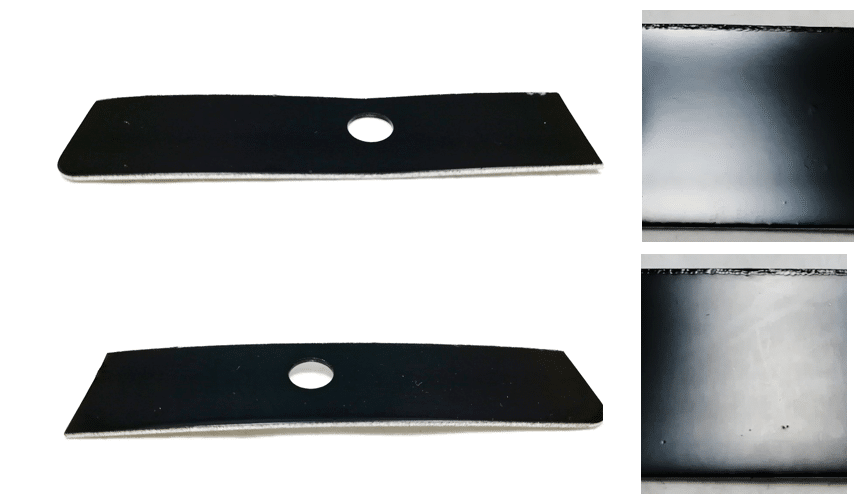
Surface defects in paint detected during quality control
The starting point of the study was the identification of visual defects in certain coated parts during quality control stages. These defects appeared as slight variations in the surface appearance of the coating, generating a visual effect that did not match the expected finish according to process specifications.
Although the issue might initially seem purely aesthetic, in industrial environments such irregularities can have broader implications. Coating defects may be linked to issues in paint formulation, deviations in application conditions, or surface contamination affecting the proper formation of the protective layer.
Visual paint defects are not always purely aesthetic: they may indicate alterations in the coating process or in material interactions.

For this reason, before making decisions regarding changes in the production process, it was necessary to understand the true nature of the defect. A diagnosis based solely on visual inspection was insufficient to identify the root cause, leading to the need for a more detailed study using material characterization techniques, especially in applications where coatings must meet technical and durability requirements associated with standards such as ISO 12944.
Paint defect analysis to understand the root cause
Faced with these surface anomalies, the main objective of the project was to determine what was causing the observed defect in the coating. To achieve this, it was essential to characterize the affected areas in detail and compare them with regions showing normal behavior.
The purpose of the study was not only to describe the defect, but to obtain information that would help understand its origin and support technical decision-making regarding the coating process. Identifying microscopic surface features could provide relevant insights into potential alterations in the coating structure or interactions between different layers.
Microscopic analysis enables the identification of differences between compliant and defective areas that cannot be detected through visual inspection.
In addition, having reliable experimental data helped reduce uncertainty associated with the issue and avoid unnecessary interventions in the production process. In many cases, coating defects may have multiple potential causes, making it essential to base decisions on solid technical evidence obtained through appropriate analysis.
Failure analysis in coatings under a complex scenario
One of the main challenges of the project was that the detected defects did not present an obvious morphology to the naked eye. Surface irregularities could be observed under certain lighting conditions, but their origin could not be determined through standard visual inspection or routine production control techniques.
This type of situation is relatively common in problems related to industrial coatings. Anomalies affecting paint appearance often originate from microscopic-scale phenomena, such as variations in coating microstructure, film formation defects, or small surface discontinuities.
Given this complexity, INFINITIA’s forensic engineering team adopted an approach based on coating analysis using microscopy techniques. These tools allow for detailed examination of surface morphology and enable the detection of features not visible through conventional inspection methods. This approach made it possible to gain a deeper understanding of the detected defect.
How was it addressed or what was the solution?
To address the study, an analysis strategy was designed to accurately characterize the areas of the coating where the defect appeared. The objective was to observe the material surface at different magnification levels to identify potential irregularities, discontinuities, or structural features related to the observed phenomenon.
This type of analysis is particularly useful when defects cannot be explained through macroscopic inspection. Through microscopic surface characterization techniques, different regions of the sample were compared to evaluate potential differences between correctly performing areas and those affected by the defect.
Microscopy for defect analysis in coated surfaces
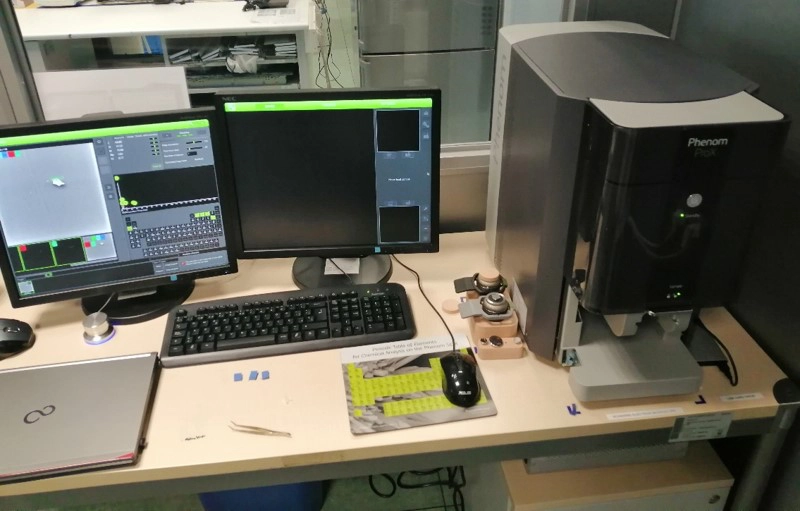
One of the main tools used in the study was microscopy applied to materials analysis, using a Phenom ProX from Thermofischer Scientific. This technique allows observation of sample surfaces with a level of detail far beyond that achieved through conventional inspection methods.
Microscopy applied to materials enables the study of coating morphology and the detection of anomalies invisible to the naked eye.
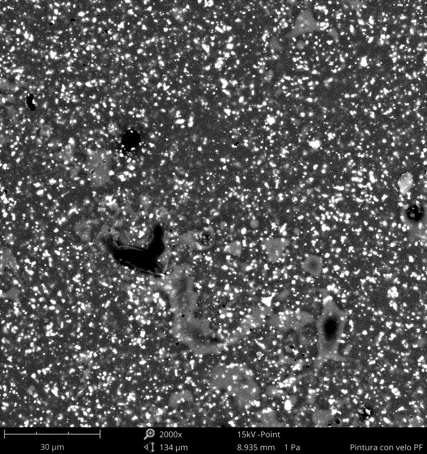
Through microscopy, it was possible to examine the morphology of the coating surface and identify features not visible through visual inspection. These observations help detect irregularities in the coating structure, as well as small discontinuities or alterations in paint film formation.
Microscopic observation also facilitates comparison between different regions of the sample. By analyzing both defective and apparently compliant areas, it is possible to identify structural differences that help explain the origin of the observed surface phenomenon.
Coating analysis through microscopic characterization
The study focused on examining the surface structure of the coating in detail using microscopy techniques capable of analyzing surface topography and morphology.
This approach is particularly valuable in the analysis of industrial paints, as many surface defects originate during the coating film formation process. Factors such as particle distribution, the presence of inclusions, or small discontinuities can influence the final surface appearance.
The team analyzed the samples to identify patterns or features that could explain the observed defect. This characterization process provided relevant information about the coating structure and potential factors influencing the performance of the paint system.
Microscopic surface characterization to support decision-making
Based on the results obtained through microscopy, a more detailed understanding of coating behavior at the microscopic scale was achieved. This type of information is essential when analyzing phenomena affecting the surface appearance of coated materials.
Microscopic characterization made it possible to identify relevant surface features and provide technical evidence to interpret the observed defect. Although the study focused on analyzing the phenomenon, the results provided a solid basis for guiding potential future actions related to the coating process.
This type of analysis is especially valuable for industrial companies that need to accurately understand issues affecting their products. Having experimental data obtained through advanced techniques helps reduce uncertainty in decision-making and address quality problems from a technically grounded perspective.