
What was the challenge or problem to be solved?
In highly technified industrial environments, the lack of detailed technical information on critical electronic components can compromise an organization’s ability to make reliable decisions regarding their maintenance, replacement, or redesign, making the reverse engineering of electronic components a key approach in such scenarios. This situation is especially common when working with proprietary, obsolete components or those sourced from non-transparent supply chains, where technical documentation is unavailable or insufficient.
This context creates a scenario of technical uncertainty that directly impacts product quality, process robustness, and the ability to adapt to changes in suppliers or operating conditions. As a result, companies are forced to seek alternatives that allow them to regain control over the technical knowledge of the components integrated into their systems.
Structural analysis of electronic components in industrial environments
In this case, the client faced the need to analyze an electronic component whose behavior directly influenced the performance of the system in which it was integrated. The lack of information regarding its internal design, materials, and manufacturing processes prevented a proper understanding of its operation and the reliable evaluation of possible alternatives. These types of situations limit responsiveness to incidents and hinder continuous product improvement.
The analysis of electronic components was approached as a key tool to break down the system into its constituent elements and understand the relationship between its structure and functionality. This approach makes it possible to identify critical parameters and how they influence overall performance, providing a solid technical basis for decision-making.
Understanding the component reduces dependency on the supplier
and enables more reliable technical decision-making.

In addition, this type of analysis not only allows for understanding the existing component but also facilitates the identification of opportunities for improvement or adaptation, which are particularly relevant in environments where product optimization is a competitive factor.
Definition of technical specifications based on advanced characterization
The objective of the project focused on establishing a technical foundation that would enable the definition of technical specifications for the component, allowing the client to replicate, validate, or improve it with confidence. This involves transforming information obtained through analysis into specific criteria that can be used in design, procurement, or quality control processes.
The lack of specifications created a significant risk, as any decision had to be made without a clear technical reference, increasing the likelihood of errors or deviations in product performance. In this context, having well-defined specifications allows industrial processes to be structured and variability to be reduced.
Analytical data are transformed into applicable technical criteria
for design, validation, and quality control.
This approach not only provides technical reliability but also enables the client to gain autonomy from suppliers by having objective criteria to assess compliance with requirements.
Electronic reverse engineering for design and functionality reconstruction
Developing a reverse engineering project for electronic components involves addressing complex systems in which multiple materials and technologies are integrated into compact configurations. This complexity makes both access to different elements and their characterization difficult, while minimizing alteration of the original state in early stages.
One of the main challenges lies in selecting appropriate analysis techniques capable of providing relevant information without compromising sample integrity. This is coupled with the need to interpret results within a functional context, partially reconstructing the design logic of the component.
INFINITIA addressed this challenge through a structured approach focused on knowledge generation, integrating different disciplines to obtain a complete understanding of the system and translating data into useful information for the client.
How was it addressed or what was the solution?
To address this challenge, INFINITIA developed an approach based on the integration of analytical techniques and the interpretation of results from a functional and industrial perspective. This approach not only makes it possible to obtain information about the component but also to understand its behavior and role within the system.
The project was structured as a progressive knowledge-generation process, where each phase provided information that enabled further advancement toward a more comprehensive understanding of the component. This iterative approach is particularly suitable for complex systems, where information must be built gradually.
Physico-chemical and structural characterization of electronic materials
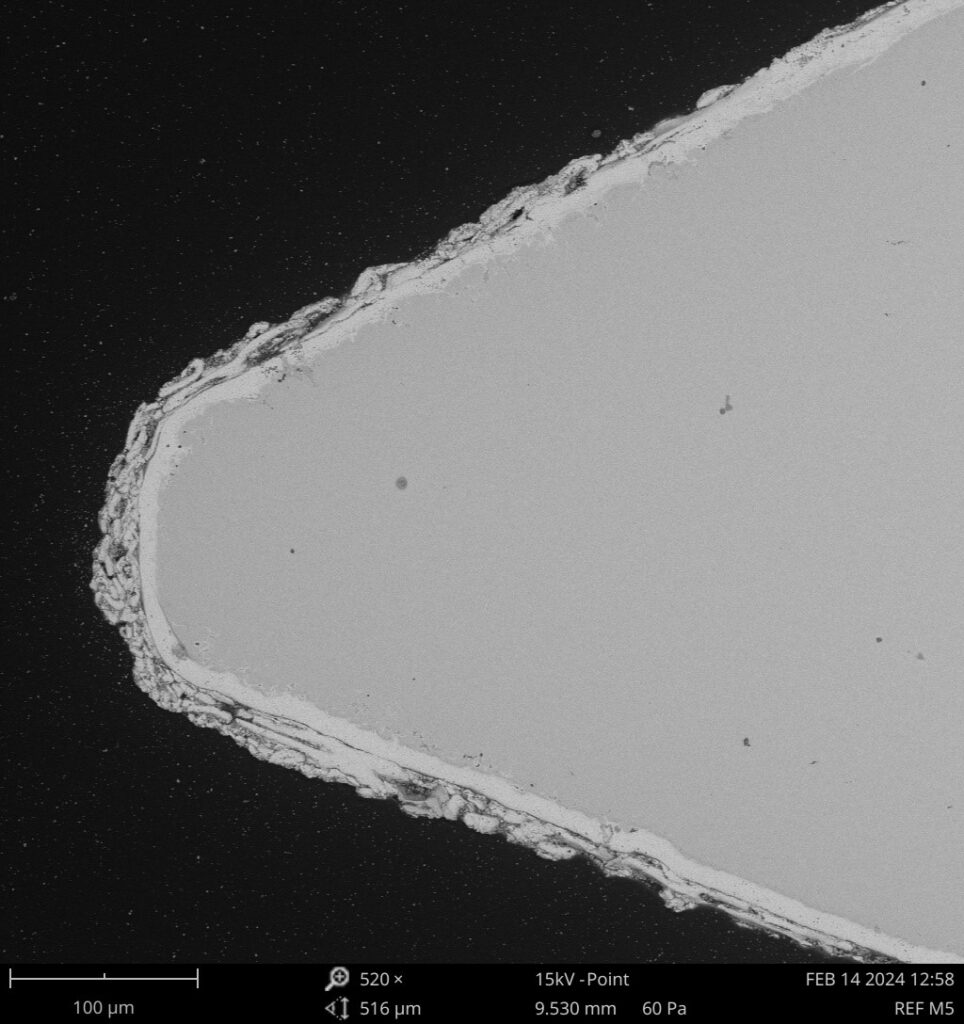
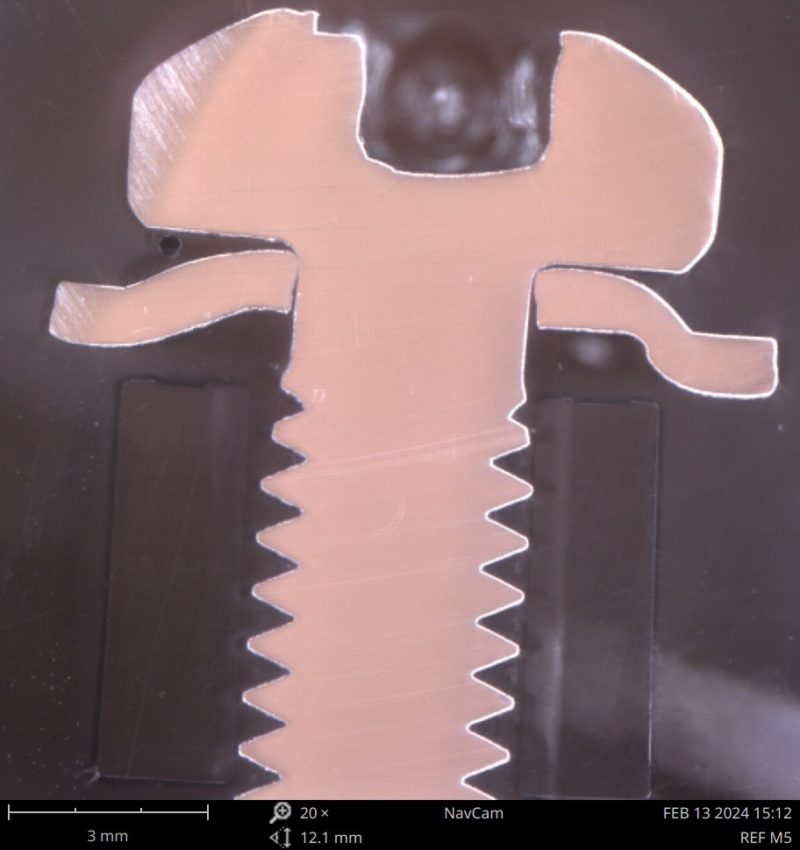
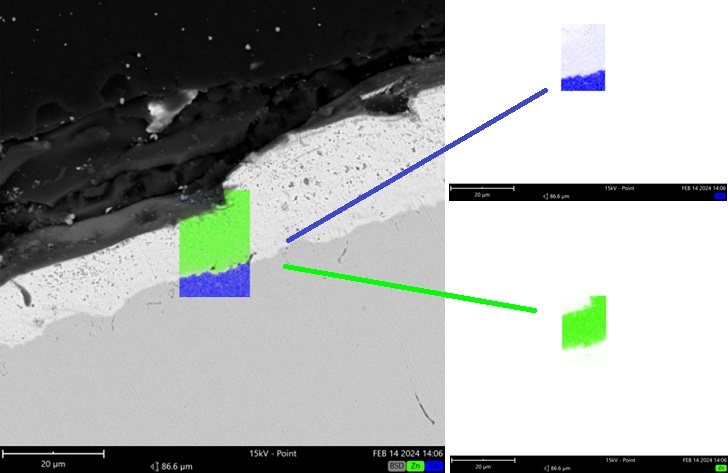
The first step consisted of performing a characterization of electronic materials aimed at identifying the composition and structure of the component. This analysis provided information about the materials used and their distribution, which are key aspects for understanding system behavior.
A strategy based on combining different analytical techniques was applied, allowing results to be cross-validated and improving the reliability of the information obtained. This approach is especially relevant in electronic components, where small variations can have a significant impact.
In addition, the selection of techniques was carried out in a staged manner, starting with less invasive methods and progressing toward more detailed analyses when necessary, thus ensuring the integrity of the samples in the early stages.
Application of electronic reverse engineering through integrated analysis
Based on the information obtained, a reverse engineering process was developed in which results were integrated to reconstruct the design and functionality of the component. This approach made it possible to establish relationships between the different elements of the system and to understand its overall behavior.
The tasks included functional decomposition, identification of materials and technologies, and analysis of their interaction. This process enabled the generation of a coherent view of the component, overcoming the fragmentation of analytical information.
The INFINITIA team played a key role in interpreting the results, combining technical knowledge and industrial experience to translate data into actionable information.
Electronic product reengineering focused on specifications and validation
As a result of the project, the foundations were established for electronic product reengineering, enabling the definition of clear technical specifications aligned with the client’s needs. This approach facilitates component replication and the validation of alternatives.
A solid technical basis is established to replicate, validate, or improve
the product with reduced uncertainty.
Among the main outcomes are the identification of materials, understanding of the design, and definition of critical parameters for operation. This information helps reduce uncertainty and improve the quality of technical decision-making.
In addition, the project contributed to improving the client’s ability to manage its supply chain and evaluate suppliers, increasing autonomy and reducing risks associated with lack of information.