

What was the challenge or problem to solve?
Injection mould manufacturing is a fundamental pillar in the plastic industry, enabling mass production of components with precision and efficiency. However, it faces significant challenges, especially in terms of costs and production times.
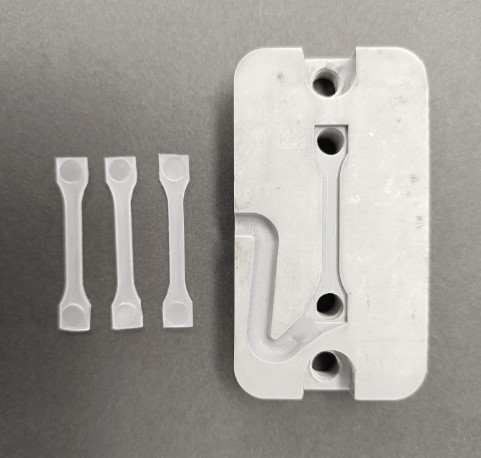
In this context, a client raised the need to explore alternatives to conventional mould manufacturing methods that could reduce both cost and time required, without compromising their performance. The project aimed to validate the use of DLP 3D printing technology for the manufacturing of low-cost injection mould inserts.
 The main challenge was to identify a resin and manufacturing parameters that would withstand the high temperatures and pressures of the injection process, avoiding deformations or fractures. At INFINITIA, we were able to demonstrate that DLP 3D printing is a viable, economical, and efficient solution for injection mould manufacturing, opening the door to new productive processes for our clients.
 How was it addressed or what was the solution?
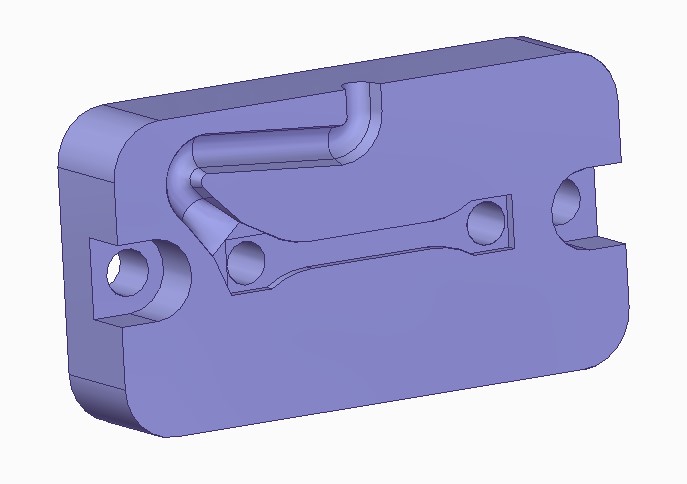
The Product Development team started the project with the design of the insert for the injection machine, considering the specific dimensions of the injection mould and the desired geometry for the final piece. This design was supported by the use of metrology tools and professional CAD software, ensuring the precision and suitability of the insert to the machine and process needs.
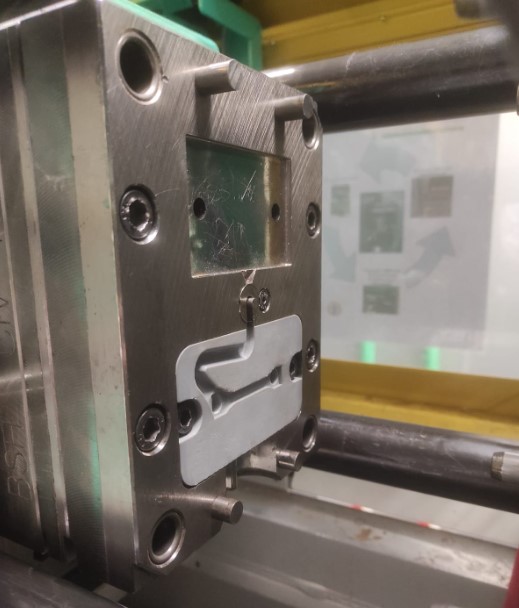
Subsequently, the mould was 3D printed using a special high-temperature resin. The challenge of the project lay in that the mould had to withstand the extreme conditions during the injection process without deforming, which was crucial to ensure the durability and efficacy of the mould. The DLP technology, known for its precision and quality in part manufacturing, was used to produce the mould with exceptional detail and reliability.
With the mould manufactured, injection tests were conducted with standardized specimens, using both the 3D printed mould and a conventional mould to compare the results. The mechanical characterization and surface analysis of the specimens revealed that the pieces obtained with both types of moulds had very similar properties, both in terms of mechanical resistance and surface finishes. These findings demonstrated that moulds manufactured through DLP 3D printing are not only viable for the production of injection-moulded parts but also offer a low-cost and rapid manufacturing alternative, without compromising the quality of the produced parts.