×

Composite material testing

Composite materials testing is a key service at INFINITIA aimed at evaluating the mechanical, thermal, and chemical behavior of these materials under representative service conditions. This type of analysis is essential in industrial environments where composite materials are used in structural or high-performance applications, and where reliability, durability, and safety are critical factors.

At INFINITIA, this service is approached from a technical perspective, combining expertise in materials, manufacturing processes, and real service conditions to develop lighter products and components. The objective is to characterize material behavior, validate its suitability for a specific application, and detect potential deviations or defects that may compromise performance in service.

Through the application of advanced techniques and standardized testing, data is obtained to select, optimize, and validate composite materials in sectors such as automotive, aerospace, and construction. This approach enables informed technical decision-making during development, industrialization, and component operation, especially when considering material creep behavior.

What are composite materials?

Composite materials are formed by combining two or more components with different physical and chemical properties, which together create a new material with superior characteristics compared to its individual constituents. This combination is deliberately engineered to leverage the specific advantages of each phase, enhancing the material properties in the final specimen. On one hand, there is the matrix, which acts as the continuous phase, and on the other, the reinforcement, which is incorporated to enhance the mechanical properties of the system.

The matrix, which can be polymeric, metallic, or ceramic, is responsible for shaping the material, protecting the reinforcement from external agents, and distributing applied loads to improve overall material strength. The reinforcement, typically in the form of glass, carbon, or aramid fibers, provides mechanical strength and stiffness. The interaction between both components is critical, as adhesion at the matrix-reinforcement interface directly determines the final material performance, especially under loads, impacts, or fatigue, which are evaluated through mechanical testing of composites.

This synergy enables materials with a high strength-to-weight ratio, low density, and optimized performance under demanding conditions such as thermal variations, corrosive environments, or cyclic loading. Unlike traditional materials, composites can be specifically designed for each application by adjusting fiber orientation, reinforcement fraction, or matrix type.

Representative examples include glass fiber reinforced polymer (GFRP), carbon fiber reinforced polymer (CFRP), and ceramic composites used in high-temperature applications. These materials are widely used in sectors such as automotive, aerospace, and energy due to their ability to withstand high stresses, their fatigue resistance, and their good corrosion behavior.

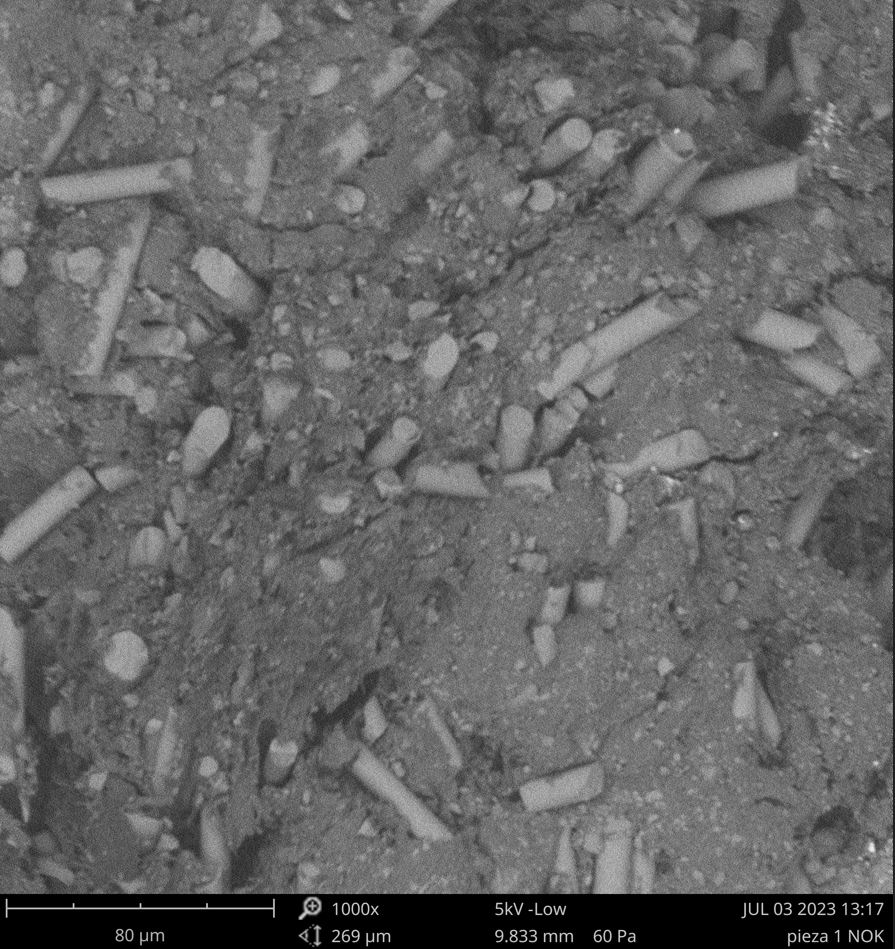
Close-up of multilayer composite material with carbon fiber and polymer matrix structural analysis
Technician performing ageing test in environmental chamber for composite material validation

Benefits of composite testing

Composite material testing allows precise understanding of their real behavior under operating conditions, which is essential in industrial environments with high mechanical, thermal, and environmental demands. At INFINITIA, we have worked on validating carbon fiber structural components for aerospace applications, ensuring performance under cyclic loads and extreme operating conditions.

One of the main benefits is the early identification of defects such as delaminations, voids, or microcracks. This type of analysis is applied, for example, in evaluating parts manufactured through lamination or infusion processes, where detecting internal imperfections before service is critical to avoid structural failures and reduce associated risks.

In addition, testing enables optimization of design and material selection through real performance data obtained from tests on composite materials. At INFINITIA, we collaborate with automotive manufacturers to refine composite configurations, improving strength-to-weight ratio and reducing variability in production processes, resulting in higher efficiency and quality control.

Finally, these material tests are essential to ensure compliance with technical and regulatory requirements in critical sectors according to ISO standards, including shear testing protocols. Through experimental validation, it is possible to ensure that materials maintain their performance throughout their service life, even under demanding conditions, reducing field failures and increasing product reliability.

Composite material testing at INFINITIA

At INFINITIA, composite material testing is integrated within a global approach to material analysis and forensic engineering, aimed at understanding real material behavior under service conditions and enabling informed technical decision-making. This service goes beyond test execution, serving as a tool to solve specific industrial problems related to performance, durability, or failures in composite materials.

The INFINITIA technical team defines the most suitable testing strategy based on material type, composite architecture, manufacturing process, and expected service conditions, ensuring that the analysis is tailored to each case and project objectives. This approach enables the selection of the most relevant testing techniques to evaluate critical properties and detect potential deviations.

Furthermore, results are not interpreted in isolation but are integrated with complementary analyses such as chemical characterization, microstructural analysis, or failure studies. This allows correlation between material behavior, its origin, processing, and evolution in service.

This approach enables INFINITIA not only to characterize materials but also to provide value in terms of design optimization, process validation, and continuous improvement, contributing to increased reliability, safety, and performance of industrial systems based on composite materials.

Composite materials testing

Composite material testing techniques and characterization methods

At INFINITIA, we develop different composite material testing methods to evaluate how these materials behave under demanding load, temperature, and environmental conditions in real industrial applications, where material reliability is a critical factor.

Our goal is to accurately characterize mechanical properties such as tensile, compression, and flexural performance, as well as to analyze phenomena such as fatigue, degradation, and defect influence. This approach makes it possible to understand not only the material itself, but also its response under real service conditions, facilitating its validation and optimization according to the requirements of each application.

Tensile testing of composite materials

This test evaluates the material’s resistance to tensile stresses by applying a controlled axial load until failure, which is essential in fatigue-related validation and structural assessment. Key properties such as elastic modulus, ultimate tensile strength, and maximum strain are determined, taking into account factors such as fiber orientation and matrix-reinforcement interface quality, which are critical in understanding the behavior of composite materials.

In composite materials, tensile behavior is influenced by mechanisms such as fiber breakage, interface debonding, or crack propagation. At INFINITIA, we apply these tests to validate laminate configurations in structural components, ensuring their performance under real service loads.

Additionally, these tests allow comparison of different composite architectures and assessment of manufacturing parameters such as resin content or impregnation quality in the laboratory. This is essential for optimizing design and ensuring consistent mechanical performance in demanding applications, supported by advanced materials engineering.

Compression testing of composite materials

Compression testing evaluates the material’s ability to withstand loads that tend to reduce its volume, and it is particularly relevant in sandwich-type composite structures where compressive stresses are dominant. It allows the analysis of phenomena such as fiber buckling, structural instability, or matrix failure.

Through these tests, compressive strength parameters and characteristic failure modes are determined, considering variables such as geometry or manufacturing process. At INFINITIA, we use this analysis to validate components subjected to critical loads, such as lightweight structures or support elements in advanced industrial sectors.

This type of test also makes it possible to identify the material’s sensitivity to internal defects or reinforcement misalignment, which can significantly reduce load-bearing capacity. In this way, it supports improved design and greater component robustness under real loading conditions.

Flexural testing and structural behavior

This test evaluates the material response under combined tensile and compressive loads by applying a force perpendicular to its axis, focusing on the specimen’s fracture characteristics. Properties such as stiffness, flexural strength, tensile strength, and deformation capacity without failure are assessed through standardized material testing methods.

In composite materials, flexural behavior is influenced by laminate architecture and the quality of internal interfaces. At INFINITIA, we use these tests to detect phenomena such as delamination or progressive stiffness loss, especially in applications such as structural panels or components subjected to repeated loading.

These tests also make it possible to study stress distribution through the thickness of the material, which is essential for optimizing multilayer configurations and improving the overall structural behavior of the component.

Fatigue testing and long-term durability

Fatigue testing simulates cyclic loading in order to evaluate the material’s durability over time and its resistance to damage accumulation. This analysis is essential in composite materials, where progressive failure can occur even under loads below the ultimate strength of the material.

During testing, phenomena such as crack initiation and propagation, as well as matrix-reinforcement interface degradation, are studied. At INFINITIA, we apply these tests to estimate component service life and optimize designs in sectors such as automotive and aerospace.

In addition, this type of analysis makes it possible to establish fatigue behavior curves and define safe design criteria, taking into account the inherent variability of composite materials and their sensitivity to repeated loading conditions.

Environmental behavior evaluation

In addition to mechanical testing, the response of composite materials to environmental conditions such as temperature, humidity, UV radiation, or chemical exposure is also evaluated through specific testing methods. These variables can affect both the matrix and the reinforcement interface, altering the overall behavior of the material as well as its tensile properties and stiffness.

At INFINITIA, we reproduce real service conditions to evaluate phenomena such as polymer matrix degradation, adhesion loss, or changes in the mechanical properties of the materials used. This type of analysis is critical in applications exposed to aggressive environments or demanding climatic conditions.

These tests also make it possible to assess the long-term stability of the material, identify ageing mechanisms, and validate protective solutions or more suitable material selections for each application environment.

Defect and quality analysis in composite materials

Defect analysis makes it possible to identify imperfections arising from the manufacturing process, such as voids, delaminations, or poor impregnation. These defects can act as critical failure initiation points under load or service conditions.

By combining mechanical testing with characterization techniques, it is possible to correlate these defects with material behavior. At INFINITIA, we use this approach to optimize manufacturing processes, establish acceptance criteria, and ensure the reliability of composite materials in critical applications.

In addition, this type of analysis helps detect recurring defect patterns associated with specific production processes, facilitating continuous improvement and quality control in composite material manufacturing.

Industries where composite material testing is applied

Composite materials are used across multiple industrial sectors where weight reduction, mechanical strength, and durability are critical factors. Their application enables improved component performance, enhanced energy efficiency, and extended service life, particularly in demanding environments through the use of fiber-reinforced polymers.

The use of polymer matrix composites is not generic, but requires specific adaptation depending on the sector, service conditions, and technical requirements. This involves proper material selection as well as validation through testing to ensure performance under real conditions, such as compression and flexural loading.

Automotive Industry: Weight optimization and structural validation in service

In the automotive sector, composite materials are used to reduce vehicle weight without compromising structural integrity, particularly in the context of electrification and sustainability. These materials must withstand complex combinations of dynamic loads, impacts, vibrations, and environmental exposure, requiring validation through ASTM tests that replicate real operating conditions.

  • Validation of lightweight structural components: mechanical behavior analysis in chassis, body structures, and reinforcements, optimizing the strength-to-weight ratio in composite materials.
  • Impact absorption testing: evaluation of energy dissipation capacity in crash scenarios, considering anisotropic behavior and flexural strength.
  • Durability and environmental resistance: degradation studies under humidity and chemical exposure, ensuring stability in real service conditions.

At INFINITIA, these tests are applied to validate composite configurations in automotive applications, reduce design uncertainty, and improve vehicle energy efficiency while ensuring compliance with safety and reliability requirements.

Aerospace Industry: Composite material validation under critical conditions

The aerospace industry requires extremely high levels of reliability, where materials must maintain structural integrity under severe conditions of load, temperature, and pressure. Composite materials, especially carbon fiber reinforced systems, enable weight optimization without compromising strength, making them essential in critical structures.

  • Fatigue and damage tolerance testing: evaluation of behavior under cyclic loads and crack propagation in structural components.
  • Extreme condition validation: analysis under thermal cycling, pressure variations, and prolonged exposure to demanding environments.
  • Structural optimization: study of laminate configurations to maximize strength-to-weight ratio in aerospace structures.

At INFINITIA, specific tests are developed to validate composite materials in aerospace applications, ensuring performance in service and supporting certification processes under strict standards.

Construction and Infrastructure: Durability and performance in aggressive environments

In construction, composite materials are used due to their high corrosion resistance and ability to withstand mechanical loads under adverse environmental conditions. These materials are continuously exposed to humidity, solar radiation, atmospheric pollution, and thermal variations, which can lead to progressive degradation affecting long-term performance.

  • Environmental resistance evaluation: analysis under humidity, marine environments, and aggressive chemical exposure affecting matrix and interface.
  • Structural reinforcement validation: performance of composites in reinforcement, rehabilitation, and strengthening applications.
  • Durability optimization: long-term degradation studies to reduce maintenance, extend service life, and ensure compliance with technical requirements.

At INFINITIA, these tests are used to validate materials in infrastructure applications, anticipate degradation mechanisms, and optimize performance under real conditions.

Energy Industry: Testing composites and evaluation under extreme operating conditions

In the energy sector, composite materials are used in applications exposed to severe operating conditions such as high temperatures, continuous mechanical loads, and corrosive environments. These factors act simultaneously, accelerating degradation processes and influencing long-term performance.

  • Extreme condition resistance testing: evaluation under temperature, pressure, and chemical exposure in representative conditions.
  • Fatigue and ageing analysis: study of degradation under cyclic loads and long-term operation.
  • Validation under continuous service: performance of critical components under intensive use conditions.

At INFINITIA, these tests help validate composite materials in energy applications, reduce failure risks, and optimize material selection through comprehensive mechanical and physical testing.

Naval and Offshore Industry: Corrosion resistance and durability in marine environments

In marine environments, materials are exposed to highly aggressive conditions such as saltwater, constant humidity, UV radiation, and temperature variations. These factors accelerate degradation, making composites a suitable solution due to their chemical resistance and low maintenance requirements.

  • Marine corrosion resistance evaluation: performance under saltwater, humidity, and long-term exposure.
  • Structural durability analysis: behavior under mechanical loads, fatigue, and continuous operation.
  • Lightweight structural optimization: improved efficiency in vessels and offshore structures.

At INFINITIA, composite materials are validated for naval applications, ensuring performance under real service conditions and improving structural reliability.

Railway Industry: Reliability in fatigue-loaded components

In the railway sector, composite materials are used in components subjected to cyclic loads, vibrations, and variable operating conditions. These stresses generate fatigue and progressive degradation, requiring validation to ensure safety and durability.

  • Structural fatigue testing: evaluation under repeated loads and long-term dynamic stresses to predict service life.
  • Critical component validation: analysis under real operating conditions and functional safety requirements.
  • Weight and efficiency optimization: mass reduction to improve energy performance of railway systems.

At INFINITIA, these tests ensure long-term reliability of composite materials in railway applications and improve safety in demanding conditions.

Composite material testing in product development with INFINITIA

We perform composite material testing with a comprehensive approach focused on characterization, validation, and performance optimization under service conditions. This ensures that materials meet performance, durability, and reliability requirements, addressing both design and manufacturing aspects.

At INFINITIA, we collaborate with clients from early development stages, enabling identification of improvement opportunities in material selection, composite architecture, and processing parameters. This approach helps anticipate deviations and reduce risks associated with failures in later product lifecycle stages.

Testing is tailored to each project, including mechanical performance evaluation, long-term durability, resistance under extreme conditions, and compatibility analysis between materials. This is essential in applications where composites are subjected to complex loads and demanding environments.

The combination of technical expertise, industrial experience, and advanced testing capabilities in dynamic mechanical analysis enables the development of reinforced plastic solutions with optimized performance and extended service life. This approach improves product reliability and supports informed decision-making during development and industrialization, backed by a team of experts.

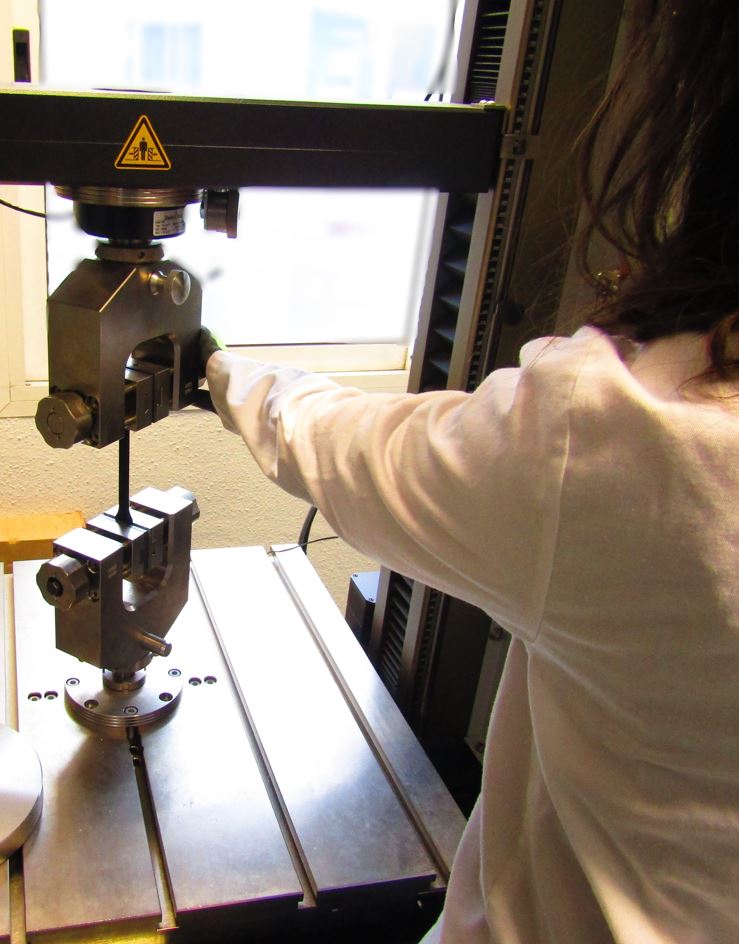
Universal testing machine performing tensile test on composite material specimen mechanical analysis

Contact us

To receive a PREFERENTIAL ANSWER, please contact us using the form below.


    (*) Mandatory fields


    When do you need to receive the quotation? (*)

    What approximate investment do you expect for this service? (*)

    When do you need to receive the results of the contracted service? (*)

    If you prefer, you can send us your documentation:


    Allowed formats: PDF, DOC, XLS, PPT, JPG, PNG. Maximum size 10 MB total

    Or if your file is large, you can send it via a transfer platform and provide us with the link here:

    BASIC INFORMATION ON DATA PROTECTION:
    Responsible: INFINITIA RESEARCH, S.L. Purpose: to respond to queries raised by the user and send the requested information. Legitimation: user consent. Recipients: only transfers are made if there is a legal obligation. Rights: to access, rectify and delete, as well as other rights, as indicated in the Privacy Policy. You can find the complete information in our privacy policy.

    I agree with the  privacy policy.