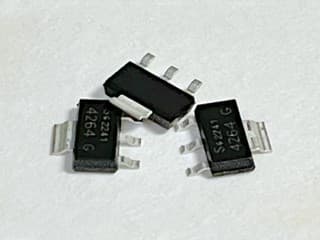

What was the challenge or problem to be solved?
In industrial environments where the reliability of electronic systems is critical, the incorporation of non-conforming or counterfeit electronic components can seriously compromise the performance of the final product. This issue is particularly relevant in globalized supply chains, where component traceability is not always guaranteed and there is an increasing risk of introducing parts that do not meet original specifications.
In this context, the need to validate the authenticity of electronic components becomes a key factor in ensuring quality, preventing premature failures, and reducing operational risks. Early detection of deviations enables informed decision-making regarding suppliers, procurement processes, and technical validation.
Structural characterization of electronic components without specifications
The client was facing a situation in which certain electronic components exhibited unexpected behavior in service, raising doubts about their origin and quality. The lack of reliable technical documentation and the inability to directly verify the origin of the components made decision-making difficult.
This type of scenario is common when working with multiple suppliers or when changes occur within the supply chain. The absence of detailed information on materials, internal architecture, or manufacturing processes introduces a high level of technical uncertainty.
The absence of technical specifications increases the risk of integrating non-conforming components, making structural characterization essential to reconstruct critical information for validation.

Given this situation, the initial objective was not only to identify a failure but to understand whether the components met the expected standards. This involved analyzing both their internal structure and their physical and functional characteristics.
Additionally, the analysis needed to establish an objective basis for comparing different samples, avoiding subjective interpretations and enabling data-driven decision-making.
Authenticity verification through OK/NOK comparative analysis
The main objective of the project was to determine whether significant differences existed between components considered compliant (OK) and those under suspicion (NOK). This comparison would allow the identification of relevant deviations and the assessment of potential counterfeiting.
The approach focused on establishing technical comparison criteria, including aspects such as internal geometry, materials used, and possible manufacturing defects. The key was to detect inconsistencies that were not visible to the naked eye.
Authenticity verification is not limited to confirming whether a component works, but also to validating whether its construction and characteristics match expectations. Components that appear functional may present critical deviations affecting their durability or long-term performance.
Therefore, the project aimed to provide a solid technical validation that would allow the client to reduce risks associated with the use of potentially counterfeit components.
Detection of microstructural deviations in counterfeit components
The main technical challenge of the project was to identify relevant differences between samples that, at first glance, could appear visually similar. Counterfeits often replicate the external appearance of the component, making detection difficult through conventional inspections.
This requires the use of advanced characterization techniques to analyze internal structure, materials, and manufacturing processes. However, this type of analysis requires expertise in interpreting results and understanding expected component behavior.
Counterfeit components replicate external appearance but exhibit detectable internal differences, making microstructural analysis essential to identify non-visible deviations.
Additionally, it was necessary to ensure that the identified differences were truly significant from a functional perspective, avoiding false positives or incorrect conclusions.
In this context, INFINITIA addressed the challenge from a forensic engineering perspective, aimed at obtaining objective technical evidence to determine the existence of relevant deviations between the analyzed samples.
How was it addressed or what was the solution?
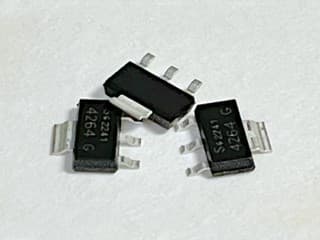
To address the problem, an approach based on reverse engineering of electronic components was defined, combining physical analysis techniques and material characterization. This approach made it possible to deconstruct the components and study their characteristics from both a structural and functional perspective.
The strategy focused on generating technical information that was not initially available, enabling the reconstruction of the knowledge required to assess component authenticity. This process was carried out comparatively, ensuring consistency between the analyzed samples.
Reverse engineering applied to component internal architecture
The technical approach was based on the application of reverse engineering methodologies aimed at understanding the internal architecture of the components. This involved detailed analysis of their construction, materials, and possible variations compared to expected configurations.
Reverse engineering made it possible to obtain a complete view of the component, overcoming the limitations of available information. This process is especially useful in contexts where technical documentation is not available or where there are doubts about product authenticity.
Furthermore, the adopted approach allowed the identification of subtle differences that could go unnoticed in a superficial analysis. These differences are key to determining whether a component has been manufactured according to original standards or if it presents deviations.
The combination of structural analysis and material characterization provided a solid basis for the technical evaluation of the components.
Comparative analysis using physico-chemical inspection techniques
The project execution was structured around a comparative analysis between OK and NOK samples. This approach allowed direct identification of differences, facilitating the interpretation of results.
The team applied different inspection and testing techniques to evaluate both internal geometry and the materials used. These techniques provided detailed information about component construction.
Direct comparison between OK and NOK samples highlights critical differences and reduces uncertainty in the technical evaluation of components.
The systematic comparison between samples enabled the detection of deviations that were not evident in isolated analysis. This type of approach is particularly effective in identifying potential counterfeits or variations in manufacturing processes.
Additionally, the use of multiple analysis techniques allowed validation of the obtained results, increasing the reliability of the conclusions.
Correlation between constructive differences and functional behavior
As a result of the analysis, relevant differences were identified between the studied samples, both at a structural and material level. These differences made it possible to establish objective criteria to distinguish between compliant and non-compliant components.
The evaluation was not limited to identifying differences but also included analyzing their potential impact on component behavior. This made it possible to contextualize the results and assess their relevance from a functional perspective.
The value of the project lies in providing the client with a solid technical basis for decision-making, reducing uncertainty associated with component quality. In this sense, INFINITIA delivered a solution based on technical evidence, enabling the client to improve validation and quality control processes within the supply chain.