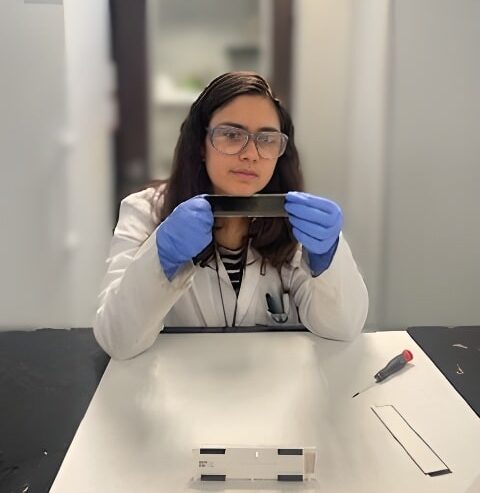

Detection of counterfeit components
The detection of counterfeit components is an essential service for ensuring the authenticity, quality, and reliability of the materials and products used in industrial settings.
At INFINITIA Industrial Consulting, we offer this service as part of our expertise in forensic engineering and advanced materials characterization.
Our industrial laboratory, equipped with state-of-the-art technology and a multidisciplinary team, enables us to rigorously verify suspicious components by comparing original parts with those of unknown origin, with the goal of identifying potential counterfeits and ensuring that they comply with technical specifications.
This work not only protects the integrity of the final products but also prevents financial and reputational risks arising from the use of non-compliant components.
Talk to a specialist
Request a free initial consultation; contact a consultant from our team of specialists

What does the detection of counterfeit components involve?
What is it?
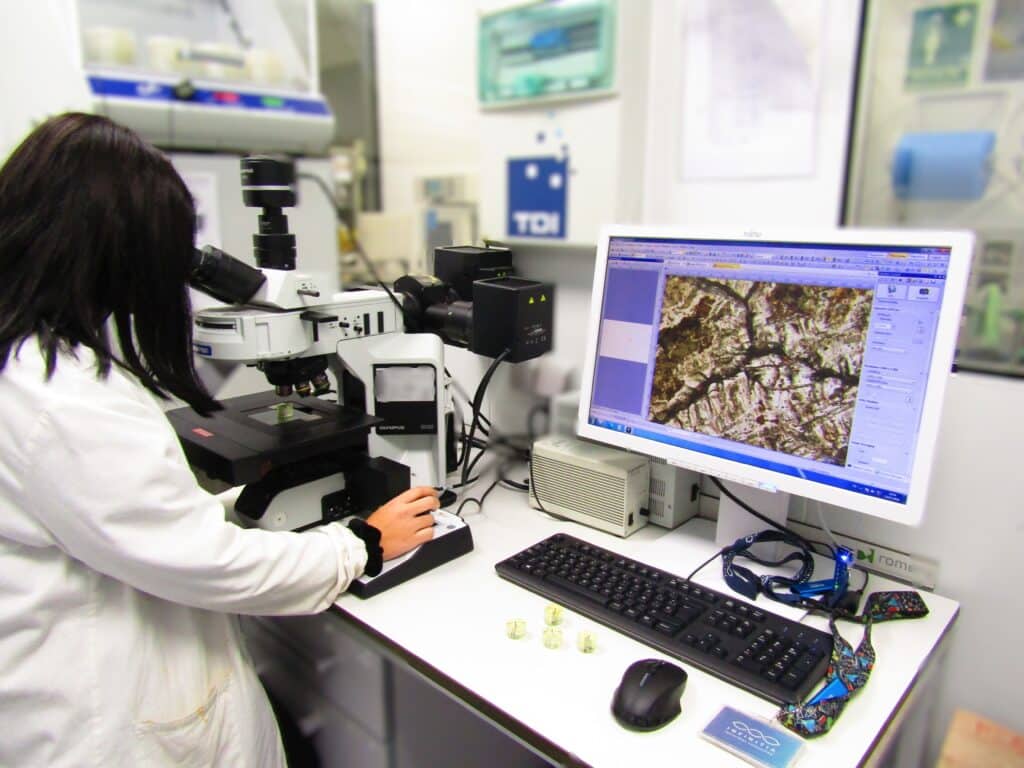
This service involves a series of comparative analyses between reference parts, technical data sheets or literature and the components under investigation, using reverse engineering techniques, mechanical testing and chemical characterisation.
At INFINITIA, we analyse the morphological, compositional and functional properties of components to identify any discrepancies with their technical specifications.
Through tests such as elemental analysis, spectroscopy, mechanical testing and inspection using electron microscopes, our team can identify changes in the composition or performance of the material that indicate the presence of counterfeits.
This methodology is tailored to the sector’s regulatory requirements and the specific characteristics of the component under investigation, ensuring accurate and reliable results.
Detecting counterfeit components at INFINITIA
At INFINITIA, we take a comprehensive approach to counterfeit detection, combining expertise in forensic engineering, innovation in materials and regulatory interpretation.
Our team selects the most appropriate techniques based on the type of component and the suspected issues: comparative analysis of mechanical properties, assessment of chemical composition using spectroscopic techniques, or structural inspections using advanced microscopy. We then compare the results with the technical data sheet for the original component or the reference material to identify any critical deviations.
This systematic approach, combined with our ability to tailor testing to our customers’ needs, makes us a reliable partner in preventing problems arising from the use of incorrect components.
Benefits of Detecting Counterfeit Components
Benefits
The main benefit of detecting counterfeit components is its ability to prevent production failures or product defects from reaching the market, thereby safeguarding both the supply chain and the manufacturer’s liability.
This type of analysis enables companies to demonstrate technically that a defective batch does not meet the required quality standards, thereby facilitating the lodging of claims against suppliers or decision-making regarding the approval of new supplies.

Types of Tests for Detecting Counterfeit Components
types
At INFINITIA, we carry out various types of tests to identify counterfeit components, verify their authenticity and compare them with genuine parts.
Our aim is to confirm that they comply with the technical specifications through chemical, structural, functional and mechanical analyses, all carried out using a forensic engineering approach applied to the industrial environment.
Tests on chemical composition and structure
These analyses enable us to identify the constituent elements of a sample and their internal chemical distribution. We use techniques such as infrared spectroscopy (FTIR), X-ray fluorescence (XRF), EDX microanalysis and mass spectrometry, amongst others.
At INFINITIA, we use these techniques to detect variations in the composition of metal alloys, surface coatings and engineering plastics. For example, we have identified differences in additives and mineral fillers in industrial polymer components that turned out to be counterfeits.
Microscopy studies and morphological analysis
Microscopy enables us to examine the internal and surface structures of the component in question. We combine optical microscopy, SEM (scanning electron microscopy) and laser profilometry to detect porosity, cracks, manufacturing marks and other signs of counterfeiting.
In a recent case, we identified manufacturing defects on the surface of counterfeit electronic connectors using SEM, which enabled the client to reject non-compliant batches and review their supply chain.
Comparative mechanical tests
Tensile, hardness and elastic modulus tests enable a comparison of the mechanical behaviour between genuine and suspect parts. These tests are crucial for assessing whether the component meets the requirements for strength and elasticity.
At INFINITIA, for example, we carry out tensile tests to verify the stiffness of metal shafts that are purportedly certified. The results revealed a strength lower than that specified, subsequently confirming that they were counterfeit.
Thermal testing and stability analysis
These tests help us to assess the thermal stability and transition properties of plastics and composites. We use techniques such as differential scanning calorimetry (DSC) and thermogravimetric analysis (TGA) to identify differences between batches.
In an analysis carried out by INFINITIA on some plastic packaging, we detected, using the DSC technique, a lower glass transition temperature compared with the original product, which indicated that a material other than the one specified had been used.
Electrical and functional tests
When it comes to electronic components, we carry out measurements of resistance, capacitance, insulation and functional response. These tests enable us to identify operational differences between genuine and counterfeit components.
In a previous study, INFINITIA tested a number of batches of sensors. Electrical tests revealed resistance values outside the acceptable range, confirming that the batches purchased were functionally incompatible.
Applications of Component Counterfeit Detection
sectors
Counterfeit detection has direct applications across multiple industrial sectors. Through our analyses, at INFINITIA we help prevent production failures, identify responsible parties within the supply chain, and ensure product quality in real-world use. Below are some of the sectors where this service offered by INFINITIA provides significant added value:
Automotive industry
In the automotive sector, the introduction of counterfeit parts compromises the safety of the end user. Detecting counterfeits helps to ensure that components used in this sector meet the required standards.
- Comparison of the composition of batches of metal fasteners received, showing variations following their elemental composition analysis using SEM.
- Validation of plastic components exposed to temperature cycles through thermal analysis.
Electrical and electronic components
The proliferation of counterfeit electronic components affects the performance of equipment and the reliability of networks.
- Visual and SEM inspection of welds on suspect plates.
- Analysis of the electrical resistance of chips to check their response in a circuit.
- Dimensional and morphological validation of connectors against the manufacturer’s technical data sheets.
Industrial equipment
In industrial machinery, counterfeit parts can cause mechanical or electrical faults with serious consequences for operations.
- Comparison of hardness and elastic modulus in shafts and gears.
- Analysis of coatings to assess their composition and ensure chemical resistance.
Medical and pharmaceutical sector
Medical devices and their components must ensure safety and traceability. Detecting counterfeits helps to maintain regulatory standards.
- Chemical resistance testing of polymers used in disposable devices.
- Thermal and stability analysis of sterilisable components.
Counterfeit Detection: An Investment in Industrial Reliability
Value
Detecting counterfeit components has become critical to ensuring the quality, safety, and reliability of industrial products. Using advanced techniques in forensic engineering, reverse engineering, and materials characterization, INFINITIA offers comprehensive solutions to compare original parts with suspicious ones, identifying deviations in their chemical composition, internal structure, functionality, or mechanical strength.
Our tests enable us to identify non-compliant components before they reach production lines or the market, helping our clients to avoid critical failures, strengthen their quality control processes and hold suppliers to account where necessary. Furthermore, we provide detailed technical reports to support audits, claims or certification processes, ensuring maximum traceability and scientific rigour.
The increasing sophistication of counterfeits, particularly in sectors such as electronics, the automotive industry, medical devices and energy, makes it essential to have a specialist laboratory such as INFINITIA’s, capable of tailoring verification tests to each type of component and specific regulations.