
What was the challenge or problem to solve?
When a company wants to launch a new product, the first obstacle is usually not manufacturing it, but demonstrating that the idea makes sense before investing in it. At that point, a reduced-scale prototype, understood as a functional replica of the product made at a smaller proportion than the real one, becomes the tool that turns a concept into something that can be operated and used to present a product idea to investors.
The client of this project was right there. It started from a product idea in its earliest phase and needed to take it further with two clear aims: to check that the operation was viable and to have a tangible object with which to present the project to potential investors. There was no design, no technical definition and no certainty about the feasibility of the proposal.
An early-stage idea that needed to be developed
An early-stage idea is a product concept still undefined at a technical level, without geometry, without chosen materials and without tests that support its operation. Developing it means going through the phases that turn that intuition into a concrete, verifiable solution.
The client’s assignment was not, therefore, aesthetic in the first instance. What it needed was to clear an uncertainty, to know whether its idea worked, and at the same time to obtain a physical support with which to defend it before third parties. An investor evaluates opportunities, and the difference between showing a drawing and putting on the table an object that can be operated is enormous in terms of credibility.
Starting from an idea without previous definition adds an underlying difficulty: there is no previous product to lean on, no behaviour data and no use experience to serve as a reference. Each requirement has to be deduced, and each design decision advances over ground that is not yet fixed. That is the reason why a structured development, which resolves the unknowns in order, is especially valuable in these cases.
That dual objective, to validate and to present, guided the whole project. The prototype was not conceived as an end in itself, but as a decision tool that would make it possible to answer two questions: whether the proposal is worth advancing and whether it is worth investing in it. INFINITIA took on the assignment from its product development service, which covers the complete path between an initial idea and a validated prototype.
Why the prototype’s aesthetics were a requirement for investors
The client asked to take great care of the prototype’s aesthetic finish. In a project aimed at validation and at raising investment, aesthetics are not an ornament, they are part of the argument. A prototype with visible process marks conveys provisionality, whereas a careful finish conveys a product close to existing.
This turns aesthetics into a technical requirement, not a preference. The most agile processes for manufacturing single parts usually leave a characteristic surface trace, and achieving a finished-product look requires post-processing, specific materials or different processes, each with its own lead times and limitations.
It is a frequent situation when a prototype must faithfully represent the final product before a committee or an investor, as happens in the design and manufacture of a functional and aesthetic demonstrator, where the perceived quality is part of the assignment’s requirements. The challenge for the Product Development team was, then, twofold: to meet function and appearance with the same object.
Reduced scale factor: the constraint that ordered the design
The scale factor is the proportion between the dimensions of the prototype and those of the real product. The client needed to keep a very specific scale factor, and that requirement, apparently minor, is one of those that most condition a prototyping project.
The reason is that scale does not affect everything equally. The geometry of the parts is reduced proportionally through design, but commercial components, minimum manufacturing thicknesses and process tolerances do not shrink with them. On reducing size, the margin narrows and each millimetre weighs more in the whole.
When a product is scaled down, the manufacturing tolerances do not scale down with it. That is where a scale prototype stops being a mock-up and becomes an engineering exercise.

In addition, a scale prototype has to keep working. Reducing the size forces checking whether each function is maintained when the parts shrink and deciding what is reproduced faithfully and what is solved another way. Combined with the aesthetic demand, this constraint is the one that defined the real technical challenge: to satisfy at the same time a strict scale and the appearance of a finished product, two conditions that often pull in opposite directions.
How was it addressed or what was the solution?
The answer consisted of an orderly product development process, in which each phase resolved a question before enabling the next. In this way, no design decision was made on an unverified hypothesis, something especially important when starting from an idea without previous definition.
INFINITIA and the Product Development team took on the technical tasks and kept the client within the process wherever its knowledge of the business was decisive.
Preliminary study and product specifications (EDP)
The project began with a preliminary study of the possible standards and constraints applicable to the product, accompanied by an analysis of the solutions already existing in related products. Reviewing how others have solved similar problems helps to identify real constraints and to situate the idea against what the market already offers, a useful exercise when the final objective is to defend the proposal before investors.
With those conclusions, the product specifications (EDP) were defined, that is, the set of functional, dimensional, normative and use requirements that the product must meet to be considered valid. Fixing them at the start turns an open idea into a bounded assignment, with verifiable criteria and a scope that all parties understand the same way.
Defining the product specifications before designing avoids redoing the work later. It is the phase that sets the basis on which the whole subsequent development is built.
Those specifications became the basis for the rest of the project, incorporating from the start the scale constraint and the level of finish required. The definition of product requirements and specifications reduces the risk of discovering late a requirement that forces a redesign, one of the most costly errors in the development of a new product.
How the line of work was selected with the client
With the specifications closed, the idea-generation phase opened. The team organised an ideation session together with the client whose objective was to provide the greatest possible number of proposals, with different approaches, without discarding any on the first pass.
Ideation in product development consists of generating ideas for a new product and then transforming them into concrete concepts, structured proposals that can be evaluated and compared. Having the client participate directly in the session ensures that the development adapts to its real needs and that the points it considers essential are covered.
Conceptualisation is the step that follows idea generation, and consists of giving shape to the most promising proposals until turning them into defined concepts, with their functionality, their approach and their technical implications already outlined. Working on concepts, and not on loose ideas, makes it possible to compare them with criteria and to decide with a solid basis which one responds best to the defined specifications.
After generating the concepts, a single line of work was selected. That choice is a controlled point of no return: it concentrates the effort in one direction and makes it possible to go deeper into it instead of splitting resources among several half-developed alternatives. The work of ideation and concepts and that of design and innovation are part of the same path: to offer the client several possible lines and to give it technical criteria to decide which one to develop fully.
From CAD design to the assembled and tested prototype
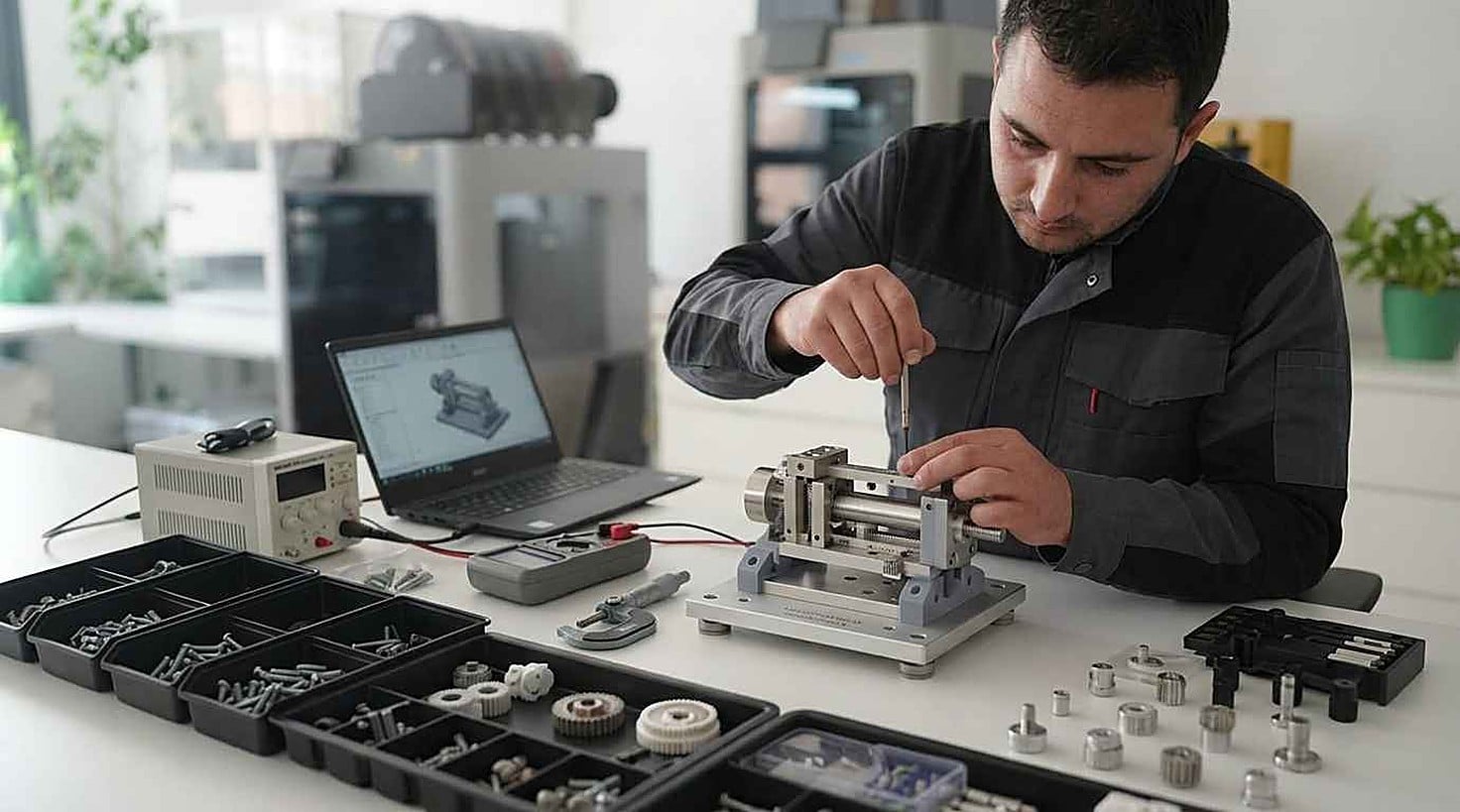
The chosen line was developed entirely in professional CAD software. Computer-aided design (CAD) makes it possible to build a complete three-dimensional model of the product and of each part before manufacturing anything, checking fits, movements and proportions on the digital model. Each part was designed from the start with the processes and materials it was going to be manufactured with in mind, because a geometry that is correct on screen may be impossible to obtain with the intended process or incompatible with the required scale.
Designing in 3D CAD with the manufacturing process in mind makes it possible to iterate on the digital model, where correcting costs hours instead of discarded parts.
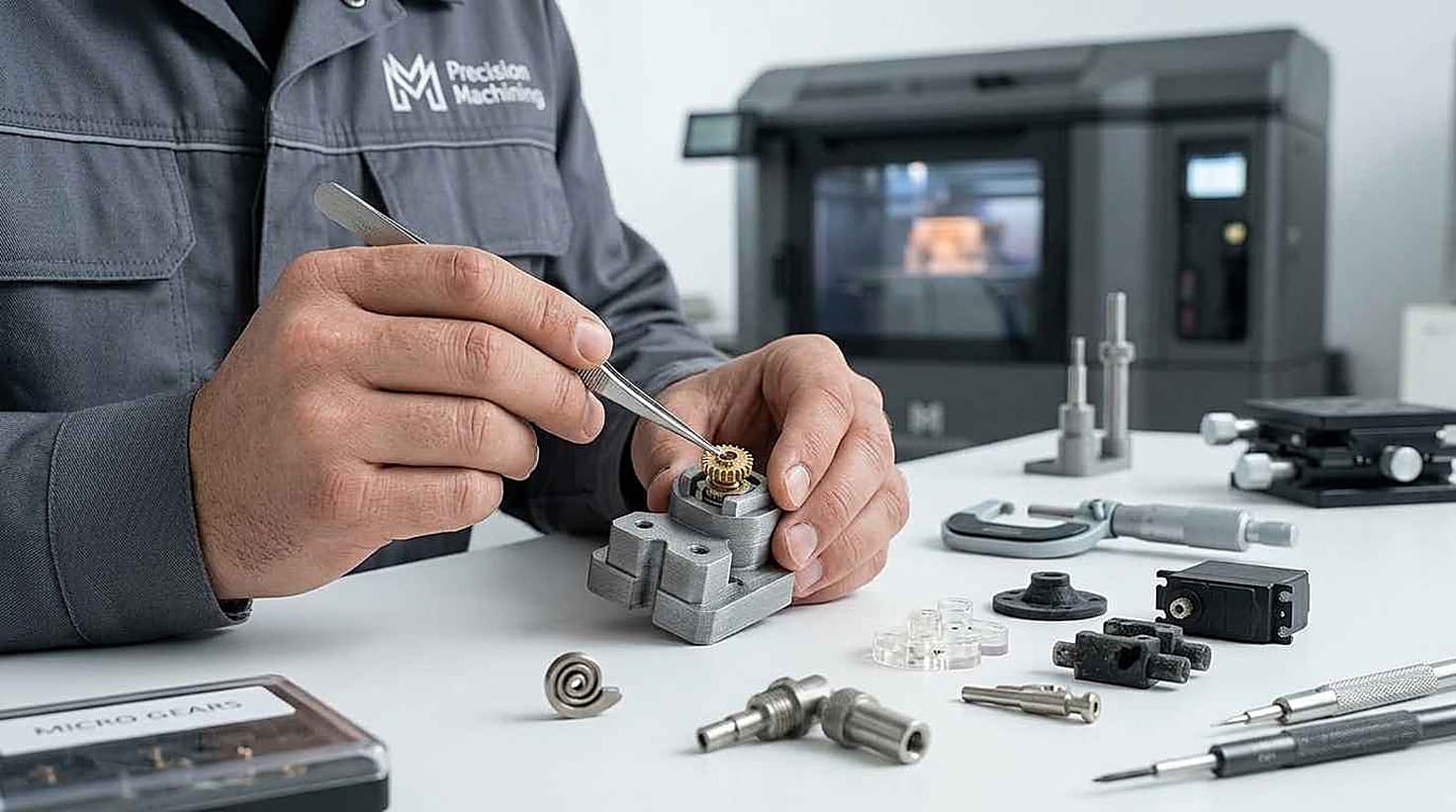
For the parts that required non-additive manufacturing, that is, processes that start from material and transform it instead of adding it layer by layer as 3D printing does, suppliers of materials and processes capable of reaching the required finish and precision were sought. That combination of design and prototyping is what makes it possible to go from the concept to a real part without losing control over the scale or the aesthetics.
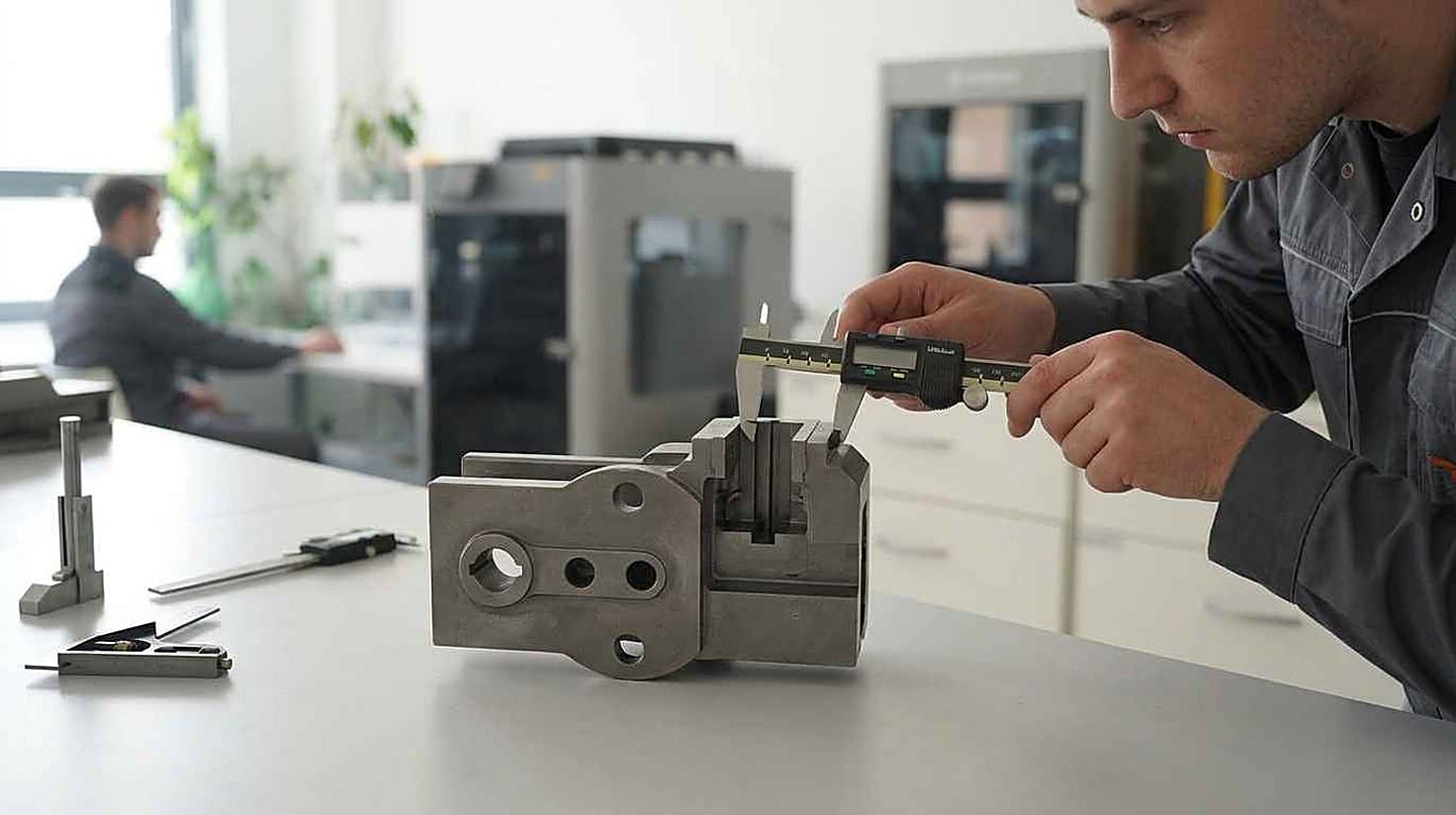
With all the materials gathered, the prototype was assembled and its operation verified with the necessary tests. Assembly is the moment when the design decisions are confronted with reality, the real tolerances and the behaviour of the whole. Once validated, the prototype was sent to the client’s premises with the specific scale and aesthetics it was looking for, ready to serve as a validation tool and to support the presentation to investors.
That is the value of going through the product development phases in an orderly way: an undefined idea is transformed into a verified object, with technical criteria behind each decision. What began as just a concept in the client’s head ended up as a prototype with the exact scale and aesthetics it needed, able to support on its own the technical validation and the presentation to investors.