
What was the challenge or problem to solve?
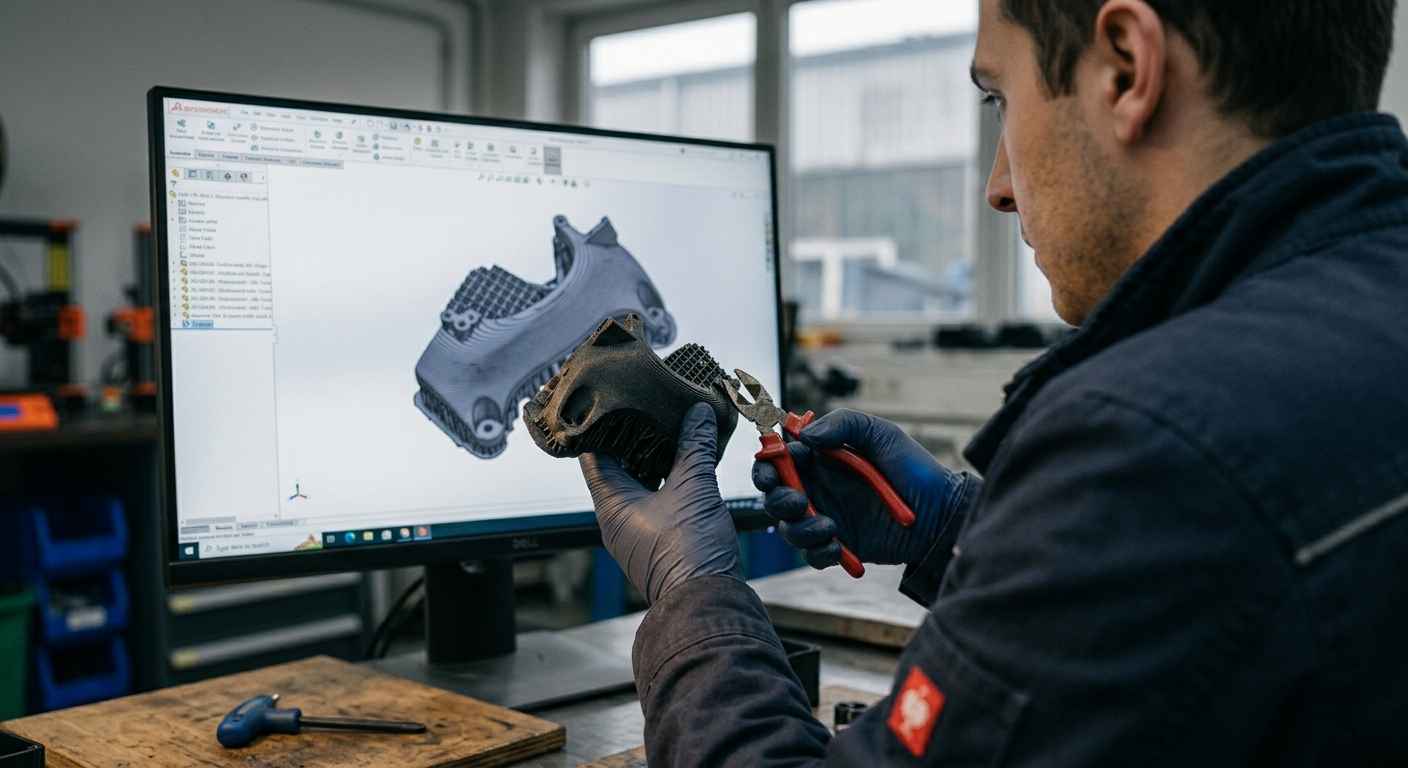
Idea maturation is the phase of product development that turns a registered but not yet verified invention into a defined product concept, evaluated and ready to be materialised in a functional prototype. That was exactly the starting point of this project: a client who had registered a utility model and had built, on their own, a first homemade prototype of the idea.
That prototype demonstrated an intention, not a product. It had not been evaluated from a technical, market or overall feasibility standpoint. The client wanted to develop the idea in greater depth through a design and innovation process, to a level sufficient to allow manufacturing, in the future, a first functional demonstrator prototype, and needed to reach that stage with technical criteria and not by intuition.
What a utility model protects and what stays unvalidated
A utility model is an industrial property title that protects inventions providing an appreciable technical advantage to the configuration, structure or constitution of an object. Registering it certifies the novelty of the idea against third parties and grants an exploitation right, but it does not prove that the associated product works reliably, that it can be manufactured at a reasonable cost, or that it responds to a real market need.
That distinction defines the project’s starting point. The client held a registered right and a physical object built by hand, but lacked the technical information needed to decide the next step. They knew what they wanted to protect; they did not yet know what they wanted to manufacture.
In product development projects that start from a protected idea, registration tends to be confused with validation. They are different things: registration is a legal act, whereas validation is an engineering process that demands analysis, design, manufacturing and testing. Recognising that difference from the start avoids committing resources to tooling, moulds or production runs before technical answers are available.
Feasibility analysis versus a homemade prototype
A feasibility analysis determines whether an idea can be executed with the available technologies, materials and processes, and under what conditions. A homemade prototype, by contrast, only shows that the idea can be materialised somehow: it is a proof of existence, not a proof of concept, and provides no information about how the product behaves in real conditions of use, nor about how it fits against the solutions already present on the market.
The client therefore needed four things that the initial prototype did not provide: a market study placing the idea against existing solutions, a feasibility analysis confirming whether it could be carried out technically, a concrete solution to the various challenges the client had identified, and a prototype that would allow objectively verifying that the idea could be developed.
A homemade prototype shows that an idea can be built; a feasibility analysis determines whether it is worth building.

These four needs are not independent from one another. The market study conditions the specifications, the specifications condition the concept, the concept conditions the design, and the design conditions the process by which the prototype will be manufactured. Tackling them in a disorderly way is the usual cause of a development ending up completely redesigned halfway through, once time and budget have already been invested in the wrong direction.
Building the technical base a registration does not provide
For INFINITIA, the challenge was to take an idea from its registered state to a level of definition sufficient to manufacture a functional demonstrator, without prior specifications, drawings or behaviour data. The Product Development team had to build that technical base from scratch, starting only from the handmade object and the client’s intention.
The difficulty was not only one of design, but of sequence and criteria: deciding what had to be found out first, which technical challenges had to be solved before modelling anything, and what level of detail was needed for the prototype to answer useful questions rather than raise new doubts.
Added to this was a condition common to any preliminary study and idea maturation project: the client had a clear vision of what they wanted to achieve, but not a single way to achieve it. The project had to leave room for their decision without giving up technical rigour, which led to proposing several alternative lines of work instead of imposing a single closed solution.
How was it addressed or what was the solution?
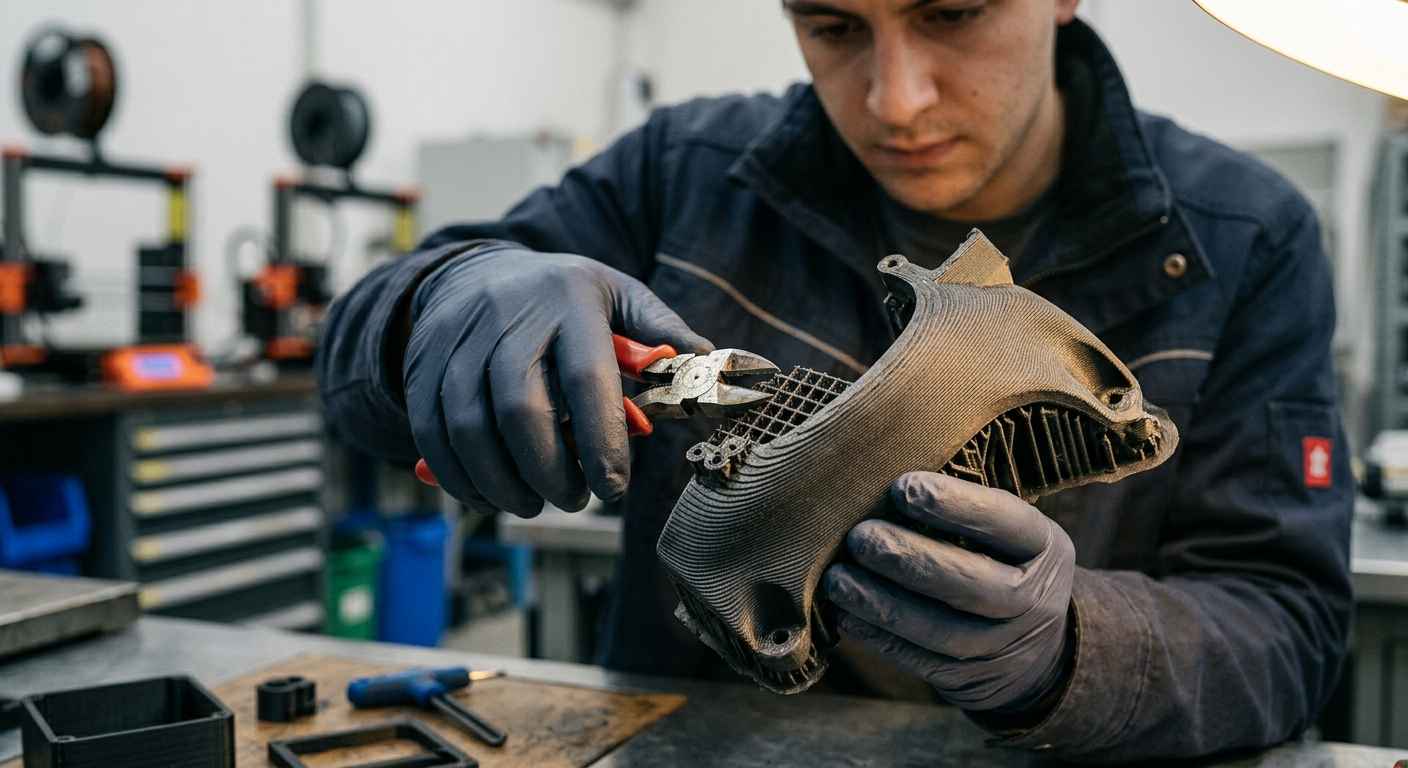
The project was structured into consecutive phases, each aimed at answering a specific question before moving to the next: whether the idea had potential, how it should take shape, and whether the result worked. This design and innovation approach orders the development and reduces the risk of advancing on unverified hypotheses.
INFINITIA’s Product Development team worked alongside the client, returning at each milestone the information needed to decide. The result was a first functional prototype with which the client could verify the idea before addressing industrialisation.
Placing the idea against the market and measuring its feasibility
The first task consisted of a market study accompanied by a feasibility assessment. The team analysed the existing solutions and evaluated both the technical feasibility and the general feasibility of the idea with the available technologies, materials and processes.
The objective of this analysis was not documentary. Studying its results made it possible to identify opportunities and risks and to establish a solid base to act as the starting point for proposing the various concepts. Without that base, any later concept would have been a bet without backing.
Analysing existing solutions also fulfils a function that goes beyond the commercial: it reveals how others have solved the same technical problems, what limitations those solutions carry, and what real room is left to differentiate. In a product protected by a utility model, that reading is especially relevant, because it delimits how far the technical advantage that is meant to be exploited actually reaches.
Three product concepts for the client to decide
With the base established, the conceptualisation phase was tackled. Before generating any concept, the team proposed solutions to each of the technical challenges the client had defined. This order is deliberate: solving the challenges first and conceptualising afterwards ensures that all the problems are covered and that none is left out for the convenience of the design.
Three different concepts for the product were then generated, each accompanied by graphic material that showed it in a fully understandable way. Working with three lines of work in parallel, instead of just one, gave the client the possibility of choosing the one that best suited their problem and their priorities.
Proposing solutions to each challenge before generating the product concepts ensures that no technical problem is left uncovered.
Presenting several understandable alternatives turns a technical decision into an informed one. The client does not choose between representations they do not understand, but between proposals whose operation, advantages and limitations are explained to them clearly. That ideation and concepts phase is the one that sets the course for the rest of the development, which is why it is best closed with criteria and not in haste.
3D CAD design and additive manufacturing of the functional prototype
Once the concept was selected, the in-depth development of a digital model was carried out using professional CAD design software. Each part was defined taking into account the materials and processes that would later be used in manufacturing, so that the geometry would be compatible with the production reality from the very first moment.
That control is what distinguishes a 3D CAD model from a merely illustrative representation: it defines geometries, thicknesses, fits between parts and assembly conditions, and makes it possible to detect interferences or manufacturing impossibilities before any physical part exists, when correcting them still has no cost. In a project born from a handmade prototype, this phase also fulfils a translation function, turning a hand-built solution into a set of defined, repeatable and manufacturable parts.
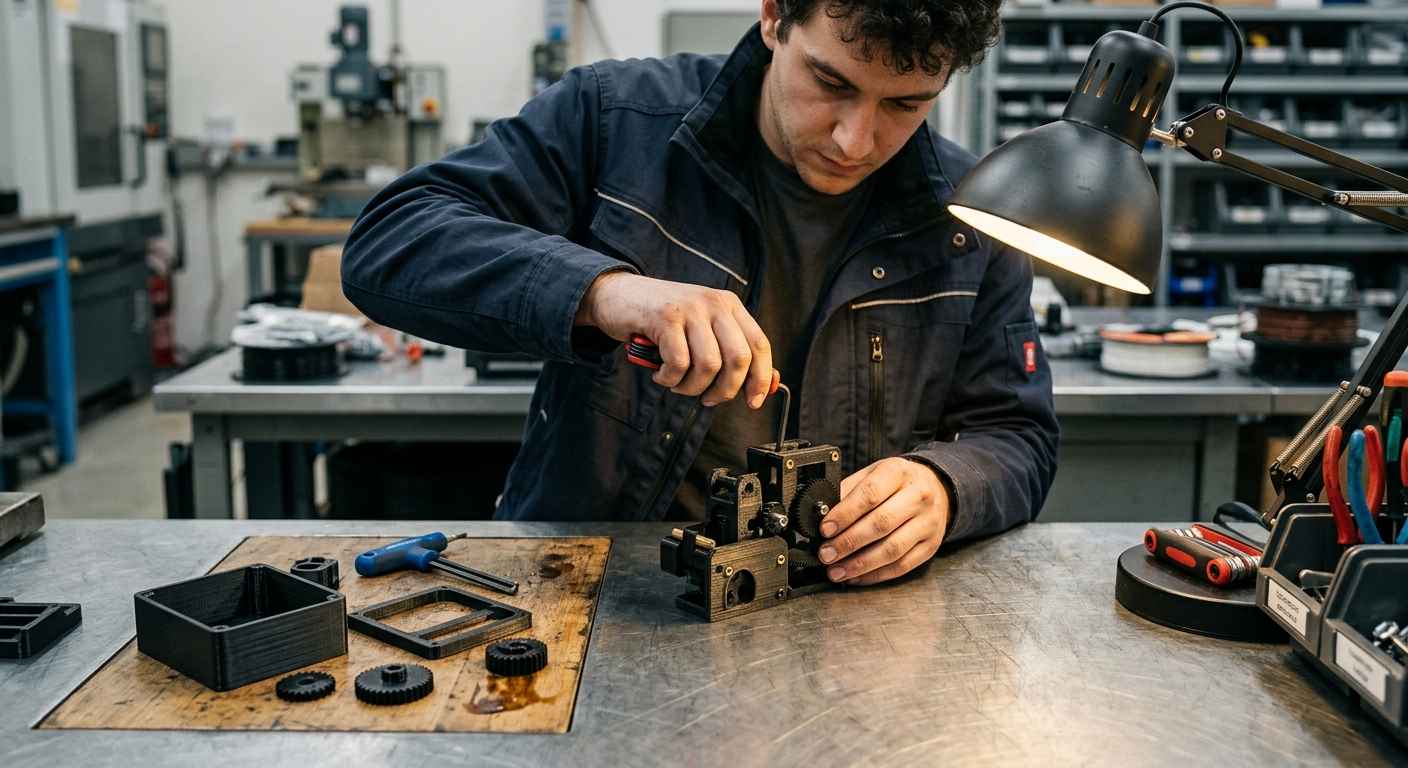
With the design closed, the team proceeded to the manufacturing, assembly, testing and commissioning of the prototype together with the client, using the most suitable processes in each case, generally additive manufacturing. Its advantage at this stage is direct: it allows obtaining complex geometries without specific tooling and remaking a part in a few hours when a test forces a modification.
A functional prototype is not accepted when it is assembled, but when the tests confirm it behaves as the design foresaw.
Once all the parts were manufactured, the prototype was assembled and the corresponding tests were run. Running these tests made it possible to analyse the results obtained and, based on them, introduce the necessary adjustments to the design; that loop between testing and adjustment is what turns an assembly into a validated prototype.
Once validated, the prototype was shown to the client so they could see its operation first-hand and to ensure the result matched what was expected. Thanks to the study carried out, to the proposal and development of the concept, and to that first functional prototype, the client was able to verify the idea before addressing its industrialisation, which was precisely the objective of the assignment.
Turning a utility model into a verified product requires going through, in order, the market study, the feasibility analysis, the conceptualisation, the CAD design and the industrial prototyping with real testing. When there is a registered idea or a first unassessed prototype, the most profitable step is not to rush towards manufacturing, but to determine how far the idea can go before committing resources to tooling or production runs. That is, ultimately, the difference between protecting an invention and proving that it works.