
Process improvement in the chemical industry means raising yield and cutting waste by attacking its material cause, not by adjusting the production balance after the fact. Much of what a batch loses (off-spec product, rework, stoppages) comes from a specific contamination, corrosion or degradation that can be measured. Finding that origin in the laboratory is what separates real process improvement from a simple cost cut, and it is one of the materials and process innovation levers that recovers the most margin.
A chemical process rarely loses yield through a single obvious cause. The usual pattern is a sustained loss, a percentage of the batch scrapped, a viscosity that does not add up or a colour out of range, that is taken as “normal” for the process until someone measures where it comes from. Here is what generates those losses, how they are identified in the laboratory and how that diagnosis turns into an action that raises yield in a stable way.
What improving a chemical process means: yield and waste
Improving a chemical process is increasing the fraction of raw material that ends up as conforming product, reducing everything lost along the way. That loss has two faces: material waste, what is scrapped, reprocessed or degraded, and availability loss, the time the plant does not produce because of cleanings, fouling or equipment failures. Both are paid for, and both usually have a measurable material root.
The difference between a solid improvement and a patch lies in the level at which you act. Retuning a temperature setpoint or raising a reagent dose can hide the symptom for a few weeks, but if the loss comes from an impurity in the raw material or from corrosion of a reactor, the problem returns. Identifying the material cause is what lets you decide whether what has to change is the supplier, the equipment material, the filtration stage or the inlet specification, instead of going on compensating a loss that repeats batch after batch.
That shift of approach also changes who owns the problem. As long as the loss is treated as operating variability, production manages it with adjustments; once it is shown to have a material cause, the decision moves to purchasing, materials engineering or maintenance, who are the ones able to change the supplier, the alloy or the cleaning plan. Measuring the origin not only reduces the loss, it also puts it in the hands of whoever can eliminate it.
What a loss really costs
The visible cost of a loss is the material that is scrapped, but it is almost never the largest. To that direct loss you add the cost of rework, the energy and hours spent recovering an off-spec batch, and the availability cost, the plant hours lost to the cleanings or repairs that same problem causes. When the loss reaches the customer, the cost of quality appears too, a claim, a returned lot or the extra cost of reinforced control for months.
Added together, those costs turn a seemingly small per-batch loss into a relevant figure over the year, and they explain why an analysis that locates the cause pays for itself quickly: it does not compete with the price of the tested sample, but with that of all the batches that would keep being lost while the cause remains unidentified. Putting a number on what the loss costs is the first step to justify the diagnosis that eliminates it.
A loss taken as “normal” for the process almost always has a specific material cause: an impurity, a corrosion, a degradation. As long as it is not measured, it is paid for in every batch.
Where waste comes from in the chemical industry
Most yield losses in a chemical process fit into a few material causes, and each one leaves a distinct signal that lets you attribute the loss instead of guessing at it.
| Cause of the loss | How it shows up in the process | How it is identified |
|---|---|---|
| Raw-material contamination | Off-spec batches with no apparent change in operation; irregular yield | Contaminant and impurity analysis and comparison with conforming material |
| Corrosion of equipment and piping | Metals carried into the product, leaks, stoppages for repair | Analysis of the equipment material and of the corrosion products |
| Fouling and deposits | Drop in thermal efficiency, more cleanings, less productive time | Characterization of the deposit to know what it is made of and where it comes from |
| Thermal or chemical degradation of the product | Colour, viscosity or purity out of range at the end of the process | Analysis of the degraded product against the reference |
| Off-spec additive or reagent | Incomplete reaction, by-products, rework | Verification of the input’s composition and its impurities |
Raw-material contamination and equipment corrosion are the two causes that subtract the most yield and the ones most often confused with “process variability”. An impurity entering with a raw-material batch can poison a reaction or shift a specification without anything in the operation having changed; contaminant and impurity analysis is what tells it apart from the normal signal of the process. Corrosion, in turn, does not only damage the equipment: it carries metals into the product and forces stoppages, and its control starts with the corrosion assessment and protection of the material in contact with the medium.
Which equipment and stages concentrate the waste
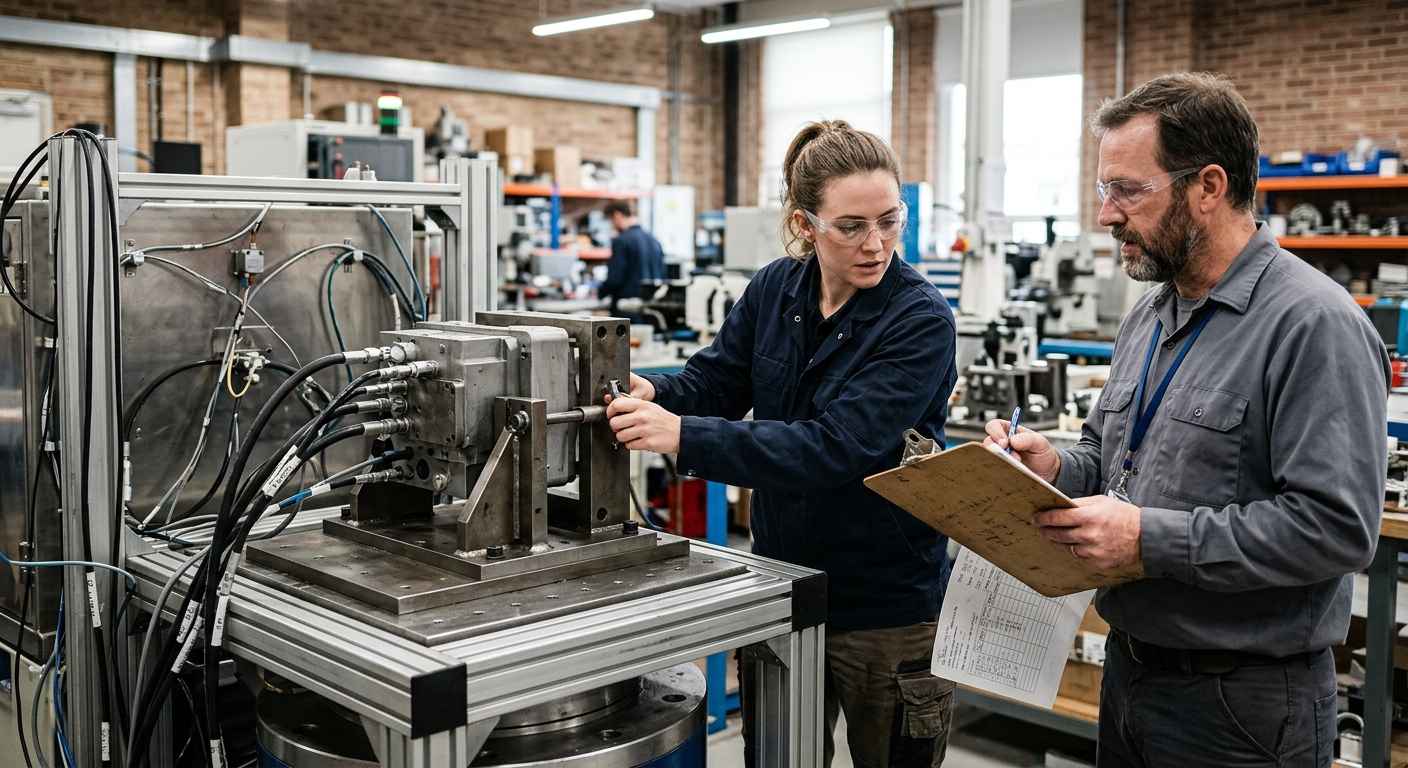
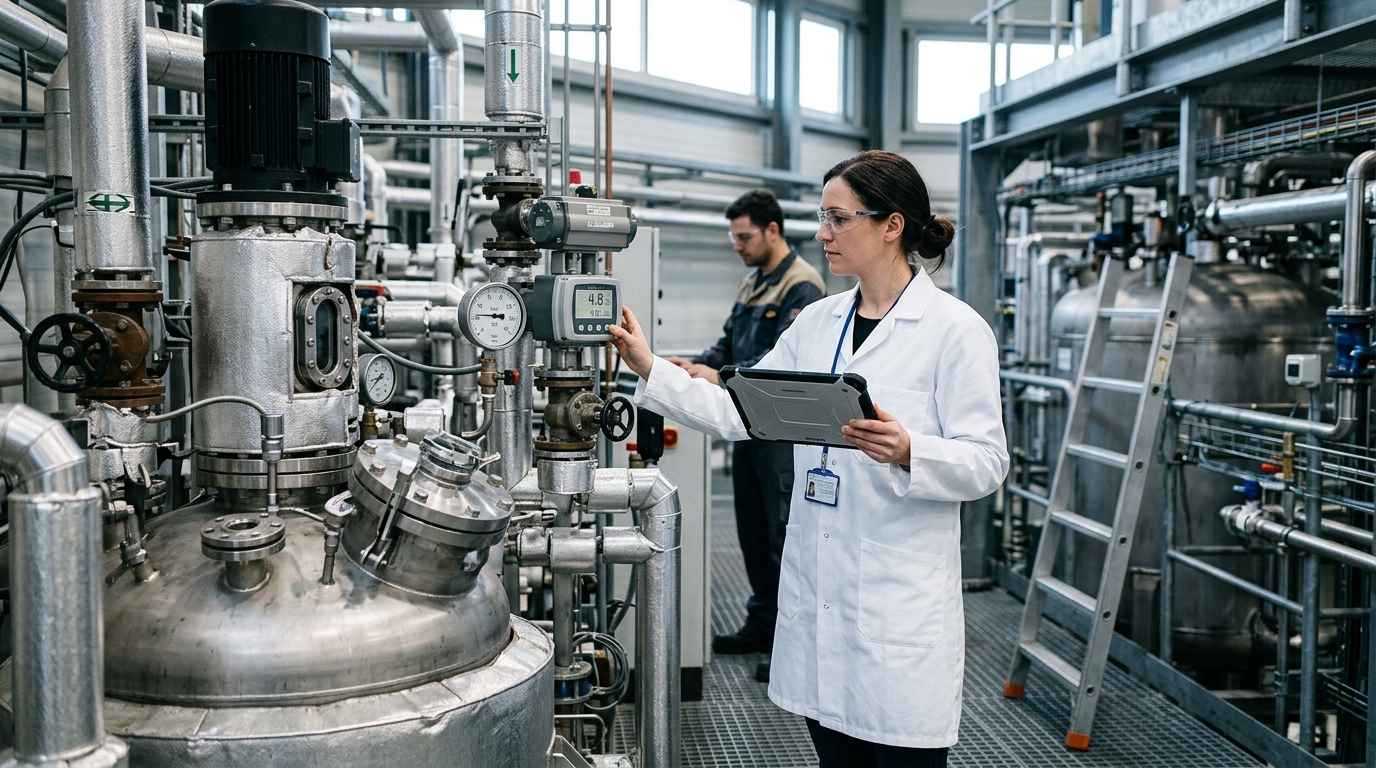
Waste is not spread evenly across the plant: it concentrates at the points where the material works hardest, where it contacts the aggressive medium or where the product sees its most critical condition. In reactors almost every cause comes together at once, corrosion of the material by the reaction medium, metals carried into the product, deposits that insulate the wall and incomplete reaction when an impurity poisons the catalyst. It is the point where a small per-batch loss multiplies, because it affects the conversion of the whole charge, so the reactor material and its compatibility with the real medium (temperature, concentration and contaminants included) is the first thing worth checking when yield does not add up.
In heat exchangers the loss is mostly one of availability: fouling reduces heat transfer, forces the energy input up and shortens the time between cleanings, and characterizing the deposit indicates whether the origin is in the process fluid, the cooling water or the corrosion of the tube itself. In packaging and sealing lines the loss appears as leaks or off-spec product from incompatibility between the product and the packaging material, and in storage it comes from cross-contamination, moisture uptake or degradation of the product through time and temperature. Knowing which piece of equipment and which stage to look at first shortens the diagnosis and avoids analysing the whole process blind.
Cross-contamination and lot traceability
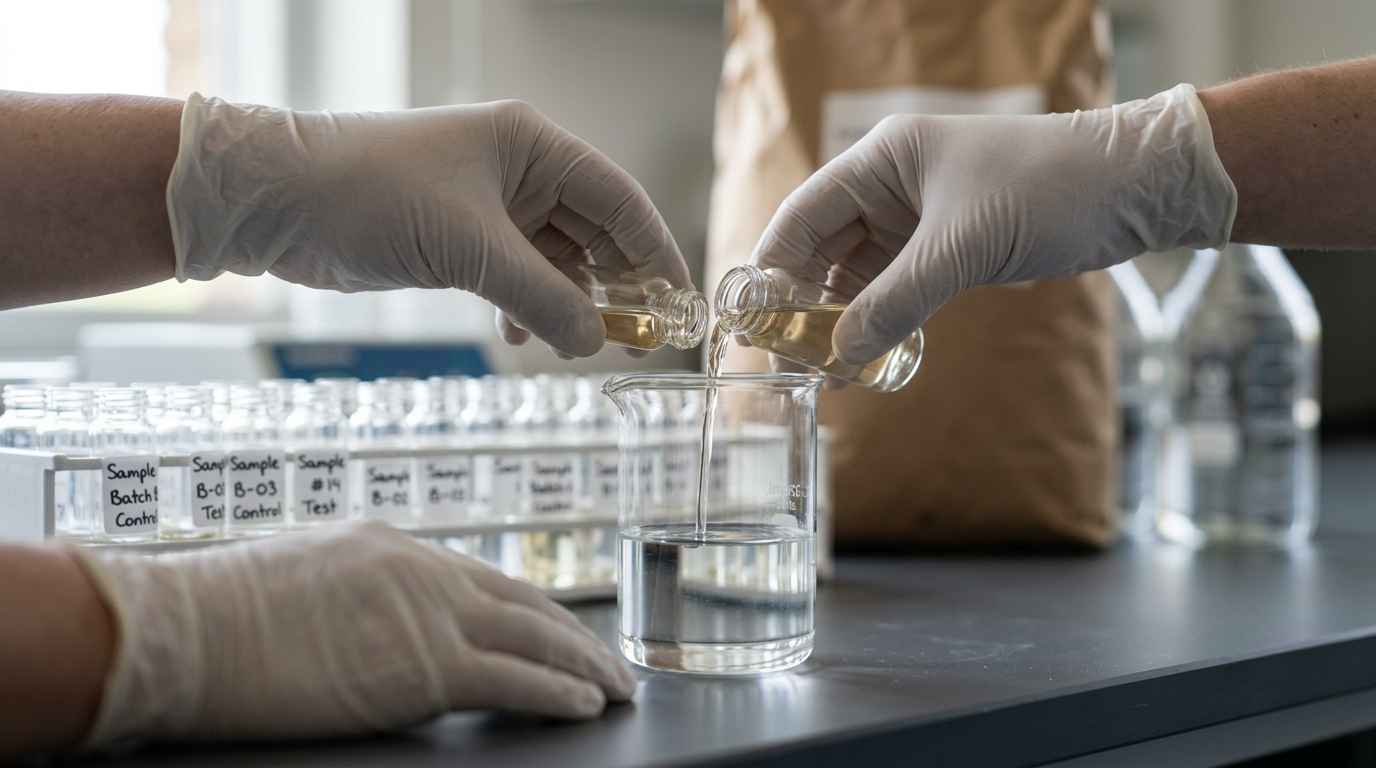
A large share of contamination losses does not start inside the reactor, but on the way of the raw material to it: a batch that carries residues of a previous product through a poorly purged line, an additive that arrives with an impurity from the supplier or a transfer that introduces water or particles. As the contaminant enters before the reaction, its effect is confused with a process problem and looked for where it is not.
The defence against this is traceability: identifying each raw-material lot, keeping a retained sample and recording which line it passed through and under what conditions. When a loss appears, cross-referencing the affected lot with those records usually narrows the search to a specific supplier, shift or stage even before taking anything to the laboratory. Without that traceability, every loss forces you to start from scratch; with it, the analysis only has to confirm the hypothesis the data already point to.
Have a similar case on your desk?
If you want to discuss it with our technical team, the first conversation is with no obligation.
How the origin of a loss is diagnosed
Identifying the cause of a loss is not a single test, but an ordered comparison that goes from the signal on the plant to the material that produces it and ends in a concrete process change. Each step answers a different question, and their value lies in chaining them.
How the laboratory locates the origin
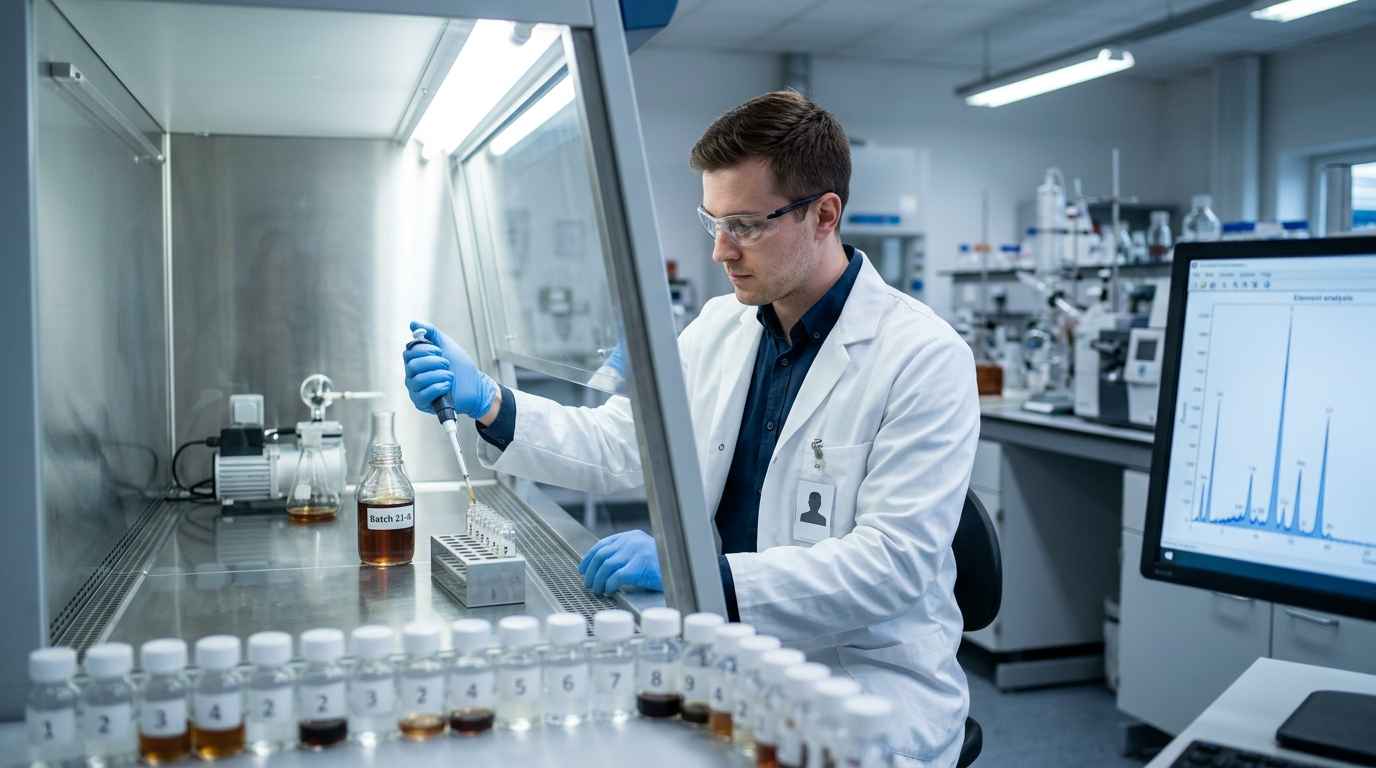
Attributing a loss to its cause requires comparison: the conforming material against the one that fails, the good product against the degraded one, the sound equipment against the corroded one. That comparison is what turns a suspicion into a proven cause, and it is the same logic used to investigate how to detect contamination in industrial processes before it ruins a whole batch. The chemical analysis of a suspect batch confirms whether it contains elements absent from the conforming material, whether a reagent arrives out of proportion or whether the final product has picked up metals from the equipment.
On that basis you decide where to keep looking: characterizing a fouling deposit reveals whether it comes from the reaction itself, the process water or a corrosion product, and analysing a process oil or fluid indicates whether it is degrading early, as in the evaluation of lubricants and industrial oils that anticipates a change before it causes a failure. When the loss originates in the equipment, that is how a case of corrosion in chemical reactors was solved, where testing the material against the real medium made it possible to choose an alloy that stopped carrying metals into the product and halted the stoppages for repair.
Which indicators reveal that a process is losing yield
Before sending anything to the laboratory, the plant itself already signals where the yield is going. The mass or molar yield per batch against the theoretical one is the master indicator: a sustained drop, even of a few points, signals that a fraction of the raw material is not being converted into conforming product. The percentage of off-spec and reworked batches turns that loss into a direct cost and, cross-referenced with the supplier or the raw-material batch, often already points to the cause. The time between cleanings is the thermometer of fouling: if it shortens, a deposit is growing and it is worth knowing what it is made of before it forces a stoppage.
Two more indicators complete the picture. The metals carried into the product, measured in ppm, are the direct fingerprint of equipment corrosion, because a progressive rise in the iron, chromium or nickel content reveals which alloy is dissolving and where. And the reagent or energy consumption per unit of product reveals incomplete reactions, by-products or thermal losses that are not always visible in the overall balance. When one of these indicators drifts and operating adjustments do not bring it back into range, it is time to take a sample to the laboratory: the signal is already located and the analysis only has to confirm the material cause behind it.
The plant indicators say that yield is being lost and where to start looking; the laboratory says why. Without the first you analyse blind, without the second you correct blind.
From cause to action: what changes in the process
Identifying the cause is the means; the end is a concrete action on the process. If the loss comes from an inlet contamination, the solution lies in tightening the raw-material specification and verifying it at receiving, not in compensating for it downstream. If it comes from equipment corrosion, the action is to change the material or the coating for one compatible with the medium, something decided with a test against the real fluid and not with a generic datasheet. And if it comes from thermal degradation, the adjustment is at the stage where the product sees the critical temperature, not across the whole process.
Changing a material or a specification does not end at the decision: you have to check that the action solves the loss without opening another. The prudent thing is to validate the change on a stage or a pilot batch and track the same indicators that revealed the loss (yield per batch, metals carried in, time between cleanings) long enough to tell the real improvement from the noise. An alloy more resistant to the medium, for example, may curb the corrosion but change the thermal behaviour of the equipment, and only the follow-up confirms that the corrected loss does not reappear by another route.
That jump from the analysis to the bottom line is what makes the diagnosis pay. A case of evaluating industrial oils to optimise production costs showed how characterizing a new fluid against the recycled one made it possible to cut consumption and scrap without touching the equipment. The loss is attacked where it is generated, and knowing where it is generated is what turns an investment in analysis into a saving measurable per batch.
Which samples to send for a reliable diagnosis
The quality of the diagnosis depends as much on the laboratory as on what reaches it. Ideally you send three things: a sample of the affected material or product, a conforming reference sample from the same point (the original to compare against) and, if the loss originates in a piece of equipment, a piece of the corroded or fouled component. The comparison against the reference is what gives the conclusion its strength, because many differences are only obvious next to a material that does conform.
Just as important is how they are taken and kept: avoiding contaminating the sample when collecting it, sealing it so it does not absorb moisture or lose volatiles, and sending it with the context information, which lot it is, at what stage the loss was detected, which supplier and which process conditions. That context guides the choice of techniques and avoids over-testing. A well-taken, well-documented sample shortens the diagnosis; one collected without criteria can lead to a wrong conclusion however correct the test is.
Compensating for a loss downstream hides it; attacking it at the stage where it is born eliminates it. The difference between the two is knowing, from a measurement, where the loss comes from.

Every loss has a material cause that can be measured
The yield of a chemical process does not rise by tweaking setpoints at random, but by identifying which material cause is subtracting conforming product: an inlet contamination, equipment corrosion, a fouling deposit, a degradation or an off-spec input. Each one leaves a measurable signal, and only with that signal in hand does the solution stop being a patch (tightening a specification, changing a material, adjusting a stage) and become the right answer to the real loss.
That is the difference between a plant that takes its waste as a fixed cost and one that reduces it because it knows where it comes from. If you have a yield that does not add up, a batch scrapped time after time or a piece of equipment carrying impurities into the product, send a sample of the affected material or product and, if you have one, a reference sample, and receive a diagnosis that identifies the cause of the loss and the action that corrects it.
Frequently asked questions about process improvement in the chemical industry
What is process improvement in the chemical industry?
It is increasing the proportion of raw material that ends up as conforming product by reducing waste, that is, everything lost through scrapped, reprocessed or degraded material and through the time the plant does not produce. Unlike a simple cost cut, it starts from identifying the material cause of each loss (contamination, corrosion, fouling or degradation) to act on it and not on the symptom.
Why does a chemical process lose yield with no apparent cause?
Because many losses come from material causes that are not visible in the operation: an impurity entering with the raw material, corrosion of a piece of equipment carrying metals into the product, a deposit that lowers thermal efficiency or a degradation of the product at a specific stage. As nothing changes in the setpoints, the loss is taken as normal variability until where it comes from is measured.
How is the origin of a loss identified?
By comparing the material or product that fails with a conforming reference. Chemical analysis reveals impurities, elements carried in by corrosion or inputs out of proportion; characterizing a deposit indicates where the fouling comes from; and testing the equipment material against the real medium shows whether the alloy is the right one. The comparison is what turns the suspicion into a proven cause.
Does equipment corrosion affect the yield of the process?
Yes, in two ways. Directly, because it forces stoppages and repairs that subtract productive time; and indirectly, because it carries metals and corrosion products into the medium that can contaminate the product or deactivate a reaction. That is why controlling the corrosion of reactors, piping and exchangers is part of yield improvement, not just of equipment maintenance.
When does laboratory analysis pay off instead of adjusting the process?
When the loss is recurrent and operating adjustments do not eliminate it in a stable way. Retuning setpoints hides the symptom for a few weeks; if the loss comes from the raw material, the equipment material or a degradation, it returns. An analysis that locates the cause costs far less than going on scrapping product or stopping the plant batch after batch, and it lets you decide the concrete change that really raises yield.