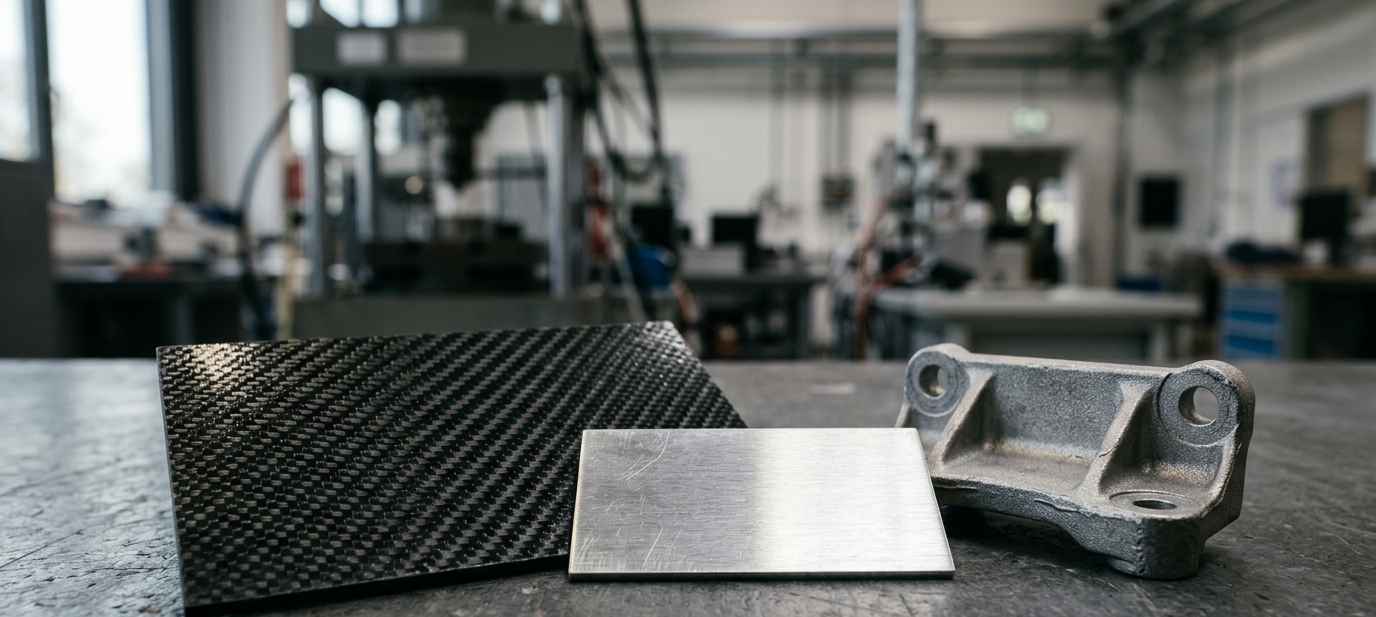

¿What is industrial failure investigation?
In any production environment, the appearance of an unexpected nonconformity introduces a scenario of technical uncertainty that forces organizations to reconsider their usual analysis mechanisms. Industrial failure investigation becomes particularly complex when there are no documented precedents that allow patterns or trends to be identified. In such cases, the organization cannot rely on process histories, accumulated statistics, or comparable past deviations. The failure appears as an apparently isolated phenomenon, yet its impact may be structural.
From a technical perspective, investigating a failure does not simply mean identifying the defective component; it also involves understanding which physical, chemical, or mechanical mechanism has caused the loss of functionality. When historical data is unavailable, the analysis must reconstruct the entire context: manufacturing conditions, process parameters, material characteristics, service environment, and possible unforeseen interactions between variables. The absence of previous data does not reduce the scope of the problem; on the contrary, it requires greater rigor during the initial characterization.
The absence of historical data does not imply an isolated failure; it may indicate uncontrolled variables or undetected mechanisms.
In many cases, the first organizational reaction is to assume that the failure is isolated. However, this interpretation can be premature. An event with no precedents may indicate that the detection system was not sufficiently sensitive, that certain variables were not being monitored, or that the failure only manifests under specific conditions that had not previously occurred. Therefore, the relevance of the investigation is not limited to resolving a specific incident but also involves evaluating the overall robustness of the production process.
Industrial failure analysis
Industrial failure analysis forms the technical foundation of any structured investigation. Its initial objective is not to immediately determine the root cause but to accurately describe the way in which the component has failed. This descriptive phase is critical because an incorrect interpretation of the phenomenon can influence the entire subsequent process.
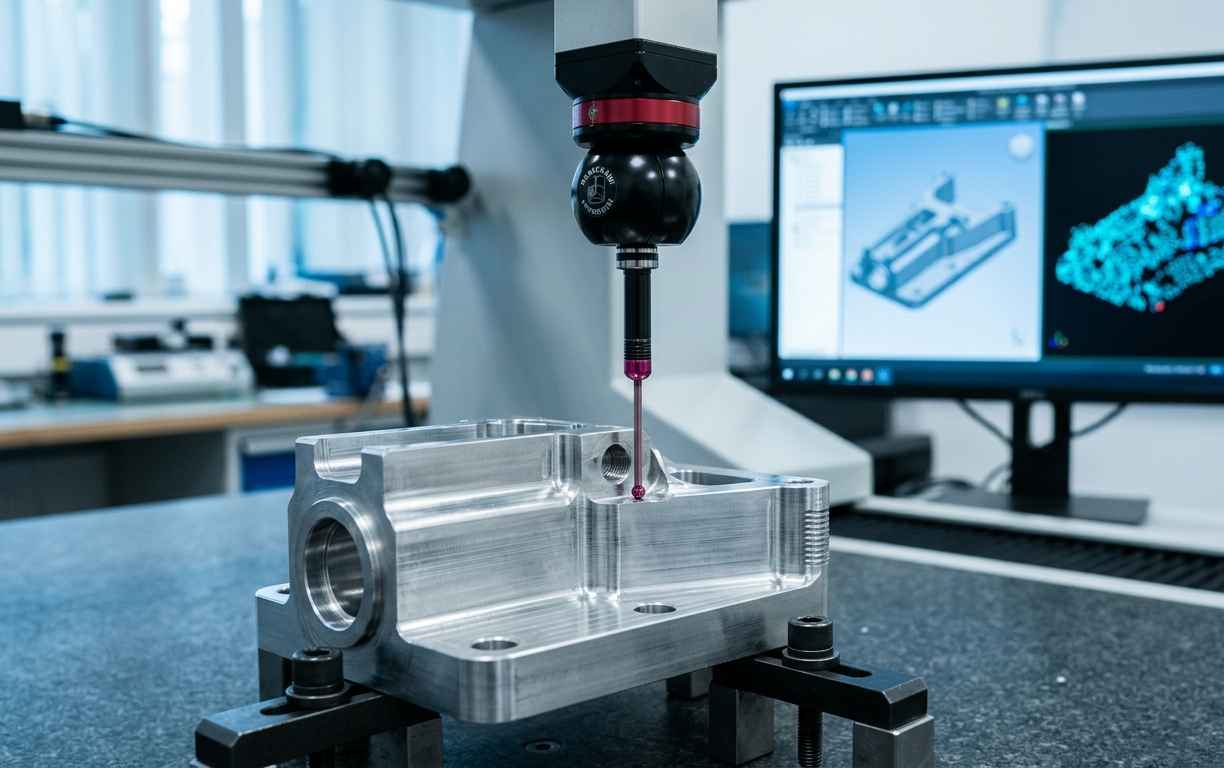
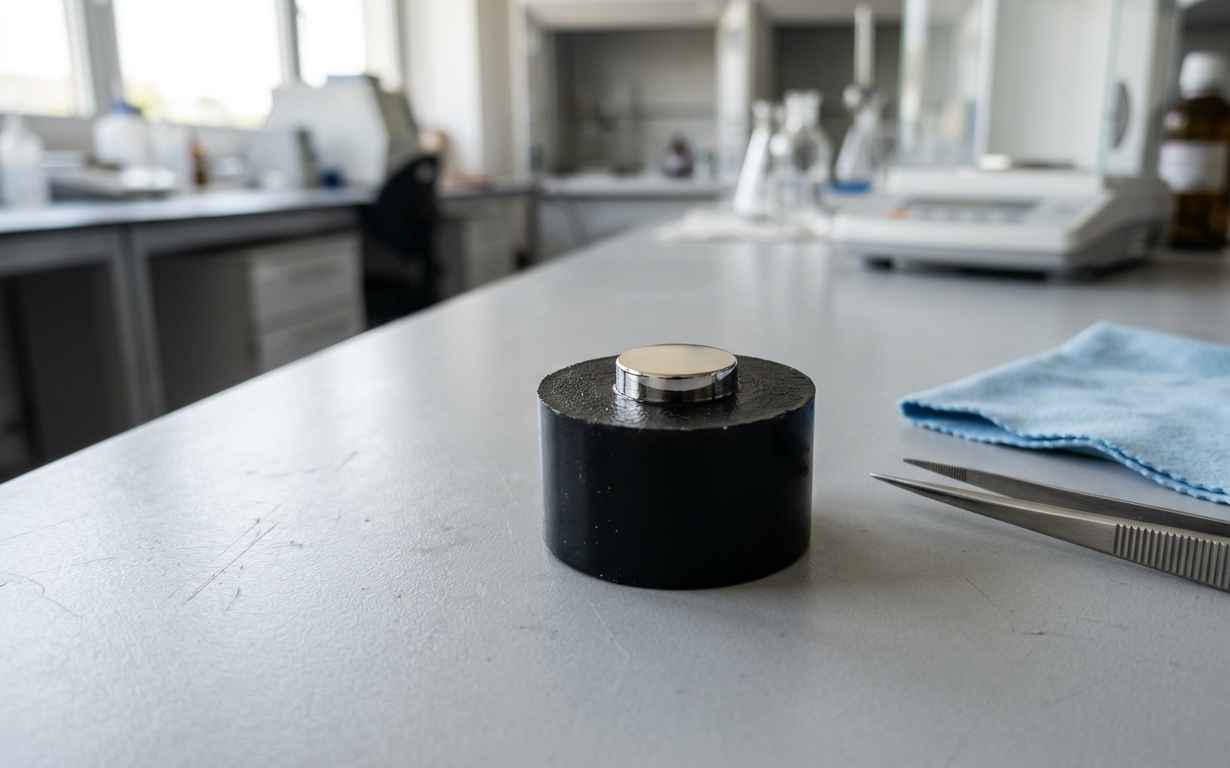
In the absence of historical data, the analysis must focus on material evidence. Fractures, deformations, surface degradation, microstructural alterations, or changes in functional properties are examined. Characterization techniques help determine whether the failure corresponds to mechanisms such as fatigue, corrosion, embrittlement, wear, overload, or chemical incompatibility, among others. Identifying the mechanism is essential to define plausible hypotheses.
The risk at this stage is oversimplifying the problem. For example, a fracture may be immediately attributed to overload when the underlying cause may actually be a progressive reduction in resistance due to inadequate heat treatment or inclusions in the base material. For this reason, the analysis must rely on verifiable data rather than assumptions based solely on prior experience.
Identifying the failure mechanism is more critical than directly assuming the root cause.
Failure without historical data
A failure without historical data requires approaching the problem from a probabilistic rather than deterministic perspective. Multiple scenarios may be possible. It may represent a truly isolated event resulting from a punctual deviation in production. It could also correspond to a latent defect that had not been detected until certain service conditions occurred. Another possibility is the introduction of an uncontrolled variation in raw materials, suppliers, or environmental conditions.
The key is not to assume that the absence of precedents means the absence of risk. In some cases, quality control systems detect deviations only within predefined ranges and may not capture complex interactions between variables. Additionally, certain degradation mechanisms require time or specific conditions to manifest, which can delay detection.
For this reason, the first phase of the investigation should focus on defining the actual scope of the problem. It is necessary to determine whether more units are affected, whether the failure occurs during manufacturing or in service, and whether there is any correlation with recent changes in the process, even if these are considered minor. This initial analysis helps to assess the risk before moving toward deeper investigations.

Technical impact and industrial implications
The appearance of a failure without documented precedents has implications that go beyond the affected component. From an operational perspective, it may generate production line stoppages, blocked inventory, delivery delays, and additional costs related to rework or replacement. From a strategic perspective, it can affect the perception of technical reliability by customers or the market.
The difficulty increases when there is no immediate explanation. The organization faces a dual pressure: on one hand, the need to restore production quickly; on the other, the obligation to provide a technically sound explanation. In highly regulated or competitive sectors, this situation can compromise trust and trigger additional audits.
The absence of historical data also limits the use of conventional statistical tools. Without repetition, there is no trend, and without trends, traditional predictive analyses cannot be applied. Consequently, the investigation must rely on the physical study of the phenomenon and on the experimental validation of hypotheses.
Nonconformity in production
A production nonconformity without precedents may have multiple origins. It may result from a punctual deviation in process parameters, a human error during assembly, accidental contamination, or variability in raw materials that remains within specified limits but alters behavior in service. It may also be related to external conditions such as changes in temperature or humidity interacting with the product in unforeseen ways.
The main risk lies in underestimating the scope. If the failure is considered isolated without rigorous verification, it may reappear in subsequent batches. For this reason, initial containment actions should be applied cautiously, including segregation of potentially affected units and verification of critical parameters.
It is equally important to question the most obvious hypothesis. In some cases, the observed symptom does not correspond to the real cause. A deformation may result from a prior dimensional variation that generated internal stresses, or localized corrosion may be associated with microscopic surface defects invisible to the naked eye. Without a thorough analysis, corrective action could focus on the symptom rather than the root of the problem.
8D methodology
The 8D methodology provides a structured framework for managing complex incidents in industrial environments. Its usefulness in situations without historical data lies in the discipline it imposes on the analysis process. It requires a precise definition of the problem, the implementation of containment actions, and the documentation of each phase of the investigation.
However, the methodology does not replace technical analysis. The identification of potential causes must be supported by objective evidence. Without experimental validation, the risk of confirming incorrect hypotheses increases. The 8D methodology should therefore be understood as a management framework that structures the investigation process, while the robustness of the conclusions depends on the technical rigor applied in the failure analysis itself.
Methods of analysis, evaluation, or solution
When no precedents exist, the investigation must adopt an experimental approach. The process begins with a thorough characterization of the affected component and continues with comparison against compliant samples. If possible, the phenomenon is then reproduced under controlled conditions.
This approach allows the investigation to progress from description to validation. However, each stage requires a critical interpretation of the results. A difference detected between samples does not necessarily imply causality; it may simply represent a variation without functional impact.
OK vs NOK comparative analysis
OK vs NOK comparative analysis is a fundamental tool in contexts without historical data. It involves studying a defective sample and a compliant sample in parallel using the same analytical techniques. This approach makes it possible to identify objective differences in chemical composition, microstructure, mechanical properties, or surface condition.
OK vs NOK comparative analysis helps detect differences that are not visible at first glance.
The key is to avoid premature conclusions. If a variation in composition is detected, it must be assessed whether that variation is sufficient to explain the observed failure mechanism. Otherwise, it may simply represent a secondary deviation unrelated to the actual problem.
Moreover, when no obvious differences are identified, the scope of the study must be expanded. It may be necessary to analyze service conditions, applied loads, or environmental interactions that are not reflected in the initial characterization.
Failure reproduction in the laboratory
Failure reproduction in the laboratory represents one of the most reliable ways to validate hypotheses. By subjecting samples to controlled conditions that simulate the real service environment, it is possible to determine whether the identified mechanism is triggered under specific parameters.
If the failure can be reproduced consistently, a plausible causal relationship is established. If it cannot be reproduced, the hypothesis must be reconsidered. This phase may require mechanical, environmental, or chemical testing, as well as advanced material characterization studies that help isolate the critical variable.
Without experimental validation, a hypothesis remains only a technical assumption.
In particularly complex situations, it may be necessary to adopt an industrial forensic analysis approach, integrating physical evidence, reconstruction of conditions, and systematic evaluation of alternative scenarios. In these contexts, having access to specialized technical support can make the difference between a plausible hypothesis and a demonstrated cause.

Making technical decisions when no historical data exists
Investigating industrial failures in the absence of historical data requires an approach based on evidence and experimental validation. The lack of precedents should not be interpreted as a sign of exceptionality but rather as an indication that the phenomenon requires rigorous characterization.
The process should begin with an objective description of the failure mode, continue with the critical formulation of hypotheses, and culminate in their validation through testing and comparative analysis. Methodological discipline combined with technical rigor helps reduce uncertainty even when no prior references exist.
From a strategic perspective, such investigations do not only resolve specific incidents. They also generate knowledge about the actual behavior of the product and strengthen quality control systems. In scenarios where there are no clear precedents, consulting with a specialized technical team can accelerate the path toward solid and reliable conclusions.