
What is industrial failure analysis?
In any production environment, the appearance of a component that no longer performs its intended function raises a fundamental technical question: what is the origin of the problem? In many cases, the first reaction is to assume there is a material failure, especially when the component shows fractures, deformation or visible degradation. However, in industrial engineering this initial interpretation is not always correct. A problem that appears to be related to the material may actually originate from an inadequate design or from defects introduced during the manufacturing process.
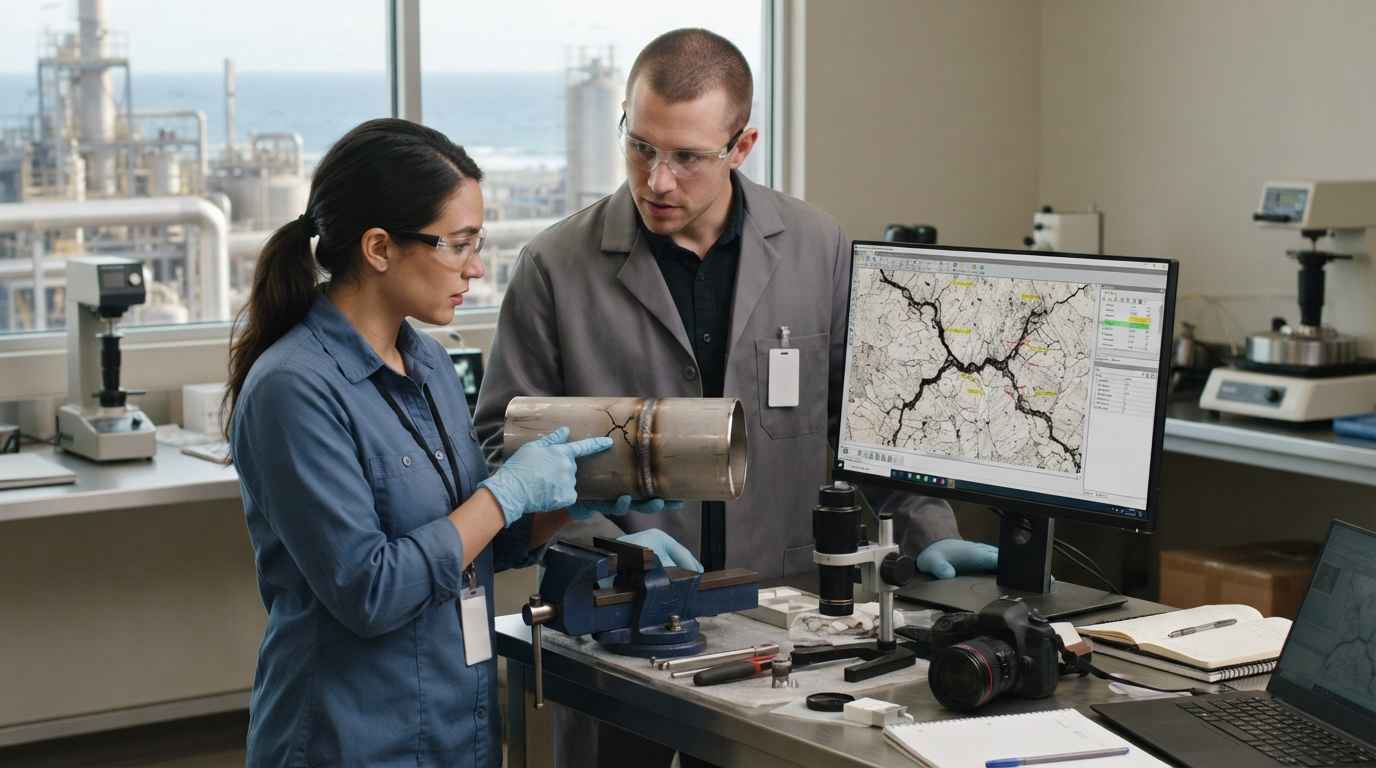
The technical analysis of these situations is addressed through industrial failure analysis, a discipline that combines scientific knowledge, experimental techniques and engineering expertise to understand why a product has stopped functioning properly. The objective is not only to describe the failure, but also to reconstruct the sequence of events that led to it and determine which factor triggered it.
Many failures attributed to a material failure actually originate in design or manufacturing process issues.
Understanding whether there is truly a material failure or whether the problem lies in the design or the production process is a critical issue for industrial organizations. An incorrect diagnosis may lead to the implementation of inappropriate corrective actions, such as changing the material supplier when in reality the component is poorly dimensioned or when the manufacturing process introduces structural defects.
For this reason, failure investigations must be approached using a systematic methodology based on technical evidence. The analysis of the affected component, material characterization, design review and evaluation of manufacturing conditions are all part of a process that allows the origin of the problem to be identified with greater accuracy.
In this context, distinguishing between failure mode, failure mechanism, and root cause is essential to determine whether the problem is actually related to the material or whether other factors are involved.
Failure mode and failure mechanism in diagnosing a material failure
When a fracture or degradation appears in a component, the first step of the analysis is to identify the failure mode. This term describes the observable way in which the component has stopped fulfilling its function. It may appear as a fracture, permanent deformation, accelerated wear or loss of mechanical properties.
In many situations, the presence of a fracture or visible deterioration immediately leads to the assumption of a material failure. However, the failure mode only describes what has happened; it does not explain why it happened.
To move forward in the investigation, it is necessary to identify the failure mechanism, meaning the physical or chemical process that caused the component to degrade. Common mechanisms include fatigue due to cyclic loading, stress corrosion cracking, material embrittlement, or contact wear.
The failure mode describes what happened; the failure mechanism explains why it happened.
Understanding the mechanism is essential to determine whether the phenomenon is truly related to the material itself or whether it has been triggered by external conditions. For example, a fatigue fracture may occur because the material contains internal defects, but it may also be associated with a design that generates stress concentrations or with dynamic loads higher than those originally expected.
For this reason, diagnosing a material failure requires analyzing not only the material itself but also the conditions under which the component was designed and manufactured.
Material failure versus design failure and manufacturing process defects
In industrial environments, failures are usually classified into three major categories: failures associated with the material, failures related to design, and problems derived from the manufacturing process.
A material failure occurs when the material properties are not suitable for the service conditions or when internal defects reduce its strength. This may be caused by incorrect chemical composition, an unsuitable microstructure, or the presence of inclusions or porosity.
In contrast, a design failure occurs when the component is not properly dimensioned to withstand the actual loads to which it is subjected. In such cases, the material may fully meet the required specifications, but the geometry of the component or the stress distribution creates operating conditions that exceed its structural capacity.
The third possible origin is related to manufacturing process defects. During operations such as casting, machining, welding or heat treatment, discontinuities or residual stresses may be introduced that reduce the structural integrity of the material.
Distinguishing between these three situations is one of the main objectives of failure analysis, since each requires completely different corrective actions.
Impact and industrial implications of a material failure
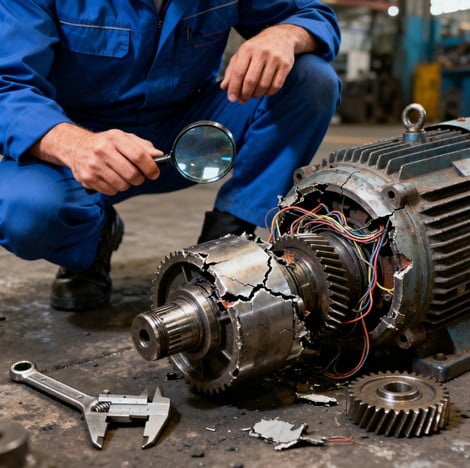
When a component fails in service, determining whether there is truly a material failure has important technical, economic and operational implications. In many cases, the initial interpretation of the problem may lead to decisions that do not address the real cause of the issue.
An incorrect diagnosis of the failure origin can lead to recurring costs and ineffective technical decisions.
If it is assumed that the material is responsible for the problem without performing a rigorous analysis, incorrect measures may be taken, such as changing suppliers, modifying the material specification or introducing additional treatments that do not resolve the origin of the failure.
Such decisions not only increase production costs but may also cause delays in industrial processes and affect relationships with suppliers or customers.
On the other hand, when the origin of a material failure is properly analyzed, it becomes possible to determine whether the problem is truly related to the material properties or whether it is associated with other factors such as component design or manufacturing processes.
Design failure as a common cause of failures attributed to materials
One of the most common mistakes in industrial failure investigations is attributing the problem to the material when the real origin lies in the design of the component.
Design failures typically occur when a component has not been properly dimensioned to withstand the actual operating conditions. This may be due to stress concentrations in certain areas of the geometry, abrupt changes in section or excessively small radii.
In such situations, the material may have adequate mechanical properties and fully comply with technical specifications, but the stress distribution generated by the design leads to crack initiation or deformation.
Another frequent factor is the underestimation of dynamic loads or vibrations present in the system. Although the component may withstand static loads correctly, repeated load cycles may cause fatigue phenomena that eventually lead to failure after a certain number of cycles.
When failures repeatedly appear in the same region of a component, the problem is often related to the design rather than to a material failure.
Manufacturing process defects and their relationship with material failure
Manufacturing processes can introduce defects that directly affect the behavior of the material. In such cases, the failure may be interpreted as a material failure, although its real origin lies in the production process.
During operations such as casting, welding or heat treatment, internal discontinuities may form that act as crack initiation points. The presence of porosity, inclusions or microcracks reduces the strength of the material and facilitates the development of failure mechanisms.
Another frequent phenomenon is the generation of residual stresses during certain manufacturing processes. These stresses may combine with service loads and accelerate crack propagation.
Unlike design failures, problems associated with the manufacturing process often show an irregular distribution. Not all parts fail, and fractures may appear in different locations depending on the specific defect present in each component.
Understanding the relationship between process defects and material behavior is essential to determine whether the issue truly corresponds to a material failure or to a deviation in the manufacturing process.
Analysis methods to identify a material failure
Investigating the origin of a failure requires applying analytical techniques that provide objective evidence about the behavior of both the material and the component in service.
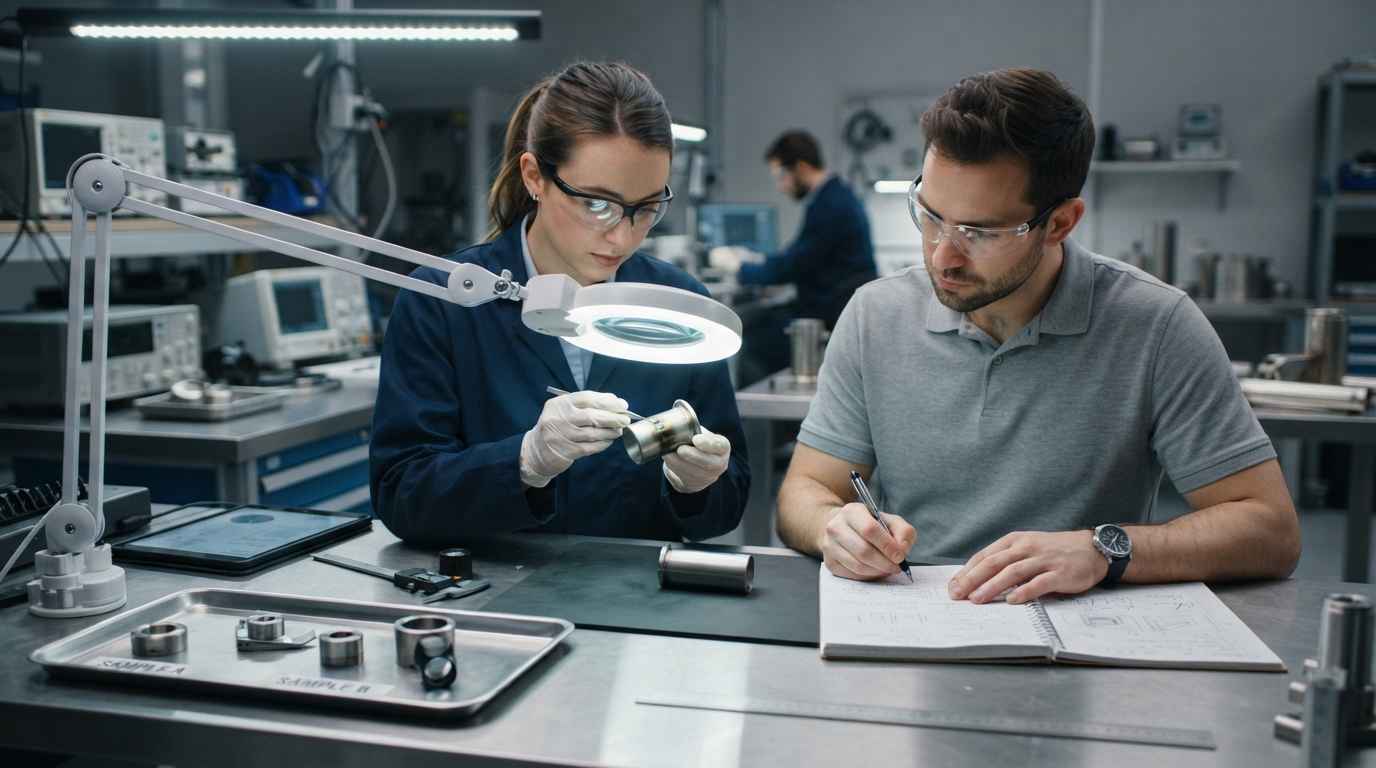
One of the most commonly used strategies is to analyze both the components that have failed and those that have operated correctly under the same conditions. This approach allows differences to be identified that may explain the occurrence of the problem.
Comparing OK and NOK samples is one of the most effective ways to identify a material failure.
Fractography in failure analysis to study the origin of a material failure
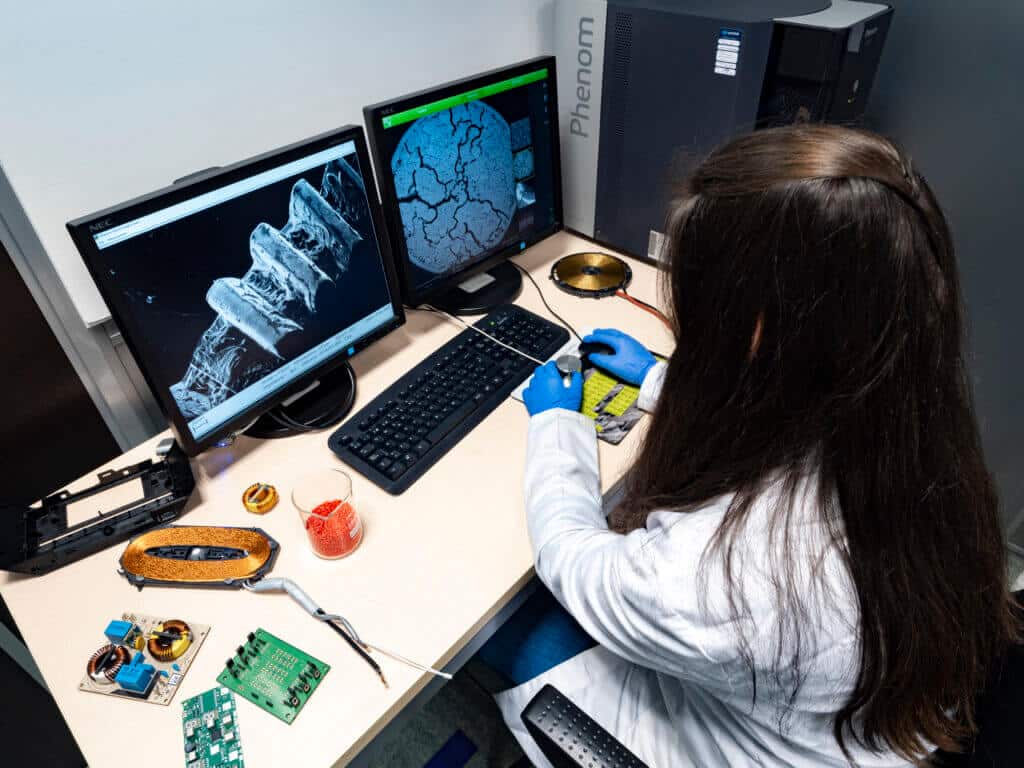
Fractography in failure analysis is a technique used to study the fracture surfaces of a component in order to understand how the failure occurred.
Fracture surfaces contain valuable information about the failure mechanism. Through microscopic observation it is possible to identify the crack initiation point, the direction of crack propagation and the characteristics associated with the type of fracture.
This analysis makes it possible to determine whether the failure is related to internal material defects, stress concentrations generated by the design, or progressive degradation phenomena such as fatigue.
When the crack initiates from an inclusion, a cavity or another material discontinuity, the problem may be associated with a material failure or with a defect introduced during the manufacturing process.
OK-NOK sample comparison and testing for failure analysis
Another key tool in industrial failure investigations is the OK-NOK sample comparison. This approach consists of analyzing defective components and comparing them with others that have functioned correctly in order to identify relevant differences.
Through this comparative analysis, variations in chemical composition, microstructure or mechanical properties of the material can be detected. These differences may provide important clues to determine whether a material failure exists or whether the problem lies in another part of the system.
To carry out these investigations, different failure analysis tests are used, including chemical analysis of the material, microstructural characterization and mechanical testing to evaluate its strength and behavior.
The combination of these techniques makes it possible to establish well-founded hypotheses about the origin of the failure and to validate them through experimental evidence.

How to identify the real cause of a material failure
Determining whether a component has failed due to a material failure, a design problem or a deviation in the manufacturing process is one of the most complex tasks within industrial failure analysis.
Although the fracture of a component is often initially attributed to the material, experience shows that many failures apparently associated with materials actually originate from other factors within the system. For this reason, technical investigations must analyze the behavior of the material, the component design and the manufacturing conditions in an integrated manner.
Identifying the failure mode and the failure mechanism is the starting point for understanding the degradation phenomenon. Based on this information, comparative analysis of defective and functional components helps guide the investigation toward the real cause of the problem.
When the origin of a material failure is correctly identified, organizations can implement effective corrective actions that improve product reliability and reduce the likelihood of the problem occurring again in the future.
In situations where the origin of the problem is not immediately evident, detailed technical analysis of materials, design and manufacturing processes can help identify the causes of the failure more precisely. In such investigations, the support of specialists in forensic engineering and industrial failure analysis can facilitate the acquisition of technical evidence that helps guide decision-making and prevent the recurrence of the problem.