
What was the challenge or problem to be solved?
Validating a coating intended for high demand conditions requires more than an initial characterization. When system performance depends on its stability in severe environments, it is necessary to demonstrate its behaviour through a structured experimental methodology capable of anticipating its evolution in service.
Material compatibility in critical applications
The project began with the need to confirm material compatibility in critical applications, where the coating played an essential role in protection and durability. The final application involved exposure to demanding environments, including potential thermal cycles, high humidity levels, or the presence of aggressive agents.
In this context, the client needed to ensure that the coating would not generate incompatibilities with the substrate or alter the overall behaviour of the system. Loss of adhesion, surface degradation, or variation in mechanical properties could compromise service life and lead to indirect costs related to maintenance or replacement.
Validating coating compatibility at early stages reduces failure risks in service and costs related to rework or replacement.

Furthermore, compatibility had to be assessed beyond the initial state. It was necessary to verify that, after prolonged exposure, no degradation phenomena associated with corrosion processes or loss of integrity would occur. The evaluation included consideration of oxidation resistance as a determining factor within the expected operating environment.
Therefore, the challenge consisted of translating a general technical need into specific and measurable evaluation criteria capable of anticipating the real behaviour of the coating under demanding scenarios.
Approval of industrial coatings
The second dimension of the problem was associated with the approval of industrial coatings. The client needed to support the material approval decision with objective data obtained under representative and comparable conditions.
It was not sufficient to rely solely on technical documentation or generic testing. Approval required a structured approach integrating tests adapted to the specific application. In this regard, a tailor made test was defined in alignment with the specific requirements of the operating environment.
The objective was to minimise technical uncertainty prior to final implementation. An approval process based on unverified assumptions may lead to operational risks that only become apparent once the system is already in service.
Accordingly, the project was oriented towards establishing an experimental framework that would allow the evaluated coating to be accepted or rejected based on clear and reproducible technical criteria.
Durability testing under severe conditions
The main technical challenge focused on designing durability tests under severe conditions capable of accelerating the degradation mechanisms expected in real application.
The objective was not merely to expose samples to extreme environments, but to define parameters consistent with the final use, including the evaluation of the coating’s thermal behaviour under elevated or fluctuating temperatures. Poorly defined acceleration conditions could induce non-representative mechanisms or complicate subsequent interpretation.
A poorly defined test can lead to non-representative results and incorrect technical decisions in critical project phases.
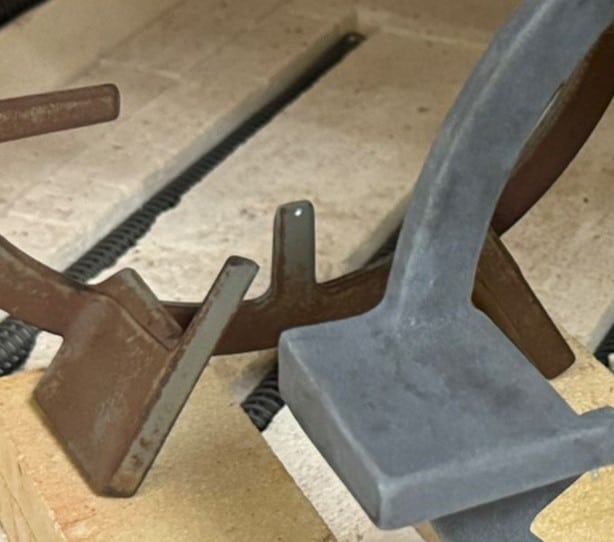
In addition, detailed observation of the surface condition after exposure was critical. Microscopic analysis was used to identify potential microcracks, morphological changes, or early signs of degradation not visible to the naked eye.
Within this framework, INFINITIA structured the experimental design to ensure that the results obtained were technically extrapolable and useful for decision-making, while maintaining confidentiality regarding specific formulations and processes.
How was this addressed or what was the solution?
The solution was based on an experimental validation strategy aimed at generating comparable, technically interpretable data aligned with the final application. The approach combined accelerated exposure, functional assessment, and critical analysis of the results obtained.
Accelerated ageing of coatings
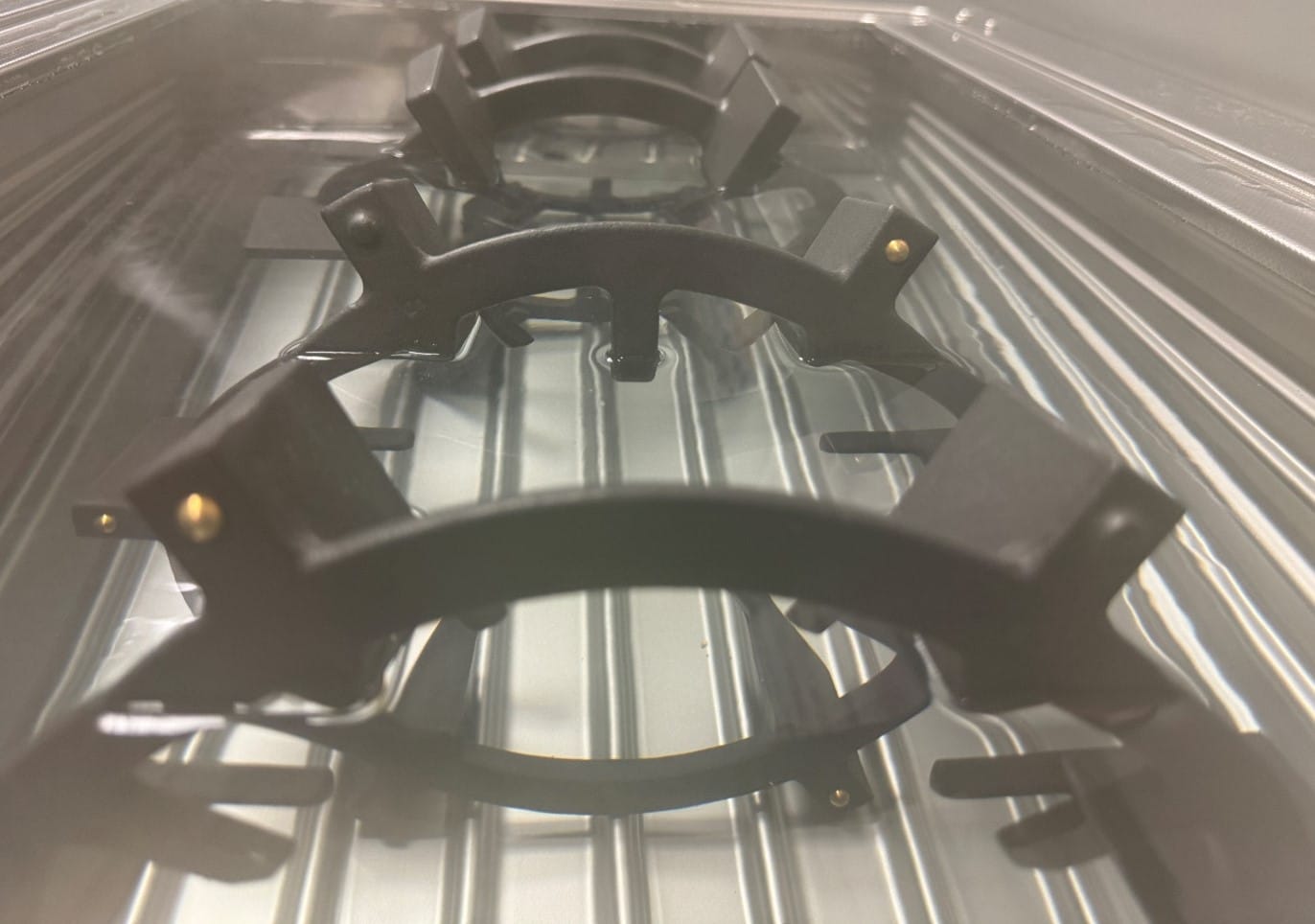
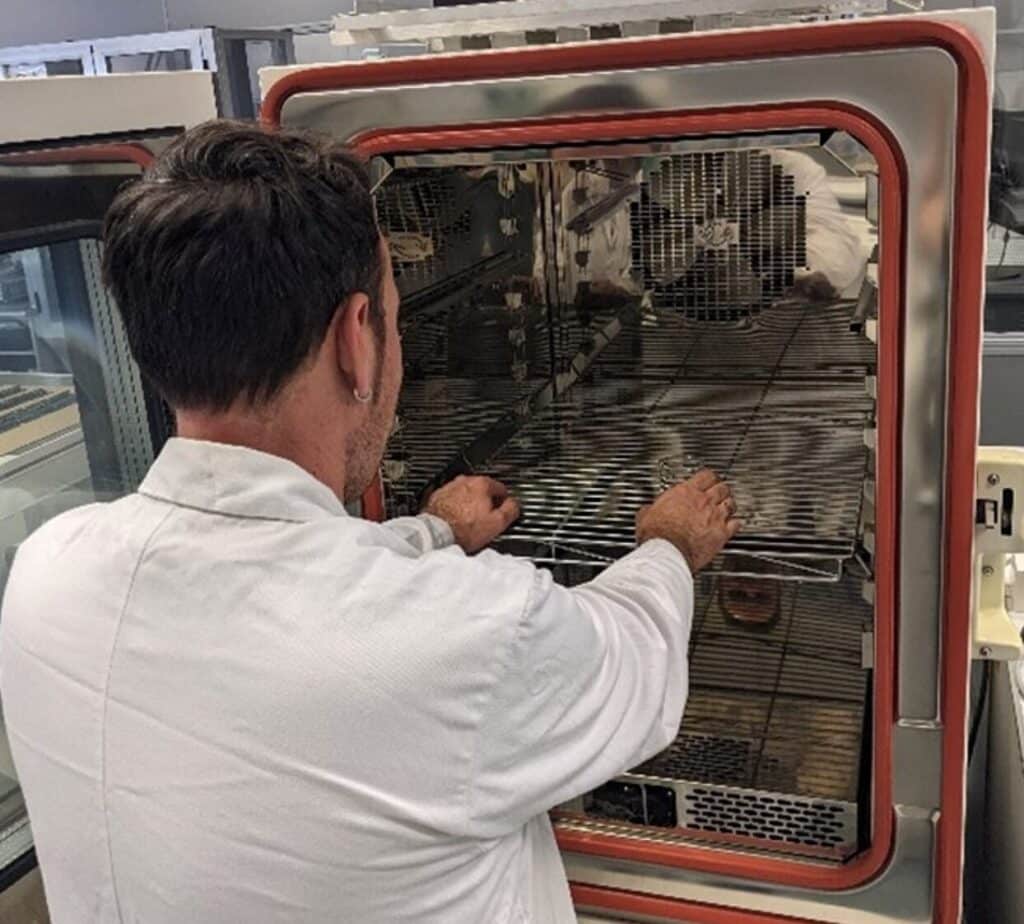
The core of the project was the implementation of accelerated ageing protocols for coatings, designed to concentrate within a reduced time frame the cumulative effects that could occur over years of service.
Samples were subjected to controlled scenarios reproducing relevant environmental factors, such as thermal variations and humidity conditions, while maintaining repeatable parameters to ensure comparability between tests.
Accelerated ageing allows anticipating in weeks the behaviour the coating will show after years in service.
The objective was not only to induce visible degradation but also to analyse the evolution of key indicators related to the integrity of the protective system. Changes in adhesion, surface stability, and behaviour against external agents were evaluated.
This approach made it possible to anticipate potential failure mechanisms and assess coating stability prior to final implementation.
Accelerated ageing testing as a validation tool
Accelerated ageing testing was integrated into a broader technical validation methodology. The INFINITIA team participated in defining critical parameters, preparing representative samples, and performing comparative evaluation after exposure.
Objective acceptance criteria were established to interpret the results consistently with the application requirements. This structured approach avoided subjective assessments and facilitated well-founded decisions.
Comparing the initial condition with the post-ageing state enabled the identification of relevant changes and the determination of whether they affected the expected functionality of the coating.
Experimental validation of coatings for approval
The final phase consisted of integrating the results into the experimental validation process for coating approval. The overall analysis made it possible to verify whether the observed behaviour was compatible with the requirements defined for the application.
The data obtained provided objective evidence regarding coating stability under representative simulated conditions, thereby reducing uncertainty associated with its implementation.
Additionally, the study allowed the identification of critical aspects that should be monitored in subsequent stages, contributing useful knowledge beyond the specific approval decision.
The added value of the project lay in the comprehensive structuring of the study, from problem definition to technical interpretation of the results, providing a solid basis for decision-making in demanding industrial environments.