

Aesthetic analysis of metals
The aesthetic analysis of metals is a specialized service that we offer at INFINITIA to guarantee the visual and functional quality of metal surfaces used in different industrial sectors.
In our surface finish analysis laboratory, we have specialists who work with the latest technologies in optical metrology, adhesion testing, scratch resistance, and accelerated aging testing.
Our goal is to verify that decorative surface finishes meet the requirements of quality control regulations and the aesthetic expectations of each customer. This service is key in industries such as automotive, aeronautics, appliance manufacturing, and the design of high value-added metal components, where the metal analysis process is essential.
Talk to a specialist
Request a free initial consultation; contact a consultant from our team of specialists

What does the aesthetic analysis of metals consist of?
What is it?

The aesthetic analysis of metals service consists of the verification and characterization of aesthetic treatments applied to metal surfaces, evaluating parameters such as homogeneity, texture, shine, color, resistance, and durability.
At INFINITIA, we carry out a thorough inspection to detect surface defects in metals, such as irregularities, marks, color differences, or loss of uniformity in the finish. To do this, we use gloss and colorimetry equipment, optical microscopy, and climate chambers that simulate extreme conditions of use.
Thanks to these analysis methods, we can make objective and reliable comparisons that enable our customers to make decisions based on solid data in order to validate suppliers, optimize corrosion resistance treatments, or improve manufacturing processes.
Aesthetic analysis of metals at INFINITIA
At INFINITIA, we develop aesthetic analyses of metals by combining forensic engineering techniques, analytics, and specialized laboratory testing. We have salt spray chambers, UV chambers, and climate chambers to perform accelerated aging tests on metal finishes, as well as equipment to measure scratch and wear resistance.
We evaluate everything from decorative metal blasting to industrial painting, coating, and varnishing processes, always adapting the procedure to each customer’s specifications. Our approach seeks not only to validate aesthetics, but also the functionality and durability of the surface finish, ensuring that the product retains its appeal and performance throughout its useful life.
Benefits of aesthetic analysis of metals
Benefits
One of the main benefits of aesthetic analysis of metals is to ensure visual consistency and the resistance of finishes under real conditions of use. At INFINITIA, we have helped companies in the automotive sector to validate mirror polishing on stainless steel, ensuring a uniform finish with no visible defects.
We also work with appliance manufacturers to verify metal satin and brushing treatments, ensuring aesthetic uniformity in mass production runs.
Likewise, the analysis allows us to evaluate decorative anodizing on aluminum alloys and laser texturing on metal surfaces, verifying that they maintain their appearance even after abrasion testing, cleaning, and prolonged exposure to aggressive environmental conditions. These benefits translate into confidence for the end customer, fewer complaints, and greater competitiveness in the market.

Types of Aesthetic Analysis of Metals, Analysis of Metals and Precious Metals
Types
At INFINITIA, we develop different aesthetic analysis tests for metals to evaluate the visual quality, surface finish, and durability of the treatments applied to metal parts.
Our goal is to accurately understand the aesthetic and functional behavior of each finish, optimizing its application, appearance, and useful life.
Homogeneity and surface appearance tests
These tests verify that the metallic finish is uniform in gloss, color, and texture, with no irregularities, marks, or defective areas. Equipment such as gloss meters and colorimeters is used, along with standardized visual inspection.
At INFINITIA, we have used these methods to validate the aesthetic consistency of mirror-polished stainless steel components for the automotive industry, ensuring their appeal and quality.
Scratch and abrasion resistance tests
We evaluate how the metal surface behaves when subjected to mechanical stress typical of actual use. Through scratch, abrasion, and controlled wear tests, we determine the aesthetic durability of the coating or treatment applied.
For example, in decorative coatings of anodized aluminum, at INFINITIA we perform standardized tests to verify that they maintain their appearance after prolonged use.
Adhesion tests on decorative coatings
Adhesion is key in surface treatments such as paints, varnishes, anodizing, or laser texturing. At INFINITIA, we perform cut tests on grids and controlled peeling to verify that the finishes remain fixed to the metal surface without detachment.
In projects for manufacturers of household appliance components, this type of analysis has made it possible to guarantee the aesthetic robustness of parts subjected to frequent cleaning.
Accelerated aging and aesthetic stability tests
These tests simulate extreme conditions of use to predict how the finish will evolve over time. We use salt spray, UV, and climate chambers to reproduce humidity, solar radiation, and environmental corrosion.
At INFINITIA, we have evaluated the color stability on satin and brushed metal surfaces, ensuring that they retain their appeal after thousands of hours of simulated exposure.
Tests on specific decorative surface treatments
We analyze specific finishes such as decorative shot blasting, mirror polishing, and laser texturing, validating both their aesthetics and functional resistance.
In the interior design sector, INFINITIA has collaborated in the verification of textured stainless steel finishes, confirming their durability against daily wear and tear in high-traffic furniture.
Applications of Aesthetic Analysis of Metals
Sectors
The aesthetic analysis of metals has fundamental applications in a wide range of industrial sectors. Surface finishes not only serve a decorative function, but also add value to the product, influence the end customer’s perception, and determine competitiveness in the market.
At INFINITIA, we conduct advanced testing to validate metal finishes, optimize production processes, and ensure that treatments meet both visual and functional durability criteria.
Automotive Industry: Validation of finishes on metal components
In the automotive sector, metallic finishes serve a dual purpose: they enhance aesthetics and ensure resistance to harsh conditions of use. Vehicle manufacturers demand uniformity in moldings, trim, pedals, and visible parts of the bodywork.
- Validation of interior and exterior moldings: control of brightness, tone, and color uniformity in chrome-plated or anodized parts.
- Scratch and abrasion resistance: testing on handles, levers, and metal controls exposed to constant use by the driver and passengers.
- Accelerated aging tests: simulation of prolonged exposure to UV radiation and temperature variations to ensure that parts maintain their appearance throughout the vehicle’s service life.
At INFINITIA, we have collaborated with automotive suppliers to evaluate mirror polishing, avoiding heterogeneity issues that lead to returns or rejections in the supply chain.
Appliance Industry: Aesthetic control in mass production
Appliances are products where the metallic finish makes a difference in the consumer’s perception of quality. The uniformity of the satin finish on an oven or the homogeneity of the anodizing can influence the purchase decision.
- Homogeneity tests on metal panels: verification of the absence of bands, stains, or irregularities in satin and brushed finishes.
- Wear resistance testing: metal handles, buttons, and controls subjected to repeated cleaning with chemical products.
- Adhesion of painted coatings: control in heat-resistant paints or anti-corrosive coatings.
At INFINITIA, we have helped manufacturers optimize brushing and decorative anodizing processes, ensuring flawless aesthetics in production runs.
Luxury Jewelry and Design: High-value finishes and precious metal analysis
In jewelry and luxury goods, aesthetics are not just a requirement: they are the core of the product. The finish must convey exclusivity, durability, and permanence over time.
- Brightness and tone control in mirror polishing applied to gold, silver, platinum, and stainless steel pieces.
- Evaluation of laser texturing and decorative shot peening that add unique effects to jewelry and watches.
- Scratch resistance tests on delicate surfaces that will be subject to direct contact in everyday use.
At INFINITIA, we verify these finishes using comparative techniques and standardized tests, ensuring that the product retains its unique appearance even after years of use.
Aeronautical Industry: Aesthetics and resistance in extreme conditions
Metallic finishes in aeronautics must be visually flawless, but they must also withstand highly demanding environments, such as sudden changes in temperature, humidity, and chemical cleaning agents.
- Accelerated aging tests in chambers: verification of uniformity in metal parts exposed to UV radiation and temperature variations.
- Adhesion control in aluminum anodizing applied to interior panels, preventing detachment and adhesion failures.
- Color stability assessment on metal parts subjected to cleaning with aggressive products.
At INFINITIA, we have adapted protocols involving salt spray and UV chambers, along with various chemical attacks, to guarantee the resistance of the finishes. We simulate usage cycles and ensure that decorative finishes maintain their properties.
Architecture and Interior Design: Aesthetic durability in large spaces
In architecture, street furniture, and interior design, metallic finishes play a key aesthetic role, as well as being exposed to harsh environments and intensive use.
- Salt spray testing on metal facades to validate resistance to environmental corrosion.
- Uniformity control in architectural coatings applied to railings, panels, or decorative furniture.
- Evaluation of wear resistance on metal surfaces installed in high-traffic areas, such as stations, hotels, or shopping centers.
At INFINITIA, we have worked on the validation of textured stainless steel treatments used in interior furnishings, ensuring that the decorative finish of certain metals and alloys remains attractive even with intensive use.
Consumer Electronics and Technology: Precision in visible finishes
Technological devices such as laptops, smartphones, and audio equipment incorporate metal parts where aesthetics are part of the brand identity.
- Validation of decorative aluminum anodizing used in cell phone and laptop casings.
- Scratch resistance tests on metal surfaces used for touch applications.
- Accelerated aging tests to ensure that finishes do not lose color or luster after exposure to heat and humidity.
At INFINITIA, we conduct these types of tests to ensure that the metallic finish retains the premium aesthetic that technology brands seek to convey.
The value of Aesthetic Metal Analysis and Precious Metal Analysis with INFINITIA
Value
The aesthetic analysis of metals is a strategic tool for any company seeking to stand out in sectors where product appearance is as important as technical performance. Throughout this article, we have seen how at INFINITIA we verify and characterize the surface treatments applied to metal parts, ensuring not only their visual appeal, but also the durability and functionality of the finish.
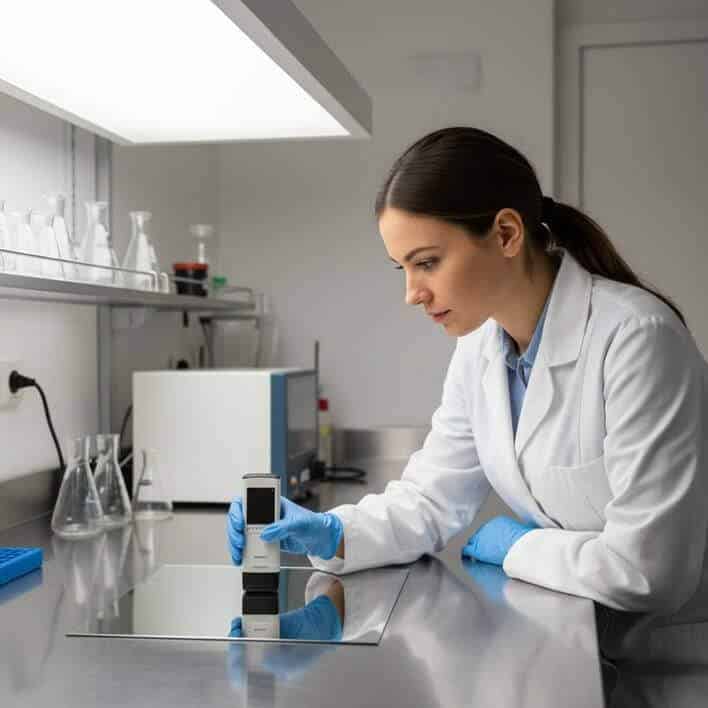
Thanks to our specialized testing—which includes tests for homogeneity, scratch resistance, coating adhesion, and accelerated aging—we help companies anticipate problems, reduce complaints, and ensure that their products meet the most demanding standards. From automotive to jewelry, household appliances, aeronautics, and architecture, the aesthetic analysis of metals is a key pillar in the validation of industrial and consumer products.
The future of this field is moving towards the digitization of aesthetic control, with automated computer vision systems, advanced optical metrology, and predictive simulations of surface aging. At INFINITIA, we are already working on these trends, integrating innovation and scientific rigor to respond to new industry demands.
Having INFINITIA as a technology partner means having a team of experts in forensic engineering, material characterization, and analysis, with the ability to design customized tests tailored to each client. Our commitment is to provide confidence, safety, and competitiveness, ensuring that metal finishes not only fulfill their aesthetic function but also remain flawless throughout the product’s useful life.