
×

Analysis of galvanized metal, anodized and coated materials

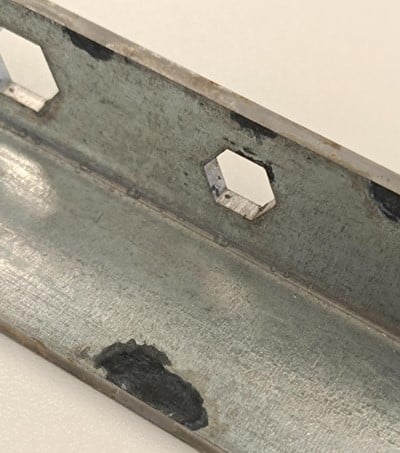
The analysis of galvanized, anodized, and coated materials is a key process for ensuring durability, corrosion resistance, and surface quality. corrosion resistance and surface quality of metal components in demanding industrial environments.

At INFINITIA we understand that surface treatments such as galvanizing or anodizing not only serve an aesthetic function, but are also essential for protecting materials against phenomena such as humidity, temperature changesabrasion or exposure to saline atmospheres.

In our industrial laboratory, we have a specialized team dedicated to the study of metal coatings that works with state-of-the-art technologies to validate the effectiveness of these treatments, identify faults, and ensure compliance with international standards. identify faults and ensure compliance with international standards.

Thanks to a scientific and multidisciplinary approach, at INFINITIA we carry out comparative tests and validation tests that allow our customers to optimize the selection of coatingsimprove production processes and reduce costs associated with premature failures.

What does the analysis of galvanized steel, anodized steel, coatings, and finishes consist of?

The analysis of galvanized, anodized, and coated materials consists of rigorously evaluating the thickness, adhesion, uniformity, and resistance of the coatings applied to metal parts. the uniformity, and the resistance of the coatings applied to metal parts.

At INFINITIA, we perform specific tests such as accelerated corrosion tests, salt sprayclimatic chamber or thermal shock tests, which reproduce extreme service conditions to predict the actual behavior of a coating in less time.

This approach allows us to compare different finishes and select the most suitable one according to the conditions of use: from protective coatings in marine environments to high-strength anodizing in alloys for components exposed to corrosion, as well as in aluminum for aeronautical applications.

The results obtained are included in comprehensive technical reports that are used both for supplier approval and for the continuous improvement of manufacturing processes.

Analysis of galvanized, anodized and coated materials

Benefits of analyzing galvanized, anodized, and zinc coatings against oxidation

One of the main benefits of this service is the ability to prevent critical failures before the product reaches the market. In sectors such as automotive, energy, or construction, a coating failure can lead to accelerated corrosion, loss of mechanical properties or even serious structural failures.

At INFINITIA, we have seen how preventive analysis of coatings has enabled our customers to reduce claimsincrease component lifespan and ensure regulatory compliance in highly regulated markets.

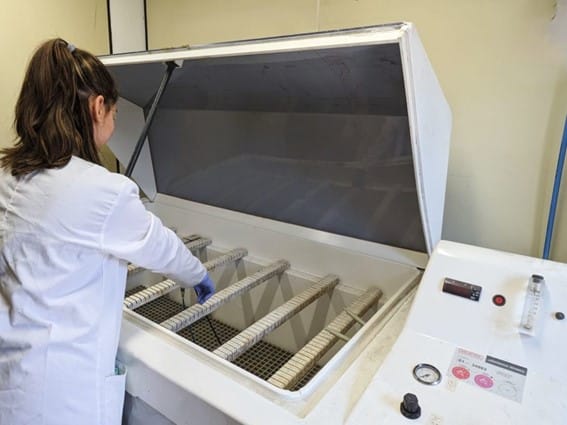
For example, the simulation of saline environments using a fog chamber has allowed us to anticipate the deterioration of galvanized coatings intended for outdoor metal structures, providing specific data on coating thickness that is vital for validation and improving corrosion protection processes.
Coating thickness, rust and corrosion behavior at INFINITIA

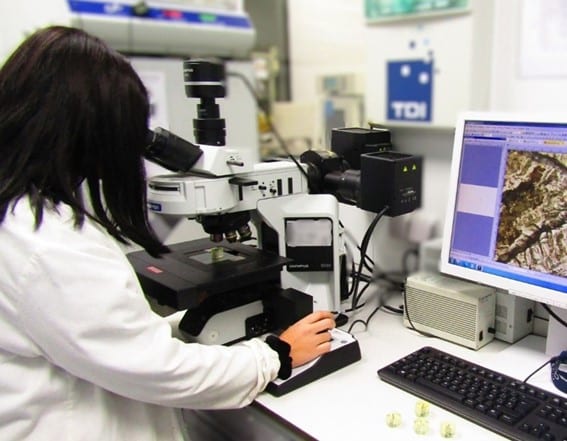
At INFINITIA, we approach the analysis of galvanized, anodized, and coated materials from a comprehensive perspective. We have equipment such as programmable climate chambers, salt spray testing systems, thermal shock equipment, and advanced microscopy to characterize both the surface and the microstructure. a8> to characterize both the surface and the microstructure of the coating.

In addition, we apply forensic engineering methodologies to diagnose failures in parts in service, identifying the causes of degradation and proposing improvements in materials or processes.

Our laboratory combines standardized testing in accordance with ISO and ASTM with customized testing tailored to each client, enabling us to offer precise technical solutions tailored to the actual needs of each industrial sector.

With INFINITIA, companies find a strategic partner to ensure the quality, durability, and reliability of their coatings. durability and reliability of their coatings.

Analysis of galvanized, anodized and coated materials

Types of Galvanizing, Anodizing, and Coating Tests

At INFINITIA, we develop different tests to evaluate the performance and durability of metal coatings applied to industrial components. Our goal is to accurately determine the resistance of each coating under real-world conditions, optimizing its applicationfunctionality, and service life.

Accelerated corrosion tests

These tests intensively reproduce the effect of rust on finishes. The effect of corrosion on galvanized and anodized coatings. Specific chambers are used to simulate immersion processes and extreme conditions of humidity, salinity, or contamination.

At INFINITIA we use tests such as salt spray and cyclic corrosion to predict the deterioration of coatings in less time. A common case is the comparison of galvanized finishes on structural parts to select the one that best withstands aggressive marine or industrial environments.

Salt spray tests

The salt spray chamber allows metal coatings to be exposed to a chloride atmosphere. This test validates the resistance to oxidation of galvanized, anodized, or protective coatings.

At INFINITIA, we have subjected automotive coatings to salt spray testing, determining which finish offered the greatest corrosion protection without increasing manufacturing costs.

Climatic chambers reproduce controlled temperature and humidity cycles to evaluate the performance of coatings in response to environmental changes.

At INFINITIA, we apply these tests to electrical components and metal structures to study degradation, cracks or loss of adhesion due to inadequate coating thickness.

Thermal shock testing and quality control

 This test exposes the parts to sudden temperature changes to study the resistance of coatings to thermal stresses. It is used on anodized aluminum and high-performance technical coatings.

At INFINITIA, we have validated the dimensional stability of aerospace coatings after cycles of extreme cold and intense heat.

Thickness and adhesion measurement

The quality of a coating depends on its thickness and adhesion to the substrate and influences its resistance to chemicals. 

At INFINITIA we perform destructive and non-destructive measurements to verify that they comply with the technical specifications. This control is critical in supplier approval and in the validation of production series.

Applications of Coating Analysis

The analysis of galvanized, anodized, and technical coatings is key to ensuring the durability, functionality, and compliance of metal components exposed to real service environments. At INFINITIA, we approach these studies from an applied perspective: supplier validation, comparison of coating alternatives, and anticipation of premature failure, combining accelerated testing with advanced characterization techniques.

Automotive galvanizing analysis: validation against corrosion, salt spray and severe service conditions

In the automotive sector, metallic coatings are essential to ensure the durability of components exposed to severe conditions such as humidity, chemical agents, thermal impacts, and continuous vibrations. Inadequate selection or variability between suppliers can lead to premature failures and field claims.

  • Validation of galvanized coatings: testing on chassis and frames using salt spray and wet-dry cycles to simulate real service conditions.
  • Aluminum anodizing tests: evaluation on engine and body components to analyze corrosion resistance and surface stability.
  • Evaluation of protective finishes: analysis under combined humidity and temperature cycles to validate in-service behavior.
  • Comparison between batches or suppliers: detection of deviations in thickness, adhesion, and corrosion resistance.

At INFINITIA, we analyze the real behavior of coatings under conditions representative of final use, helping to prevent failures and rejections in the supply chain.

Construction and infrastructure galvanizing analysis: long-term durability and corrosion protection

Metal structures in construction must maintain their integrity for decades in aggressive environments such as marine, industrial, or highly polluted urban atmospheres. Coating degradation can lead to structural corrosion, increased maintenance costs, and reduced infrastructure lifespan.

  • Accelerated corrosion testing: evaluation of galvanized profiles for façades, roofs, and auxiliary structures using salt spray and controlled cycles.
  • Climate chamber testing: simulation of prolonged exposure to humidity, temperature, and contaminants to replicate real service conditions.
  • Validation of anti-corrosion coatings: analysis in bridges and civil works to ensure protective performance in aggressive environments.
  • Comparative studies of coating systems: technical evaluation of different solutions to optimize selection during the design phase.

At INFINITIA, we conduct tests aimed at validating the expected service life of protection systems, helping to minimize corrective interventions and long-term maintenance costs.

Energy sector galvanizing analysis: corrosion resistance in wind, solar and offshore environments

Components in the energy sector, especially in wind, solar, or offshore applications, are subjected to highly demanding conditions such as saline atmospheres, intense solar radiation, thermal cycles, and prolonged mechanical loads. Coating degradation can compromise both efficiency and safety of installations.

  • Comparison of galvanizing on wind towers: salt spray and combined cycle testing to evaluate corrosion resistance under real conditions.
  • Validation of anodizing in critical components: analysis in hydraulic turbines and solar structures to verify stability and protection of the base material.
  • Thermal shock testing: evaluation of coating behavior under sudden temperature variations.
  • Analysis of progressive coating degradation: study of its evolution and impact on protection of the metallic substrate.

At INFINITIA, we analyze coating performance under extreme conditions, enabling failure anticipation, design optimization, and long-term system reliability.

Electronics and home appliances galvanizing analysis: coating thickness, adhesion and uniformity control

In electronics and household appliances, metallic coatings not only provide protection but also directly influence aesthetics, conductivity, and perceived product quality. Defects in finishes or coating variations can lead to functional issues and production rejections.

  • Thickness and uniformity control: evaluation of decorative and functional coatings to ensure consistency in large-scale production.
  • Adhesion testing: validation on anodized aluminum parts to prevent detachment or defects during use.
  • Corrosion resistance evaluation: analysis of housings and components exposed to humidity, condensation, and chemical agents.
  • Comparative analysis of finishes: study of different solutions to optimize design, cost, and perceived quality.

At INFINITIA, we evaluate these coatings from a technical and durability perspective, helping to reduce defects, improve product quality, and optimize manufacturing processes.

Aerospace and defense galvanizing analysis: technical coatings for extreme operating conditions

In aerospace and defense applications, metallic coatings must withstand extreme conditions such as abrupt temperature changes, thermal fatigue, exposure to chemical agents, and highly demanding environments. Any failure in the protection system can compromise the safety and performance of the component.

  • Thermal shock testing: evaluation of structural aluminum anodizing under extreme temperature cycles.
  • Validation of technical coatings: analysis using microscopy and electrochemical testing to characterize corrosion behavior.
  • Evaluation under repeated thermal cycles: study of coating aging and long-term stability.
  • Technical support in coating qualification: assistance in the selection and validation of solutions for critical components.

At INFINITIA, we develop studies aimed at validating the reliability and stability of coatings in highly demanding environments, reducing risks and ensuring compliance with technical and regulatory requirements.

The added value of INFINITIA in the analysis of high-quality metal finishes, galvanized coating, anodized, and steel coatings

The analysis of galvanized, anodized, and coated materials is an essential service for all companies seeking to guarantee the quality, the durability and reliability of their products in demanding industrial environments.
In sectors such as automotiveconstructionenergyelectronics, and aeronautics, a failure in the coating can lead to serious economic and technical consequences. Therefore, having a specialized laboratory such as INFINITIA represents a clear competitive advantage.

At INFINITIA, we integrate different testing methodologies—such as accelerated corrosion, salt spray, the climatic chamber or thermal shock—with precise thickness and adhesion measurements, offering a complete overview of the actual performance of the coatings. Our approach combines scientific characterization with forensic engineering, allowing us not only to validate electroplating finishes to ensure coating quality. and approve suppliers, but also to diagnose service failures and propose technical solutions that prevent future incidents.

Current trends point towards sustainable coatings that are high-performance and have advanced functionalities (antibacterial, hydrophobic, self-cleaning). In this context, INFINITIA positions itself as a strategic partner capable of accompanying companies in the transition towards innovative solutions adapted to the challenges of modern industry.

In short, choosing INFINITIA to carry out the analysis of galvanized, anodized, and coated materials means ensuring rigorous validation processes, anticipating critical failures, and ensuring the quality of the final product. means ensuring rigorous validation processesanticipating critical failures, and optimizing product life. Our commitment is to bring added value to every project, transforming technical data into practical decisions that reinforce quality, competitiveness, and the useful life of products. that enhance the qualitycompetitiveness, and reliability of companies in the industrial sector.

Analysis of galvanized, anodized and coated materials

Frequently Asked Questions About Galvanized, Anodized and Coating Analysis

The analysis of galvanized, anodized and coated materials is the set of characterization and testing techniques that makes it possible to evaluate the thickness, adhesion, uniformity and resistance of surface treatments applied to metal components, with the aim of verifying that they meet the technical and regulatory requirements of the intended service environment. Its application ranges from the validation of production series and supplier qualification to the diagnosis of failures in parts that have prematurely degraded in service.

In industry, these analyses are critical because an inadequate coating (due to insufficient thickness, poor adhesion or a deficient process) can lead to accelerated corrosion, loss of mechanical properties or structural failures with serious economic and safety consequences. Unlike a simple visual inspection, working with an external technical partner allows the real performance of the coating to be quantified and compared against objective specifications with independence and technical rigour.

Galvanizing consists of depositing a layer of zinc onto steel by hot-dip immersion or electrolysis, with the primary objective of protecting the substrate against corrosion. Anodizing is an electrochemical process exclusive to aluminium and its alloys that generates a controlled oxide layer on the surface, improving hardness, abrasion resistance and decorative capacity. Technical coatings (lacquers, powder coatings, PTFE, DLC or other functional coatings) are applied to provide specific properties such as chemical resistance, electrical conductivity or tribological performance.

Although all three types of treatment share the function of protecting or improving the metal surface, the analysis parameters, reference standards and failure mechanisms differ in each case. At INFINITIA we address aesthetic metal analysis and functional analysis in an integrated way, adapting the testing protocol to the specific treatment and sector of application.

The techniques used in the analysis of galvanized and metal coatings are selected based on the type of treatment, the base material and the objective of the study. The most common are: thickness measurement by magnetic methods (ISO 2178) or eddy currents for non-ferrous substrates; adhesion tests by cross-cut (ISO 2409) or direct pull-off; optical and scanning electron microscopy (SEM) to evaluate the microstructure and cross-sectional profile of the coating; X-ray fluorescence (XRF) to verify chemical composition; and accelerated corrosion tests such as salt spray (ISO 9227) or cyclic corrosion to predict in-service behaviour.

At INFINITIA we combine these techniques within an integrated approach that brings together coating characterisation with electrochemical testing and surface texture and microstructure analysis, enabling more technically in-depth diagnoses than when they are applied in isolation.

Coating tests systematically integrated into the production process make it possible to correlate application parameters  (bath temperature, immersion time, surface preparation, current density in anodizing) with the occurrence of recurring defects such as blistering, poor adhesion or thicknesses outside specification, becoming a tool for continuous improvement rather than just final quality control.

At INFINITIA we work with this approach on projects where the client not only needs to know whether a coating is acceptable, but why failures occur and how to eliminate them. This orientation (which integrates testing with root cause diagnosis when necessary) is one of the capabilities that sets working with an external technical partner like INFINITIA apart from commissioning a one-off inspection from a conventional testing laboratory.

The analysis of galvanized, anodized and coated materials is governed by international technical standards that establish both testing methods and acceptance criteria. The main references are:

  • ISO 1461: hot-dip galvanizing on steel and cast iron components.
  • EN 10346: continuously hot-dip coated steel flat products.
  • ISO 7599: anodizing of aluminium and its alloys; method of specifying decorative and protective anodic oxidation coatings.
  • ISO 9227 / ASTM B117: salt spray test for evaluating corrosion resistance.
  • ISO 2409: cross-cut adhesion test.
  • ISO 2178 / ISO 2360: thickness measurement of magnetic and non-magnetic coatings.
  • ISO 4628: evaluation of degradation of coatings and paints.

Beyond strict regulatory compliance, in sectors such as automotive, manufacturers apply their own specifications (Volkswagen, Stellantis, Renault, among others) that go beyond ISO standards. Correctly identifying the applicable regulations is the first step in defining the technical and documentary scope of any coating analysis project.

Control of galvanizing and coatings is especially critical in sectors where surface degradation has direct consequences on the safety, service life or functional performance of the component. The sectors with the highest demand are:

  • Automotive: chassis, bodywork parts and engine components exposed to humidity, thermal cycles and chemical agents. Variability between suppliers is a frequent cause of field complaints.
  • Construction and infrastructure: metal structures in outdoor environments, facades and civil works subjected to marine, industrial or urban aggressive atmospheres for decades.
  • Wind, solar and offshore energy: towers, supports and components subjected to salinity, UV radiation and continuous thermal cycles in difficult-to-maintain conditions.
  • Aerospace and defence: structural aluminium anodizing that must withstand sudden temperature changes, thermal fatigue and highly demanding environments under strict certification standards.
  • Household appliances and electronics: functional and decorative finishes where thickness, conductivity and perceived quality are factors of differentiation and rejection in production.

In all these sectors, INFINITIA acts as an external technical partner providing an integrated perspective that combines standardised tests with accelerated ageing tests to predict the real behaviour of the coating throughout its service life.

The salt spray test (in accordance with ISO 9227 or ASTM B117) is necessary when it is required to validate the corrosion resistance of a coating prior to its entry into service, or in response to a complaint about premature deterioration in the field. It is also a common requirement in supplier qualification and in series quality audits, especially in automotive, outdoor construction and energy applications where components are exposed to chloride environments.

At INFINITIA we have applied this test to compare galvanized finishes on metal structures intended for marine environments, determining which offered the best corrosion protection without increasing manufacturing costs, with the thickness and corrosion evolution data integrated into the final technical report.

Yes. Working with an external technical team makes it possible to verify neutrally whether the coating delivered genuinely meets what was contracted: thickness below specification, chemical composition that does not match the treatment declared by the supplier, or finishes that do not meet the minimum adhesion or corrosion resistance thresholds set out in the tender. X-ray fluorescence (XRF) and cross-section microscopy allow this evidence to be obtained quickly and with documentary solidity.

At INFINITIA we have specific experience in detection of counterfeit industrial components, combining coating analysis with elemental and chemical composition analysis to generate technical reports with sufficient rigour to support complaint processes or supplier audits.

Each of these options responds well to specific needs and has its place in the industrial ecosystem. The difference lies in the starting point: INFINITIA starts from the problem, not from the protocol or the research agenda.

This means designing the test based on the degradation mechanism relevant to that specific material and environment, integrating complementary analytical techniques to interpret what is happening and why, and translating the results into concrete technical recommendations that enable decisions to be made quickly.

It is the most useful approach when the problem does not fit neatly into any of the other options:

  • An accredited laboratory executes standardised protocols and issues conformity certificates. It is the right option for verifying regulatory compliance, but its fixed procedures do not always capture the variables that determine the real behaviour of the coating in its service environment. The result is a data point, not necessarily an answer to the technical problem.
  • A technology centre or university brings research capacity and access to advanced technology, particularly useful for medium- to long-term R&D projects. Their orientation does not always align with the timescales, decision criteria and operational constraints of a company that needs to solve something in production.

The combination of forensic engineering, customised tests and industrial benchmarking makes it possible to address cases where none of these options provides the answer the company needs: recurring failures with no clear cause, validations in environments with combined variables, or studies whose results must directly guide a redesign or a supplier decision. If your need goes beyond obtaining a certificate or a research report, we can help you get an actionable answer. Contact us.

A technical report on coating analysis prepared by INFINITIA includes the methodology applied, the acceptance and rejection criteria according to the reference standard, the quantitative results for thickness, adhesion and corrosion resistance, microscopic images and evolution graphs, and a technical interpretation oriented towards decision-making, not merely the recording of results. This approach means the report is useful both for the internal technical team and for management, or for third parties in an audit, qualification or commercial complaint process.

Where the context requires it (disputes between manufacturer and client, litigation or product certification processes) INFINITIA’s technical report can be used directly by an expert witness as documentary evidence to support the issuance of their expert report. Translating technical results into a business context, with the rigour and traceability needed to make them actionable in any scenario, is one of the distinguishing features of our work.

The cost of a galvanizing or coating analysis is not fixed and depends on several factors: the technique or combination of techniques required, the complexity of the component and the number of samples, the need to travel to the client’s facilities, the urgency of the result and the scope of the final technical report. A thickness and salt spray test on a standard component has a very different cost from a complete diagnosis integrating microscopy, XRF and cyclic corrosion.

In terms of lead times, standard projects are typically resolved within 1 to 4 weeks depending on technical complexity. For urgent situations, there is an express quotation option that allows results to be obtained within 24–72 hours.

At INFINITIA we work with a fixed, tailored budget for each case, without generic rates, because the real technical scope of each project varies depending on the problem to be solved. To obtain an accurate quotation, the most efficient approach is to send us a description of the component, the type of analysis needed or the problem to be resolved, and the applicable regulatory requirements if any. Contact us and we will send you a proposal.

INFINITIA is based in Zaragoza, Spain, from where it serves companies throughout Spain and international clients alike. Depending on the type of analysis, the work can be carried out in three ways: the client sends the sample or component to the INFINITIA team; the technicians travel to the client’s facilities to carry out on-site inspections; or both modalities are combined according to the project’s needs.

For analyses requiring specific equipment  (electron microscopy, XRF, salt spray or climatic chamber) sending the sample is the standard approach. For inspections of assets in operation or components that cannot be moved, on-site travel is the default option. If you are unsure which modality is most appropriate for your case, we can advise you without any commitment. Contact us.

Contact us

To receive a PREFERENTIAL ANSWER, please contact us using the form below.


    (*) Mandatory fields


    When do you need to receive the quotation? (*)

    What approximate investment do you expect for this service? (*)

    When do you need to receive the results of the contracted service? (*)

    If you prefer, you can send us your documentation:


    Allowed formats: PDF, DOC, XLS, PPT, JPG, PNG. Maximum size 10 MB total

    Or if your file is large, you can send it via a transfer platform and provide us with the link here:

    BASIC INFORMATION ON DATA PROTECTION:
    Responsible: INFINITIA RESEARCH, S.L. Purpose: to respond to queries raised by the user and send the requested information. Legitimation: user consent. Recipients: only transfers are made if there is a legal obligation. Rights: to access, rectify and delete, as well as other rights, as indicated in the Privacy Policy. You can find the complete information in our privacy policy.

    I agree with the  privacy policy.