
Salt spray chamber
What is a salt spray chamber or salt spray test chamber?
The salt spray chamber is a device used to perform accelerated corrosion testing, recreating high-salinity environments to evaluate the resistance of materials to aggressive conditions.
This device reproduces a controlled environment by spraying a saline solution, allowing the accelerated simulation of effects that would normally take years to manifest.
These types of tests are key in the automotive, shipbuilding, and protective coatings industries, among others, where durability and corrosion resistance are critical factors.
Among its main features are its ability to maintain precise temperature, humidity, and salt concentration conditions, ensuring consistent and comparable results. In addition to salt spray chambers, it is often combined with electrochemical tests and potentiostat equipment in order to obtain a complete characterization of the materials, evaluation against external agents, or even accelerated testing.
How does the salt spray chamber or corrosion test chamber work?
The salt spray chamber is simple but effective in creating a controlled atmosphere. The samples to be tested are placed inside the chamber, where they are exposed to salt spray for a specified period of time, depending on the type of test and the standards to be followed in salt spray testing, such as ASTM B117, VDA 233-102, or ISO 9227.
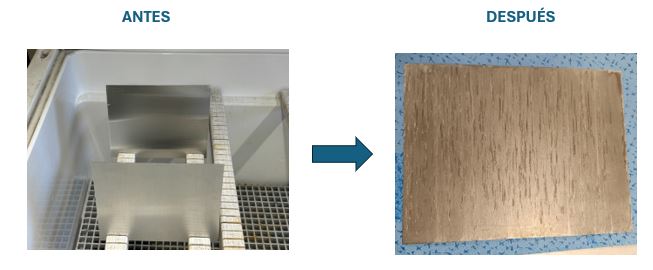
The equipment uses a nozzle system to disperse the sodium chloride solution into the environment, creating a continuous mist that settles on the surfaces of the samples. Throughout the test, the materials are evaluated for signs of corrosion such as oxidation, discoloration, or wear, which will indicate their resistance under actual conditions of use.
The interpretation of salt spray chamber results is based on several parameters, such as exposure time and the degree of visible deterioration on the samples. The typical procedure begins with the preparation of the surfaces to be evaluated, following strict industry standards. Once the test is complete, the samples are removed and the extent of corrosion damage is analyzed.
Depending on the type of material and industrial sector, tests may include measuring weight loss, coating adhesion, or the appearance of cracks in protective coatings. These results provide valuable information about the durability of the material and its ability to withstand corrosive environments.
Benefits of the salt spray chamber or cyclic corrosion chamber
One of the main benefits of the salt spray chamber is the speed with which it can replicate the effects of corrosion in extreme environments. This allows manufacturers to reduce development and evaluation times for new materials or coatings, optimizing their products to be more resistant and durable.
The equipment’s ability to simulate years of exposure in just a few days of testing makes it an essential tool for ensuring quality in sectors such as automotive, construction, and shipbuilding, where real-world conditions are extremely challenging.
Salt spray test chamber equipment
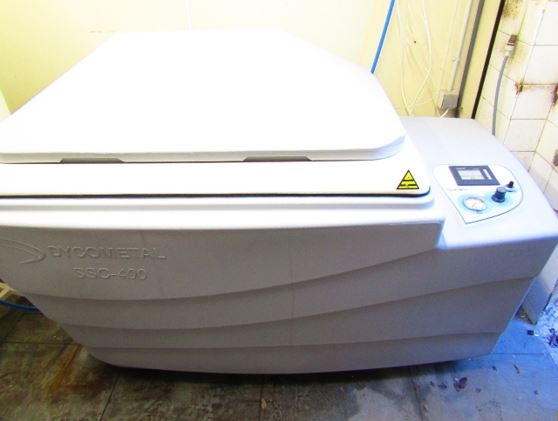
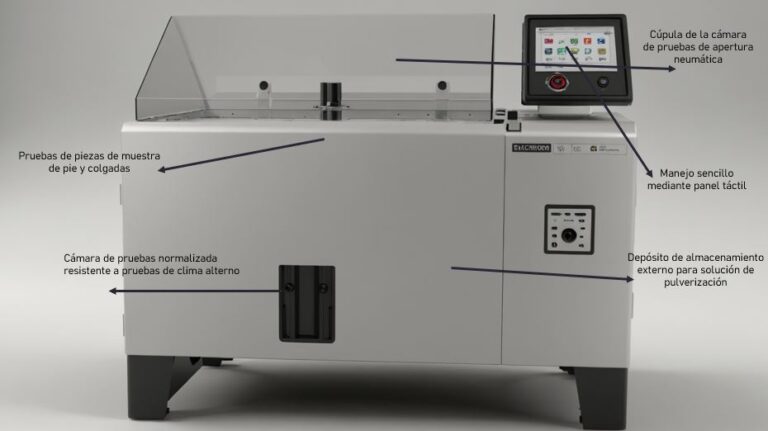
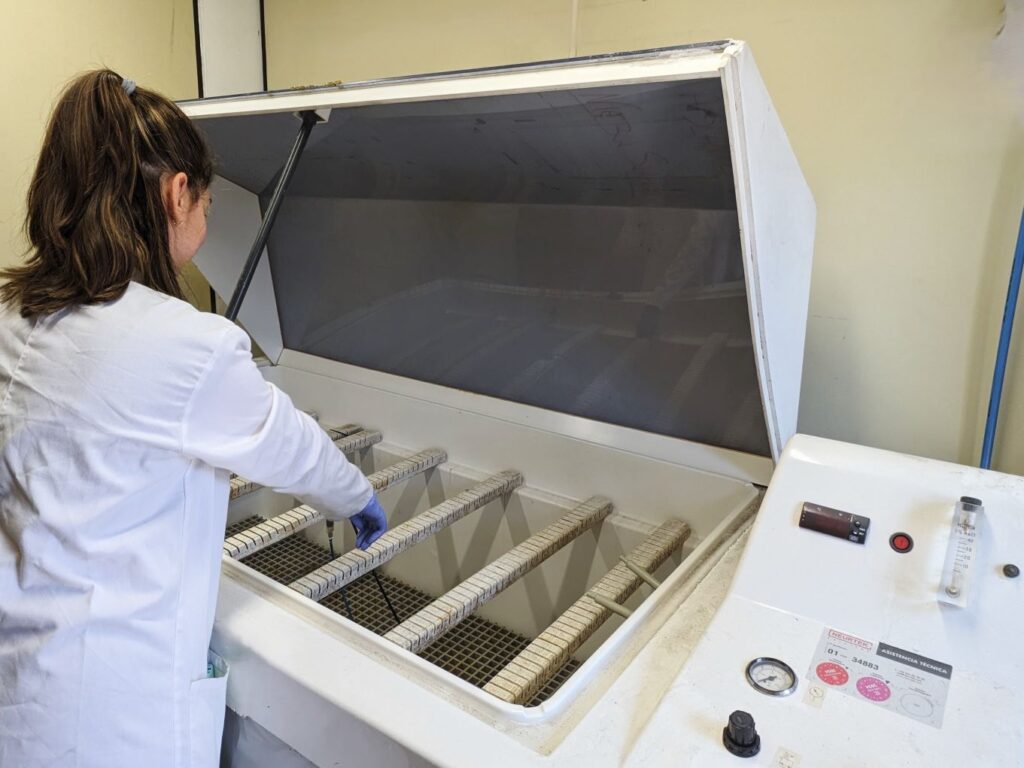
The Dycometal SSC-400 model used by INFINITIA is designed with a series of components that guarantee precise control and efficient operation of the test. It has a control panel with an automatic device responsible for managing the test, allowing for optimal monitoring and regulation.
In addition, it has a temperature regulator in the tank, ensuring stable conditions throughout the process. For proper water control, it incorporates level indicators in the boiler, while the spray pressure is kept constant thanks to a specific regulator. The equipment is also equipped with a pressure reducer and a pressure gauge that allow the air pressure to be adjusted with precision.
The inner tank is made of fiberglass and polyester resin, materials that provide high corrosion resistance and ensure durability. Inside, the heating elements are injected directly into the tank, which promotes even heat distribution and prevents fluctuations in temperature and humidity.
For the correct placement of samples, the equipment has a set of sample holder bars, allowing for orderly distribution within the chamber. In addition, a high-precision temperature probe constantly monitors the internal environment, ensuring that the test parameters are adequate.
The spray system, designed to ensure even dispersion of the saline solution, stands out for its low consumption, optimizing process efficiency without compromising the quality of the results. This mechanism allows for uniform distribution of the aerosol within the chamber, ensuring that all samples receive equal treatment.
Thanks to its advanced design and high-quality components, this salt spray equipment provides precise and reliable control of corrosion testing, ensuring consistent and reproducible results. This makes it a versatile solution for quality control laboratories and research, as it complies with international standards such as ASTM and ISO, guaranteeing reliable and globally comparable results.
Examples of equipment applications, corrosion chambers, and corrosion testing
The salt spray chamber has notable applications in a wide range of industrial sectors, where corrosion resistance is a critical factor in product durability. Some of the most relevant applications are described below:
Accelerated corrosion resistance tests
The primary use of this equipment is to subject materials and coatings to extreme corrosion conditions in an accelerated manner. These types of tests are vital in sectors such as automotive and construction, where products must withstand corrosive environments for long periods of time.
Evaluation of surfaces and coatings
The salt spray chamber is used to test the effectiveness of protective coatings applied to metals, such as paints, galvanized and anodized coatings. The tests evaluate the adhesion, uniformity, and durability of these coatings against corrosion, ensuring that products meet quality and safety standards.
Inspection of galvanized coatings and other surface treatments
Galvanizing processes, in which metal is coated with a protective layer of zinc, are crucial for preventing oxidation. The salt spray chamber allows the effectiveness of these processes to be evaluated, ensuring that materials are suitable for use in industrial and maritime environments.
Simulate endurance tests for automotive and aeronautical components
In sectors such as automotive and aeronautics, it is essential to ensure that metal parts used in vehicles and aircraft do not suffer premature corrosion. Salt spray equipment is key to assessing the durability of these components, ensuring that they maintain their structural integrity throughout the product’s service life.
Testing in the marine industry and testing standards
The materials used in ships and boats are constantly exposed to harsh marine environments. The salt spray chamber is used to simulate these conditions and test how materials react in a salt spray test, ensuring that they meet the necessary standards for use in these environments.
Accelerated corrosion resistance testing
This application allows the ability of materials to withstand corrosive environments to be evaluated in a short period of time, simulating years of exposure in just days or weeks.
Evaluation of surfaces, coatings, and galvanizing
The salt spray chamber ensures that protective coatings applied to materials comply with regulations and provide effective protection against corrosion.
Cyclic corrosion chamber. TCD in saline, acetic, and cupric environments.
This model allows specialized testing to be carried out in different corrosive solutions, such as saline, acetic, and cupric environments, expanding the possibilities for analysis in demanding industrial sectors.
Sectors in which the Salt Spray Chamber is used
Salt spray chamber tests allow us to reproduce highly corrosive environments in an accelerated manner, evaluating the behavior of materials, coatings, and metal components before their actual use. At INFINITIA, we use this type of testing as a key tool for design validation, quality control, comparison of technical alternatives, and prevention of service failures, reducing technical and economic risks.
Automotive Industry. Salt spray and cyclic corrosion testing on metal components.
In the automotive industry, metal components are subjected to harsh conditions: road salt, constant humidity, temperature changes, and chemical agents, which requires salt spray testing for validation. The salt spray chamber allows for the prediction of corrosion problems that can affect both the functionality and the aesthetics and safety of the vehicle.
At INFINITIA, we use these salt spray tests to validate the resistance of materials under extreme conditions.
- Compare anti-corrosion coatings on fasteners, chassis, brackets, and metal subassemblies.
- Validate galvanizing, cataphoresis, technical paints, and surface treatments.
- Detect process defects (porosity, poor adhesion, insufficient thickness).
- Support supplier approval and validation processes.
Shipbuilding, Offshore, and Energy Industries. Salt spray corrosion testing.
Marine and offshore environments represent one of the most aggressive scenarios for metallic materials due to the combination of salinity, humidity, and oxygen. Salt spray testing allows for accelerated evaluation of the actual durability of materials exposed to the sea.
Common applications:
- Corrosion assessment in structural steels and special alloys.
- Validation of surface protection systems for offshore structures, towers, and supports.
- Comparison of materials and coatings for technical selection in energy projects.
- Degradation studies to estimate service life and maintenance requirements.
Industrial Manufacturing and Capital Goods. Corrosion chambers and testing equipment for product validation.
In industrial machinery and capital goods, corrosion can cause blockages, loss of tolerances, leaks, or premature failure, highlighting the need for proper material specification. The salt spray chamber is used as an accelerated test to simulate the effect of a corrosive atmosphere and anticipate problems before industrialization or market launch.
Some examples for this sector:
- Quality control of metal components and functional coatings.
- Comparison between different suppliers or manufacturing batches.
- Validation of changes in material, process, or surface treatment through salt spray testing is crucial to ensuring quality.
- Support for forensic engineering studies and corrosion failure analysis.
Construction and Infrastructure. Cyclic and salt corrosion testing for long-term durability.
The metallic materials used in construction are exposed to humidity, atmospheric pollution, and corrosive agents for years. Salt spray chamber tests allow their long-term behavior to be evaluated in an accelerated manner.
Typical applications:
- Accelerated corrosion tests on structural steels, reinforcements, and metallic elements.
- Validation of galvanizing, protective coatings, and multilayer systems.
- Comparative studies for material selection in aggressive environments.
- Durability assessment for critical infrastructure and civil engineering works.
Electronics and Precision Components. Mist spray and humidistatic chambers.
In electronic components and precision systems, corrosion can cause functional failures even when it is not visible to the naked eye. The salt spray chamber allows the resistance of sensitive elements to be evaluated under controlled conditions.
At INFINITIA, we use these tests to:
- Evaluate corrosion on connectors, terminals, electrical contacts, and metal housings.
- Validate thin coatings and anti-corrosion treatments on precision parts.
- Analyze intermittent failures associated with surface or galvanic corrosion.
- Support design improvements aimed at product reliability and service life.
Laboratory and R&D. Test chamber for standardized corrosion testing.
In laboratory environments and R&D departments, corrosion test chambers allow controlled and repeatable conditions to be reproduced in order to evaluate the behavior of materials and coatings when exposed to corrosive processes. Standardized salt spray chamber tests facilitate objective comparison of results and compliance with technical standards.
Typical applications:
- Accelerated corrosion testing during the development and validation phase of new materials.
- Comparison of coatings and surface treatments under standardized conditions.
- Evaluation of the influence of process variables on corrosion resistance.
- Generation of reproducible technical data to support design and approval decisions.
INFINITIA as a strategic partner in prototyping and manufacturing industrial prototypes: innovation, reliability, and technical validation
In summary, the salt spray chamber is an indispensable tool in the field of corrosion testing, providing accurate and reliable data for the development and improvement of materials in critical industrial sectors.
With its ability to perform rapid and reproducible tests, this equipment helps to ensure the quality and durability of products in extreme conditions, contributing to the development of more resistant and sustainable materials. It has become an essential tool for researchers, forensic engineering analysis, and failure analysis investigations.
Here are some examples of how the salt spray chamber is used at INFINITIA.
Accelerated aging of electronic components in extreme environments

Corrosion resistance comparison for selecting the optimum surface finish
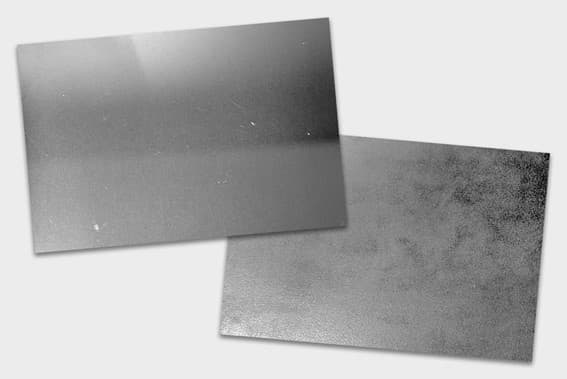
Selection of corrosion resistant materials for new assemblies