
Legal reverse engineering lets you reproduce whatever is not covered by an active right, whatever protection has already expired, and whatever you need to repair, maintain or interoperate with equipment you already own. You cross the line when you copy a shape protected by a registered design, reproduce a function covered by a live patent, use someone else’s trademark, or replicate software or firmware protected by copyright. That boundary, not the technique itself, is what defines the legality of reverse engineering. The discipline sits within forensic engineering and, specifically, within the reverse engineering service, which reconstructs the geometry, materials and behaviour of a part from the physical object rather than from the maker’s drawings.
Dismantling, measuring and characterising a component to understand how it works is a lawful technical activity in most industrial contexts. What determines whether the result can be manufactured and sold is not the analysis method but which industrial and intellectual property rights fall on the original part, and how far they still reach. Telling the analysis apart from the later commercial use is what keeps a spare-parts or improvement project from turning into an infringement.
What industrial property actually protects
Industrial and intellectual property does not protect a product as a single block, but separate, specific aspects of it, each with its own scope and its own duration. Understanding what each right covers is the first step toward knowing which part of a component you can reproduce and which part stays reserved to its owner.
Patents protect a technical invention (a product or a process that offers a new solution to a technical problem) for an indicative maximum of around twenty years from filing, provided renewal fees are paid. While a patent is in force, reproducing the claimed function or mechanism infringes, even if you arrive at it independently through your own analysis. Utility models protect inventions of lower complexity, typically improvements in shape or configuration with a technical effect, for a shorter term (on the order of ten years).
Industrial design rights protect the appearance (lines, contours, texture, shape) of a product, not its function, and can usually be renewed in periods up to roughly twenty-five years. A trademark protects the signs that identify commercial origin (name, logo) and can be renewed indefinitely, so you can never reuse it on your replica. A trade secret or know-how protects confidential information with competitive value (a formula, a process parameter) for as long as it stays secret and reasonable measures are kept in place to protect it. And copyright covers, among other things, the code of software and firmware for the life of the author plus several decades.
A single component may carry, at the same time, a patent on its mechanism, a registered design on its shape, a trademark on its housing and firmware protected by copyright; lawful reverse engineering works on whatever falls outside all of those rights or on the ones that have already expired.
The practical consequence is that there is almost never a single yes-or-no answer for the whole part. The external shape may be free while the internal mechanism is still patented, or the patent may have lapsed and left the function in the public domain even though the trademark remains active. Reproducing the geometry of a discontinued seal is often legitimate; replicating the control algorithm that governs it is not. That is why it pays to map the part right by right before deciding what to build.
When reverse engineering is legal
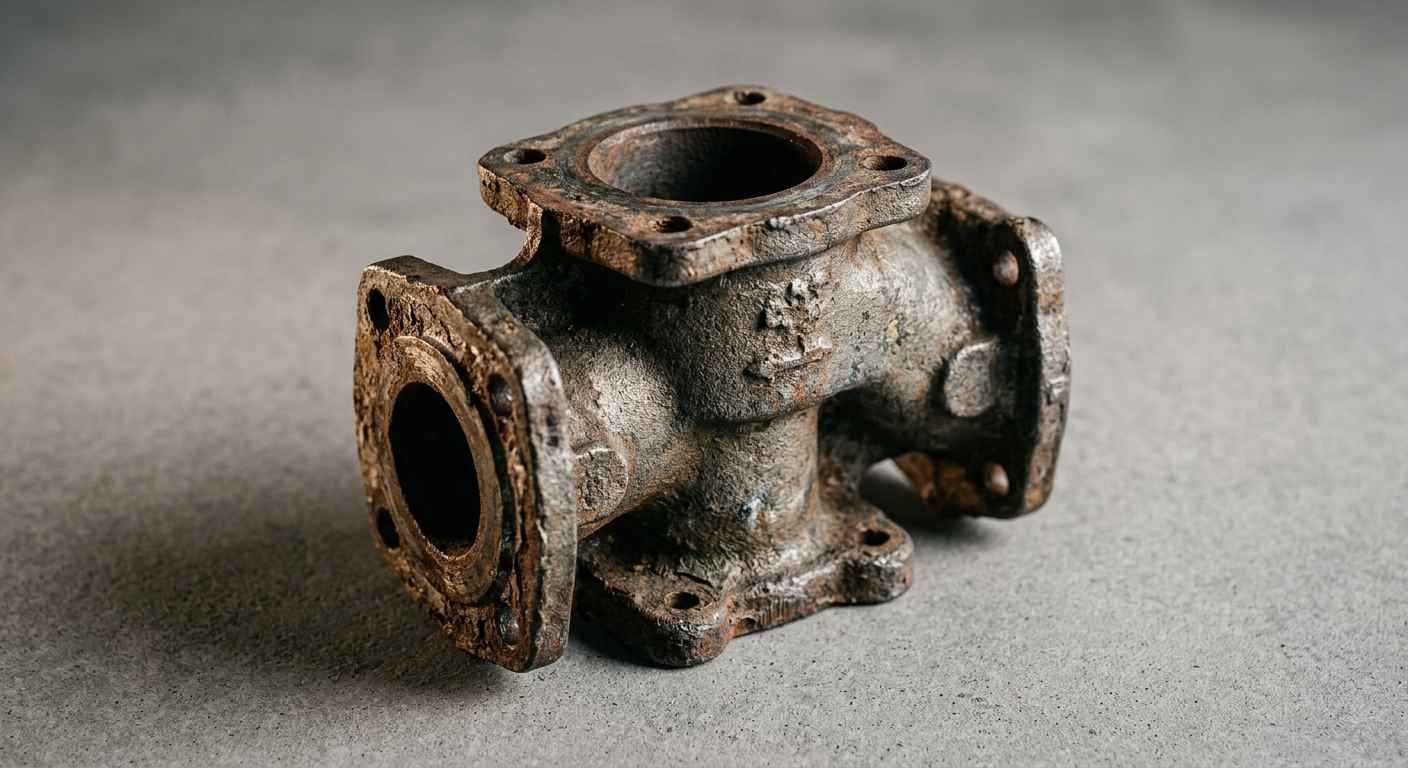
Reverse engineering is legal when the analysed part is not covered by any active right, when protection has expired and passed into the public domain, or when the purpose is to repair, maintain or make interoperable equipment you already own. In those situations, measuring the object and rebuilding its technical definition in order to manufacture it again is an activity accepted in ordinary industrial practice.
The clearest case is that of discontinued parts or components with no available replacement. When a manufacturer stops supplying a component and protection has lapsed or never existed, rebuilding it to keep a machine running is a legitimate use. This is the territory of projects such as reverse engineering of parts to produce spares from the original component, where the starting point is the physical object, not a manufacturer’s drawing. The same applies to repair and interoperability, where analysing equipment so it works with your own consumables or accessories responds to a legitimate interest of the owner.
Industrial benchmarking also sits within lawful ground. Buying a competitor’s product on the open market, dismantling it and characterising it to compare materials, tolerances and performance is a normal technical intelligence practice; industrial benchmarking and comparative trials deliver objective data without copying anything protected. Failure analysis on a broken part, to understand why it failed and to redesign, is equally legitimate. In all these cases the sample must have been obtained lawfully (purchased, transferred or your own property), not taken without permission or received under a confidentiality agreement that forbids dismantling it.
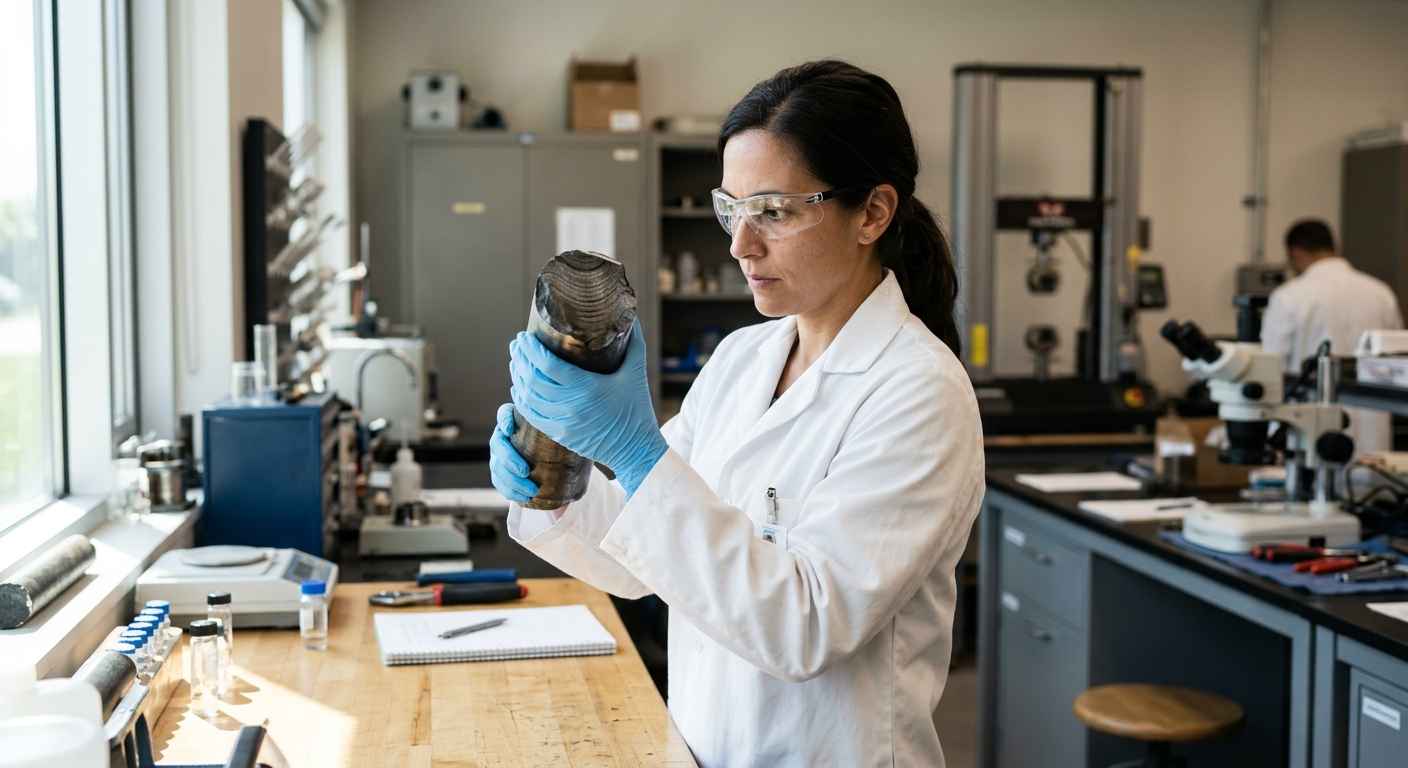
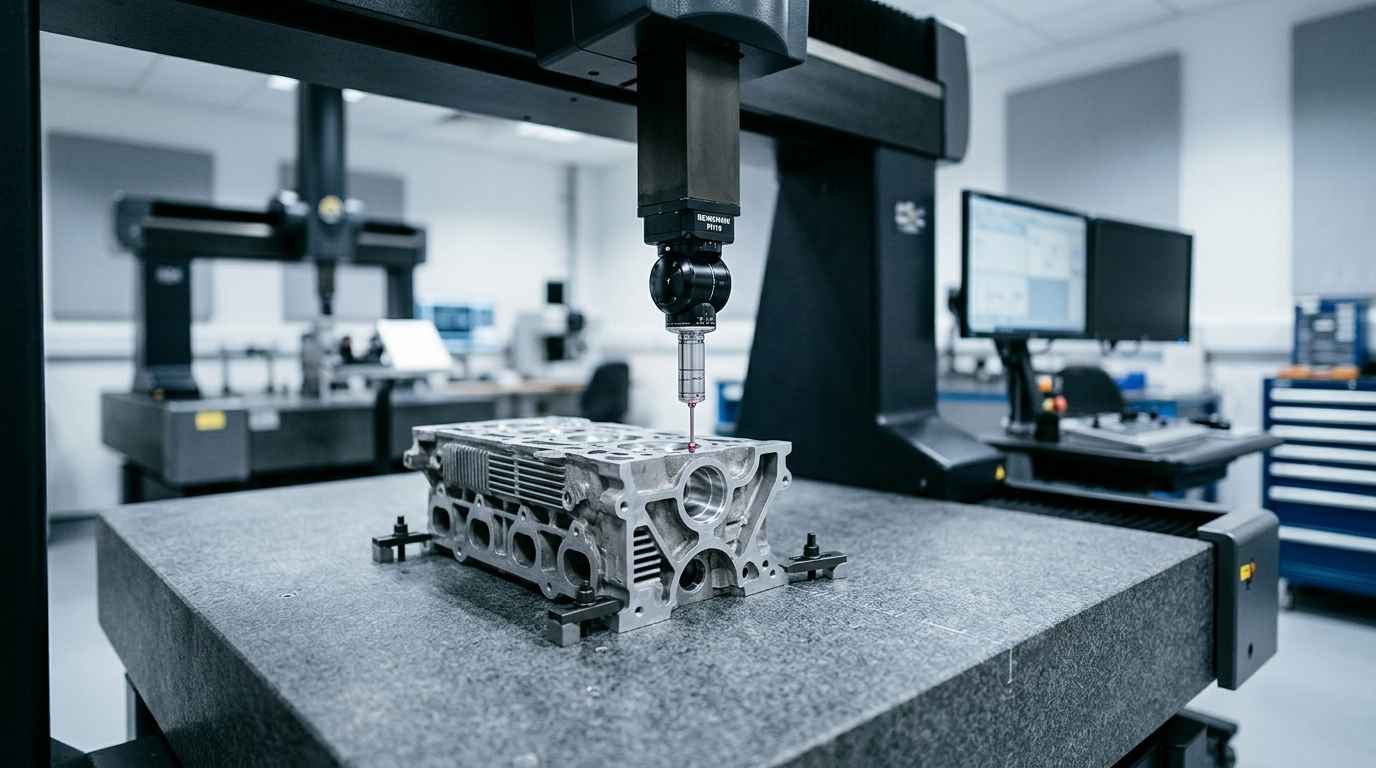
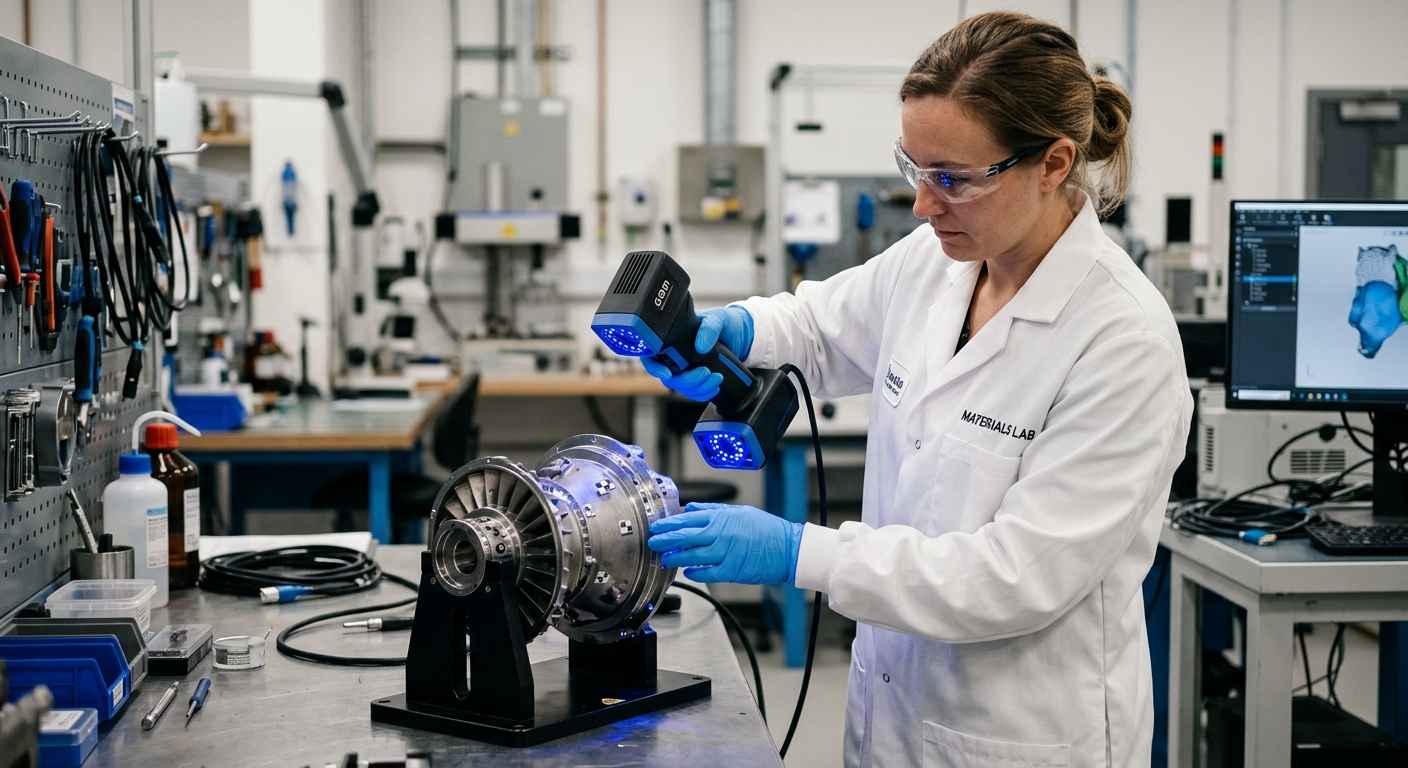
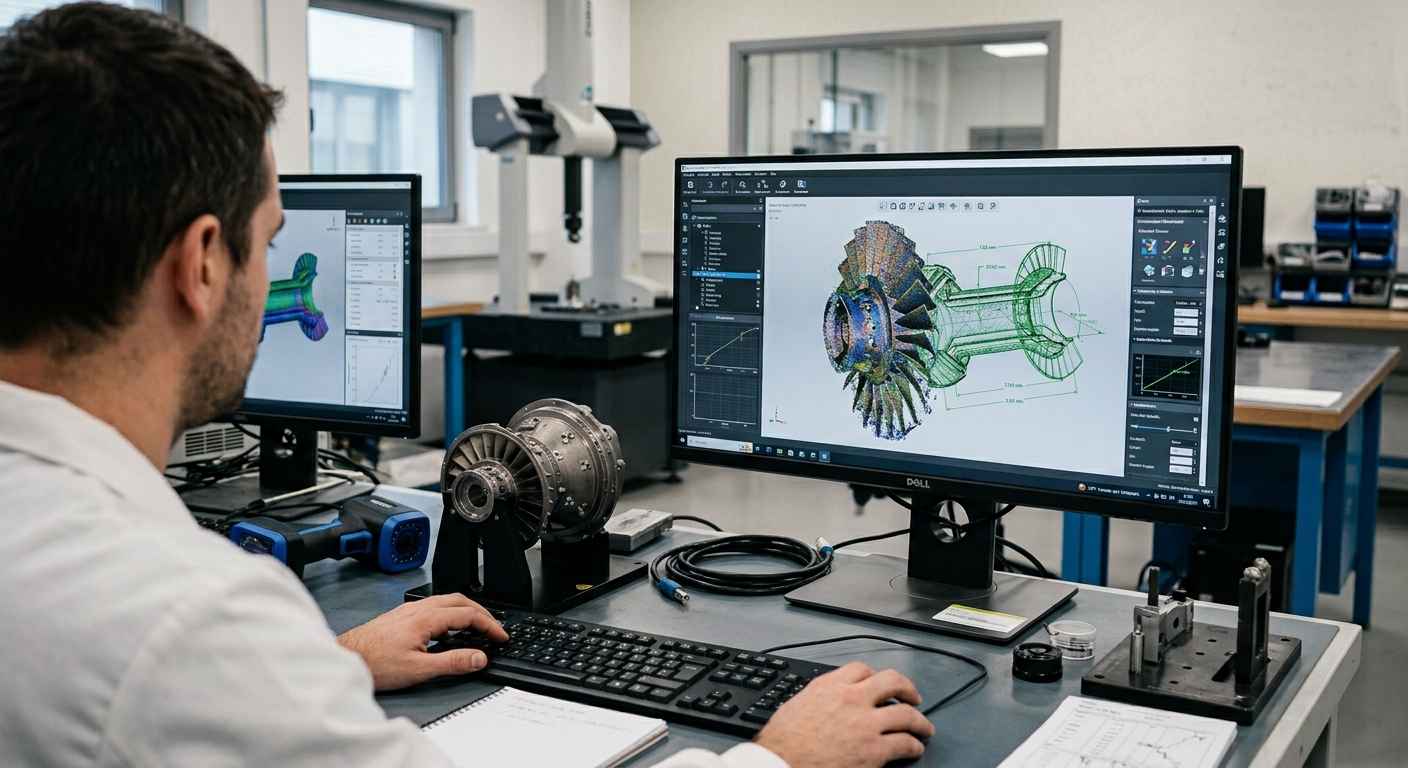
The analysis technique itself is neutral. 3D scanning, non-destructive testing to inspect the interior without damaging the part, and material characterisation to identify alloys and treatments are measurement tools; using them does not infringe by itself. What can infringe is commercially exploiting a result that reproduces an active third-party right.
| Type of protection | What it protects | Indicative duration | What you cannot replicate while in force |
|---|---|---|---|
| Patent | A technical invention (product or process) | Up to about 20 years from filing | The claimed function or mechanism, even if you reach it by your own analysis |
| Utility model | A technical improvement in shape or configuration | On the order of 10 years | The protected configuration with a technical effect |
| Industrial design | The appearance (shape, lines, texture) | Up to around 25 years with renewals | The registered external shape, even if you change the inside |
| Trademark | Signs of commercial origin (name, logo) | Renewable indefinitely | The name or logo on your replica |
| Trade secret | Confidential information with competitive value | As long as it stays secret | Data obtained improperly (not what you deduce from a product on the market) |
| Copyright (software) | The code of programs and firmware | Author’s life plus several decades | The code, copied or translated into another language |
Have a similar case on your desk?
Send us the physical sample and we measure and characterise it with traceability, so your decision rests on objective data.
When replication crosses the line and what the risks are
Replication crosses the line as soon as the result reproduces a third-party property right that is still in force, regardless of whether you reached it by your own analysis and without ever seeing the original drawings. Reverse engineering does not create a right to copy; it only gives you the technical information, and that information remains subject to the owner’s legal limits.
Copying a shape protected by an industrial design is an infringement even if the interior works in a different way, because what is protected is the appearance. Reproducing a live patented function infringes even if the external design is different, because what is protected is the technical solution. Using the manufacturer’s trademark on your part, or imitating it to the point of causing confusion about origin, is a separate trademark infringement in its own right. And in software, copying the code or translating it into another language breaches copyright, even if you keep the external behaviour identical.
The trade secret deserves separate attention. Deducing a parameter by observing a product you bought on the market is lawful; obtaining that same information by taking it, through a former employee who brought it with them or by breaking a confidentiality agreement, is an improper appropriation that can be sanctioned even if you never manufacture anything. The boundary here is not in the data but in how you get it. Manufacturing or selling a replica that deliberately imitates a protected original also connects with the territory of counterfeiting, where detection of counterfeit components is used precisely to prove that a part is a copy and not a genuine product.
Reaching a result on your own, without seeing the maker’s drawings, does not protect you against a patent or a design in force: independent reverse engineering defeats trade secret and copyright claims, but it does not overcome a live patent.
The risks of crossing that line are concrete: injunctions that force the product off the market, damages, destruction of stock and, in deliberate counterfeiting, liability that can reach the criminal level. On top of that comes the reputational cost with industrial customers who demand traceability of origin. That is why the decision to manufacture should rest on the actual status of the rights over each aspect of the part, not on technical judgement alone.
How to document a clean reverse-engineering process
A clean reverse-engineering process is one that can prove, with traceable documentation, that the replica was obtained by measuring and characterising the physical object and not by copying protected information from the manufacturer.
The clean-room principle consists of separating whoever had access to protected information from whoever develops the new part. The redesign team works only with functional specifications derived from measurement (dimensions, tolerances, material properties, behaviour), not with drawings, source code or internal documentation from the original. That documented barrier is the strongest defence against a claim of copying a trade secret or code, because it establishes that the result comes from analysis and not from improper access.
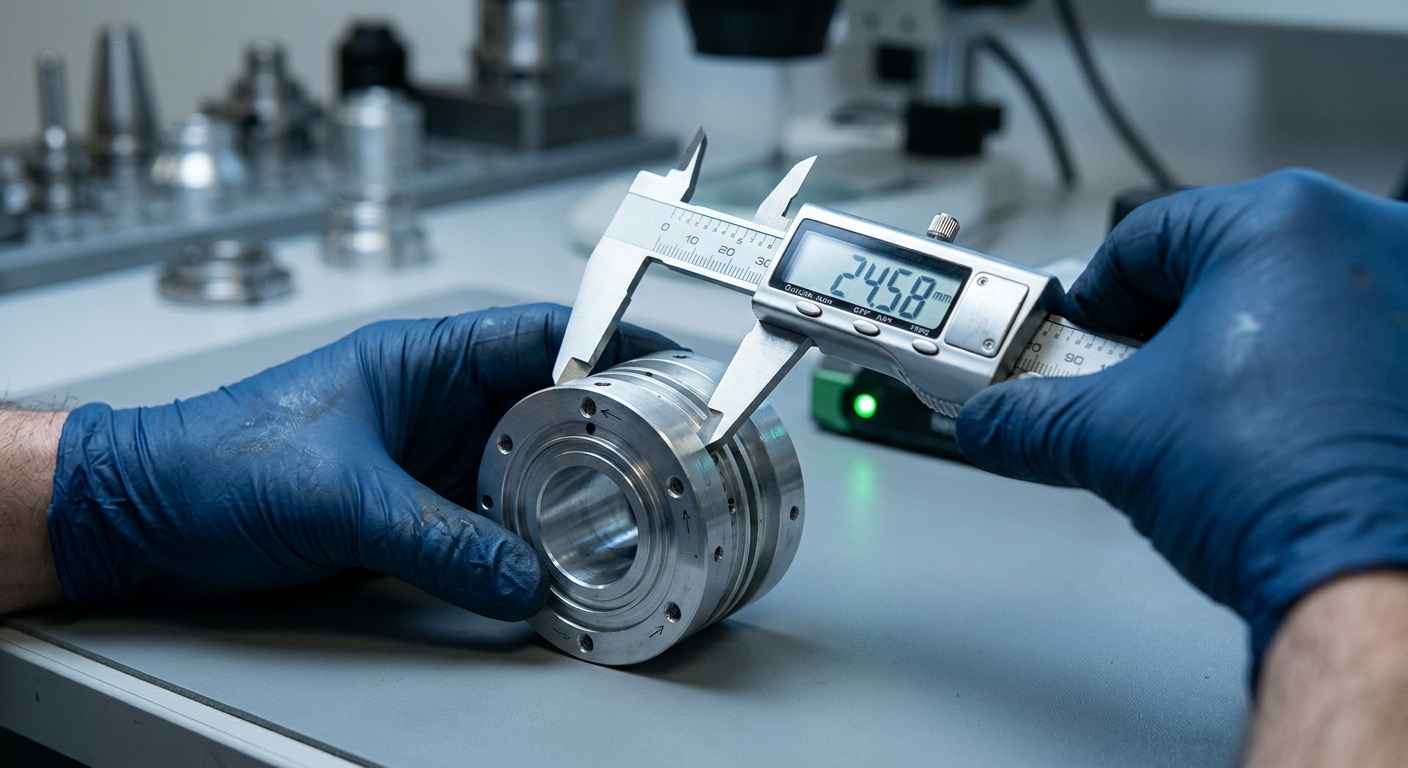
Sample traceability matters just as much. It is worth recording how the component was obtained (an open-market purchase invoice, a transfer from the owning customer, a part removed from your own installation), with the date and condition, to prove that acquisition was lawful. From there, the work is to measure and characterise, not to reconstruct someone else’s drawings: 3D scanning for the geometry, non-destructive testing for the interior, and composition and microstructure analysis to reproduce the material on a metallurgical basis rather than by guesswork. This measure-instead-of-assume approach is the same one applied when you replicate a component without drawings starting from the physical object.
All of this is consolidated into a technical report that documents the full chain: origin of the sample, measurement and characterisation techniques used, specifications obtained and redesign decisions. On that basis, projects such as reverse engineering and manufacturing of complex spares from the original part are carried out, where documentation is not a formality but the evidence that the spare was developed cleanly and can be defended if it is ever challenged.
Replicating on technical grounds with legal backing
The legality of reverse engineering is not decided by the technique, but by two prior questions: which rights fall on the part and how far they remain in force, and how the sample was obtained and documented. Reproducing what is free or expired, and doing it to repair, maintain or interoperate, is legitimate; replicating shapes, functions, trademarks or code that are still protected is not. Between those two extremes, most real cases require mapping the part right by right before manufacturing, because a single component can carry free and reserved parts at once.
This content is general engineering information, not legal advice. Effective protection varies by jurisdiction and by the circumstances of each component, so every specific case should be reviewed with a qualified industrial and intellectual property lawyer before you manufacture or sell a replica.
The role of an external forensic engineering team is to supply the technical side of that decision: measuring the component, characterising its material, reconstructing its geometry and behaviour, and documenting the process in a traceable way, so that the legal judgement rests on objective data rather than on assumptions. If you have a discontinued component, a critical spare with no supply, or a part whose manufacture you want to validate before launching it, send us the physical sample and we measure and characterise it with 3D scanning, non-destructive testing and material analysis, and you receive a technical report with the specifications and process traceability to back your decision.
Frequently asked questions about the legality of reverse engineering
Is reverse engineering legal?
Reverse engineering is legal as a technical activity of analysis, and its result is reproducible when the part is not covered by an active right, when protection has expired, or when the purpose is repair, maintenance or interoperability of equipment you own. It stops being lawful when you commercially exploit a result that reproduces a live patent, a registered design, a third-party trademark or protected software. The measurement technique never infringes by itself; what can infringe is manufacturing and selling the replica.
Can I manufacture a spare part for a discontinued component?
Yes, manufacturing a spare for a discontinued component is usually legitimate when protection has expired or never existed and the aim is to keep equipment you already own in service. It is one of the most common uses of reverse engineering, rebuilding the part from the original object rather than from a supplier’s drawing. Even so, it is worth verifying that no patent or design still covers the specific function or shape you are going to reproduce.
What is the difference between reverse engineering and illegal copying?
Reverse engineering rebuilds the technical definition of a part by measuring and characterising the physical object to understand, repair or redesign it; illegal copying reproduces and exploits a third-party right that is still in force (registered shape, patented function, trademark or code). The difference is not in how the information is obtained, but in what you do with it afterwards and whether an active right falls on the result. Analysing is lawful; exploiting what is protected is not.
Is software reverse engineering legal?
Software reverse engineering has stricter limits, because code is protected by copyright. Analysing the behaviour of a program to achieve interoperability can be accepted within specific circumstances, but copying the code, decompiling it outside those circumstances, or translating it into another language breaches the author’s rights. Because it depends heavily on the jurisdiction and on the exact purpose, this is the case where prior legal advice is most necessary.
How do I prove my replica does not infringe?
You prove it with a traceable clean-room process: documenting that the sample was obtained lawfully, separating whoever had access to protected information from the redesign team, working only with specifications derived from measurement, and consolidating everything into a technical report. An independent technical analysis of the part’s origin and characteristics provides objective evidence that the replica comes from analysing the physical object and not from copying the manufacturer’s information.