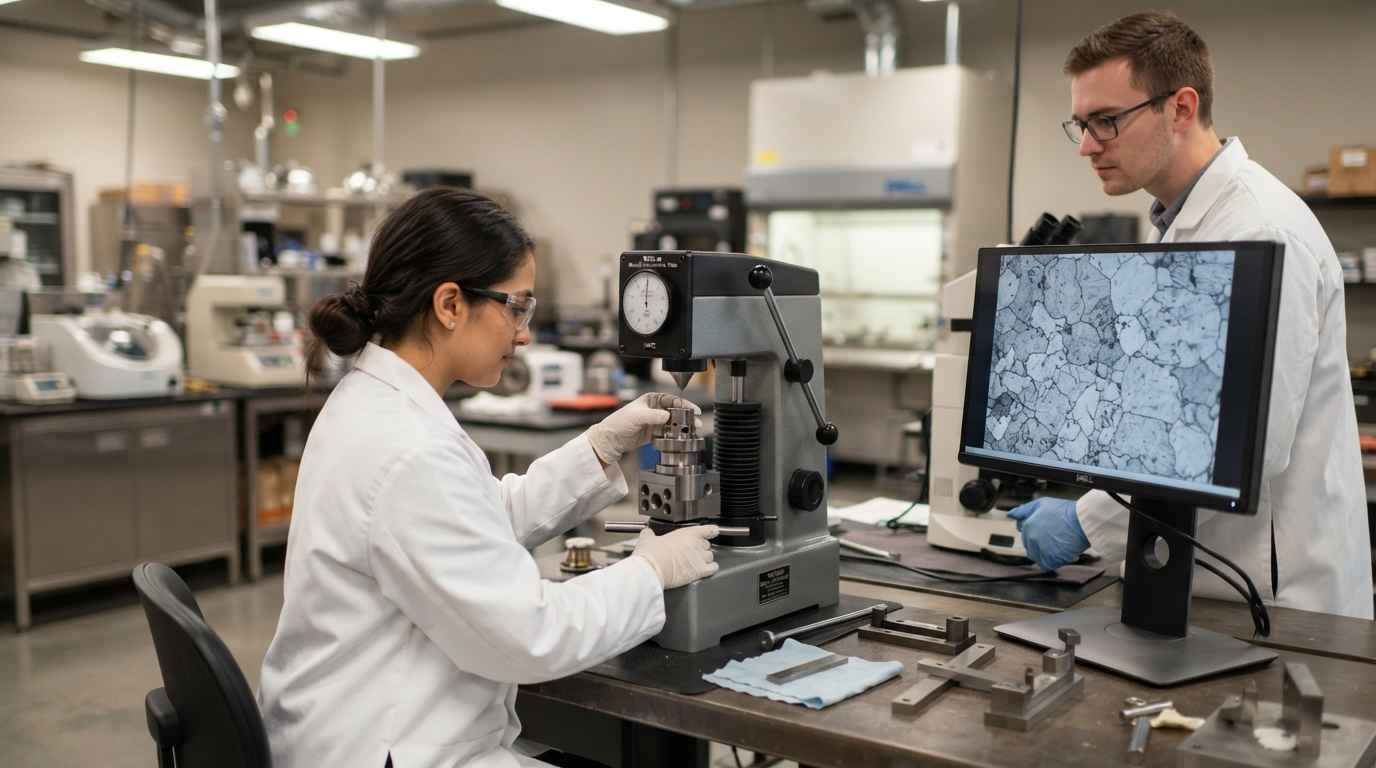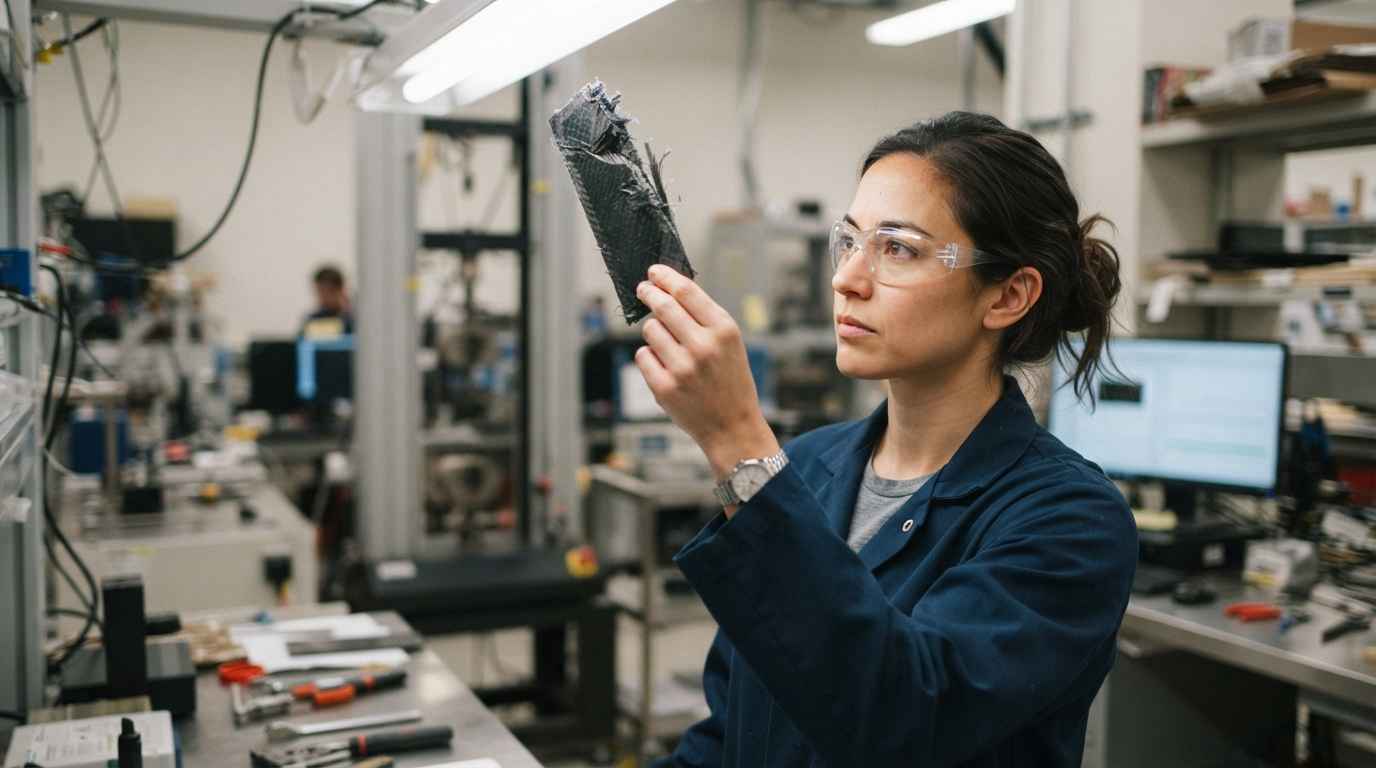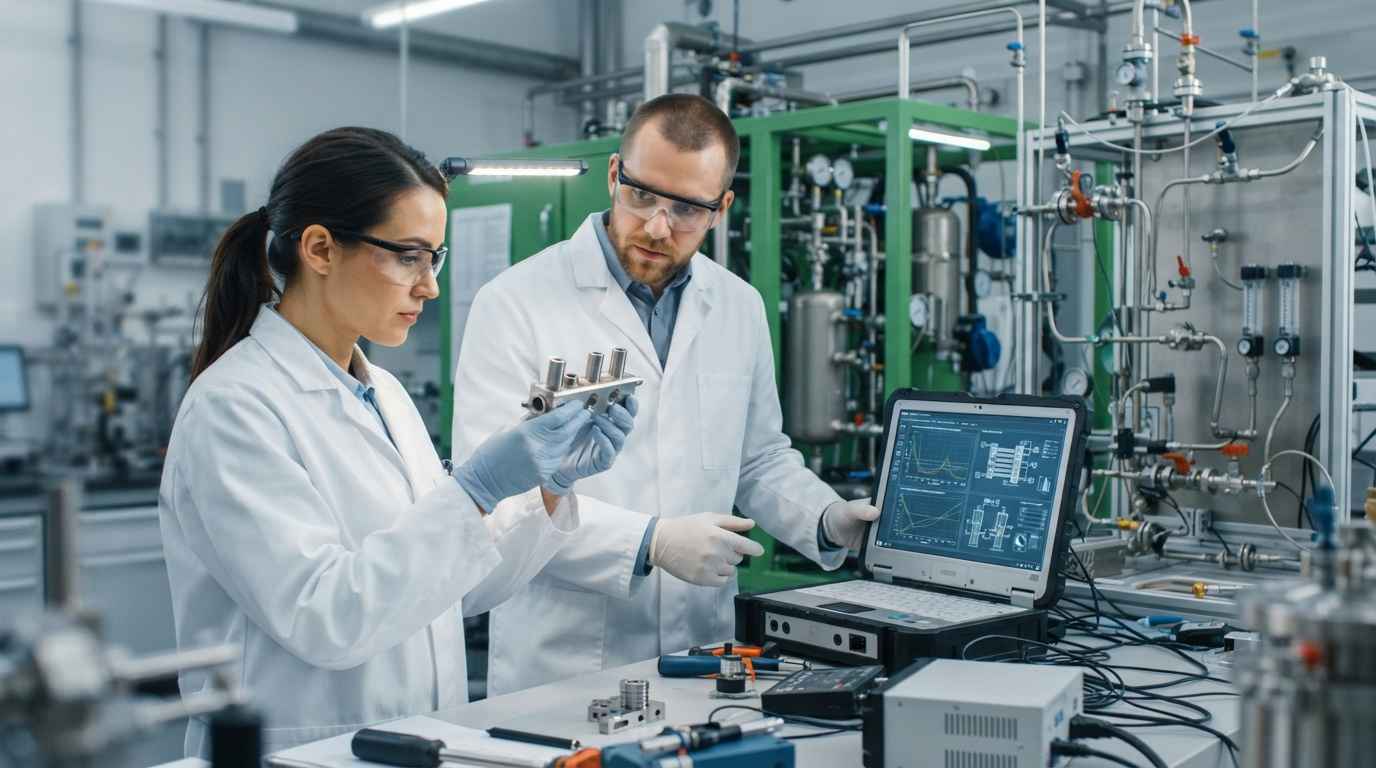

Materials for new energies are those able to withstand the specific conditions of technologies such as hydrogen, batteries or fuel cells. In the case of hydrogen, the critical requirement is to resist its tendency to penetrate the metal and embrittle it, keeping structural integrity throughout the component’s service life.
The energy transition places demands on materials that were not common before. A steel that behaves well under conventional mechanical loads can fail prematurely when it works in contact with pressurised hydrogen, because the gas changes its behaviour from the inside. Understanding that difference is the starting point of any technological innovation project aimed at the energy sector.
Choosing the right material is not just a question of nominal strength, but of compatibility with the specific energy vector. That selection and validation work fits within R&D strategic consulting, where the material is assessed against real service conditions Doing that assessment early, rather than after a prototype fails, is what separates a smooth development from a costly redesign, because a material change late in a project ripples through geometry, joining and qualification all at once.
What materials for new energies are
Materials for new energies are the set of metals, polymers, composites and coatings selected to work reliably in low-carbon energy generation, storage and transport technologies. Their common denominator is that they operate in environments combining mechanical loads with chemical, thermal or electrochemical agents that That durability, moreover, has to be demonstrated over long timescales: many energy components are designed for twenty or thirty years of service, and accelerated testing seeks to reproduce in weeks the degradation the material would suffer over that period. Interpreting that acceleration correctly is as important as the figure itself.
A material suitable for new energies is not the strongest in the abstract, but the one that keeps its properties under the specific conditions of the energy vector it works with, be it hydrogen, battery electrolyte or high temperature.
Materials for new energies, definition and sectors
The category spans very different sectors: green hydrogen, electrochemical storage in batteries, fuel cells, wind and solar power, and the associated transport and distribution infrastructure. Each imposes its own combination of requirements, but all share the need for proven durability under conditions that do not appear in classic industrial applications.
The energy sector brings together high-strength metals, stainless steels, aluminium and nickel alloys, polymers for seals and membranes, and functional coatings. The choice among them depends on the agent they face and the service life required, which is why the same component may need different materials depending on whether it works with gaseous, liquid or Classing a material as fit for new energies does not depend on a single property, but on clearing the critical threshold of the vector it works with: compatibility with hydrogen in some cases, stability against the electrolyte in others, or resistance to temperature and ultraviolet radiation in solar generation. That requirement-driven approach is what prevents unduly extrapolating data from one application to another.
Why hydrogen imposes its own requirements
Hydrogen is the smallest molecule, and that feature makes it singular: it penetrates the crystal lattice of many metals and changes their mechanical behaviour from within. A material perfectly valid for air or water can turn brittle in contact with pressurised hydrogen, losing ductility and toughness with no visible change on its surface.
On top of this, hydrogen is often handled at high pressure or at cryogenic temperature, which adds further loading. Compatibility with hydrogen is therefore not a single property, but the result of how the material, the pressure, the temperature and In practice, the same steel can be perfectly safe to carry natural gas and unsuitable for hydrogen at the same pressure, because the damage mechanism is different. That is why projects to repurpose gas infrastructure for hydrogen require re-evaluating the existing materials instead of taking their prior track record as valid.
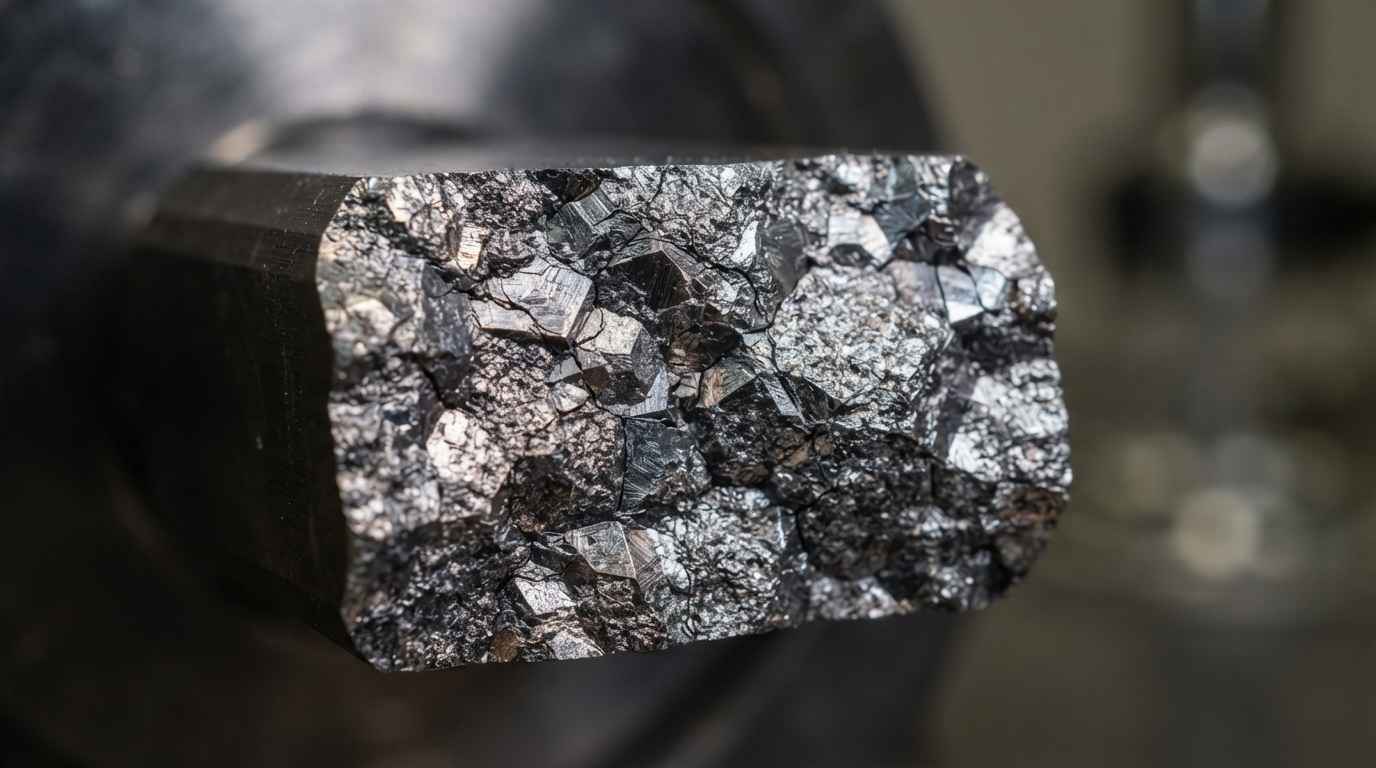
Hydrogen embrittlement, the main challenge
Hydrogen embrittlement is the failure mechanism that most conditions the selection of materials for this technology. It consists of a loss of ductility and load-bearing capacity when a metal absorbs hydrogen, and it can cause cracks and brittle fractures What makes embrittlement dangerous is its delayed nature: damage accumulates while the part is simply under a static load and in the presence of hydrogen, with no need for fatigue or impact. A joint that passes the commissioning test can crack weeks or months later, already in service.
What hydrogen embrittlement is and how it acts
Hydrogen embrittlement occurs when hydrogen atoms diffuse into the metal and concentrate in high-stress zones, such as a crack tip or the grain boundaries. There they reduce the energy needed for the material to fracture, so a statically loaded part can crack over time even if it never exceeds its nominal allowable stress.
The phenomenon depends on three factors acting at once: the amount of hydrogen available, the stress level at which the part works and the material’s own susceptibility. When the three coincide, the result is a delayed, hard-to-anticipate failure that At the microscopic scale several mechanisms are involved: hydrogen can promote separation of the grain boundaries, ease the local motion of dislocations or build up internal pressure by recombining in microvoids. The same one does not always act, which is one of the reasons susceptibility must be measured on the specific material and condition, not deduced from general tables.
Hydrogen embrittlement rarely gives warning: the part keeps its appearance and dimensions until it fractures in a brittle way, so the only reliable defence is to select and validate the material before putting it into service.
Which materials are more and less sensitive
Sensitivity to embrittlement varies widely between families. High-strength, high-hardness steels are among the most vulnerable, precisely because their microstructure accumulates internal stresses that hydrogen exploits. At the opposite end, austenitic stainless steels and some aluminium and nickel alloys show much higher resistance, which makes them The underlying difference is the crystal structure: the face-centred cubic lattices of austenitic stainless steels trap and diffuse hydrogen in a less damaging way than the body-centred cubic lattices of ferritic and martensitic steels. Even so, within each family there are important variations depending on composition and treatment condition, which must also be verified.
The practical rule is that the higher the mechanical strength and hardness, the higher the susceptibility tends to be, which forces a trade-off between performance and safety. Validating that trade-off means testing the material under representative conditions, which requires specific infrastructure such as that developed in the design and manufacture of a gas test bench, able to reproduce the gaseous environment the part is subjected to. In sectors where performance is extreme, as shown by high-performance materials for the defence sector, A practical rule is not to set strength higher than the application needs: over-specifying a steel’s hardness to gain mechanical margin can, in a hydrogen environment, reduce the real safety margin by raising susceptibility. The optimal material is usually the one that meets the requirement with the lowest risk, not the strongest one.
How a material’s compatibility with hydrogen is assessed
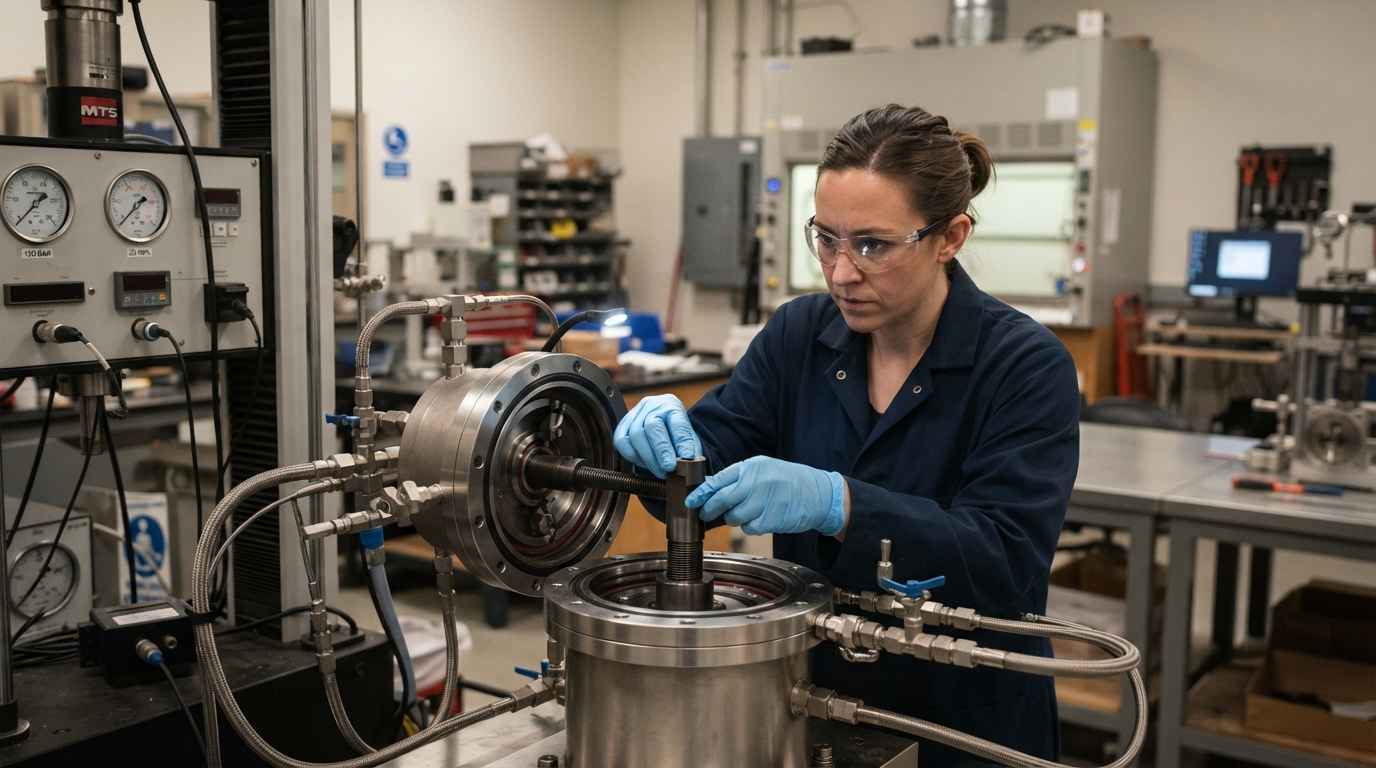
Assessing compatibility with hydrogen means measuring, under controlled conditions, how much a material’s properties degrade when it works in its presence. Knowing its behaviour in air is not enough: you have to reproduce the real hydrogen, pressure and temperature and This baseline comparison is essential because absolute values on their own say little: what matters for a design decision is how much of a property is lost specifically because of the hydrogen, and that is only visible when the exposed and unexposed states are measured under the same protocol.
Compatibility and permeation testing
Compatibility tests subject specimens to hydrogen and measure the drop in mechanical properties such as ductility or toughness. Slow strain-rate tensile tests in a hydrogen atmosphere, permeation measurement (the rate at which the gas crosses the material) and sustained-load cracking tests are the main tools to quantify sensitivity. It is worth distinguishing between testing the material pre-charged with hydrogen and testing it directly in a pressurised hydrogen atmosphere, because they do not always give the same result. The most useful indicator is usually the ratio between a property measured in hydrogen and the same property in air or inert gas, since it expresses the loss attributable to the gas in a way that is comparable between candidates.
Are you selecting a material that will work in contact with hydrogen? Send us the component and its service conditions and we will propose the right compatibility test plan.
Material selection and validation
Selecting a material for hydrogen combines the compatibility data with the mechanical, cost and manufacturability requirements. A candidate that resists embrittlement but cannot be welded or formed reliably is not viable, just as one that is perfect on paper but incompatible with the working pressure is not. The final decision is made by cross-referencing all those variables on measured data, Documenting where each figure comes from (heat, treatment, supplier) is part of the decision, because the same material designation can behave differently depending on its origin. That traceability turns selection into a defensible choice before an audit or an approval, rather than a generic recommendation.
When the current material does not meet the need, the project moves into substitution, where the candidate must match or beat the original across several properties at once. This approach connects with the use of alternative materials and relies on the analytical capability of a materials testing and characterisation laboratory to confirm that the alternative behaves as expected In a substitution, the safest path is to qualify the new material against the same criteria and conditions as the one it replaces, so the comparison is direct; changing several variables at once makes any difference impossible to attribute.
| Test | What it assesses | Technical reference | What it provides |
|---|---|---|---|
| Compatibility with the gas | Material resistance to hydrogen | ISO 11114-4 | Suitability of the metal for service |
| Steel embrittlement | Susceptibility to embrittlement | ISO 16573 | Comparison between candidates |
| Test in pressurised hydrogen | Degradation in a real environment | ASTM G142 | Validation under use conditions |
| Permeation | Gas diffusion rate | Electrochemical technique | Leak and embrittlement risk |
Applications and sectors of new energies
Materials for new energies are applied along the whole hydrogen chain and other energy vectors, from production to end use. At each link, the material is chosen for its compatibility with the specific conditions of that stage, and a single project may need That stage-by-stage split explains why a new-energy project is rarely solved with a single material: the norm is a coordinated combination in which each component is optimised for its function, and in which the interfaces between different materials (seals, joints, welds) tend to be the most delicate points.
Hydrogen storage and transport
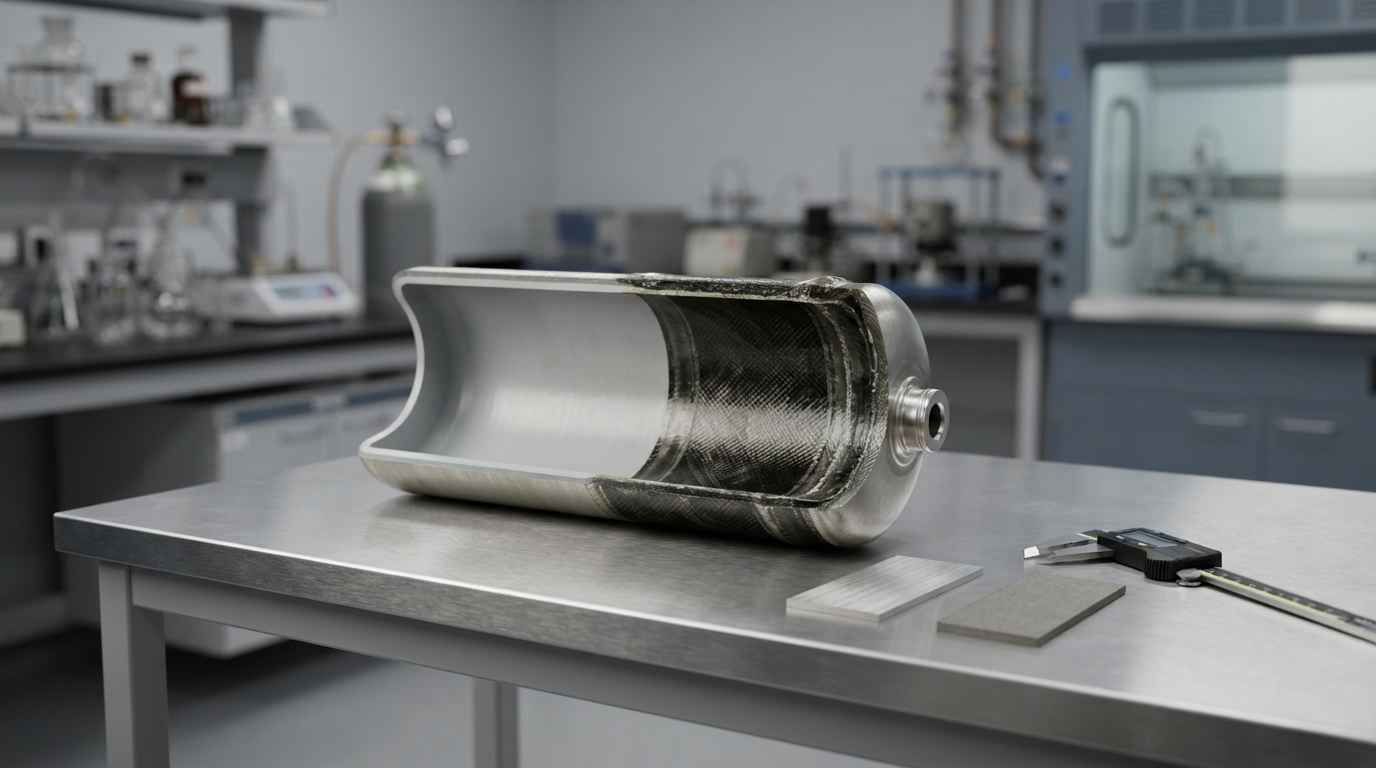
Storage and transport are the stages where compatibility with hydrogen is most critical, because the gas works at high pressure and in prolonged contact with the walls of the tank or pipeline. Materials must resist embrittlement over years of service and charge-discharge cycles, which demands both a good initial selection and quality control that In the lightest high-pressure tanks, the metal wall is often replaced by a polymer liner wrapped in fibre, precisely to avoid embrittling the metal; in exchange, new requirements appear for the permeability and compatibility of the liner itself. Each solution solves one problem and opens another, and only testing tells which pays off in each case.
Common solutions combine austenitic stainless steels, specific alloys and, in high-pressure tanks, composite materials with barrier coatings. The choice depends on the trade-off between weight, pressure and cost, and its validation relies on applied innovation programmes such as those channelled through applied innovation solutions for product and process.
Fuel cells, batteries and other vectors
Beyond gaseous hydrogen, new energies include fuel cells, batteries and conversion systems, each with its own chemistry and its own critical materials. Fuel cells bring together polymer membranes, bipolar plates and catalysts that must withstand an aggressive electrochemical environment; in batteries, the electrode and electrolyte materials Here too the pattern repeats: a material that performs well in a fresh cell can degrade as it cycles, so what matters is not the initial figure but how the property holds up over hundreds or thousands of cycles, Compatibility, moreover, is not limited to the main material: the adhesives, sealants and coatings that accompany the component also age against the same environment, and a failure in a secondary element can disable the assembly just as one in the structural part. That is why the assessment covers the whole system, not only the metal.
The common thread across all these technologies is that the material becomes a limiting factor for performance and durability. Anticipating how it will degrade in service, through representative testing, is what allows you to That foresight also has a direct economic value: a material failure in an energy installation not only forces a part replacement but can shut down a whole facility and compromise its safety, so the cost of testing beforehand is small against that of the failure avoided.
The material as an engineering decision, not a catalogue one
Materials for new energies are not chosen by their nominal datasheet, but by how they behave against the specific energy vector they work with. In hydrogen, that behaviour is dominated by embrittlement, a delayed failure that gives no warning and is only controlled by selecting and validating the material under representative conditions. The difference between a reliable component and one that fails in the field usually lies in That logic applies equally to a tank, a pipeline or a fuel cell: the material and the specific test change, but not the principle of checking behaviour before scaling up. Carrying that discipline from the laboratory through to incoming inspection of each batch is what sustains reliability over time.
If you are developing a component for hydrogen or another energy technology and need to confirm that the material holds up, gather the part, its service conditions and the requirements it must meet, and send them over: we return a compatibility test plan and a clear, data-backed selection criterion.
Frequently asked questions
What are materials for new energies?
They are the materials selected to work reliably in low-carbon energy technologies, such as hydrogen, batteries or fuel cells. Their common trait is that they must keep their properties in environments combining mechanical loads with chemical, thermal or electrochemical agents, so they are chosen for their compatibility with each energy vector and not only for their nominal strength.
Why does hydrogen embrittle metals?
Hydrogen is the smallest molecule and penetrates the metal’s crystal lattice, concentrating in the zones of highest stress. There it lowers the energy needed for fracture, so the part loses ductility and can crack at stresses below its design limit. The effect depends on the amount of hydrogen, the stress level and the material’s own susceptibility.
Which materials resist hydrogen best?
Austenitic stainless steels and certain aluminium and nickel alloys show high resistance to embrittlement, which makes them common in components in contact with hydrogen. High-strength, high-hardness steels, by contrast, are among the most sensitive, so their use requires specific validation confirming that the trade-off between performance and safety is acceptable.
How is a material’s compatibility with hydrogen checked?
Specimens of the material are tested in a hydrogen atmosphere, reproducing the service pressure and temperature, and the drop in properties such as ductility or toughness is measured against the unexposed material. Slow strain-rate tensile tests, permeation and sustained-load cracking are the main techniques, with reference standards such as ISO 11114-4 or ASTM G142.
How long does it take to validate a material for hydrogen?
Timelines depend on the number of candidates and the depth of the test programme, and can range from a few weeks to several months when long-duration sustained-load tests are included. An initial screening quickly rules out unviable materials and reserves full validation for the finalist. Request a scope assessment to tailor the timeline to your case.