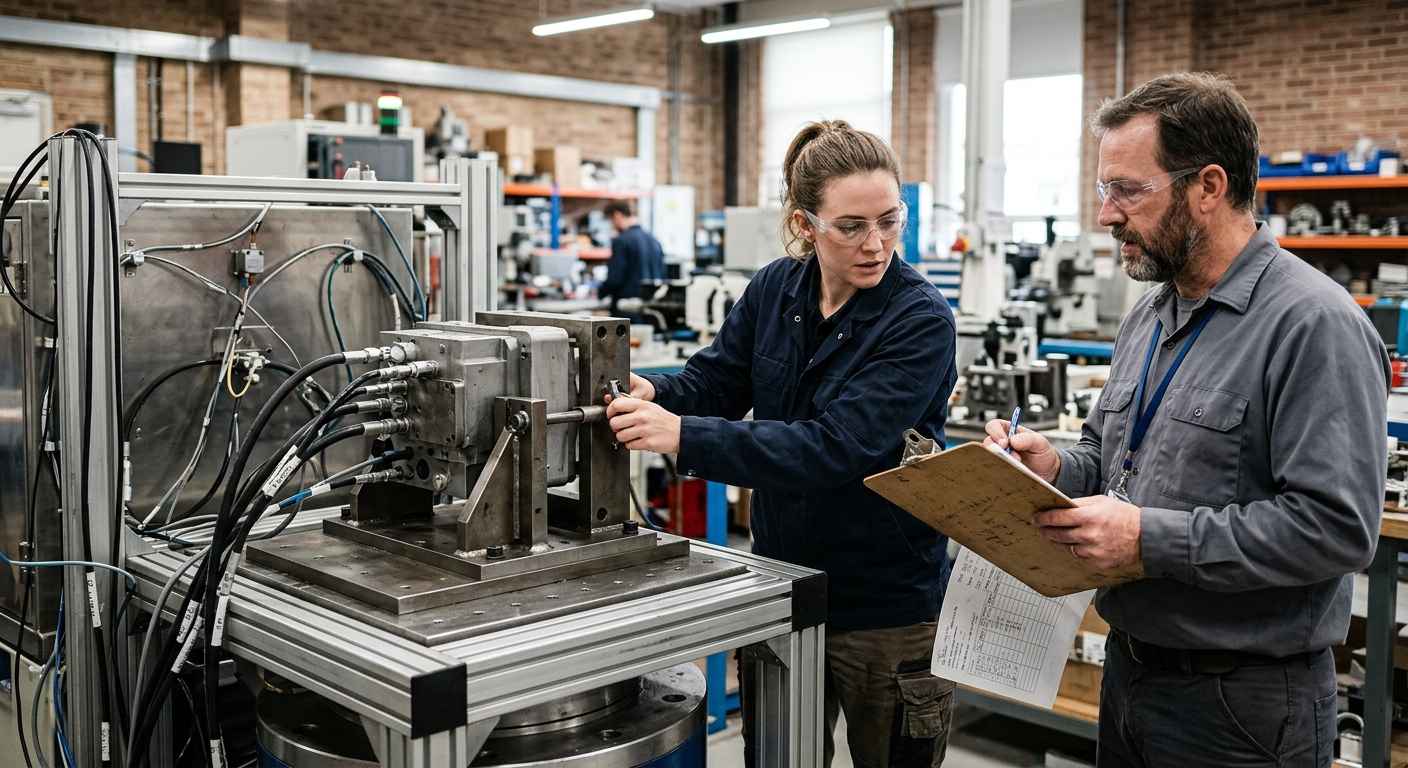

The types of wear on a component are not interchangeable: each one leaves a distinct mark and responds to a distinct cause, so confusing them leads to correcting the symptom and not the problem. Telling whether a part has worn by abrasion, adhesion, surface fatigue, corrosion or erosion is what lets you tackle the root cause, and it is part of the forensic analysis that turns a repeated failure into a corrective action, drawing on the diagnosis of the root cause of failure when the part fails again and again.
A worn component is usually just repaired or replaced, and a few weeks or months later the same failure returns because the cause is still there. Wear is a mechanism, not a one-off defect: it changes with how the part works, what it is in contact with and the environment it lives in. Here is how the main types are recognized, how they are identified in the laboratory and how you move from the type of wear to the solution.
What wear is and why distinguishing the type matters
Wear is the progressive loss of material from a surface through its interaction with another surface, a fluid or particles. It is not an instantaneous failure like a fracture, but a gradual degradation that ends up taking the part out of tolerance, increasing clearances, reducing sealing or causing the assembly to fail. That is why it is often detected late, once the effect has already escalated.
Distinguishing the type matters because the solution for each is different and often opposite. Hardening a surface helps against abrasion, but can make an adhesion problem worse if it increases the affinity between the two materials. A lubricant solves adhesive wear, but traps particles and aggravates abrasive wear if it is not filtered. Acting on the wrong type spends money and leaves the failure intact, so the first step is always to identify the real mechanism.
That first step also decides where the effort goes. Changing a material, redesigning a seal or reviewing a lubricant are actions of very different cost, and they only make sense if they attack the mechanism that is actually wearing the part. Identifying the type of wear before deciding avoids spending on the wrong lever and repeating the failure after the repair.
Wear is a mechanism, not a defect: the same worn part can come from opposite causes, and the right solution depends on which one it is, not on the general look of the surface.
How wear differs from a fracture or a corrosion
Before classifying the type of wear it is worth confirming that the failure mode really is wear, because in practice it is confused with others. A fracture is sudden and separates the part; wear, in contrast, removes material little by little without breaking it, though it can end up causing a fracture when the remaining section no longer holds. Pure corrosion attacks the whole exposed surface chemically without any mechanical contact, while wear needs that contact, a sliding, a rolling or the impact of a flow. And creep deforms the material under sustained load at high temperature without tearing it away.
The distinction is not academic: a problem labelled as wear when it is really corrosion, or the other way round, leads to a solution that does not touch the cause. That is why the diagnosis starts by placing the failure in its category, and often the mark itself gives it away, because wear leaves contact marks (grooves, transfer, pitting) that corrosion or creep do not produce. Once it is confirmed to be wear, the next step is to identify which type.
What confusing the mechanism costs
Confusing the type of wear does not only leave the failure unsolved, it usually makes it more expensive. When the repair does not attack the cause, the part wears out again and is replaced over and over, and to that replacement cost you add the machine stoppages each change causes. On a production line, a clearance that grows or a seal that fails because of a misdiagnosed wear can end in out-of-tolerance product or an unplanned stoppage, far more expensive than the part itself.
The worst case is applying the opposite solution to the one needed: hardening a surface that actually fails by adhesion, or lubricating a contact that wears from an abrasive the oil retains. There the spending is not only useless, it accelerates the deterioration. That is why identifying the mechanism before deciding is not a laboratory luxury: it is what avoids repeating a repair that does not work and turns a recurring breakdown into a closed problem.
The five types of wear and how to recognize them
Most industrial cases fit into five mechanisms, and each leaves a characteristic mark on the surface that lets you recognize it.
| Type of wear | How it happens | Characteristic mark |
|---|---|---|
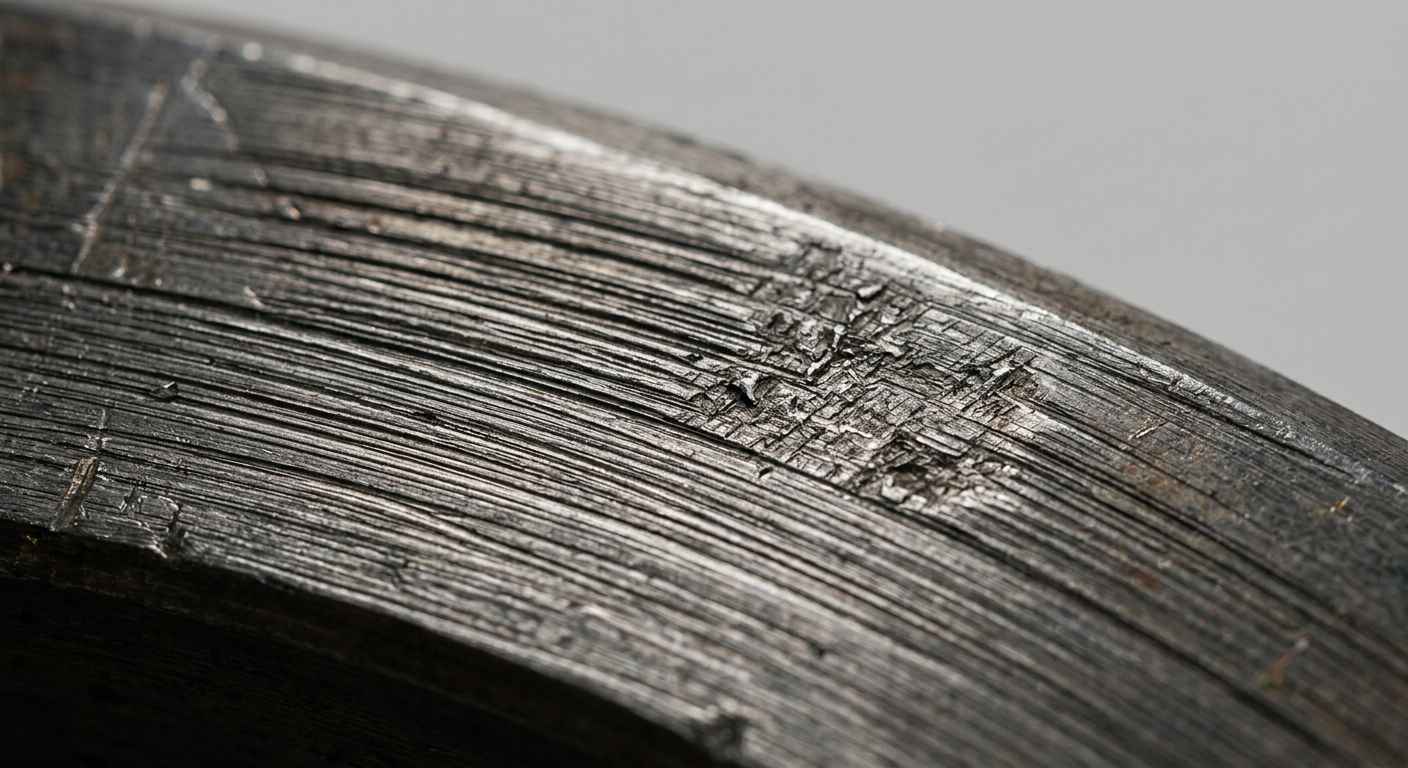
| Abrasive | Hard particles or a rough surface scratch the part | Parallel grooves and scratches in the direction of movement |
| Adhesive | Two surfaces in contact weld at micro-points and tear away | Transferred material, tearing and scuffing |
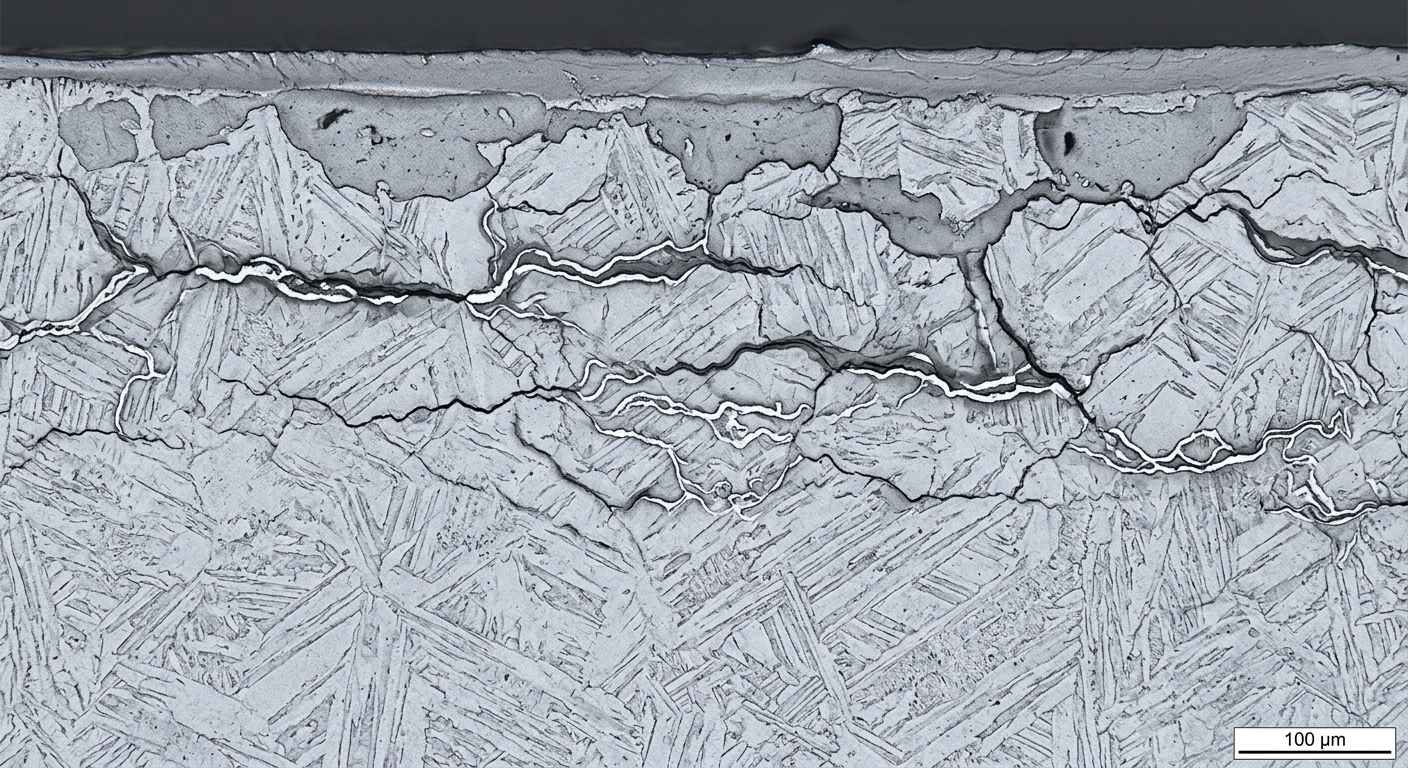
| Surface fatigue | Cyclic contact loads generate subsurface cracks | Pitting and flake detachment (spalling) |
| Corrosive / tribocorrosion | Mechanical wear combines with chemical attack | Corrosion products mixed with the worn area |
| Erosive | A flow of particles or fluid repeatedly impacts the surface | Localized wear at the impact zone, with a wavy relief |
Abrasive and adhesive are the most frequent and the most confused. Abrasive leaves parallel grooves and usually comes from contamination, poor filtration or a contact surface that is too hard. Adhesive leaves material transferred from one part to another and appears when lubrication is missing or when two materials have too much affinity. Surface fatigue is typical of bearings and gears, where contact rolls under load; corrosive appears in humid or chemical environments; and erosive, in pumps, valves and pipes carrying fluids loaded with solids.
In which components each type of wear appears
Each mechanism has its typical components, and knowing which part usually fails for each one speeds up the diagnosis, because it points from the start to what to look for on the surface. Abrasive wear dominates where there are hard particles or contact with rough material: chains and conveyor buckets, buckets and blades in earthmoving, cylinder liners with contaminated lubricant. Adhesion appears in pairs sliding under boundary lubrication (guides, bushings, worm screws, pistons) and is responsible for galling when the oil film is missing. Surface fatigue is the signature of bearings and gears: contact rolls under repeated load and ends in pitting and spalling, even with the right material and lubrication, when the contact load exceeds what the surface can withstand.
Tribocorrosion is seen in pumps, valves and shafts working in humid, saline or chemical environments, where chemical and mechanical attack feed each other; and erosion concentrates on pump impellers, pipe elbows and nozzles through which a fluid loaded with solids or droplets flows. Recognizing the component already shortens the list of likely mechanisms, but does not close it: confirmation is still the real mark on the part, because the same bearing can fail by fatigue, by abrasion from a contaminant or by corrosion depending on how it has worked.
Have a similar case on your desk?
If you want to discuss it with our technical team, the first conversation is with no obligation.
How the type of wear is diagnosed
Recognizing the type by eye is only a hypothesis. Turning it into a proven cause, and from there into an action, requires taking the part to the laboratory, reading the surface and the section, and translating the confirmed mechanism into the right lever.
How the type of wear is identified in the laboratory
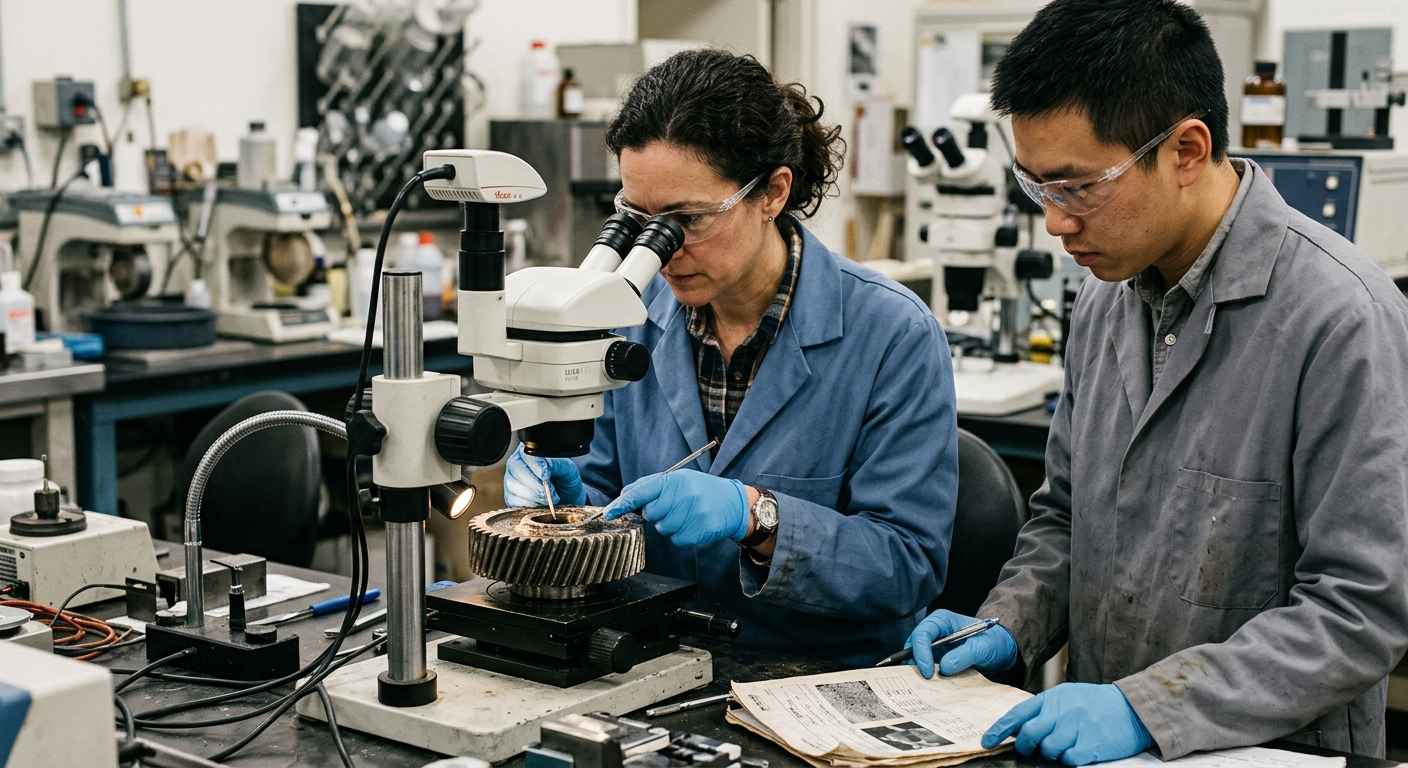
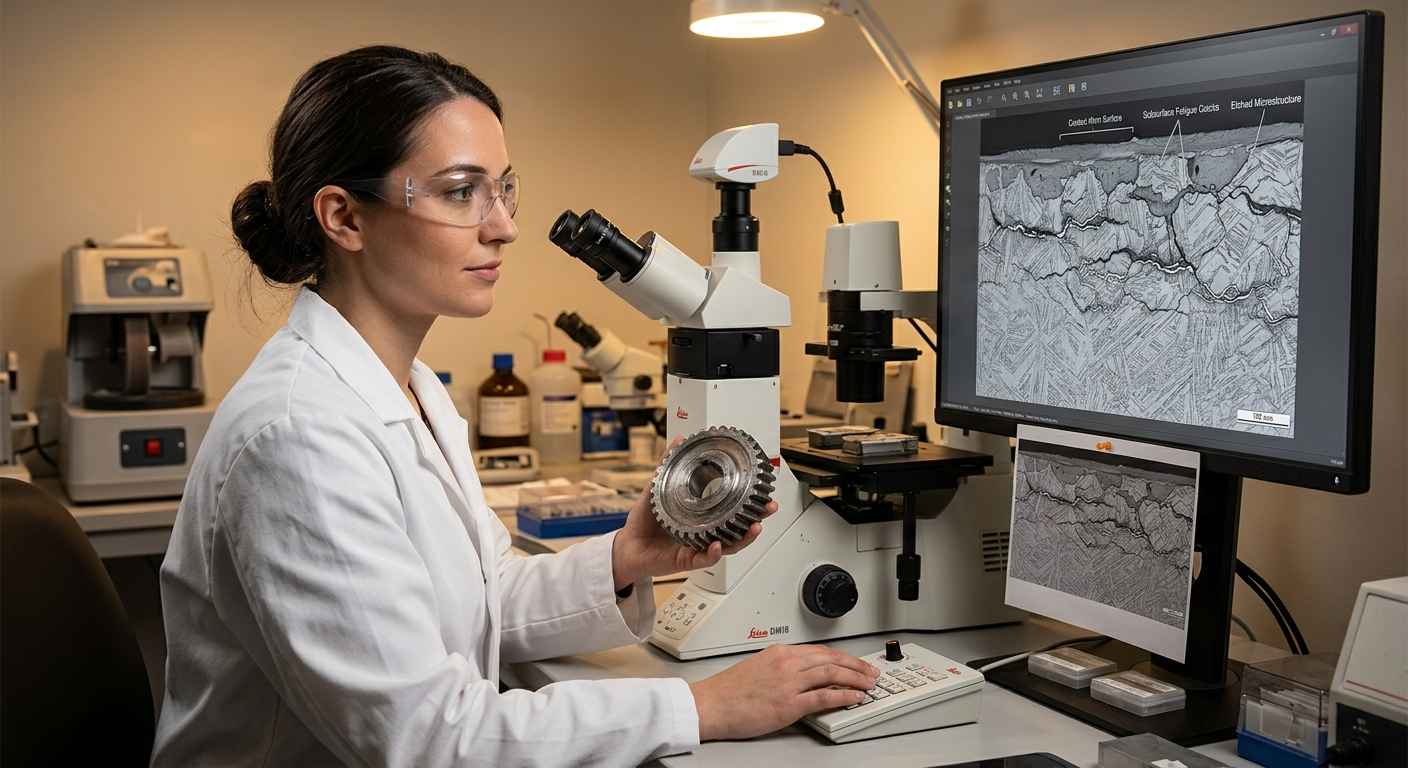
To the naked eye, two worn parts can look the same; the difference is in the surface and the subsurface, and that is where the laboratory comes in. Observing the worn surface under a microscope, including surface texture and microstructure analysis, reveals whether there are abrasion grooves, material transferred by adhesion or fatigue pitting, and measures the roughness and topography that tell one mechanism from another.
The metallographic section completes the diagnosis. Metallographic testing shows what happens below the surface: subsurface cracks typical of contact fatigue, layers deformed by adhesion, or corrosion products that reveal a chemical component. Hardness measurement, for example with the Vickers method of ISO 6507, checks whether the material had the specified hardness or whether an incorrect heat treatment left it soft and exposed to abrasion. And when wear has ended in fracture, fractography links the wear mechanism with the final failure mode. That combination of surface, section and hardness is what turns a hypothesis into a diagnosis, in the same way that failure analysis integrates all the evidence into a single cause.
From the root cause to the solution
Identifying the mechanism is the means, not the end. Abrasive wear points to contamination or filtration: the solution lies in sealing, cleaning the fluid or a harder coating. Adhesive wear points to lubrication or the pair of materials: the solution goes through improving the lubricant, changing one of the two materials or adding a surface treatment that reduces affinity. Surface fatigue points to contact overload or a material with insufficient hardness, and is tackled by redistributing the load or improving the material’s strength.
That jump from the mechanism to the load that causes it connects with sizing: many contact-fatigue pits are, at bottom, a problem of fatigue sizing under cyclic loads that is not solved by changing the part, but by correcting the loading. That is how the root-cause analysis of failures in factory equipment that caused production stoppages was solved, and the failure analysis in metal parts that broke during assembly: in both, distinguishing the type of wear was what pointed to which lever to act on.
Repairing a worn part without identifying the mechanism is changing the symptom and waiting for the failure to return. Identifying the type of wear is what turns a repeated repair into a solution.
How each type of wear is prevented
With the mechanism confirmed, prevention stops being generic: each type responds to a different lever and applying the one for another may do nothing. Against abrasion, the route is to harden the surface (heat treatment, case-hardening, hard coating) and, above all, to remove the abrasive with better filtration and sealing, because often the cause is not the part but the particle that should not be there. Against adhesion, the key is lubrication and the material pair: improving the oil or its additives, changing one of the two materials or adding a surface treatment that separates the two faces.
Against surface fatigue the lever is the contact load and the material’s strength: redistributing the load, improving the finish or raising the surface hardness. Tribocorrosion is attacked on its chemical side (a material more resistant to the medium or a protective coating) as well as the mechanical one, because treating only the wear leaves the corrosive attack intact. And erosion is reduced by changing the material of the impact zone for a tougher one, smoothing the flow geometry or controlling the particles in the fluid. In every case, the right prevention is the one matching the confirmed mechanism, not the one applied by default.
Hardening, lubricating, sealing or redistributing load are all good solutions, but each one for its mechanism. Applied to the wrong type, the best of them is worth nothing.
Which part to send and with what information
The quality of the diagnosis also depends on what reaches the laboratory. Ideally you send the worn part itself without cleaning or brushing it, because washing removes exactly the particles, deposits and transferred material that reveal the mechanism. If one exists, it helps to send an unworn or lightly used reference part, which serves as a pattern to measure how much material has been lost and to compare the sound surface with the damaged one. The characterization of materials starts from that comparison to separate what belongs to the material from what the service has caused.
Just as useful is the context: how long the part had been in service, with what lubricant and at what load it worked, in what environment and whether the failure was progressive or sudden. That information guides the choice of techniques and avoids unnecessary tests; sometimes it even points to the mechanism before looking at the surface. A well-kept, well-documented part shortens the diagnosis and makes the conclusion defensible.
Tackle the cause, not the symptom
The types of wear are distinguished because each one leaves its own mark and responds to its own cause: abrasive scratches, adhesive transfers material, surface fatigue pits, corrosion attacks chemically and erosion strikes. Recognizing which one is acting means looking at the surface, the section and the hardness in the laboratory, not just the general appearance of the part. And only with the mechanism identified does the solution stop being a patch: hardening, lubricating, sealing, redistributing load or changing material stop being random options and become the right answer to the real mechanism.
That is the difference between a part that is replaced every few months and one that stops failing because the cause was tackled. If a component wears out early or the same failure keeps coming back, send the worn part and, if you have one, a reference part, and receive a diagnosis that identifies the type of wear, its root cause and the action that actually stops it.
Frequently asked questions about the types of wear
What are the main types of wear?
The five most common mechanisms in industry are abrasive wear (particles or hard surfaces that scratch), adhesive wear (surfaces that weld at micro-points and tear away), surface fatigue (cyclic contact loads that cause pitting and detachment), corrosive wear or tribocorrosion (mechanical wear combined with chemical attack) and erosive wear (a flow of particles or fluid that impacts the surface). Each leaves a distinct mark and responds to a distinct cause.
How do you tell abrasive wear from adhesive wear?
By the mark they leave. Abrasive wear produces parallel grooves and scratches in the direction of movement, typical of hard particles or a rough surface. Adhesive wear leaves material transferred from one part to another, tearing and scuffing, and appears when lubrication is missing or when the two materials have too much affinity. Under the microscope the difference is clear, and it matters because their solutions are opposite: harden or filter against abrasion, lubricate or change the material pair against adhesion.
Why does it matter to identify the type of wear before acting?
Because the right solution depends on the mechanism and applying the wrong one can make the problem worse. Hardening a surface helps against abrasion but can aggravate adhesion; a lubricant solves adhesion but traps particles and worsens abrasion if it is not filtered. Without identifying the type, you act on the symptom, the failure returns and the expense repeats. Identifying the mechanism is what lets you tackle the root cause.
Which tests are used to diagnose wear?
Observing the worn surface with microscopy and surface texture analysis identifies grooves, transferred material or pitting; metallographic testing reveals subsurface cracks, deformed layers or corrosion products below the surface; hardness measurement checks whether the material had the specified hardness; and fractography relates wear to the failure mode when it has ended in fracture. The combination of these techniques is what confirms the mechanism.
Can wear be of more than one type at once?
Yes, and it is common. Many cases combine mechanisms: tribocorrosion joins mechanical wear and chemical attack, and an abraded surface can accelerate fatigue by concentrating stresses in the grooves. That is why the diagnosis does not look for a single label, but for the dominant mechanism and the secondary ones, so as to act on the one that governs the failure without ignoring those that contribute.