
An industrial failure investigation is the technical process by which the causes that have led a component, material or system to stop functioning according to its specifications are identified. It is structured in five phases: initial diagnosis, failure characterisation, root cause identification, experimental validation, and definition of corrective actions. At Infinitia we approach this process by integrating materials engineering, chemistry and laboratory analysis to resolve cases that others cannot explain, across sectors ranging from automotive and aerospace to the chemical industry and packaging.
What is an industrial failure investigation?
In any industrial system, products, components or processes are subjected to complex operating conditions, including mechanical loads, thermal variations, chemical exposure or prolonged usage cycles. In this context, an industrial failure investigation consists of a set of technical activities aimed at understanding why a product, component or system has stopped functioning properly or has experienced unexpected degradation. The objective is not only to describe the observed damage, but to reconstruct the process that led to the failure.
When a problem arises in equipment, a component or a material, the initial reaction is often to replace the affected element in order to restore operation. However, this solution rarely addresses the underlying issue. If the mechanisms that caused the failure are not understood, the problem is likely to recur. For this reason, technical failure investigation has become a key tool in industrial sectors where reliability, safety and product durability are critical factors.
The observed damage in a component is often only the final consequence of a prior process. Understanding that process is the goal of an industrial failure investigation.
Failure investigation also makes it possible to identify deviations in design, manufacturing processes or actual operating conditions. In some cases, a component fails because operating conditions exceed design specifications; in others, the issue may be related to material defects, incorrect heat treatments or poorly controlled manufacturing processes. For this reason, this type of analysis typically integrates knowledge from materials science, mechanical engineering, chemistry, physics and industrial processes.
In addition to solving specific problems, failure investigation provides valuable insights for improving products and processes. Results can be used to modify designs, optimise materials, redefine manufacturing procedures or adjust operating conditions.
The 5 phases of an industrial failure investigation
- Initial diagnosis: visual inspection, collection of operating context and documentation of observed damage without altering the evidence.
- Failure characterisation: microstructural analysis, mechanical or chemical testing according to the nature of the problem.
- Failure mode study: determination of whether the mechanism is fatigue, overload, corrosion, chemical degradation or another, based on the evidence gathered.
- Root cause identification: hypothesis testing through techniques such as SEM/EDX, fractography or XRF elemental analysis to reach a solid, verifiable conclusion.
- Technical report and corrective actions: structured documentation with design, material or process recommendations, prepared following the methodological criteria applicable to the type of testing involved (ASTM, EN or equivalent standards as appropriate).
How industrial failure diagnosis is performed in the initial phase
The starting point of any investigation is industrial failure diagnosis, which involves accurately identifying what has happened and what the visible manifestations of the problem are. In this initial phase, the main objective is to gather all available information about the failure before performing any intervention that could alter the evidence.
The diagnosis typically begins with direct observation of the affected component or system. At this stage, aspects such as the location of the damage, fracture geometry, the presence of deformation, cracks, wear or corrosion are examined, along with any other visible indication that may provide information about the origin of the problem. In many cases, this first visual inspection already allows preliminary hypotheses about the failure mechanism to be formulated.
Operating conditions, loads, temperature and chemical environment can be decisive in a failure. Therefore, industrial failure diagnosis analyses both the component and its working environment.
In addition to examining the component, it is essential to gather information about the operating context. Usage conditions, load cycles, working temperatures, chemical environments or maintenance procedures can provide important clues for interpreting the failure. The same component can behave very differently depending on the environment in which it is used.
Another important part of the diagnosis involves reviewing available technical documentation. Design drawings, material specifications, heat treatments, manufacturing procedures or maintenance records may reveal discrepancies between expected and actual operating conditions. In some cases, these differences alone explain the occurrence of the failure.
The initial diagnosis does not aim to definitively determine the cause of the problem. Its main function is to define the observed phenomenon, identify possible mechanisms involved, and determine which types of analysis will be required in the subsequent stages of the investigation.
Factors that can lead to material failure in industrial environments
Many industrial problems originate from material failure, that is, a degradation or loss of structural integrity of the material forming a component. These failures can manifest in various forms, including fractures, fatigue cracks, corrosion, wear, plastic deformation or chemical degradation.
Material behaviour is influenced by numerous factors, including chemical composition, microstructure, applied heat treatments and manufacturing conditions. Even small variations in these parameters can significantly alter the mechanical, thermal or chemical properties of a material.
In some cases, material failures are related to defects introduced during manufacturing. Inclusions, porosity, segregation or microcracks can act as stress concentration points that promote crack initiation under certain loading conditions. These defects may remain latent for long periods until service conditions trigger their propagation.
Materials may also degrade progressively due to environmental effects. Corrosion, for example, can weaken the load-bearing cross-section of a component until unexpected failure occurs. Similarly, prolonged exposure to high temperatures can alter the microstructure of certain metals, reducing their mechanical strength.
Understanding how materials behave under real service conditions is essential for correctly interpreting observed failures. For this reason, failure investigations often include detailed analyses of material properties and internal structure. For a closer look at one of the most common mechanisms, you can read our article on how to identify fatigue fracture in materials.
Technical risks in industrial systems and components
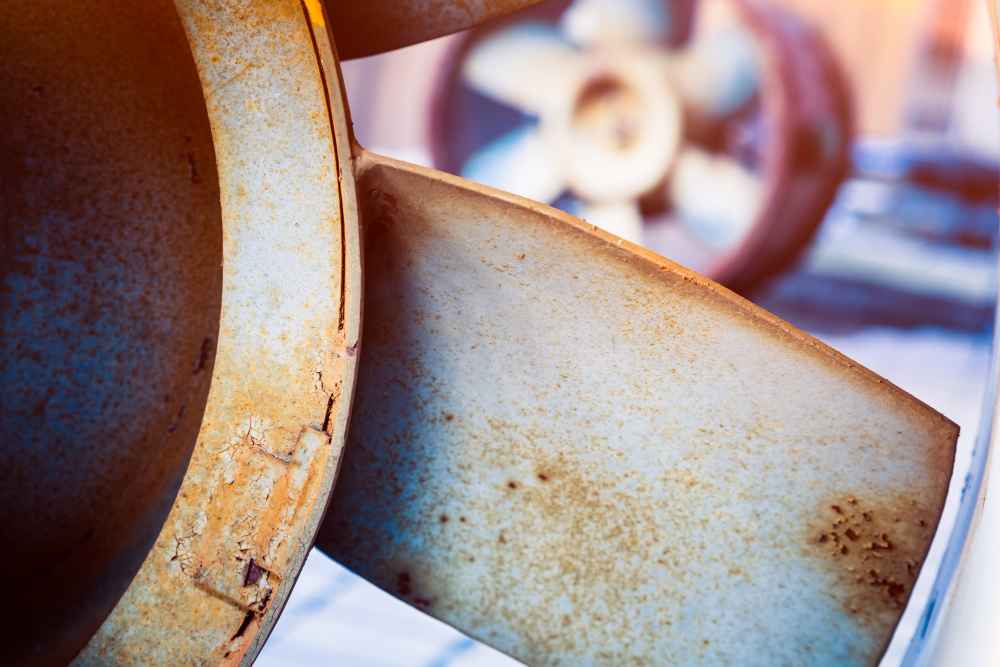
Failures in industrial products or equipment can have significant consequences from both technical and economic perspectives. When a critical component fails, the impact can extend beyond the damaged element and affect the overall performance of a system or production line.
In industrial sectors where operational continuity is essential, unexpected failures can lead to production downtime, financial losses or delays in product delivery. In addition, replacing damaged components involves costs associated with spare parts, labour and intervention time.
From a technical perspective, failures can also compromise the safety of equipment and personnel. In industrial infrastructures, energy facilities or transportation systems, the failure of certain components can create hazardous situations that require thorough investigation to prevent future incidents.
Industrial failure analysis not only explains what happened, but also helps improve designs, materials and operating conditions to prevent recurrence.
Technical failure investigation makes it possible to understand not only what occurred, but also which conditions contributed to the problem. This information is essential for implementing corrective actions that reduce the likelihood of recurrence. In many cases, investigation results lead to design modifications, material changes or improvements in manufacturing processes.
Furthermore, the knowledge generated through failure investigations can be used to develop prevention strategies. Monitoring key operational variables, introducing periodic inspections or improving maintenance criteria are examples of measures derived from such studies. When a failure recurs despite having taken corrective action, the approach needs to change: our article on repetitive failures in production explains how to address these cases definitively.
How to identify the root cause of a failure in an industrial system
The ultimate objective of any technical investigation is to identify the root cause of the failure, that is, the set of factors that led to the problem. This concept refers to the fundamental origin of the failure, beyond its visible manifestations.
In many cases, the observed damage is only the final result of a sequence of events. For example, a fracture may result from a fatigue process that developed over thousands of load cycles. In turn, that fatigue process may have been promoted by stress concentration in a specific area of the design.
Identifying the root cause requires systematically analysing all variables involved in the failure. These include aspects related to component design, material selection, manufacturing processes, assembly conditions and real operating conditions.
Identifying the root cause requires validating hypotheses through technical analysis and experimental evidence, not just initial observations.
To structure this analysis, it is common to use methodologies such as root cause analysis or quality tools that help organise potential hypotheses. These approaches help distinguish between primary causes, contributing factors and resulting effects.
Root cause identification is not always immediate. In many investigations it is necessary to combine different analytical techniques and test multiple hypotheses before reaching a solid conclusion. This process requires correctly interpreting available evidence and assessing its consistency with possible failure mechanisms.
Methodologies used in root cause analysis of industrial failures
Root cause analysis is a systematic methodology aimed at identifying the factors that have led to a technical problem. Unlike a superficial diagnosis, this approach seeks to understand the relationships between different variables to explain how the failure developed.
One of the main characteristics of this type of analysis is that it does not focus solely on the damaged component. It also considers the full context in which the problem occurred, including manufacturing processes, usage conditions, maintenance practices and potential deviations from technical specifications.
To structure the analysis, tools such as cause-and-effect diagrams, event sequence analysis or problem-solving methodologies used in industrial quality systems are commonly employed.
This type of analysis also requires validating hypotheses with experimental evidence. Conclusions must be based on verifiable data obtained through testing, material analysis or component performance evaluation. Without such validation, any explanation remains speculative.
The outcome of root cause analysis enables the definition of corrective actions aimed at eliminating or reducing the origin of the problem. These actions may involve changes in product design, manufacturing processes or operating conditions. In cases where the failure has legal or contractual implications between manufacturer and client, the findings are documented with the methodological rigour required for an independent expert to rely on them when issuing an expert technical report, or for the report itself to be submitted directly in a claims process.
Why failure reproduction is the definitive proof
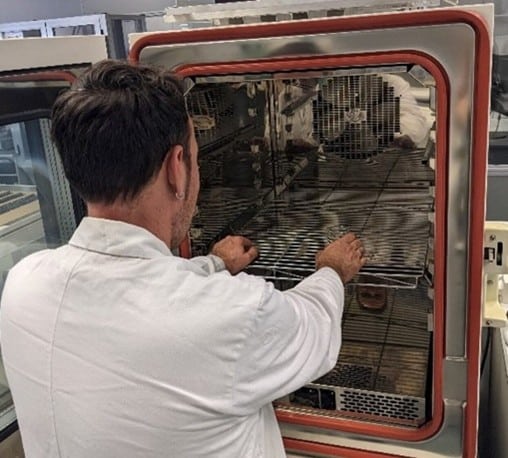
Identifying a hypothesis about the root cause is necessary, but not always sufficient. In cases where the conclusion will have technical, contractual or legal consequences, the hypothesis must be validated by reproducing the failure under controlled laboratory conditions. This step, failure reproduction, involves subjecting an equivalent part to the same conditions estimated to have caused the problem, in order to confirm that the same failure mode is obtained. It is the difference between a technically reasonable explanation and a demonstrable conclusion.
Analysis techniques applied to industrial failures
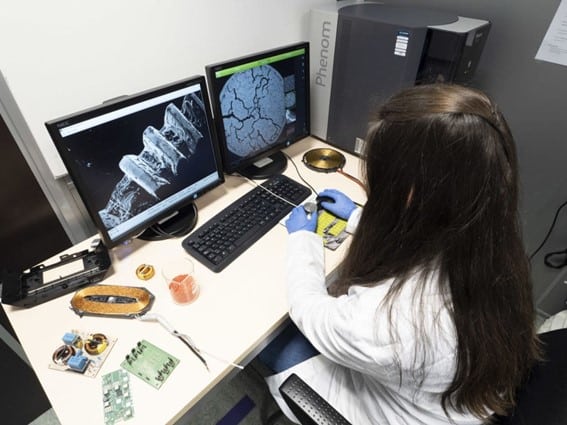
Once the possible hypotheses about the origin of the failure have been identified, the investigation moves into a detailed technical analysis phase. At this stage, various experimental and analytical techniques are applied to examine materials, components and the operating conditions of the affected system.
| Technique | Type of failure where it applies | What it reveals | Destructive? |
|---|---|---|---|
| SEM / Fractography | Fractures, fatigue cracks | Fracture morphology, propagation mechanism | Yes (sample) |
| EDX / XRF | Corrosion, contamination, coating failures | Local or surface elemental composition | No / Yes (depending on technique) |
| Mechanical testing (tensile, hardness, impact) | Failure by overload, insufficient design | Actual properties vs. design specification | Yes |
| Optical metallographic microscopy | Manufacturing defects, heat treatments | Grain size, phases, inclusions | Yes (sample) |
| Non-destructive testing NDT / Ultrasound / Radiography | Internal defects without altering the part | Internal cracks, pores, delaminations | No |
| GC-MS / HPLC | Chemical failures, contamination, polymer degradation | Composition of organic substances present | Yes |
The type of analysis required largely depends on the nature of the failure. In cases involving mechanical fracture, it is fundamental to examine fracture surfaces and material microstructure using fractography and microscopy testing. In other situations, it may be necessary to study corrosion phenomena, chemical degradation or material interactions through EDX elemental analysis or chromatographic techniques.
The objective of these techniques is not only to describe the condition of the material, but also to reconstruct the sequence of events that led to the failure. Based on the information obtained, investigators can assess whether initial hypotheses are consistent with the observed evidence.
Application of non-destructive testing in failure investigation
Non-destructive testing is one of the first tools used in industrial failure investigations. These techniques allow components or structures to be examined without compromising their integrity, which is especially important when preserving original evidence.
Common techniques include ultrasonic inspection, industrial radiography, eddy current testing and magnetic particle inspection. Each method is designed to detect specific types of internal or surface defects in materials.
Non-destructive testing can reveal internal cracks, porosity, inclusions or discontinuities not visible to the naked eye. This information is essential to determine whether the failure is related to manufacturing defects, degradation processes or accumulated service damage.
Another key advantage is that these techniques can often be applied directly in industrial environments without fully dismantling equipment. This enables the evaluation of critical components and the detection of similar defects in parts that have not yet failed. In the context of a failure investigation, non-destructive testing helps to narrow down the problem and identify the most relevant areas for more detailed subsequent analysis.
How microstructural analysis helps interpret the origin of a failure
When a deeper understanding of material behaviour is required, the investigation may include microstructural analysis techniques. These allow the internal structure of materials to be examined at microscopic scales, revealing features not visible through conventional inspection.
Microstructural analysis typically begins with sample preparation from the affected component. These samples are subjected to cutting, polishing and chemical etching to enable observation under a microscope.
Through these techniques it is possible to identify grain size, phase distribution, inclusions and microcracks. These features provide key information about the material’s history and the processes that may have contributed to the failure.
In addition to optical microscopy, advanced techniques such as scanning electron microscopy (SEM) with associated EDX analysis are frequently used to study fracture surface morphology and local chemical composition simultaneously. This combination is particularly useful for determining whether a fracture occurred due to fatigue, overload, stress corrosion cracking or hydrogen embrittlement, among other mechanisms.
Microstructural analysis also helps verify whether the material meets the technical specifications defined in the design. Differences in microstructure or chemical composition may indicate issues in manufacturing or heat treatment processes. You can find examples of this type of work in our works done section.
Understanding the origin of the problem to prevent recurrence
Industrial failure investigation is not limited to explaining why a component has failed. Its main objective is to generate technical knowledge that reduces the likelihood of recurrence.
Understanding how a failure develops requires an integrated analysis of product design, materials, manufacturing processes and real operating conditions. Only through this comprehensive approach can contributing factors be identified and effective corrective actions defined.
In many cases, investigation results lead to improvements in component design or manufacturing procedures. They may also drive changes in maintenance criteria, monitoring systems or operating conditions.
The knowledge generated in these investigations contributes to improving product reliability and optimising risk management in industrial environments. To move beyond reactive correction, preventive failure analysis makes it possible to anticipate problems before they affect production or the final product. At Infinitia we work with companies in automotive, construction, chemical, aerospace, food and other sectors, in cases ranging from fatigue in metal components to chemical degradation in polymers or coatings. If your company needs to determine the root cause of a failure with technical rigour, tell us about your case or browse examples of failure analysis work we have carried out.
Frequently asked questions about industrial failure investigation
How long does an industrial failure investigation take?
It depends on the complexity of the case. An initial diagnosis with visual inspection and preliminary hypotheses can be ready within a few days. A full investigation involving microstructural analysis, mechanical testing and a technical report typically takes several weeks, depending on the number of techniques required and sample availability.
What is the difference between failure analysis and a quality inspection?
A quality inspection verifies whether a product meets specifications at a given point in time. Failure analysis reconstructs why a component has stopped meeting them, identifying the root cause through analytical techniques such as SEM, EDX or mechanical testing. They are complementary processes, but with different objectives and scope.
When is an expert report required in an industrial failure investigation?
When the failure leads to a dispute between manufacturer, supplier or client, or when an insurance claim is involved. In these cases, the report must document the methodology followed, the techniques applied and the conclusions in a way that can be technically evaluated by third parties. The rigour in the traceability of the analysis, following the criteria of standards such as ISO 17025 or equivalents, is what gives the document its technical validity.
Can a failure be investigated without having the damaged component?
It is possible in some cases, particularly if equivalent unfailed parts are available for comparison, along with process data or maintenance records. However, direct analysis of the affected part is always preferable, as it allows examination of the actual fracture surface and microstructure of the material involved.
What happens if the failure recurs after corrective actions have been taken?
Recurrence usually indicates that the root cause identified was incorrect or incomplete. In these cases, it is necessary to revisit the hypotheses from the beginning, broaden the scope of analysis and consider process or environmental variables that were not evaluated in the initial investigation.