

Validation through user testing
User testing is the process in which representative people use a concept, prototype or product in real tasks to check, against criteria set in advance, whether it is understood, used without errors and preferred before investing in its development.
Within our product development service, testing with users is part of prototyping: we define what needs to be validated and against which criteria, select the participants, prepare the prototype each test requires and base design decisions on what we observe, from the first concept to the version prior to industrialization.
A product that meets its specifications can still fail because users do not understand how to use it, make mistakes when assembling it or prefer a competitor’s alternative. If that comes to light once the molds are made or the product is on the market, fixing it means redesigning, repeating validations and delaying the launch.
Talk to a specialist
Request a free initial consultation; contact a consultant from our team of specialists

What is user testing?
What is it?
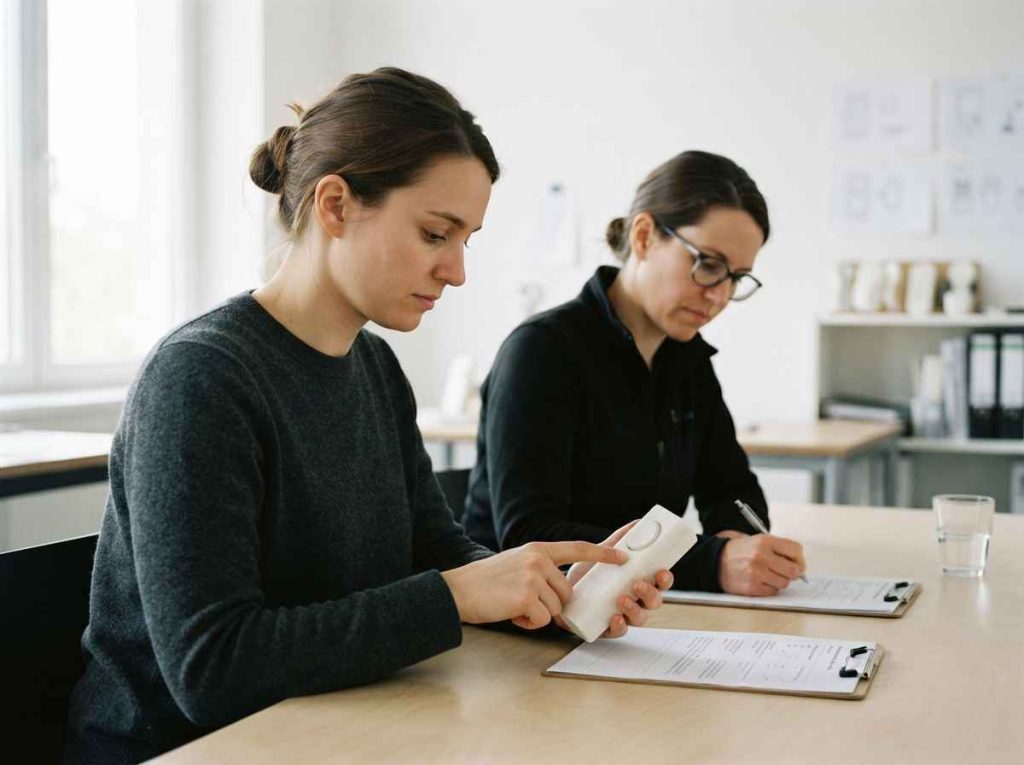
A user test consists of putting a concept, prototype or product in the hands of people who represent those who will use it, asking them to carry out specific tasks and recording what they do, where they hesitate and what they think. It is used for validation, that is, to check with evidence whether the design meets the objectives set before more money is committed to it: whether it is understood, used without errors and preferred over the alternatives.
Validation with users complements technical testing. A technical test confirms that a part withstands loads or that a mechanism works; a user test confirms that people operate it with the intended gesture, assemble it in the right order or read an indicator correctly. A product can meet every specification and still generate complaints and returns if real use differs from intended use, something that only shows up when someone outside the design team uses it.
Depending on the question, the test measures time and errors in each task, the sequence of steps and postures when handling the product, the understanding of messages and indicators, preference between alternatives and satisfaction. It combines direct observation, interviews and questionnaires, and relies on the prototype the question requires: renders and mock-ups for concepts, high-fidelity prototypes for perception and functional prototypes for interaction. Results are always compared with the criteria agreed before starting.
User validation at INFINITIA
We start from the decision the test has to support: which alternative to choose, whether a concept deserves to be developed or whether a change improves use. From there we define the participant profile, the tasks and the criteria that will mark the test as passed, before looking at any results.
We recruit participants through our user panel, which gives access to specific profiles and representative samples, and we present the design in the format the question calls for. In the user validation of new packaging design proposals, 3D renders were shown in face-to-face and online interviews.
When the question concerns interaction, users try high-fidelity or functional prototypes while we observe how they use them, as in the user study to validate a new product interface, which measured the acceptance of the new concepts and the interest in each one.
We deliver a report with the results of each test against the agreed criteria, the comparative analysis of the alternatives and the design changes that follow from them. That way the next development phase starts from decisions backed by usage data rather than assumptions.
Benefits of validating with users before industrialization
Benefits
It allows a design to be corrected or discarded while changing it is still cheap. A user test on a render, a mock-up or a prototype detects an awkward gesture, a skipped step or an alternative nobody chooses before tooling is made, software is programmed or the product is launched.
It settles internal debates with data. Discussions about which design works best are resolved with times, errors and preferences measured with real users. The comparative analysis of the alternatives documents the reason behind each choice for management or the customer and avoids repeating the same debate at every phase.
It reduces use errors and complaints. Watching people from outside the project handle the product reveals unforeseen uses. In the design and prototyping of a coupling to improve the user experience of a device, the functional prototype made it possible to validate the interaction before industrialization.
It gives confidence to the investment decision. Measuring acceptance of and interest in a concept before developing it reduces the risk of reaching the market with a technically sound product nobody chooses, and supports the proposal to management or investors with data from real users.
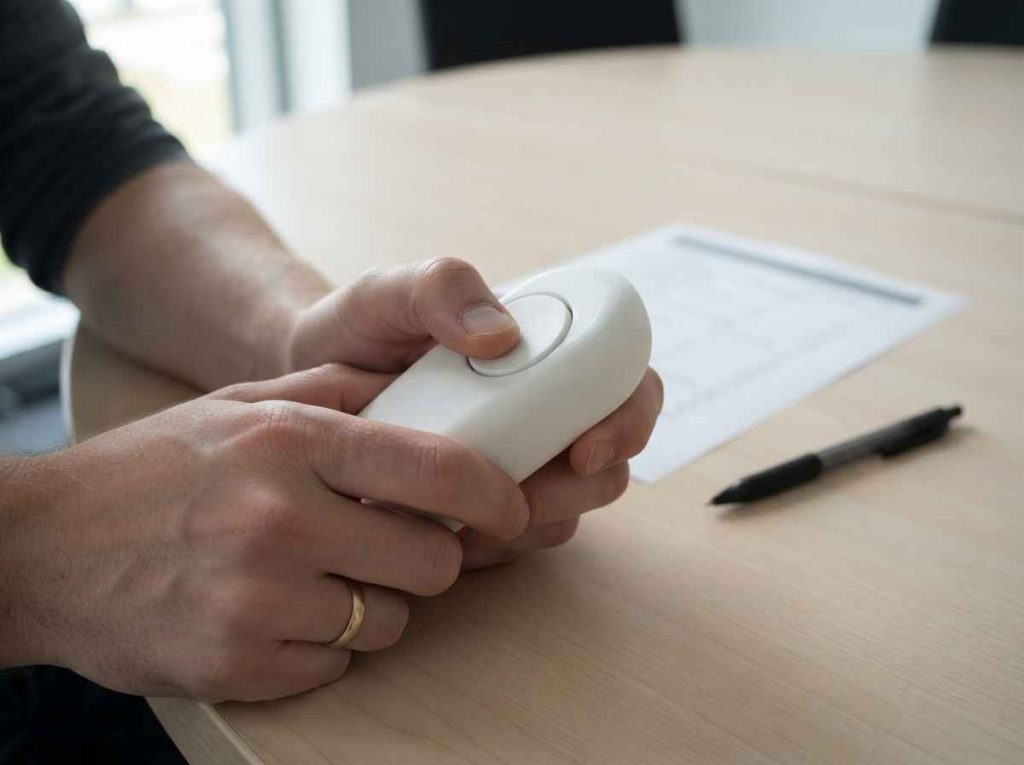
Types of user tests according to what needs to be validated
Types
Each user test answers a different question: whether a concept generates interest, whether it is understood, whether it is used without errors or whether one version is better than another. The type of test and the prototype are chosen based on that question, never the other way around.
Several are combined over the course of a development. The first ones, with renders or mock-ups, filter concepts at low cost; the last ones, with functional prototypes, confirm real use before the design is frozen for manufacturing.
Concept validation with renders and mock-ups
Concept validation presents several proposals to users in an easy-to-understand format, such as 3D renders, mock-ups or prototypes with different shapes, and asks them what they understand, what they expect from the product and which one they prefer. It is carried out in individual interviews, face to face or online, and in focus groups, with the same questions for every proposal so the results can be compared. Answers are analyzed comparatively and gathered in a report with the conclusions for each proposal.
It makes it possible to filter concepts before investing in detailed design and to choose which one to develop with preference and comprehension data. It also checks whether the product communicates what it intends to, such as its function or its quality, before materials and finishes are defined.
Usability tests with measured tasks
In a usability test, representative users carry out specific tasks with the prototype while the time for each task, errors and hesitations are recorded, and at the end they are asked about their satisfaction. Repeating the same tasks with several participants makes it possible to quantify the most frequent errors and decide which ones to fix first. The indicators are the same in every session, so each participant’s results can be added up and compared.
It suits products with panels, displays or software. For interfaces it is carried out on a navigable GUI prototype before programming, and with the same logic a new version is compared with the current one to measure whether the improvement is real.
Observation of the use sequence
Observation of the use sequence records, step by step, how users handle a real product or a prototype: the order of actions, movements and postures. Analyzing those records identifies the most common incorrect actions and the moment they occur, which are then checked with users in interviews and surveys.
It is the right test when a handling error has consequences, as in fitting a device, assembly by the user or maintenance. Its conclusions translate into design changes, physical aids that guide the gesture or instructions that are understood without explanation.
Perception tests with appearance prototypes
Perception tests assess how users rate the look, feel or perceived quality of a product. They are carried out with appearance prototypes that can be picked up and handled, also in several color or finish versions for comparison, and when the variable is sensory, such as an odor, with a panel of assessors under controlled conditions.
They make it possible to choose finishes, colors and materials based on the opinion of the people who will buy or use the product, and to check whether an improvement is really perceived by comparing samples with and without the change. An improvement measured in a technical test that the user does not notice does not change how the product is rated.
Interaction tests with functional prototypes
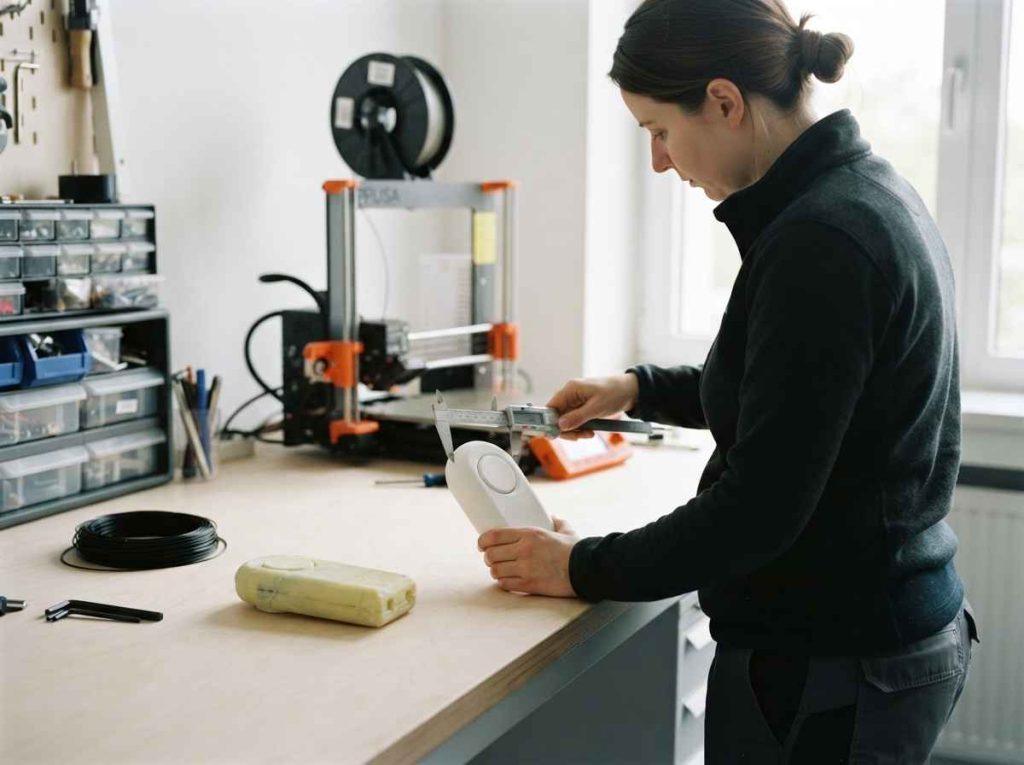
Interaction tests use a functional prototype, which reproduces the real behavior of the product, to check whether the operating gesture is comfortable and precise: the effort required, the guidance during an assembly or the feedback the person perceives when completing an action. Parts can be made by additive manufacturing to iterate quickly from one test to the next.
They answer whether a design change really improves use and whether the concept is viable, before resources are committed to industrialization. The test can take place at our facilities or at the customer’s, so that their team can continue internal testing with its own criteria.
Tests in the real context of use
Context tests observe the product or service where it is actually used, with its conditions of space, time pressure, lighting or noise. They combine techniques such as following users through the task (shadowing) and mapping the customer’s full experience (customer journey) with interviews, surveys and focus groups that confirm whether the hypotheses and changes meet their needs.
| Test | Prototype | Validates | Stage |
|---|---|---|---|
| Concept | Render or mock-up | Interest and preference | Early |
| Usability | High fidelity | Tasks and errors | Design |
| Use sequence | Product or prototype | Steps and postures | Design or improvement |
| Perception | Appearance prototype | Look and feel | Design |
| Interaction | Functional prototype | Gesture and comfort | Pre-industrialization |
| Context | Product or service | Real use | Final or improvement |
They validate aspects that do not appear in a test room, such as interruptions, time pressure or the habits of each setting, which condition use as much as the design itself. They are the final check before a design is closed or a change is rolled out to all users. The table summarizes what each type of test validates, with which prototype and at which development stage it fits.
Sectors where validating with users prevents use errors and rejections
Sectors
Testing with users adds the most value where a use error has consequences or where users choose among many alternatives: healthcare devices, household appliances, packaging, machinery and equipment with controls or displays.
In all of them, validating with real users before the design is frozen avoids discovering the problem through after-sales service, when every correction affects molds, stock and customers.
User testing in healthcare: devices patients use without supervision
In healthcare, many devices are fitted or operated by patients themselves at home, with no professional present, and a step done wrong can cause a malfunction or a complication.
- Fitting and assembly: observation of the use sequence to locate the steps where patients make mistakes.
- Different profiles: tests with patients and with healthcare staff, who use the same product in different ways.
- Instructions: checking that messages, alerts and leaflets are understood without help.
Validating with real patients before launch identifies the most common use errors and makes it possible to redesign the gesture or the aids that guide it, instead of relying on training alone.
User testing in consumer goods: appliances and everyday use
In appliances and consumer products, users compare with what they already know and abandon the features they do not understand at first, even if the product works perfectly.
- Interfaces and panels: tests with high-fidelity prototypes to measure the acceptance of new features.
- Usage habits: study of how the product is used today to design improvements that fit the routine.
- Preference: comparison of shape, color or finish alternatives with users from the target audience.
Measuring user interest in each concept before developing it focuses investment on the features that will actually be used and reduces the risk of a launch without acceptance.
User testing in food: packaging, opening and communication
In food, packaging has to stand out on the shelf and work at home: open, pour, close and preserve, for users of very different ages and abilities.
- Communication: validating whether the design conveys the product, its use and its quality before final development.
- Functional use: opening, closing and dispensing tests with prototypes that can be handled like the real package.
- Representative sample: selection of participants matching the consumer profile the product targets.
Comparing several packaging proposals with real consumers makes it possible to choose the one with the greatest acceptance and justify the decision before investing in molds, printing and launch, while changing the design still carries no tooling cost.
User testing in machinery: controls, assembly and maintenance
In machinery and equipment, users are operators and technicians who work under time pressure, wearing gloves or in awkward postures, and a confusing control or an uncomfortable adjustment leads to stoppages and errors.
- Controls and displays: usability tests with real operators measuring task times and errors.
- Assembly and adjustment: observation of the assembly, disassembly and adjustment sequences of the units.
- Maintenance: checking access, reach and postures in cleaning and replacement tasks.
Validating use with the people who operate and maintain the equipment reduces the training needed and operating errors, and allows access points and controls to be corrected before series production and before the user manual is closed.
User testing in electronics: indicators, setup and accessories
In electrical and electronic products, part of the use depends on small indicators, buttons and connections, and on an initial setup the user does only once and without a manual.
- Indicators: checking that lights, sounds and displays are interpreted as the design intends.
- First setup: commissioning tests with users who do not know the product.
- Accessories and connections: coupling and disconnection tests to validate the gesture and its comfort.
A user test on the prototype detects the use confusion behind technical support calls and returns without a defect, while it can still be solved in the design or in the information supplied with the product.
User testing in mobility: accessories, controls and services
In automotive and mobility, users handle accessories, controls and service apps on the move, with little time and often outdoors, and compare them with what they already know from other products.
- Accessories: assembly and use tests with functional prototypes before industrialization.
- Controls and information: validating that they are understood at a quick glance and without distraction.
- Services: in-context tests of booking, use and return flows with real users.
Testing the product or service under its real conditions of use avoids discovering, once on the market, that some users cannot complete the main tasks or need help to do so.
User testing as the basis for development decisions
Value
Testing with users provides measured data on how a product will be used before the investment is committed. Each test answers a specific decision, is assessed against criteria set in advance and documents why the design is the way it is, a record any later review can consult.
We plan each test according to the development stage. At the start it builds on user studies, which identify needs and behaviors and translate them into requirements; later, tests check with real users that the design meets them. That way every change has a measured reason. When a result contradicts a team hypothesis, the test provides the evidence to change course before the change becomes expensive.
The approach also keeps costs in check: prototype fidelity only increases when the question requires it, as explained in the article on the low-fidelity prototype, and each test round is limited to what still needs validating. The more decisions are closed with renders and mock-ups, the fewer rounds are needed with functional prototypes, which are the most expensive to make and modify. In regulated products, the record of how the product is used and of the errors detected supports the design decisions.
If you have a concept, a prototype or a product and need to know whether users understand it, use it without errors or prefer it, send us what you have: renders, drawings, the prototype or the current product, and the decision that depends on the test. We will propose the type of test, the participant profile and the validation criteria, and deliver a report with the results and the recommended changes.
Frequently asked questions about user testing
FAQs
What can a user test not validate?
A user test does not validate strength, durability or the long-term technical behavior of the product; that requires technical testing. Nor does it prove that the product will sell: it measures understanding, use and preference in a test situation, not the purchase decision on the market, where price and competition come into play.
Validating purchase interest requires other tools, such as a minimum viable prototype placed in front of real customers. Combining user tests with technical testing and market validation covers all three questions: whether it works, whether it is used correctly and whether it is chosen.
How many users does a test need?
It depends on what needs to be concluded. To find usability problems, small groups are used over several rounds, so that each round checks the fixes from the previous one. To compare alternatives or measure preferences, a larger sample representative of the target audience is needed.
The profile matters more than the number. A large group that does not resemble the real users contributes less than a small one that does. That is why defining the profile and recruiting are the parts that most affect the validity of the results, and they are agreed before starting.
What is the difference between user testing and a user study?
A user study investigates needs, habits and behaviors to define what the product has to do, and it usually takes place before design. User testing checks whether a specific design, as a concept, prototype or product, delivers what was expected of it.
The two complement each other in the same development. The study generates the requirements and hypotheses, and the test verifies them on the design. A project can start with either one depending on the information the company already has. The practical difference lies in the output: the study delivers requirements and opportunities, and the test delivers a decision on a specific design.
At what point in development should user tests be carried out?
At several points, with different goals. At the start, with renders or mock-ups, to choose between concepts; during design, with high-fidelity or functional prototypes, to correct use; and before industrialization, to confirm that the final version meets the agreed criteria.
They are also carried out on products already on the market when there are complaints, returns or sales below forecast. In that case the test first diagnoses the problem and then checks that the redesign solves it. The earlier the first test, the cheaper it is to change course, because a render can be modified in hours and a mold takes weeks.
How are the criteria for considering a design validated set?
Before the test, the tasks the user has to complete and the indicators that decide the result are agreed: percentage of tasks completed without help, times, errors, satisfaction level or preference over the alternative. Each indicator has a threshold set with the customer according to the product’s risk and the decision that depends on the test.
Setting them beforehand prevents results from being interpreted conveniently once they are known. In products where a use error has serious consequences, the criteria are stricter, and the link between each observation, the change it triggers and its verification is documented.
How are the participants in a user test selected?
The starting point is the target user profile and the context of use: who uses the product, with what experience, under what conditions and with what limitations. Participants are recruited against that profile, in our case through a user panel that gives access to specific profiles such as professionals, patients or operators.
People from the team or the company itself are kept out, because they know the product and do not make the mistakes of a new user. When the product has several user profiles, such as the person who installs it and the person who uses it every day, each profile is tested separately.
Can user tests be carried out remotely?
Yes, to validate concepts, communication and preference: renders and mock-ups are presented in online interviews with the same questions as in a face-to-face session. The in-depth interview to measure a user’s interest in a product works the same way in both formats.
Interaction, use sequence and physical perception tests require presence, because the user has to handle the prototype and the observer has to record gestures and postures. The usual approach is to combine formats: remote to filter concepts and face to face to validate use. Online sessions also make it easier to reach participants in different regions.
What happens with the results of a user test?
They are analyzed against the agreed criteria and compared between alternatives, identifying which problems appear, how often and in which tasks. The output is a report with conclusions and the design changes that follow from each finding, prioritized by their effect on use. The most frequent errors and the tasks in which they occur are shown statistically.
When the solution is not obvious, alternatives are generated together with users and the customer’s team in co-creation sessions. The changes are tested again in a later round to check that they solve the problem without creating new ones.
How much does user testing cost?
It depends on the number and profile of participants, the type of prototype to be prepared, the number of tasks and rounds, whether sessions are face to face or remote and the depth of the analysis. Recruiting very specific profiles or building functional prototypes has the greatest influence on the budget, together with the number of rounds.
To give you a firm figure, we need to know what you want to validate, with whom and which decision depends on the result. Send us that information and we will prepare a proposal with the type of test, the number of participants and the timeline for each phase.
How long does it take to get the results?
Typical lead times range from one to four weeks depending on complexity: participant recruitment, prototype preparation, the number of sessions and the analysis. A concept validation with renders is faster than an interaction test that requires building a functional prototype.
If you need the results by a specific date, such as a product committee or an investor presentation, let us know from the start. We will use it to adjust the number of rounds and participants that can be completed in time. Later rounds, with the changes already incorporated, are quicker to prepare because recruitment and criteria are already defined.
What do I need to send to get started?
Send us whatever you have of the product: renders, drawings, prototypes, the current product or a description of the concept. Add who will use it, under what conditions and which main tasks they need to perform, and, if available, data on complaints, returns or previous tests.
Also tell us which decision depends on the test: choosing between alternatives, validating a concept, fixing a usability problem or confirming the design before industrialization. With that information we will propose the type of test and confirm timeline and budget before we start. If there are confidentiality restrictions on the concept, let us know so we can define how it is presented to participants.
Why does a product that works in internal tests fail with users?
Because the people testing it internally know the product, know how it should be used and do not make the mistakes of a new user. In addition, internal tests are usually carried out under ideal conditions, without the time pressure, interruptions or habits of the real setting.
If this happens to you, start by observing real users with the product in its context and measuring where they make mistakes. Once the causes are identified, the changes are tested with the same users before manufacturing is modified, and the improvement is verified by comparing it with the current version on the same tasks and with the same user profile.