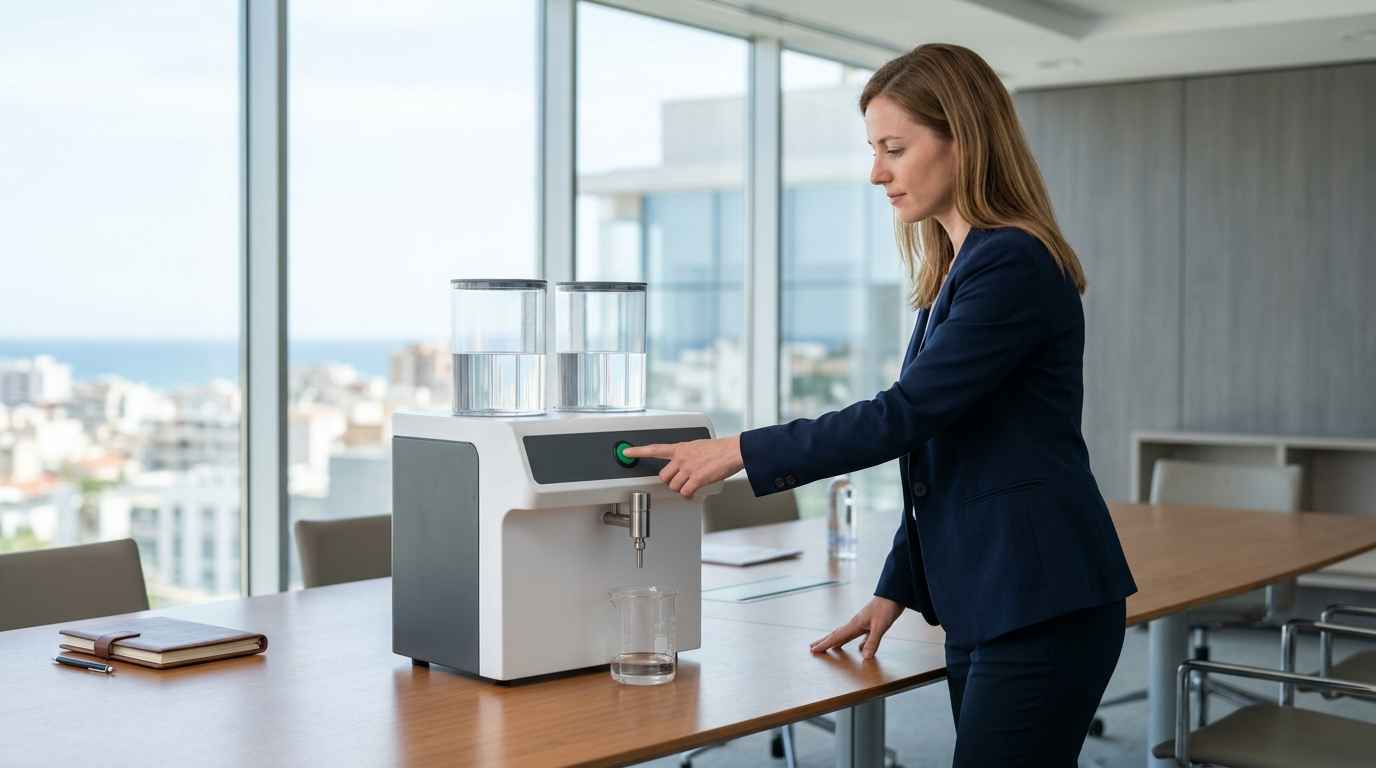

Functional demonstrator is a prototype built to show that the product works, to investors, management, pilot customers or at a trade fair, reproducing its main function with the reliability a live demonstration demands.
Its value depends on it demonstrating what needs to be demonstrated, and that is decided before it is built. An initial diagnosis for product development establishes which function is the one that convinces, which parts have to be real and which can be simplified, and how much it makes sense to invest at this stage.
Within product development, the demonstrator has a place of its own. It does not replace technical validation or preparation for manufacturing, but it is often the piece that secures the funding, the internal approval or the first order that make everything else possible.
INITIAL DIAGNOSIS
Do you have a product idea and are not sure what the first prototype has to demonstrate? Take a look at our initial diagnosis for product development

What a functional demonstrator is and how it differs from a prototype
A functional demonstrator differs from other prototypes in its purpose, which is to communicate and not to learn. A development prototype is built to find out whether something works and failure is accepted, because every failure teaches something. A demonstrator is built to show something already known to work, and a failure in front of the person who has to decide costs you the meeting.
That difference changes the priorities. In a demonstrator what matters is reliability during the demonstration, how clearly the function can be seen and an appearance consistent with the final product. Cost optimisation, manufacturability and service life matter less, and they will be resolved in later stages.
Functional demonstrator and functional prototype, communicating versus validating
The functional prototype and the demonstrator can look physically alike and answer different questions. The first answers whether the function is achieved with the proposed design, and its limits are well described in the analysis of what a functional prototype does and does not validate. The second answers whether the person watching is convinced that the product works and deserves the next step.
Before both usually comes the proof of concept, which shows that the technical principle is feasible, normally with a laboratory set-up that has no product form. The demonstrator takes that proven principle and presents it inside something that looks like the product, because a breadboard full of cables convinces an engineer, but rarely an investor or a buyer.
Looks and function in a functional demonstrator
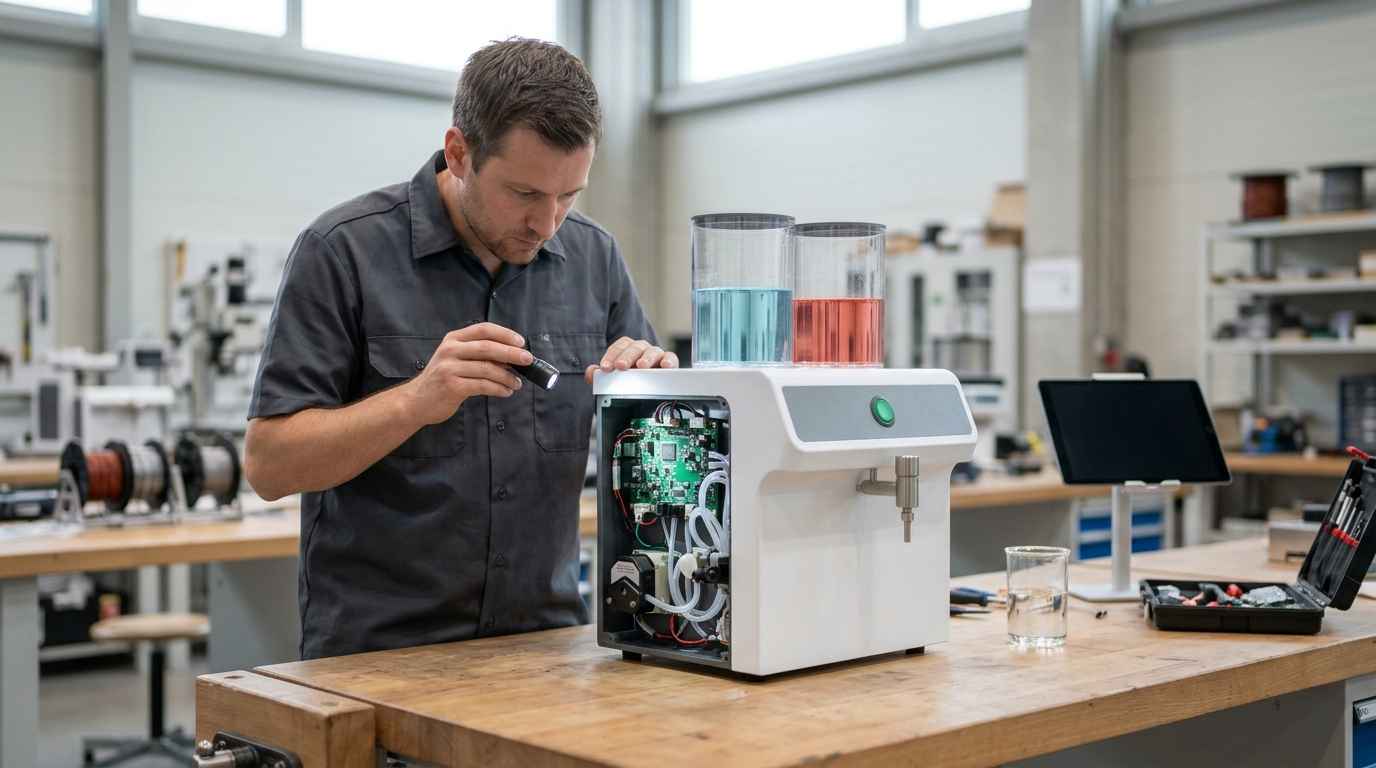
Product development often distinguishes between the prototype that looks like the product and the one that works like the product. The functional demonstrator is usually the combination of the two, a housing with the planned shape, size and finish, containing a system that really performs the main function.
That combination has an integration cost worth anticipating. Components that worked loose on a bench have to fit in the volume of the design, dissipate their heat, receive power and withstand someone handling the assembly. It is often solved with visible compromises, such as an external power supply or a slightly larger housing, which are acceptable as long as they are explained.
Deciding which part is real and which is only appearance is the most important design decision. The practical rule is that everything the audience will touch, hear or see moving has to behave as in the product, and everything hidden can be solved with the fastest reliable solution. A button that responds late or a motor that sounds different is more noticeable than a development board hidden inside.
A functional demonstrator is not built to learn, it is built to convince. That is why its main requirement is reliability in the demonstration, and not unit cost or manufacturability.
What a functional demonstrator has to show depending on who sees it
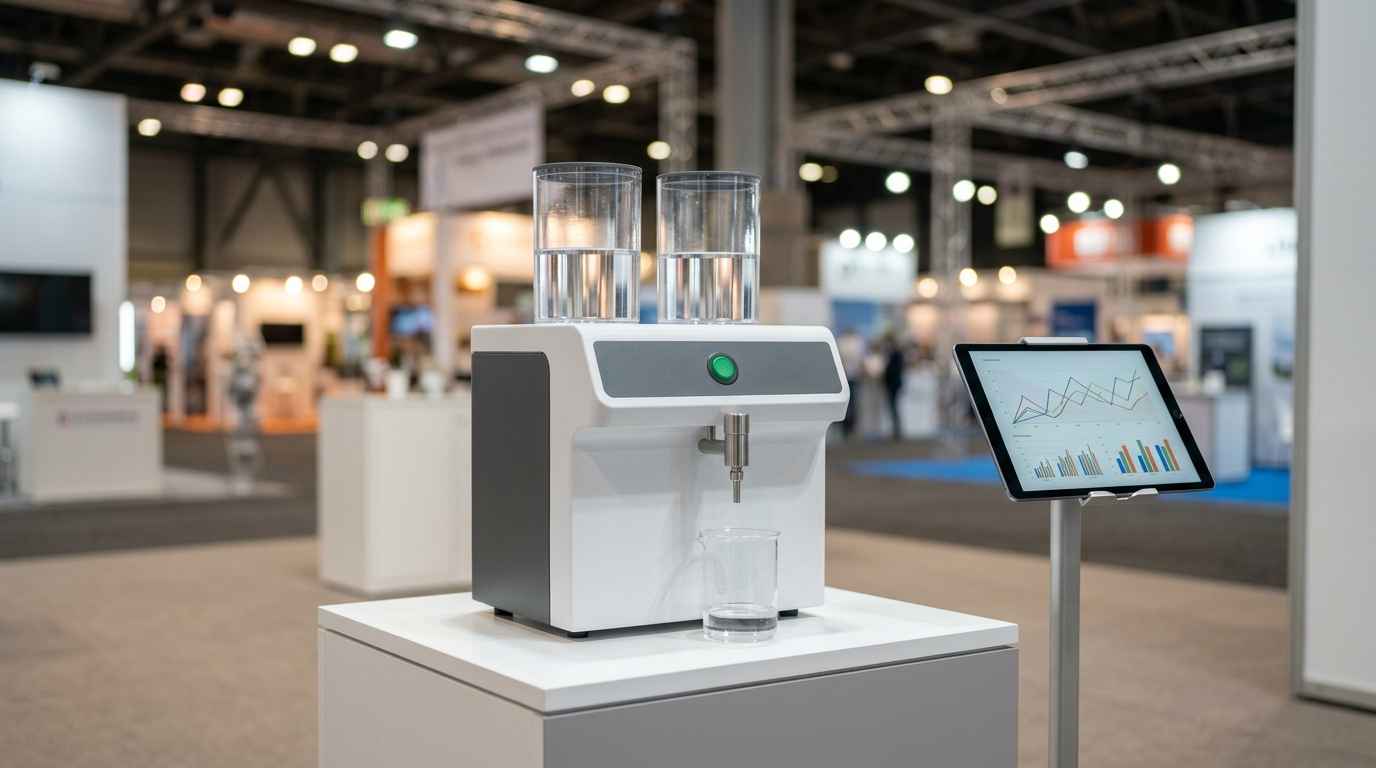
What a functional demonstrator has to show depends on who is going to see it and what decision that person has to make. An investor, a management committee, a pilot customer and a trade fair visitor look at different things, and the same demonstrator rarely satisfies them all equally.
Functional demonstrator for investors and management
An investor needs to see that the problem exists, that the solution solves it and that there is a credible path to a manufacturable product at a reasonable cost. The demonstrator covers the second part, and the presentation that accompanies it covers the other two. A scale prototype designed and built to present a product idea to investors meets exactly that need.
It is worth preparing for the technical review that usually follows a good demonstration. The investor may come with an adviser who asks to open the demonstrator, know which components it contains and understand what is missing for the series version. Having documented what is real, what is provisional and what the plan is for each part turns that review into a point in your favour.
A company’s management decides something similar with a different question, whether it is worth moving to industrialisation. There the demonstrator has to reproduce the user experience and aesthetics of the final product faithfully enough for the committee to picture the product on the market, as in the design and manufacture of a functional and aesthetic demonstrator to launch a new product line, where the aim was to justify that step while keeping costs down.
Functional demonstrator for pilot customers and trade fairs
A pilot customer looks at the demonstrator through the eyes of a user. They care that it fits their process, that it works with their materials or in their conditions and that the result is comparable with what they use today. Here a demonstration at the customer’s premises is worth more than any presentation, and it requires a demonstrator robust enough to travel, be set up and work outside the workshop.
A trade fair asks for something else, visual impact and durability. The demonstrator will run for days, in the hands of strangers and without anyone from the technical team always at its side. That means protecting the delicate parts, simplifying its use until it needs no explanation and taking spares of whatever is most likely to fail.
In both cases a requirement appears that the workshop prototype did not have, the safety of third parties. A demonstrator handled by people outside the project cannot have sharp edges, pinch points, hot surfaces or accessible electrical connections. It does not need the marking of the final product, but it does need a basic risk review before it leaves the workshop.
| Type of prototype | Question it answers | For whom | What has to be real |
|---|---|---|---|
| Proof of concept | Whether the technical principle is feasible | Technical team | The phenomenon or operating principle |
| Functional prototype | Whether the design performs the function | Development team | The function with the proposed design |
| Functional demonstrator | Whether the product convinces the decision maker | Investors, management, pilot customers | The main function and the user experience |
| Minimum viable product | Whether the market uses it and pays for it | First customers | The value the customer buys |
TELL US ABOUT YOUR CASE
Do you have a meeting with investors or a pilot customer and nothing that works on the table? Tell us what your product does and who you are going to show it to and we will propose which demonstrator to build
How to design a functional demonstrator that does not fail live
A functional demonstrator that does not fail live is designed with the demonstration in mind and not only the product. The function has to start quickly, repeat many times in a row without overheating or going out of adjustment and survive transport, and all of these are requirements a development prototype does not have.
Reliability, transport and the demonstration script
Reliability is designed starting from the script. What is going to be shown, in what order, how long each step lasts and what has to happen in each one. With the script written down you can see which parts of the demonstrator really work and which only have to be present, and robustness is concentrated where it is needed.
Then it is rehearsed the way it will be used. Dozens of cycles in a row, cold starts, transport in the boot of a car and set-up on a table that is not the workshop one. The failures that appear in those tests, a connector that comes loose, a battery that does not last the meeting or an adjustment lost with vibration, are the same ones that would appear in front of the investor.
A fallback plan is also worth preparing. A recorded video of the full demonstration, a second unit or at least spares for the most exposed parts allow the meeting to continue if something fails. It is not pessimism, it is the difference between an anecdote and a lost opportunity.
When the function can be measured, showing the measurement adds credibility. A flow rate, a temperature, a cycle time or a power consumption shown on a screen while the demonstrator works turns the demonstration into data, and allows comparison with the solution the audience uses today. That instrumentation is planned in the design, not added the night before.
Manufacturing technologies for a functional demonstrator
Prototyping techniques are chosen according to what each part has to convey. Stereolithography gives smooth surfaces and fine detail for visible housings, polymer sintering gives strong parts for mechanisms, machining gives precision and real materials, and vacuum casting in silicone moulds allows a few units with an almost series finish.
Finish matters more than it seems in a demonstrator. A housing that has been sanded, primed and painted in the planned colour changes how the product is perceived compared with a raw printed part, and the decision maker also judges by what they see. Inside, on the other hand, it is reasonable to use commercial development electronics and standard components, as long as the function being shown is the real one.
It is worth designing it so that it has a second life. A demonstrator with modules that can be swapped allows the improvements that come out of the first meetings to be incorporated without rebuilding it completely, and it ends up serving as a test bench for the next iteration of the product instead of sitting on a shelf.
A demonstrator that works in the workshop and fails in the meeting has demonstrated nothing. The demonstration script, rehearsed dozens of times and including transport, is what decides which parts need robustness.
Mistakes that undermine the credibility of a functional demonstrator
The mistakes that undermine the credibility of a functional demonstrator have more to do with what is promised around it than with the device itself. An experienced investor or customer quickly spots the gap between what is shown and what is said, and that gap weighs more than any technical defect.
Promising functions the demonstrator does not have
The most serious mistake is presenting something simulated as real. If a function is controlled by hand from behind, if the battery is external or if the housing could not be manufactured that way, it has to be said. Hiding it works until the investor’s first technical review or until the pilot customer asks to use it alone, and from then on confidence in everything else is lost.
The second mistake is the opposite, investing in the demonstrator as if it were the product. A demonstrator with every planned function, final finishes and custom electronics consumes the budget needed for the next stage and delays the presentation. The sensible approach is for the main function to be flawless and for the rest to be good enough.
Between those two extremes there is a simple practice that avoids misunderstandings, separating in the presentation what the demonstrator does today from what the product will do. Planned functions can be shown with a render or a video, presented as what they are, so the audience values the real progress without confusing it with the plan.
Showing the demonstrator without protecting the idea or preparing the next step
Showing a demonstrator at a trade fair or to third parties without a confidentiality agreement means disclosing the invention. If the technical novelty is significant, it is advisable to have filed the patent or utility model application beforehand, because a prior public disclosure can prevent it from being protected later. It is a decision to take with an intellectual property adviser before the first demonstration.
Another mistake is not having an answer ready for the question that always comes next, how much it will cost to manufacture and when. The demonstrator opens that conversation, and arriving without a reasoned estimate of the path to series production turns a good demonstration into a promise with nothing behind it.
Nor should you waste what the people who see it say. Every demonstration generates questions, doubts and objections that are information about the product, and recording them systematically after each meeting gives a list of improvements based on real reactions. The demonstrator communicates, but it can also listen if someone takes care of collecting what it hears.
From the functional demonstrator to the next decision
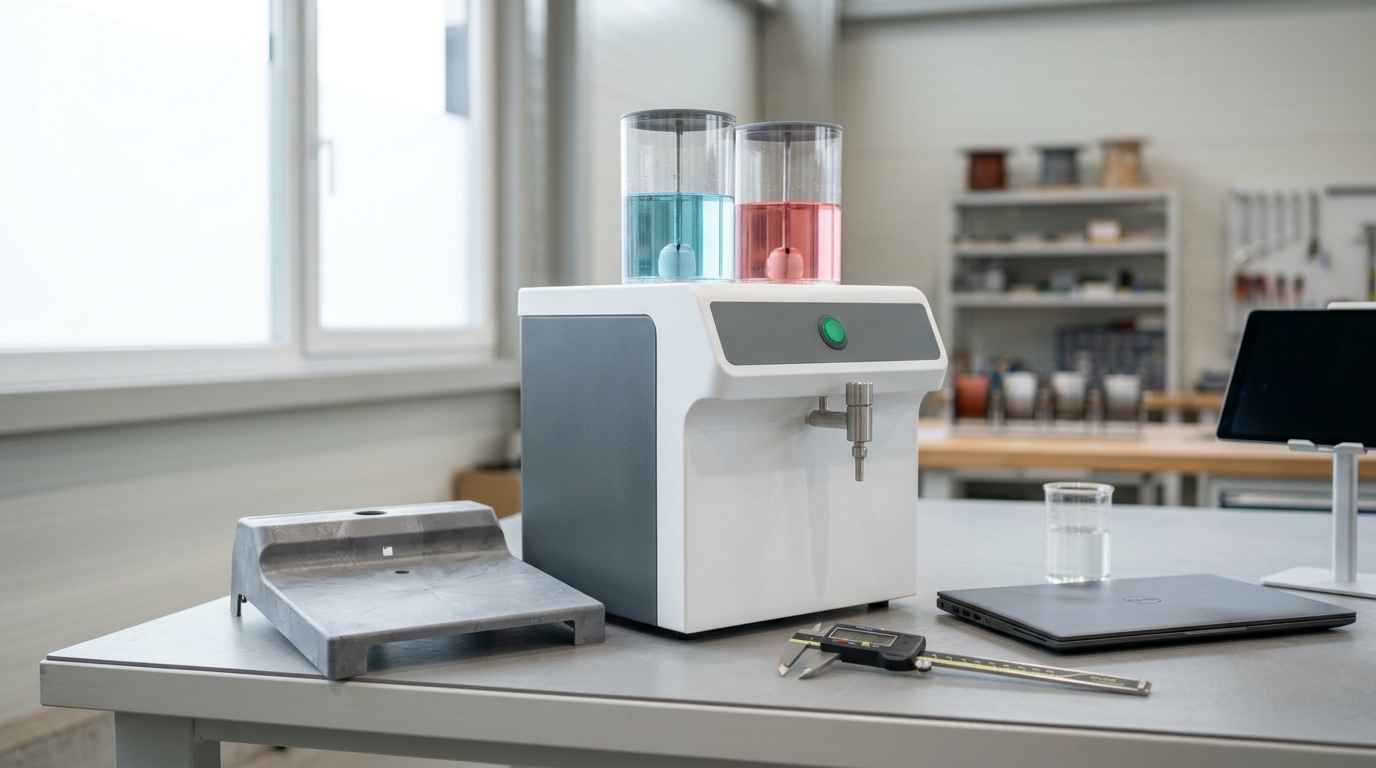
A well planned functional demonstrator gets the decision maker to see the product working and believe in it enough to take the next step, whether that is funding, approving industrialisation or trying it in their process. It succeeds when the main function is real, the demonstration is reliable and what is said around it matches what is seen.
What most affects the result happens before manufacturing, deciding what it has to demonstrate, to whom and with what script. With those three answers the demonstrator costs less, fails less and leaves open a conversation about the real product, not about a prototype nobody will be able to reproduce.
Prepare a description of what your product does, the current state of development, the audience you are going to present it to and the date of that presentation. With that, what has to be real and what can be simplified is defined, the manufacturing technologies are chosen and you receive a demonstrator proposal with its scope, its demonstration script and its timescale.
Frequently asked questions about the functional demonstrator
What can be simulated in a functional demonstrator without misleading the people who see it?
Anything that is not part of the function you want to demonstrate can be simplified, as long as you say so. An external power supply, a housing made with a different technique, a manual adjustment beforehand or development electronics are normal compromises at this stage. What cannot be simulated without saying so is the main function, because that is precisely what the demonstrator claims works.
How many units of a functional demonstrator should be built?
It is usual to build at least two, one for demonstrations and one in reserve, and more if the demonstrator is going to pilot customers or several trade fairs at once. A second unit costs considerably less than the first, because the design, programming and prototyping tooling are already done, and it prevents a breakdown from leaving the project with nothing to show for weeks. If the units go into different hands, they should also all carry the same software and assembly version.
What factors determine the cost of a functional demonstrator?
The cost depends on the complexity of the function that has to be real, the level of finish and the number of units. A printed and painted housing with commercial components inside is the most contained scenario. It rises when custom mechanisms, in-house electronics or an almost series finish are needed, and it depends heavily on the combination of prototyping technologies chosen for each part.
What risk do you take if you present your product without a functional demonstrator?
You risk the decision maker discounting the technical risk to the maximum, because they see nothing that works. A render or a presentation shows the intention, not the ability to deliver it, and in an investment round or a committee that translates into worse terms or a postponed decision. If what has to convince is mainly the user experience, the route may be a minimum lovable product centred on that experience.
How long does it take to build a functional demonstrator?
Typical lead times range from one to four weeks once what it has to demonstrate has been defined, depending on the complexity of the function and the level of finish. If the function depends on mechanisms or electronics that have not yet been developed, that prior development is added to the timescale, and it should be planned backwards from the date of the presentation. Also set aside a few days at the end to rehearse the full demonstration and correct whatever comes up before the date.