

Zero prototype manufacturing
A zero prototype is the first complete unit of a product built with the final design and with materials and processes as close as possible to series production, serving as a reference to validate assembly, fits and function before investing in molds.
Within our product development service, this unit is the step in product manufacturing that closes the design before industrialization: we manufacture and assemble the complete product by combining machining in the production material, casting, printed mold inserts and 3D printing, and we check that all the parts fit and work as designed.
A design that has worked in partial prototypes can fail when all its final parts are brought together. An interference between the housing and the board, a fit that is too tight or a material that does not behave like the printed prototype, if discovered after the molds have been ordered, means modifying tooling that has already been paid for.
Talk to a specialist
Request a free initial consultation; contact a consultant from our team of specialists

What is a zero prototype?
What is it?
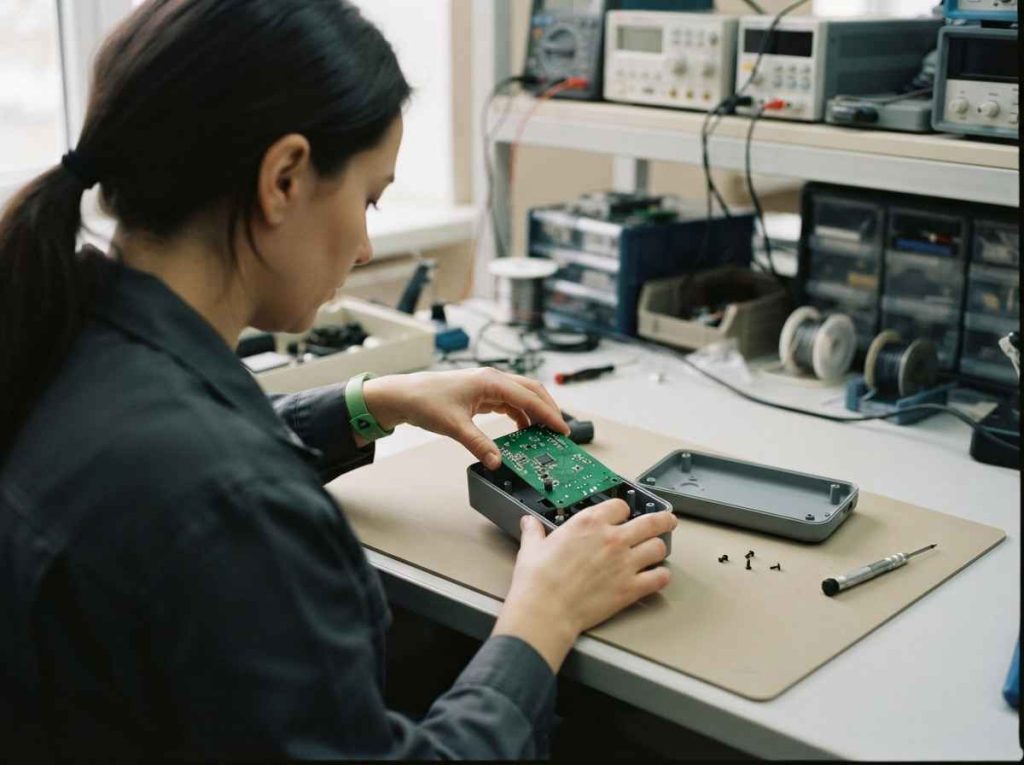
It is the unit that brings together the complete product design for the first time, with all its parts, purchased components and final joints. It is used to check that the assembly goes together, works and behaves as expected when its critical parts are made in the production material or the closest one available. Earlier prototypes validate specific aspects of the design, such as function, form or ergonomics; this unit validates the entire product and remains as the physical reference against which suppliers’ parts will be compared.
It is built when the design is frozen and before the production molds and tooling are ordered, which are the most expensive investment in industrialization. At that point, changing a dimension or a material still costs little; afterwards, every change affects a mold that has already been made. That is why this unit is planned to detect the problems that only appear with the complete product: interferences between parts, accumulated clearances, assembly forces, access to screws and connectors, or the behavior of the real materials.
Each part is made with the process that best reproduces its production behavior within the available quantity and lead time. Structural parts or those with critical fits are machined in the final material; injection-molded plastic parts can be obtained with printed mold inserts and the production thermoplastic; elastomers by casting, and parts with no mechanical requirements by 3D printing. The assembly is put together with the planned purchased components and then checked.
Pre-industrialization prototype at INFINITIA
We start from the CAD model and drawings of the frozen design, and decide the process, material and manufacturing priority for each part. Before manufacturing, we check that each geometry can be obtained with the chosen process, so that the differences from production are known and do not come as a surprise during assembly.
When the unit has to faithfully reflect the final product, we also take care of finishes and user experience, as in the functional and aesthetic demonstrator to launch a new product line, which allowed the customer to evaluate functionality and aesthetics before moving toward industrialization.
If the product needs several units or a comparison of materials, we make the tooling to obtain them, as in the molding tool to manufacture the first batches and validate materials, where prototypes in three materials were compared before fine-tuning the mold the customer used to produce its samples.
We deliver the assembled unit together with a record of what was checked during assembly: fits, interferences and recommended design changes, and, when the project requires it, the results of the dimensional inspection and functional tests. That record shows what is ready for ordering the molds and what should be corrected first.
Benefits of validating the complete product before ordering the molds
Benefits
It makes it possible to detect design errors while correcting them still costs little. An interference, excessive clearance or a material that does not perform, found in this unit, is solved by changing the model; found in the pre-production run, it means modifying molds that have already been made and delaying the launch.
It reduces modifications to molds and tooling. Production molds are ordered on a design that has already been assembled and tested as a whole, with the fit dimensions checked on real parts. The corrections left for the pre-production run focus on the process, with lower cost and lead time than a design change.
It gives suppliers and quality a physical reference. The assembled unit shows each supplier how its part should sit in the assembly and helps quality prepare the acceptance criteria for the first production parts. Questions of interpretation are settled on the object, with the part in hand.
It allows industrialization to be decided with data. Management, product and engineering assess the same object: how it is assembled, how it works and how it looks. With that unit in front of them, the investment in molds, the choice of suppliers and the launch schedule are decided on a complete, tested product.
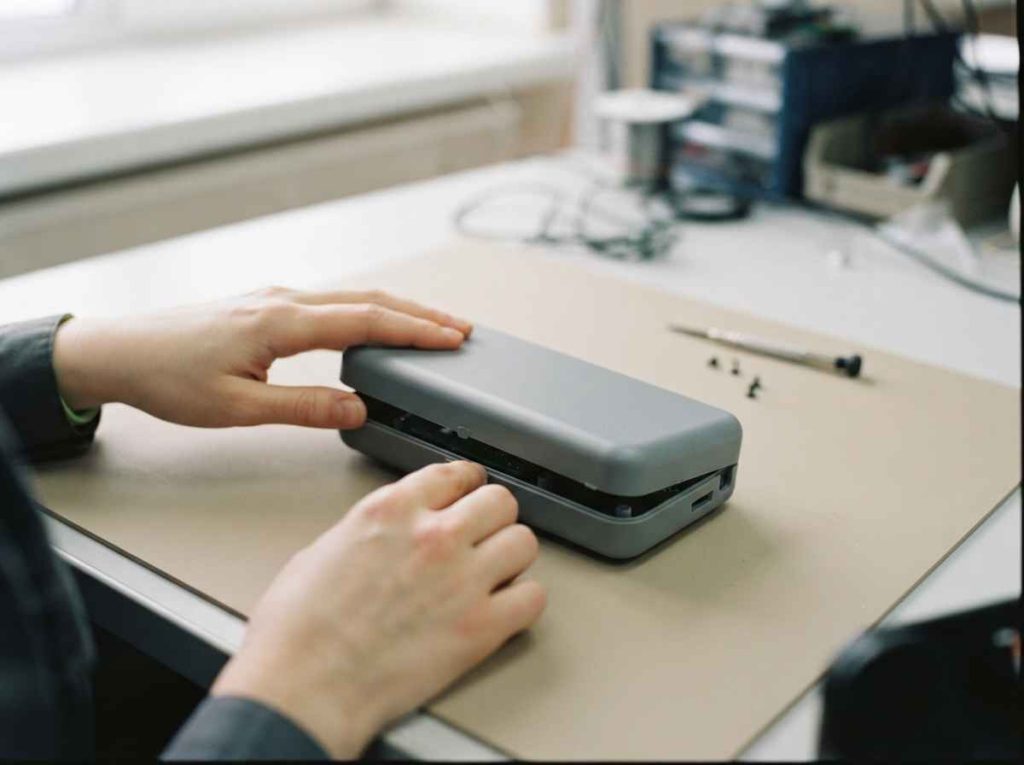
Manufacturing processes for the prototype parts
Types
This unit combines parts obtained by different processes, because each one has to answer a different question and not all of them justify the same cost. What matters is that the parts that define strength, fits and joints behave like the production ones.
The selection criterion is the same for all of them: material, number of units, tolerance, finish and time to decision. The table in the 3D printing section summarizes how close each process comes to production.
Parts machined in the production material
CNC machining starts from a block of the final material, whether a metal or an engineering thermoplastic, and produces parts with their real mechanical properties and tight tolerances. It is reserved for structural parts, those that carry loads and those that define critical fits in the assembly, such as bearing housings, guides or flanges, and for parts that will be tested mechanically.
Among the prototype manufacturing technologies, it is the one that allows strength and fits to be tested with data that holds for production when the final part will be injection molded or cast. Geometric differences from that part, such as internal radii or ribs, are documented so they can be taken into account when interpreting the results.
Plastic parts with printed mold inserts
When the production part will be injection-molded plastic and its behavior depends on the process, mold inserts are made by DLP 3D printing in a high-temperature resin and the final thermoplastic is injected with them. The part thus has the real material, the weld lines and the shrinkage typical of injection molding.
It is used to validate clips, snap fits, threads and thin walls, which in a printed part do not behave as they do in production. It also provides useful information for the design of the final mold, such as the effect of the gate location. A printed insert withstands a limited number of shots, so it suits short prototype runs.
Cast parts in elastomer or resin
Casting in molds, which can be printed, reproduces parts in elastomers or resins of different hardnesses from a master model. It makes it possible to obtain several units of seals, bellows, grips or housings without waiting for the production mold and to compare materials under the same conditions. The finish depends on the master model, which is prepared with the level of detail the part requires.
It is the way to validate the sealing of a gasket, the feel of an overmolding or the right hardness for a flexible element. When dozens of units are needed, tooling design for casting makes it possible to produce them repeatably for user tests or for the first sample batches.
3D-printed parts with no mechanical requirements
3D printing, with technologies such as SLA, DLP, SLS, FDM or PolyJet, is used for parts whose role in the prototype is to occupy their volume, route a cable or complete the appearance of the assembly. It is the fastest way to have all the parts available and allows a geometry to be iterated quickly.
| Process | Material | Mechanical fidelity | Lead time |
|---|---|---|---|
| CNC machining | Final | High | Medium |
| Printed inserts | Final | High | Medium |
| Mold casting | Similar | Medium | Medium |
| 3D printing | Approximate | Low | Short |
Its limit is the material: a part built in layers does not respond like an injection-molded one, so it cannot validate strength, fatigue or snap fits. In this unit, these parts carry the least risk when they are later replaced by production parts, and their cost allows them to be remade if the design changes.
Purchased components and electronics
The prototype includes the components that will be bought for production: fasteners, bearings, motors, connectors, displays or electronic boards. Fitting them with their final part numbers checks that they fit, that they can be assembled and disassembled and that their fastenings and wiring have the planned space inside the housing.
It is also the time to confirm that the selected part numbers are available and to identify components with long lead times or few supply alternatives. If the electronic board is still a prototype, it is fitted in the final housing to check connectors, indicators and temperature in their real position. Every change of part number is reflected in the bill of materials before production quotes are requested.
Assembly, inspection and change record
Assembly follows the sequence planned for the line, noting the points where parts have to be forced or adjusted or where an improvised tool is needed. The functional dimensions of the assembly are then checked and, if the project requires it, functional and user tests are carried out with the complete unit under the agreed conditions.
Each deviation is documented with its cause and the proposed correction, and the changes are incorporated into the model and drawings. This way the technical documentation for manufacturing sent to suppliers describes a product that has already been assembled and tested as a whole. The assembled unit is kept as a reference sample to compare the first parts.
Sectors where validating the complete product avoids changes to the molds
Sectors
This validation adds the most where the product combines many parts made by different processes, where molds and tooling represent a large investment and where an error discovered in production affects thousands of units.
In all of them, the next step is the pre-production run, which checks with the final molds that the process reproduces what the prototype has already validated.
Zero prototype in household appliances and consumer goods: housings, assembly and appearance
In household appliances and consumer goods, the product combines injection-molded housings, mechanisms and electronics, is assembled on a line with tight cycle times and is judged by the user on its appearance and feel.
- Housings: fit between injection-molded parts, visible gaps and snap fits checked on the assembled unit with the final fasteners.
- Assembly: sequence, forces and assembly tools evaluated before designing the line workstations.
- Appearance: finishes, colors and visible joints assessed on a complete unit rather than on loose parts.
The complete unit allows fit, assembly and appearance to be approved before ordering the housing molds, which account for a large part of the product investment.
Zero prototype in electronic products: board, housing and temperature
In electrical and electronic products, the board, the housing and the interface elements are developed in parallel and may come from different suppliers, and their integration is only verified when they are assembled together.
- Integration: connectors, buttons, displays and indicators aligned with the openings in the final housing and accessible to the user.
- Temperature: thermal behavior of the electronics inside the real closed volume, with the heat sources in position.
- Wiring: routing, fastening and enough space to assemble and disassemble without strain or pinching.
Fitting the electronics into the final housing before freezing the mold avoids remaking the board or modifying the tooling when both have already been manufactured.
Zero prototype in machinery: mechanical assemblies, fits and maintenance
In machinery and capital equipment, assemblies combine machined, welded and purchased parts, are made in short runs and must be able to be assembled, adjusted and maintained over many years of service.
- Fits: bearing housings, guides and shafts checked with parts machined in the real material and to their tolerances.
- Accessibility: access to screws, grease points and wear parts for the planned maintenance tasks without dismantling other assemblies.
- Welded assemblies: distortion and assembly datums checked before setting the welding sequence.
In short runs, that first unit can be the first machine of the batch, and what is learned while assembling it goes straight into the drawings for the following ones.
Zero prototype in medical devices: materials, cleaning and use
In medical devices, the materials in contact with the patient, ease of cleaning and safety of use shape the design, and changes after the design freeze have to be documented and justified.
- Materials: parts in the intended material for the areas in contact with the patient or with fluids.
- Cleaning: seals, grooves and joints evaluated so they can be cleaned properly with the intended methods.
- Use: handling tests with the complete unit before fixing the user interface.
Validating the design on a complete unit before freezing it reduces the changes that would later have to be justified and documented with each revision of the device.
Zero prototype in automotive and mobility: integration, vibration and assembly
In automotive and mobility, components and accessories are integrated into a limited space alongside other parts, withstand vibration and temperature changes and are assembled with tight cycle times.
- Integration: available space, clearances and mounting points checked against the component’s installation environment.
- Vibration: joints, clips and wiring prepared for the functional and vibration tests the component requires.
- Assembly: sequence, accessibility and locating datums designed for the line of the company that integrates the component.
A complete unit with parts in the production material makes it possible to start functional testing before the molds are available, with results closer to those of the final product.
Zero prototype in plastic and rubber parts: joints, seals and shrinkage
In products with many plastic and elastomer parts, behavior depends on the material and the process: a printed clip does not behave like an injection-molded one, and the hardness of a seal determines whether it seals.
- Joints: clips and snap fits injected with printed inserts in the production thermoplastic to check their retention.
- Seals: elastomers cast in several hardnesses to choose the right one with real sealing tests.
- Shrinkage: warping and distortion of the injection-molded parts that anticipate adjustments needed in the final mold.
Testing joints and seals with material and process close to production gives the moldmaker information to adjust the final mold from its first design.
Validating the complete product as the last step before the molds
Value
This unit closes the design with facts: it brings together all the final parts and components for the first time, checks that the assembly goes together and works, and leaves a physical reference for industrialization. The most expensive decisions, such as molds, suppliers and schedule, are made after that check.
With the complete product assembled, every department decides on the same object. Engineering confirms fits and tolerances, quality defines how parts will be accepted and purchasing has a reference for supplier prospecting and validation, comparing quotes on parts that have already proven they fit. The corrections found are incorporated into the design for manufacturing of each part before the drawings are released, so the molds are designed on a geometry already checked on real parts.
The cost of this unit is weighed against what it prevents: modifications to molds already made, launch delays and parts rejected in the first deliveries. In regulated sectors, it also allows the design to be frozen knowing that what is documented corresponds to an assembled and tested unit, and reduces the changes that would have to be justified later. It can also be used to present the product to management or customers with a unit that faithfully represents what will be manufactured.
If you have a frozen design and are about to order the molds, send us the CAD model, the drawings, the bill of materials and any previous prototypes, along with the planned production process and volume. We will propose which parts to make with each process, which checks to carry out on the unit and the lead time, and deliver the assembled unit with a record of what should be corrected before industrialization.
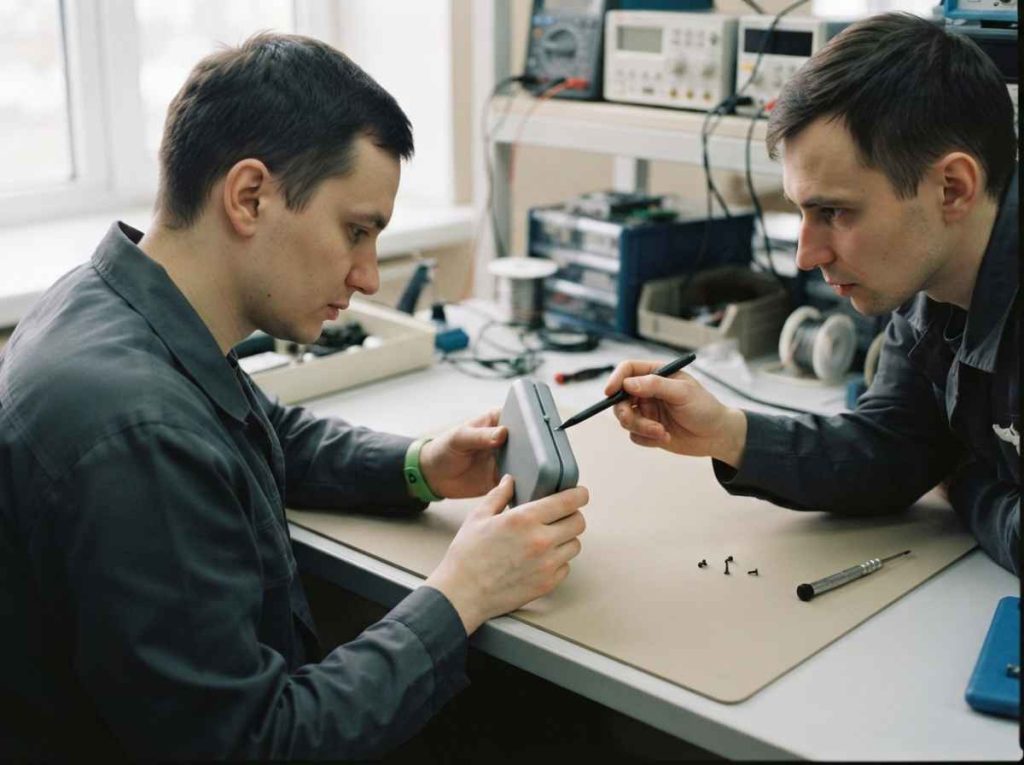
Frequently asked questions about the zero prototype
FAQs
What can a prototype built before series production not demonstrate?
It does not demonstrate that the production process will reproduce the parts with the expected quality and cost. Its parts are made with prototype processes, even if in the final material, and say nothing about a mold’s ability to repeat a dimension thousands of times or about the defects typical of production.
Nor does it replace the approval or certification tests the product may require. Those questions are answered by the pre-production run and the corresponding tests, on parts made with the final molds and process.
What is the difference between a functional prototype and a prototype built before series production?
A functional prototype answers whether the working principle is valid; a prototype built before series production, whether the complete product can be manufactured and assembled as designed. The former accepts approximate materials and processes, as the article on what a functional prototype does and does not validate explains; the latter aims for the critical parts to behave like production parts.
That is why they are made at different times. The functional prototype comes early, while design alternatives are still being explored; the one built before series production, when the design is frozen and the next decision is to order the molds.
At what stage of development is the complete unit built before series production?
When the design is frozen, partial prototypes have validated the function and the next decision is to order production molds and tooling. If it is done earlier, pending design changes make it obsolete; if it is done later, its findings arrive when the molds are already being made.
In simple products, with few parts and no expensive molds, it can be merged with the last functional prototype. In products with many parts made by different processes or with costly tooling, it is best planned as a separate phase with its own budget and schedule.
Do all the parts have to be made in the production material?
No. The parts that define strength, critical fits, snap fits or sealing should be made in the production material or the closest one possible, because they are what the prototype has to validate. The rest can be made with faster and cheaper processes.
The decision is made part by part, according to the risk of getting each one wrong. A printed decorative cover does not compromise the validation; a printed clip does, because it will not behave like an injection-molded one and may approve a joint that will fail in production.
How are injection-molded plastic parts made without the final mold?
With mold inserts printed in a high-temperature resin, which allow the production thermoplastic to be injected, or with casting in molds, which can be printed, when a similar material is enough. Simple or low-requirement parts can also be machined from a block of the same thermoplastic.
Each method has its limits: printed inserts withstand a small number of shots, and casting does not reproduce the weld lines or the stresses of injection molding. That is why the method is chosen according to what each part has to demonstrate in the assembly.
What is checked when the prototype is assembled?
That all the parts fit without forcing, that clearances and fits are within the planned values, that the assembly sequence is feasible and that screws, connectors and maintenance items are accessible. The functional dimensions of the assembly and its basic operation are then checked.
Each issue is recorded with its probable cause, whether a design dimension, an accumulated tolerance or an out-of-tolerance part, because the correction is different in each case. That record is the basis for the changes that are incorporated before the drawings are released.
What happens if the prototype reveals a design error?
It is corrected in the model and drawings, and the need to remake the affected parts to confirm the correction is assessed. That is the aim of this phase: for errors to appear here, when correcting them means changing a file rather than a mold that has already been made.
If the change affects several parts or the assembly sequence, the assembly may need to be rebuilt. Allowing from the outset for a second iteration prevents a correction from delaying the decision to industrialize or the order for the molds.
What comes after validating the complete product?
Releasing the drawings to order the production molds and tooling and, with them, the pre-production run: a short run with the final process to check that production reproduces what was validated. The assembled unit serves as a reference throughout that process, including for preparing incoming inspections.
During industrialization, support during production relies on that reference to resolve with the manufacturer the differences between the first production parts and what was validated in the prototype, with objective data and the reference part at hand.
How much does a zero prototype cost?
It depends on the number of parts, how many have to be made in the production material, the processes required, the electronics and the checks to be carried out on the assembled unit. A product with a few machined parts costs much less than one with many injection-molded parts that require inserts or casting.
To give you a firm figure, we need to see the model, the drawings and the bill of materials. Send us that information and we will prepare a proposal with the process for each part, the lead time and the checks included, so you know what you will receive.
How long does it take to get the assembled unit?
Typical lead times range from one to four weeks depending on the number of parts, the processes required and the availability of purchased components. Printed and machined parts are obtained sooner than those that need inserts or casting tools, which require the mold to be made first.
If you need the unit by a specific date, such as a management presentation or the decision to order the molds, let us know from the start. With that date, we prioritize the slowest parts to make and the components with long delivery times, so assembly can start as soon as the critical items arrive.
What do I need to send to get started?
Send us the CAD model of the assembly, the drawings you have, the bill of materials with the part numbers of the purchased components and, if they exist, the previous prototypes and what was learned from them, so tests already done are not repeated. If you already have a part manufactured, let us know and we will consider integrating it into the assembly.
Also tell us the planned production process and volume for each part, the tests you want to carry out with the unit and when you need it. With that information we will propose the scope and confirm the lead time and budget. If the design is confidential, let us know so we can agree on how the information is handled.
Can I order several units at once?
Yes. When the unit is needed for parallel testing, to show to customers or to send for testing, several are made, and the processes are chosen with that quantity in mind: casting and printed mold inserts make it possible to obtain several parts from the same tool. Each unit is assembled and checked in the same way as the first.
If you need more units than those methods allow, we will assess with you whether an intermediate tool or bringing the pre-production run forward makes sense. Mention it when requesting the proposal, because the quantity affects the process for several parts, the cost of each unit and the total lead time.