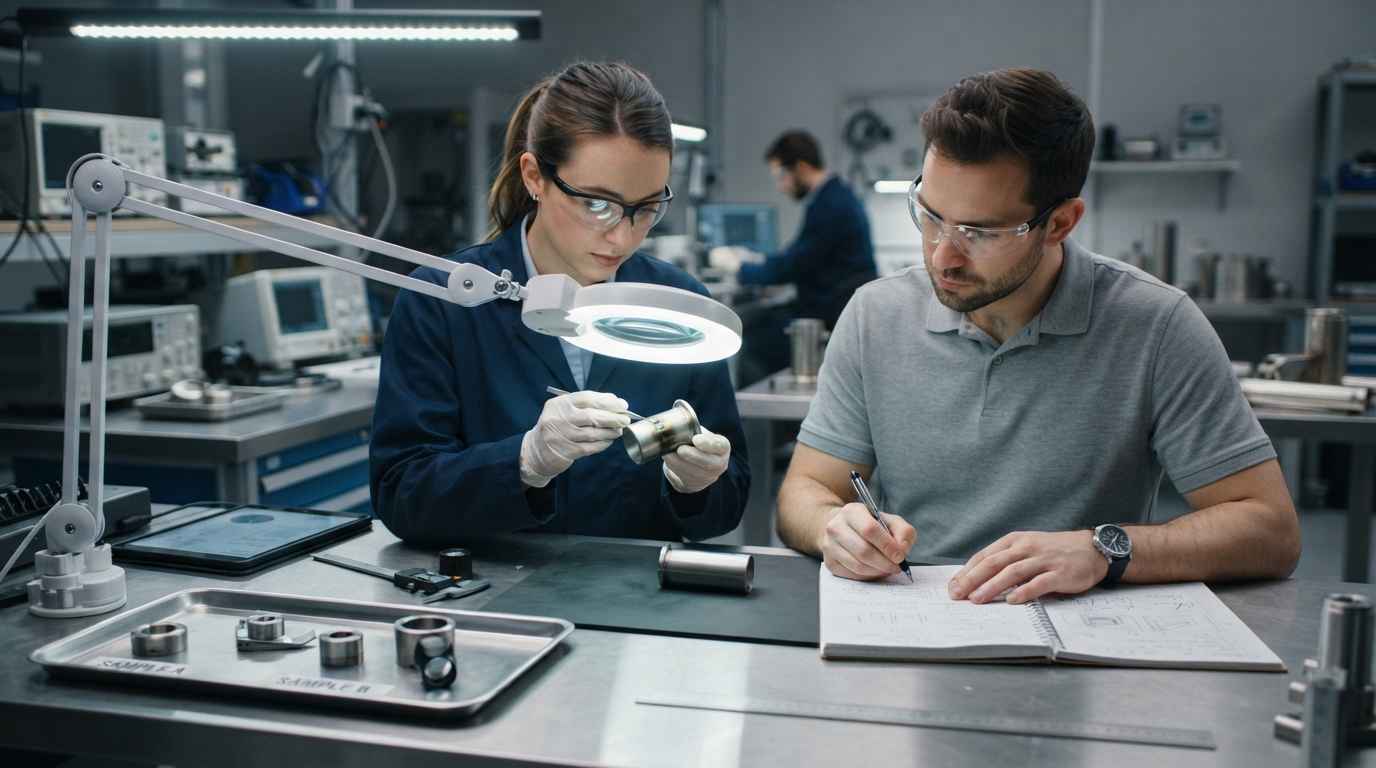

Substitute material validation is the process by which testing confirms that a new material can replace another without the part losing performance or reliability. When a supplier disappears, a price rises or a regulation changes, substituting the material is common, but doing so without checking equivalence is one of the most frequent causes of a later failure.
The goal of substitute material validation is not to prove that the new material is good in the abstract, but that it behaves like the original in that specific application. That is where materials innovation comes in, turning a substitution idea into a test plan that confirms or rules out equivalence with data.
That work relies on innovative solutions when the obvious substitute does not exist and an alternative that meets the requirements has to be found. In both cases, validation is what separates a controlled material change from a blind bet.
INNOVATIVE SOLUTIONS
Do you need to find a substitute material and confirm it is equivalent? Discover our innovative solutions in materials

What substitute material validation is
Substitute material validation is the systematic check that a candidate material reproduces the properties and behaviour the part needs to work just as it did with the original material. It is not about matching every property of the material, but the ones that are critical for that application, and about proving it with tests instead of with datasheets.
Validating a substitute material is not checking that it resembles the original, but proving that the part keeps performing its function with the new material, under the same conditions and for the same service life.
When a material substitution is needed
The need for a substitute material arises for very different reasons: a supplier stops making a specific grade, the cost of a material soars, a regulation bans a substance, or weight has to be cut or availability improved. In all those cases the material changes for a business reason, but the part still has to work the same, and that is what makes validation necessary.
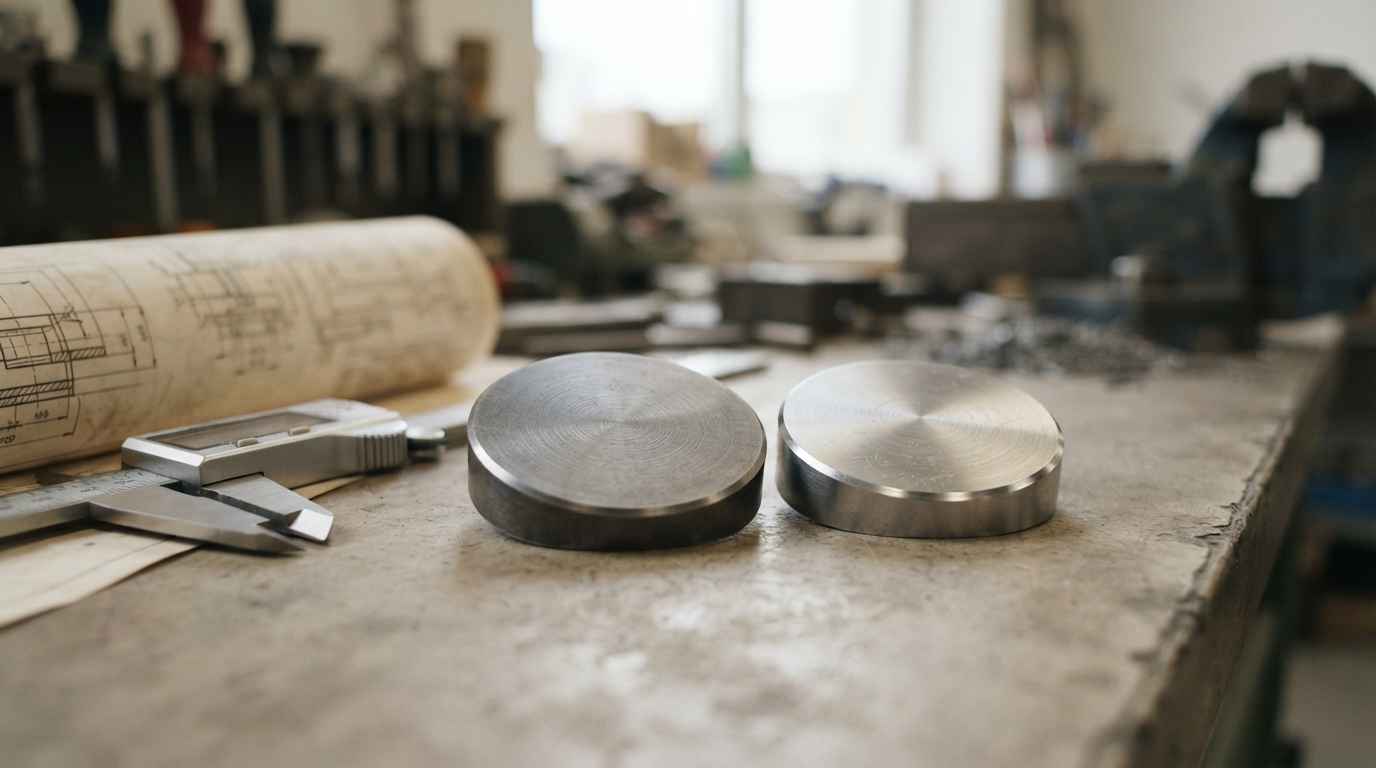
The frequent mistake is to assume that two materials with the same designation or a similar datasheet are interchangeable. Two nominally equal grades from different suppliers can differ in composition, treatment or process, and that difference translates into different behaviour in service. That is why substitute material validation starts by taking nothing for granted.
The more critical the part, the more rigorous the validation must be. Substituting the material of a packaging is not the same as changing that of a component under load or temperature, and the scope of the tests must match that risk. Defining well what is at stake is the first step before choosing what to check.
Anticipating the substitution also avoids rushed decisions. When a supplier warns that a grade will be discontinued, there is room to validate a substitute material calmly; when the warning arrives with the line stopped, the temptation is to change without testing and hope it works. Having the critical materials and their possible alternatives identified in advance turns an emergency into an orderly change.
What equivalence between materials means
Equivalence between materials is not an absolute equality, but the substitute meeting or exceeding the requirements the application imposes on the critical properties. A material can differ in many respects and still be equivalent for a specific use, as long as it matches what really matters in that part.
To define equivalence, the function of the part has to be translated into measurable properties: strength, stiffness, toughness, resistance to temperature, to corrosion or to wear, depending on the case. That list of requirements is the reference against which the substitute material is compared, and without it the validation has no criterion.
Equivalence also has a process component. A material can have the right properties but behave badly when formed, welded or machined, and that rules it out even if in the laboratory test it resembles the original. That is why substitute material validation looks at both the properties and the manufacturability.
It is worth distinguishing between technical equivalence and regulatory equivalence. A substitute material can match the behaviour of the part and still not qualify if the application requires a certified grade or one included in a customer specification. In regulated sectors, validation not only proves that the material works, but that it meets the formal requirements that allow its use, and both must be covered.
What to compare between the original and the substitute material
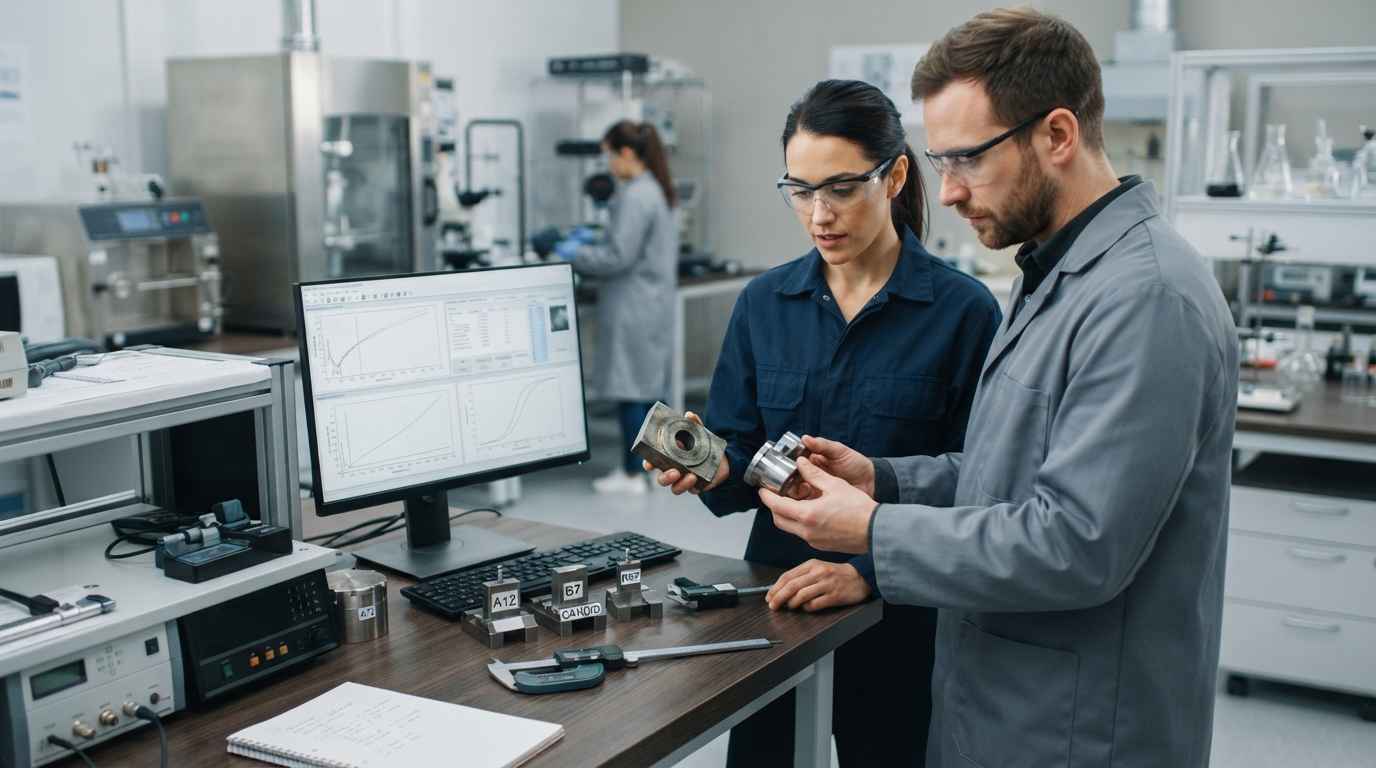
Validating a substitute material starts by deciding which properties to compare, because trying to match them all is expensive and unnecessary. The comparison focuses on the properties critical for the application and on the real behaviour under service conditions.
Mechanical and physical properties
The first block of comparison is the mechanical properties: tensile strength, yield strength, elongation, hardness and toughness. They determine whether the part withstands the loads it is designed for, and a difference here can mean that the substitute material breaks sooner or deforms where the original did not.
To the mechanical ones are added the physical properties relevant to the case: density, thermal and electrical conductivity, expansion, or behaviour under heat. In many substitutions the problem is not in the strength, but in a physical detail, such as a different expansion that throws off a fit or a conductivity that changes heat dissipation.
Comparing these properties on the datasheets is a starting point, but not enough to validate. Datasheets give nominal and often optimistic values, whereas substitute material validation requires measuring on the real material that will be used, because the variability between batches and suppliers is precisely what you want to control.
The number of samples and their representativeness also affect the comparison. Measuring a single specimen can give a misleading value if the material has scatter, so substitute material validation works with several samples and, when it matters, with different batches. Comparing means and dispersion, and not just an isolated figure, is what allows you to state with confidence that the substitute matches the original.
Behaviour in service
Beyond the catalogue properties, you have to compare how the material behaves under real conditions of use. A substitute can match the strength at room temperature and fail when heated, degrade with humidity or lose properties with ageing, and that is only seen by reproducing the service.
Behaviour against the environment is decisive when the part works in aggressive conditions. Resistance to corrosion, to chemicals, to UV or to thermal cycles can be very different between two apparently equivalent materials, and it is one of the differences that causes the most problems when it is not validated.
Manufacturability and assembly also count. A substitute material that requires changing process parameters, that behaves differently when welded or that needs another adhesive can be valid, but it forces you to validate that part too. Ignoring the process is one of the reasons a substitution that worked in the laboratory fails on the line.
Finally, you have to look at the supply stability of the substitute itself. There is little point in validating an alternative material if its availability is as fragile as the original’s or if its composition varies greatly from one batch to another. Choosing a substitute with a stable supply and a controlled composition is part of the decision, because equivalence must hold over time and not only in the first batch tested.
TELL US ABOUT YOUR CASE
Do you have to substitute a material and doubt its equivalence? Send us the original and the candidate and we will propose a validation plan with tests
What tests confirm the equivalence of a substitute material
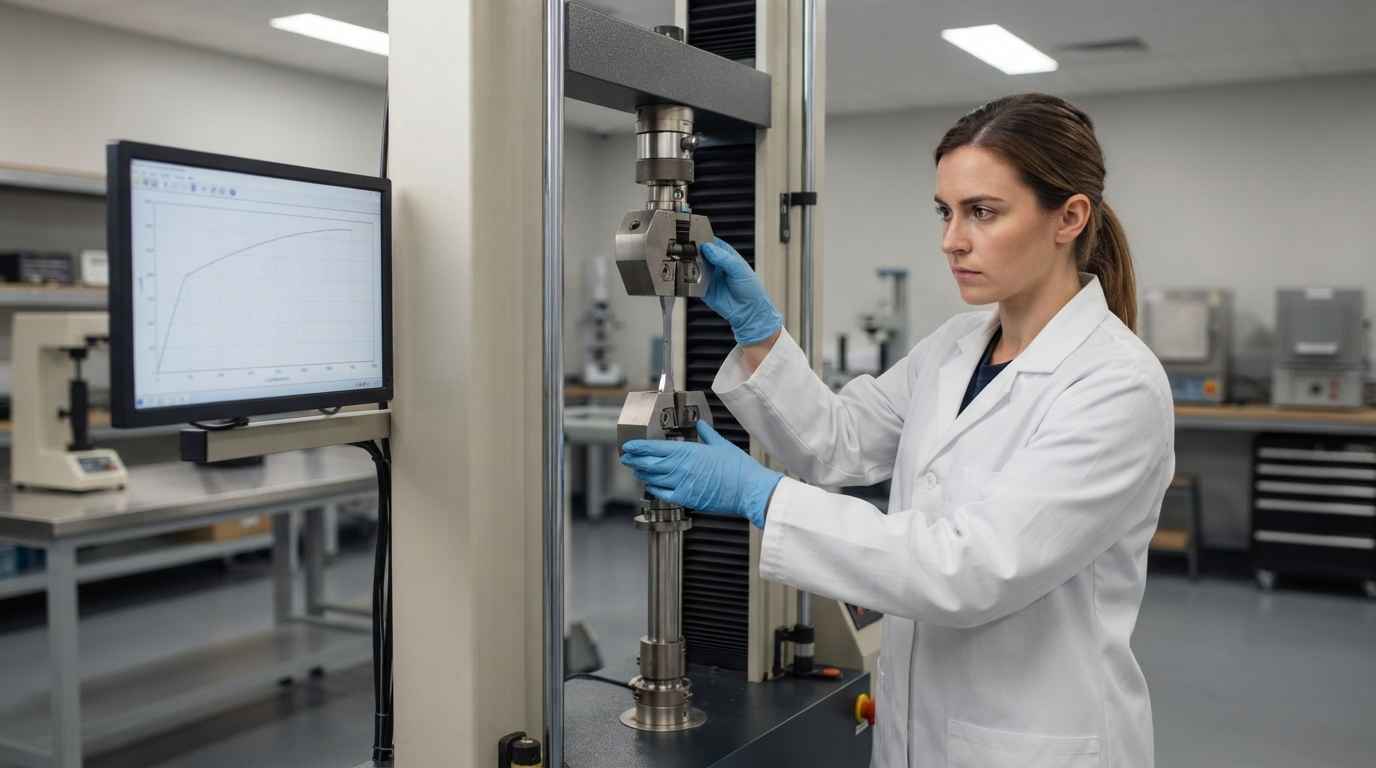
Confirming the equivalence of a substitute material requires tests that measure the critical properties on the real material and reproduce the service. The set of tests is chosen according to which requirements are decisive for the part, not from a fixed list.
Characterisation tests
Characterisation tests establish what the substitute material is and what properties it has. Composition analysis confirms that the material is what it is believed to be and detects differences from the original; mechanical tests measure strength, hardness and toughness; and microscopy reveals the microstructure, which explains many differences in behaviour. A clear case is the validation of materials requirements for ASME certification, where characterising the material was the basis of acceptance.
These tests are done in parallel on the original and the substitute material, to compare under the same conditions. Comparing against the real original, and not only against a specification, is what gives value to substitute material validation, because it reveals whether the new material matches what was actually being used.
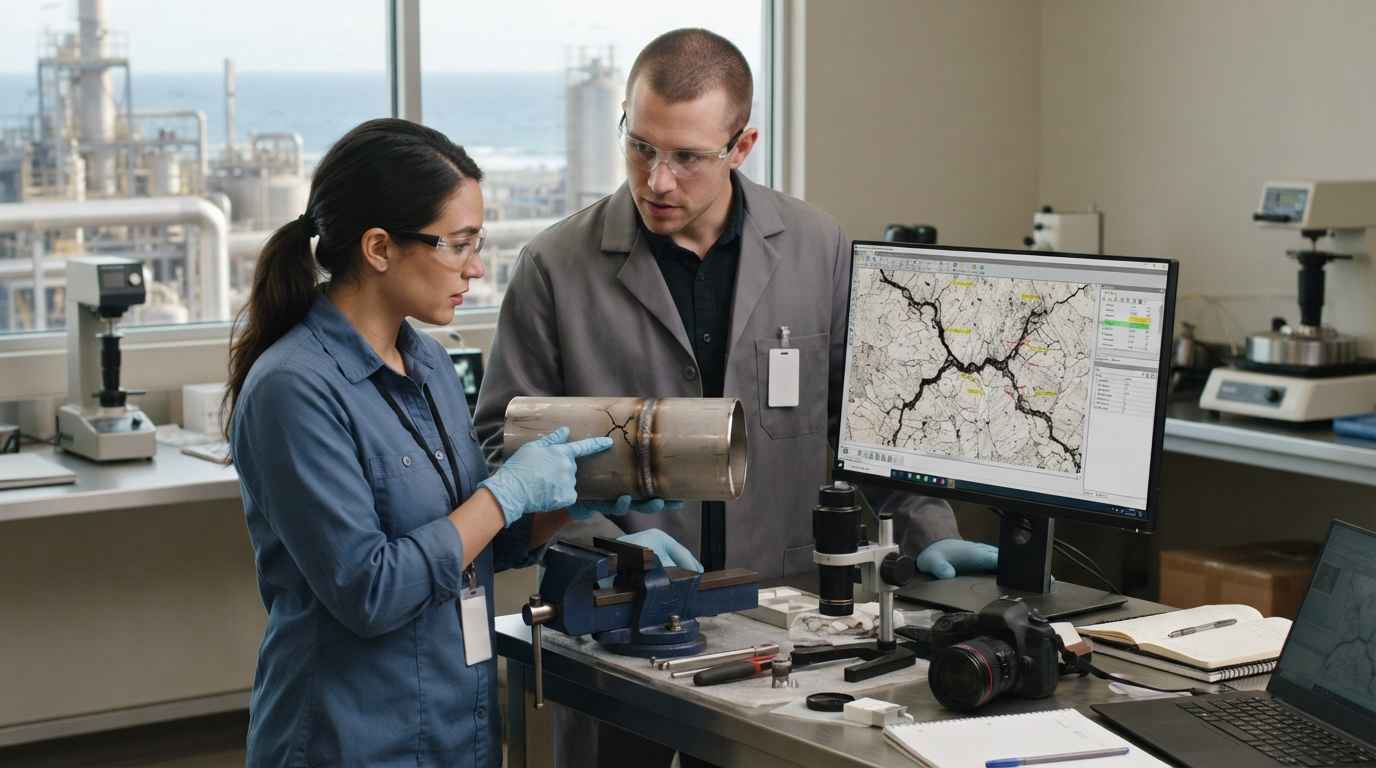
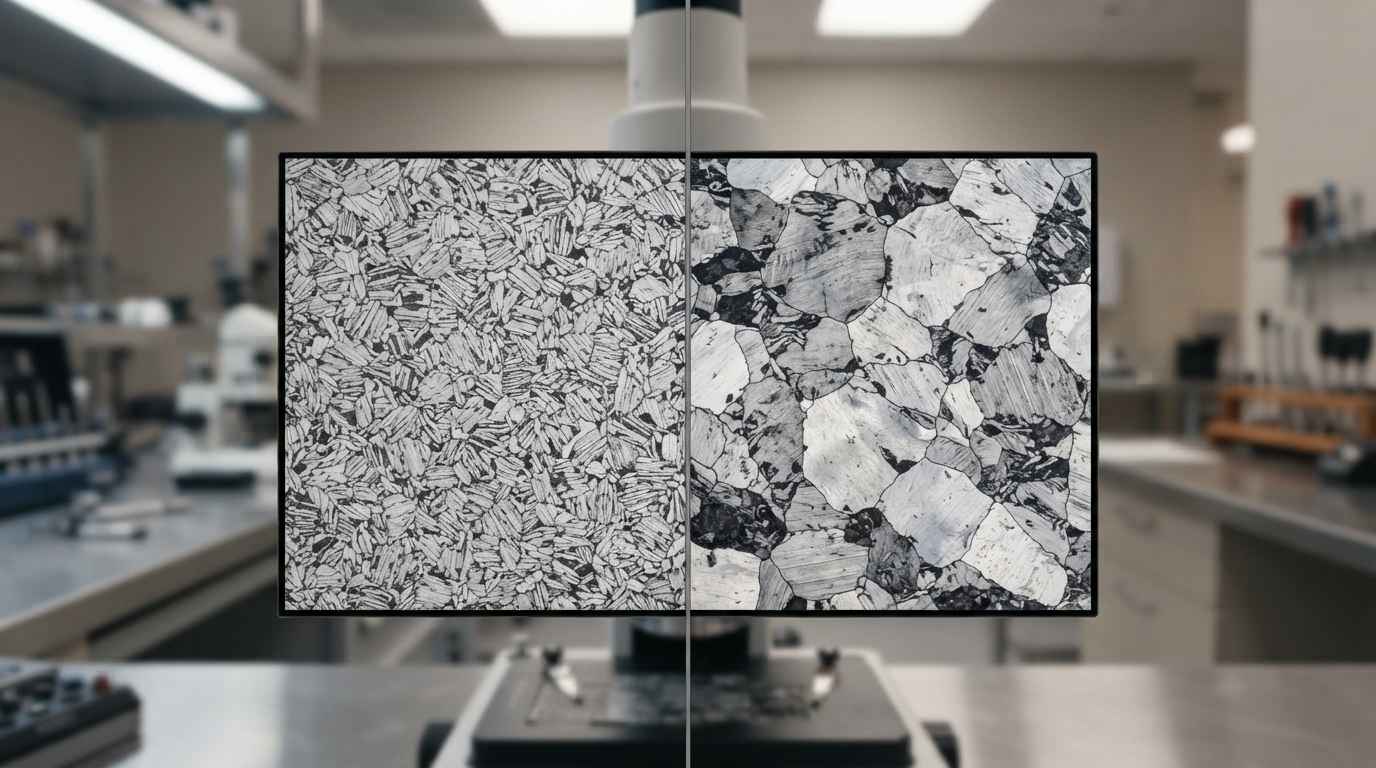
The microstructure deserves special attention, because it explains differences that the overall properties do not show. Two materials with the same composition can have different grain sizes or phases depending on their treatment, and that changes toughness or fatigue resistance. Observing the microstructure of the substitute material and comparing it with the original helps to anticipate how it will behave even before the service tests.
Functional and durability tests
When characterisation is not enough, tests that reproduce the service are used. Durability, fatigue, accelerated ageing or thermal shock tests subject the substitute material to real conditions to see whether it withstands the same as the original over time. An example is the thermal shock tests for the homologation of materials, which confirm durability under extreme conditions.
| Test | What it compares | Reference | What it confirms |
|---|---|---|---|
| Composition analysis | Chemistry of the original and the substitute | Representative analysis | That the material is as expected |
| Tensile test | Strength and yield limit | ISO 6892 | Mechanical equivalence |
| Hardness test | Surface hardness | ISO 6507 | Consistency of treatment |
| Ageing and thermal shock | Behaviour over time | Representative test | Durability in service |
From the test to the equivalence decision
The goal of these tests is not to accumulate data, but to make a clear decision: the substitute material is equivalent, it is not, or it is with conditions. The correspondence between what the part requires and what the test confirms must be verified, because a test that does not reproduce the critical condition can give a false equivalence.
Documenting what was tested, with which method and against which criterion turns substitute material validation into a defensible decision before a customer, an audit or a certification. Without that traceability, the substitution remains a claim that is hard to sustain the day a problem appears.
The validation report is also a reusable asset. When later you have to justify the change to a new customer, repeat the substitution on another part or defend it in a claim, that report avoids redoing the work from scratch. A well-documented validation not only solves today’s change, but saves time in every material decision that comes afterwards.
How to document the validation and avoid frequent mistakes
A substitute material validation is only useful if it is documented and if it avoids the mistakes that invalidate it. A good validation plan turns a risky substitution into a traceable and repeatable change.
The validation plan
The validation plan defines, before testing, which properties are critical, which tests cover them, which acceptance criterion applies and on how many samples. Setting those criteria before seeing the results avoids the bias of accepting an equivalence that does not actually meet, and makes substitute material validation objective.
The plan also decides the scope according to the risk. For a low-criticality part it may be enough to characterise and compare properties; for a safety part, durability tests and validating the full process will be needed. Matching the effort to the risk avoids both under-validating and over-spending.
Documenting the material traceability is part of the plan. Recording batch, supplier, heat and test conditions allows the validation to be repeated and lets you detect whether a later problem comes from a material variation. Material substitution, as explained in material substitution, rests on that traceability.
Frequent mistakes when validating a substitute
The most common mistake is validating only on the datasheet, without testing the real material. Datasheets give ranges and nominal values that do not reflect the variability of the material arriving at the factory, and relying on them is the fast track to a substitution that fails. Substitute material validation requires measuring, not reading.
Another mistake is forgetting a non-obvious critical property. Sometimes the mechanical properties are compared but the expansion, the chemical resistance or the long-term behaviour is ignored, and the failure comes precisely from there. Relying on analysis techniques such as those described in the microscopy techniques for the characterisation of materials helps not to leave out what is not visible to the naked eye.
The third mistake is not validating the process. A substitute material that passes in the laboratory but behaves differently when formed or welded generates defective parts in production. Including manufacturability in the validation avoids discovering the problem once the series has already been launched.
A fourth, subtler mistake is validating once and forgetting. The equivalence proven on one batch does not guarantee it holds if the supplier changes its process or its raw-material source. Setting up a light incoming-inspection check on the substitute material lets you detect in time whether a batch drifts from what was validated and stops the problem from coming back through the back door.
Validating a substitute material is cheaper than a failure in series
Substitute material validation is what lets you change material with criteria: it defines which properties are critical, measures them on the real material, reproduces the service and documents the equivalence decision. Recognising what to compare, choosing the tests that confirm it and keeping it traceable is what separates a controlled substitution from a failure in series. The difference is almost never in the material, but in having checked equivalence before producing.
If you have to substitute a material and want to know whether the candidate is really equivalent, gather the original material, the substitute and the part’s service conditions and send them over: we return a test plan, the data-backed comparison and a clear equivalence conclusion so that the change gives you no surprises.
Frequently asked questions
What is substitute material validation?
It is the process by which testing confirms that a new material can replace another without the part losing performance or reliability. It does not seek to match every property, but to prove that the substitute meets the ones critical for that specific application and that the part keeps working the same, under the same conditions and for the same service life.
When is it necessary to validate a substitute material?
Whenever the material of a part is changed for another: when a supplier stops making a grade, a cost rises, a regulation changes or weight has to be cut. Also when the same grade is bought from another supplier, because two nominally equal materials can differ in composition or process and behave differently in service.
Is it enough to compare the datasheets of the two materials?
No. Datasheets give nominal values and ranges that do not reflect the variability of the real material arriving at the factory. Substitute material validation requires measuring on the material that will be used and comparing it with the original under the same conditions, because that variability between batches and suppliers is precisely what you want to control.
Which tests are used to confirm equivalence?
It depends on which properties are critical, but they usually combine composition analysis, mechanical tests such as tensile and hardness, microscopy to see the microstructure and tests that reproduce the service, such as durability, fatigue, ageing or thermal shock. The tests are done in parallel on the original and the substitute to compare on equal terms.
What are the most frequent mistakes when validating a substitute?
Validating only on the datasheet without testing the real material, forgetting a non-obvious critical property such as expansion or chemical resistance, and not validating the manufacturing process. A material that passes in the laboratory but behaves differently when formed or welded generates defective parts, so manufacturability must be part of the validation.