
Materials for electronics have to solve two problems at once: getting rid of the heat the components generate and resisting the corrosion of the environment they work in. Heat dissipation and corrosion protection are the two demands that most condition the reliability of an electronic device, and choosing the materials well is what decides whether it lasts years or fails in months.
When a device heats up more than expected or corrosion appears on a board, the origin is usually a material that was not right for those conditions. That is where materials innovation comes in, helping to select and validate the materials for electronics that really withstand the heat and the service environment.
That work relies on innovative solutions when the usual materials are not enough and a composite, a coating or an alloy that combines thermal conductivity with corrosion resistance is needed. In electronics, that combination is almost always the challenge.
INNOVATIVE SOLUTIONS
Do you need materials for electronics that solve heat and corrosion? Discover our innovative solutions in materials

What electronics demands from materials
Electronics demands from materials, above all, that they get rid of the heat and withstand the environment without degrading. An electronic component concentrates a lot of power in little space and often works in environments with humidity, temperature or aggressive atmospheres, so materials for electronics are chosen for how they manage heat and how they resist corrosion, rather than for their mechanical strength.
In electronics, the material almost never fails from mechanical load, but because it does not get rid of the heat in time or because the environment corrodes it, and those two factors are what decide the service life of the equipment.
Why heat is the main enemy
Heat is the main enemy of electronics because almost all the power that is not used turns into heat that has to be evacuated. If that heat does not leave, the temperature of the component rises, its performance drops and its service life shortens rapidly, because many electronic failures are triggered by temperature.
That is why heat dissipation is a central criterion when choosing materials for electronics. A good dissipating material conducts the heat from the component to a heatsink or to the housing, and keeps the working temperature within the safe range. When that thermal path is poor, the component cooks in its own heat.
Miniaturisation makes the problem worse. Each generation of electronics packs more power into less volume, which concentrates the heat and leaves less room to evacuate it. That trend makes the choice of materials for heat dissipation increasingly decisive, and a material that was fine a few years ago falls short today.
Thermal behaviour also depends on how the heat is distributed, not only on how much is generated. A localised hot spot can damage a component even if the average temperature of the equipment is low, so materials for electronics must conduct the heat evenly and avoid concentrations. That detail explains why two designs with the same heatsink can behave very differently depending on how they spread the heat.
Why corrosion also decides reliability
Corrosion is the other great threat to electronics, because it attacks the connections, contacts and tracks that make the circuit work. A thin layer of oxide on a contact is enough to increase resistance, generate heat and cause an intermittent fault that is hard to diagnose, and humidity with contaminants accelerates that process.
Aggressive environments multiply the risk. Electronics that works outdoors, in marine, industrial or condensing environments suffers corrosion much sooner than that of a controlled environment, and there the protection of materials for electronics is what makes the difference between a reliable device and one that fails. An illustrative case is the corrosion resistance of electronic components, where the behaviour of the material against the environment was decisive.
Heat and corrosion, moreover, feed off each other. A hot spot accelerates corrosion reactions and a corroded connection generates more heat, so both problems usually appear together. That is why materials for electronics are assessed by looking at both demands at once, and not separately.
Added to this is the effect of power-on and power-off cycles. Every time equipment starts up and cools down, its materials expand and contract, and those repeated variations fatigue the joints and open paths for humidity to enter. A well-chosen material for electronics withstands those cycles without cracking or peeling, and that behaviour over time is as important as its performance on the first power-on.
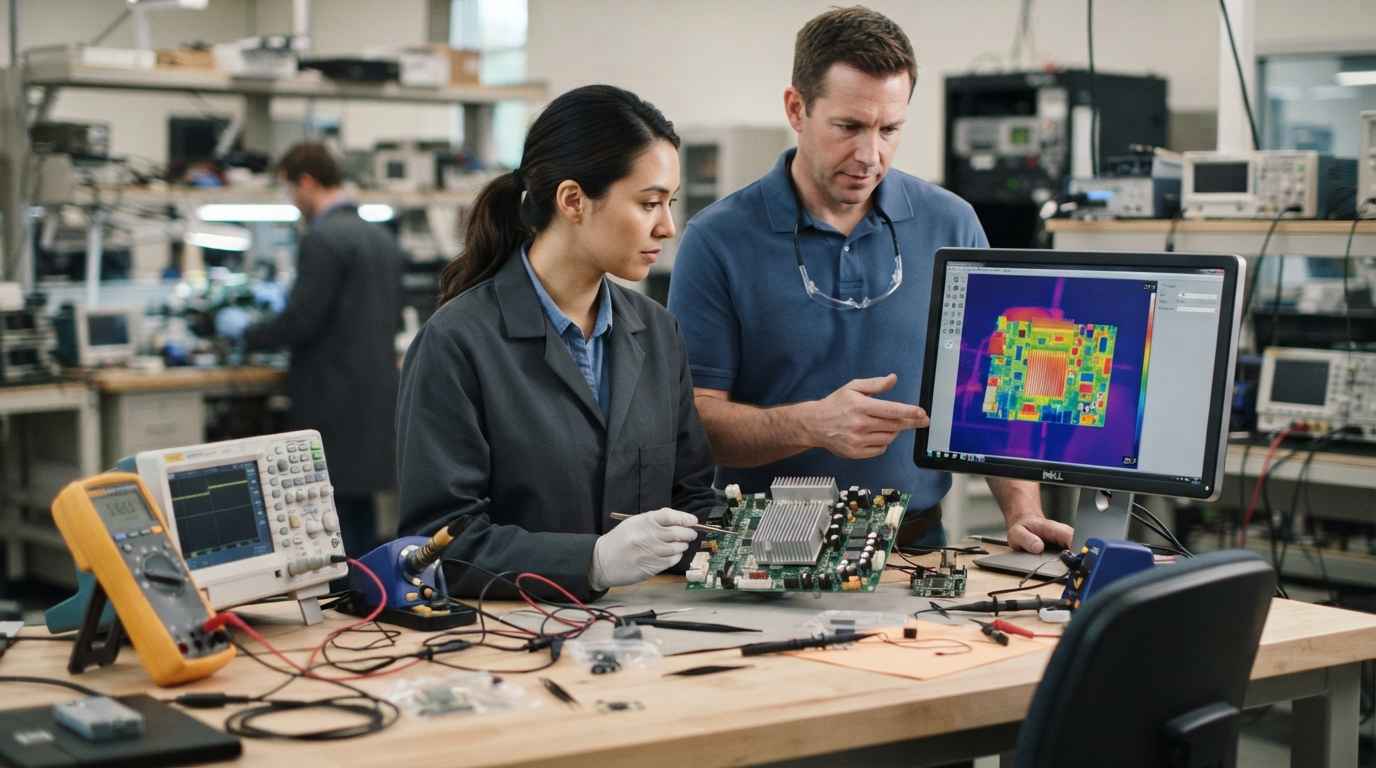
Materials for heat dissipation in electronics
Materials for heat dissipation in electronics are the ones that conduct heat from the component to where it can be evacuated. Choosing this thermal chain well is what keeps the working temperature under control and extends the life of the equipment.
Conductive metals and alloys
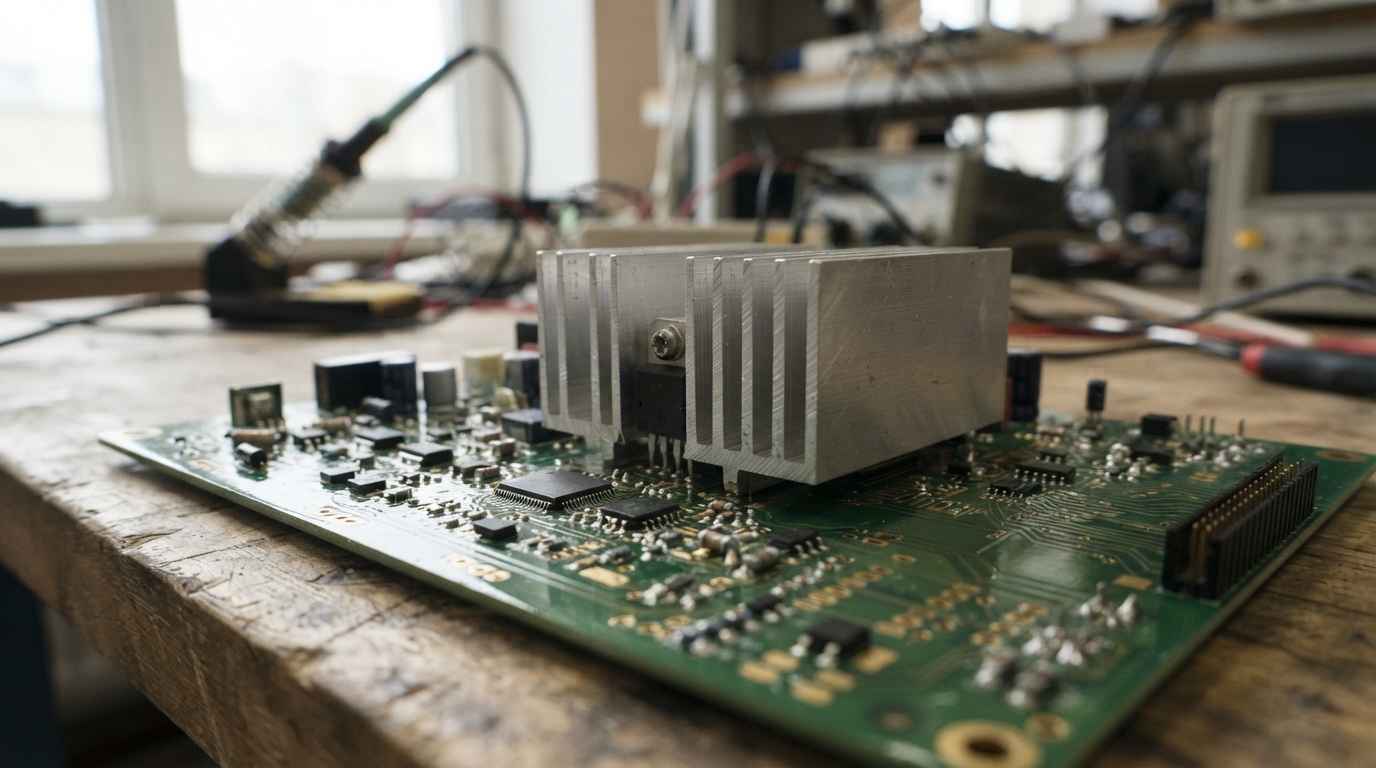
Metals are the basis of heat dissipation in electronics because of their high conductivity. Aluminium is the most common for its good balance of conductivity, weight and cost, and copper is used where a lot of heat has to be evacuated, because it conducts even better although it weighs and costs more. Heatsinks, component bases and ground planes use these metals to draw the heat out.
The choice between one material and the other depends on the balance of performance, weight and cost. In a portable device the weight of copper can be a problem; in a power one, its conductivity more than compensates. Matching the dissipating material to each case is part of designing the thermal management of the electronics well.
The finish of the metal also counts. An anodising or a coating improves heat emission by radiation and, at the same time, protects against corrosion, so a single treatment solves both demands. Choosing that finish with criteria is a simple way to improve dissipation without changing the material.
The geometry of the heatsink multiplies or limits what the material can do. A good metal poorly used, with little exchange surface or badly oriented to the airflow, dissipates less than a more modest material well designed. That is why the choice of materials for electronics always goes hand in hand with the thermal design, and is not decided just by looking at the conductivity in a table.
Thermal interfaces and composite materials
Between the component and the heatsink there is always an imperfect contact that slows the passage of heat, and that is where thermal interface materials come in: pastes, pads and conductive adhesives that fill the gaps and improve the transfer. A good interface material can lower the temperature of a component by several degrees without changing anything else.
When metals are not enough or weigh too much, composite and advanced materials appear: metal-matrix composites, conductive ceramics or materials with graphite and graphene that combine thermal conductivity with lightness or with electrical insulation. These materials for electronics allow heat to be dissipated where a conventional metal does not fit.
The trend is to integrate the thermal function into the material itself. Instead of adding a heatsink, the aim is for the package, the substrate or the housing to conduct the heat by themselves, which saves space and weight. Developing those multifunctional materials is one of the fields where materials innovation for electronics contributes the most.
TELL US ABOUT YOUR CASE
Is your electronics heating up or corroding? Send us the component and its working environment and we will propose the right materials and tests
Materials and coatings for corrosion protection
Corrosion protection in electronics is achieved by choosing resistant materials and adding coatings that isolate the circuit from the environment. The combination of both is what keeps the contacts and tracks in good condition throughout the life of the equipment.
Protective coatings and finishes
Coatings are the first line of defence against corrosion in electronics. Finish plating on contacts and connectors, such as gold or tin plating, protects the critical areas, and conformal coatings cover the whole board with a thin layer that isolates it from humidity and contaminants. Choosing the right coating depends on the environment it has to withstand.
The finish of the metal parts of the electronics fulfils a double function. An anodising, a paint or a coating protects against corrosion and, depending on the case, also improves dissipation or insulation. That is why the selection of the finish is a decision that affects both the protection and the thermal management of the materials for electronics.
Material selection according to the environment
Protection starts by choosing the material suited to the environment. A contact that works for a dry interior does not work for a marine environment, and a metal that resists well in one case corrodes in another, so the selection starts from knowing the real service conditions: humidity, temperature, contaminants and condensation.
Designing with that environment in mind avoids many problems, in line with what is explained in design for a corrosive environment. Anticipating where the equipment will work and choosing the materials for electronics accordingly is cheaper than correcting corrosion that has already shown up in the field.
Cleaning the board before applying any protection is part of the result. Flux residues, salts or greases get trapped under a coating and act as corrosion sites, so a good protective material applied over a dirty surface fails all the same. Taking care of that previous step is as important as choosing the right coating for the materials for electronics.
| Demand | Material or solution | Test reference | What it provides |
|---|---|---|---|
| Heat dissipation | Aluminium, copper, conductive composites | Thermal conductivity (ASTM D5470) | Evacuates the heat from the component |
| Thermal interface | Conductive pastes and pads | Representative test | Improves the thermal contact |
| Corrosion protection | Conformal coatings and finishes | ISO 9227 (salt spray) | Isolates the circuit from the environment |
| Environmental resistance | Material selected by environment | IEC 60068 (environmental cycles) | Withstands humidity and temperature |
From the material to the reliability of the equipment
The goal of choosing the materials for electronics well is not to show off a datasheet, but for the equipment to work reliably in its real environment throughout its life. Heat dissipation and corrosion protection are decided together, because a material that solves one but neglects the other leaves the equipment exposed.
Checking that the chosen material performs under real conditions, and not only in the catalogue, is what turns a good intention into reliability. A test that reproduces the heat and the service environment confirms whether the selected materials for electronics withstand what is expected of them.
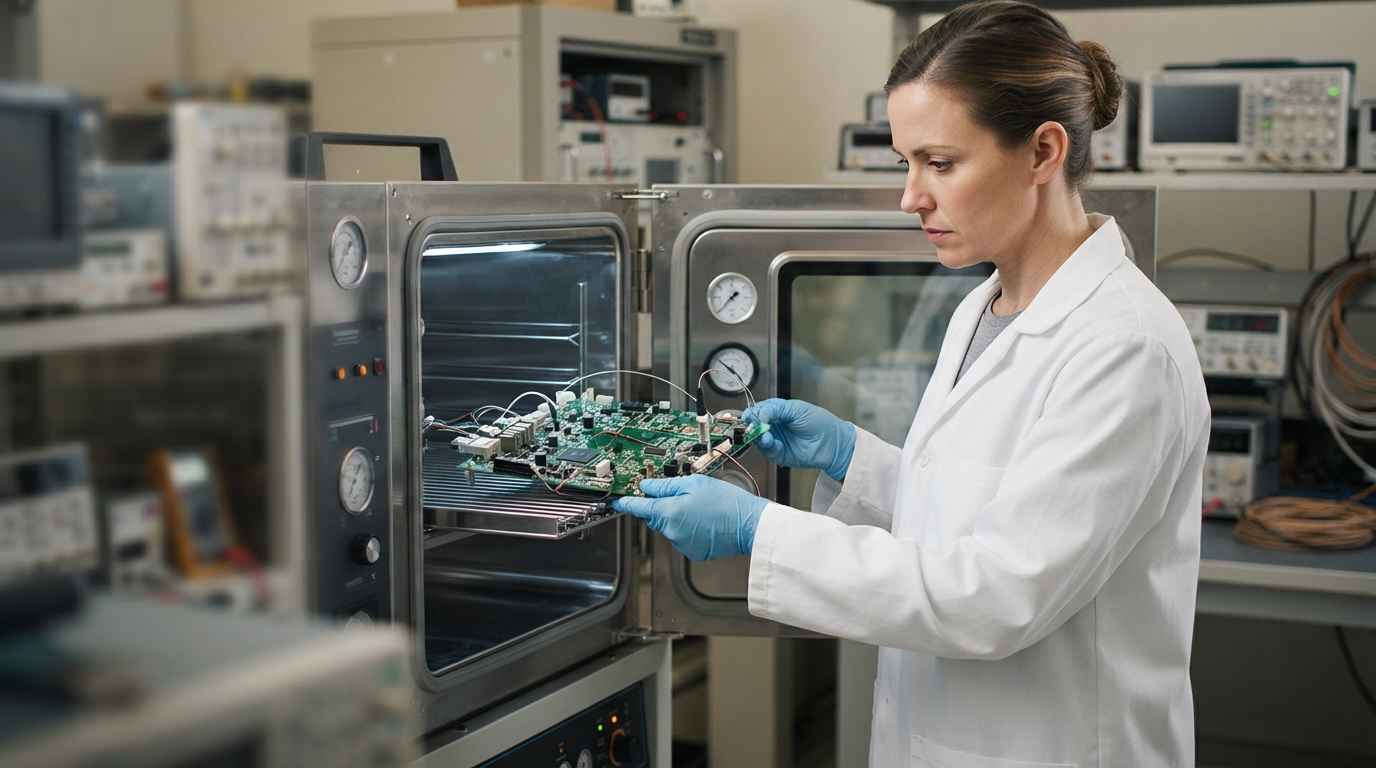
How to choose and validate the materials for electronics
Choosing the materials for electronics consists of crossing the thermal and corrosion demands with the real service conditions, and validating them with tests before manufacturing in series. A good selection criterion avoids both oversizing and falling short.
Selection criteria
The first criterion is the balance between heat dissipation, corrosion protection, weight and cost. A single material is rarely the best at everything, so choosing materials for electronics means finding the compromise that meets the critical requirements of the equipment without making it too expensive. Defining what those critical requirements are is the starting point.
The service environment governs the selection. An indoor device is not the same as an outdoor one, nor a consumer one the same as an industrial one, and each environment changes which materials and coatings make sense. Knowing the real conditions, and not the assumed ones, is what makes the choice right.
Compatibility between materials closes the criteria. Putting two different metals together in the presence of humidity creates galvanic corrosion, and a thermal material incompatible with the package can peel off with temperature cycles. Choosing materials for electronics that get along well with each other avoids failures that do not depend on a single component, but on their combination.
The total cost over the life of the equipment, and not just the price of the material, should weigh in the decision. A cheaper material that forces reworking equipment under warranty or that shortens the service life is expensive in the end, while a somewhat more expensive but reliable one avoids failures in the field. Looking at the materials for electronics with that total-cost perspective often changes which option is really the most economical.
Tests that confirm the choice
Validating the materials for electronics requires tests that reproduce the real heat and environment. Thermal cycling and thermal shock tests check that the material and its joints withstand the repeated expansions, and salt spray and humidity tests confirm the corrosion resistance. An example is the failure analysis of PCBs and temperature sensors, where understanding the thermal behaviour was key.
Accelerated ageing completes the validation. Subjecting the materials for electronics to conditions harsher than the real ones for a controlled time allows you to anticipate how they will degrade in service, which is especially useful when hard-to-reproduce failures appear, like those described in the technical analysis of lithium battery failures. With that data, the choice stops being a bet.
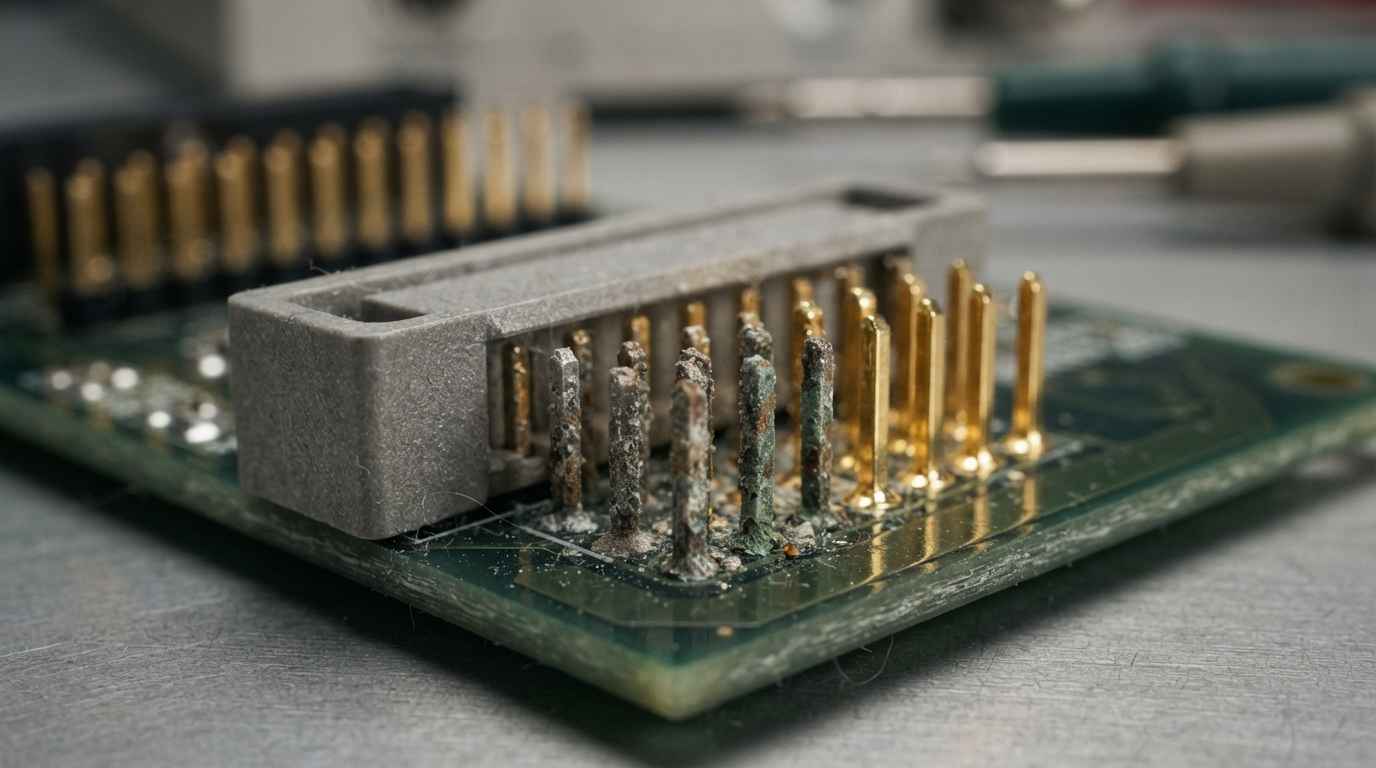
Choosing the materials for electronics well avoids failures from heat and corrosion
Materials for electronics have to get rid of the heat and resist corrosion at the same time, and the reliability of the equipment depends on that double demand. Recognising what the application asks for, choosing the materials and coatings that solve heat dissipation and corrosion protection, and validating them with tests under real conditions is what separates equipment that lasts from one that fails in the field. The difference is almost never in an isolated component, but in having chosen the combination of materials well.
If your electronic device heats up too much, suffers corrosion or you want to secure the materials before manufacturing in series, gather the component, its working conditions and the service environment and send them over: we return which materials for electronics fit, why and a test plan to confirm it.
Frequently asked questions
Which materials for electronics are used for heat dissipation?
The most common are aluminium, for its good balance of conductivity, weight and cost, and copper, when a lot of heat has to be evacuated. To these are added thermal interface materials, such as conductive pastes and pads, and advanced composites with graphite or ceramics, which allow heat to be dissipated where a conventional metal does not fit or weighs too much.
Why is heat so critical in electronics?
Because almost all the power that is not used turns into heat that has to be evacuated. If it does not leave, the temperature of the component rises, performance drops and service life shortens, since many electronic failures are triggered by temperature. Miniaturisation makes the problem worse, because it concentrates more power in less space and leaves less room to dissipate.
How is electronics protected against corrosion?
With a combination of resistant materials and coatings. Finishes on contacts and connectors protect the critical areas, and conformal coatings cover the board with a layer that isolates it from humidity and contaminants. The key is to choose the material and the coating according to the real service environment, because what works in a dry interior does not work in a marine environment.
Can dissipation and corrosion be solved at the same time?
Yes, and in fact it is advisable, because both problems usually appear together and feed off each other. Some finishes, such as anodising, improve dissipation by radiation and at the same time protect against corrosion. Choosing the materials for electronics by looking at both demands at once avoids solving one and leaving the equipment exposed by the other.
How are the materials for electronics validated before manufacturing?
With tests that reproduce the real heat and environment: thermal cycling and thermal shock for the expansions, salt spray and humidity for corrosion, and accelerated ageing to anticipate degradation. These tests confirm whether the chosen materials withstand what is expected of them, and turn the selection into a decision with data instead of a bet.