Product Development
Product development is a specialized technical service that INFINITIA applies to transform ideas, industrial needs, or technical challenges into functional, validated products prepared to move toward manufacturing or industrialization. This process can range from initial conceptualization to proof of concept testing, prototype design, MVP development, pre-series production, and manufacturing support.
In our product development approach, we combine capabilities in mechanical engineering, electronics, industrial design, simulation, material selection, prototyping, and experimental validation within our development process. This integrated vision makes it possible to evaluate not only the product’s shape or functionality, but also its technical feasibility, behavior under real operating conditions, and its ability to be manufactured efficiently.
The objective is to provide a robust technical solution that accelerates time-to-market, optimizes resources, and increases the product’s chances of success. This service is especially relevant in industrial environments where design, functionality, reliability, and scalability directly determine the competitiveness of the final product.
What does product development involve?
Product development consists of the technical process through which an idea, need, or initial concept is transformed into a physical, functional solution prepared for use or manufacturing. This process involves analyzing requirements, studying users and market conditions, defining specifications, generating concepts, designing components, manufacturing prototypes, and verifying product behavior before moving into production phases.
Unlike approaches focused only on aesthetic or conceptual design, industrial product development integrates different technical disciplines to ensure that the product performs correctly in its real environment, which is essential for market research and product validation. This includes mechanical, electronic, and functional development, as well as software, hardware, sensors, actuators, or control systems integration when required.
At INFINITIA, this service is approached through a structured methodology that may include conceptual design, proof of concept, demonstrators, functional design, prototyping, MVPs, pre-series production, and technical validation. Each phase answers a specific question: whether the idea is viable, whether the technology works, whether the product addresses a real need, whether it can be manufactured, and whether it meets the defined requirements.
As a result, the product development team transforms a concept into a tangible solution, reducing planning errors and avoiding progression toward manufacturing based on unverified assumptions. This approach helps organize the project from its earliest stages and supports more reliable technical decision-making throughout the entire product development lifecycle.
Benefits of applying a product development strategy
Product development makes it possible to manage complex industrial projects through an organized process in which decisions are supported by technical analysis, prototypes, and progressive testing. This is especially important within the product development process when working with new products, unproven technologies, critical components, or demanding functional requirements.
Unlike development approaches based solely on intuition, preliminary design, or direct manufacturing, a structured process allows technical, economic, and functional feasibility to be analyzed in advance. This approach helps identify limitations in materials, components, geometries, manufacturing processes, assemblies, or user experience before the product reaches the market, improving product management and reducing development risks.
At INFINITIA, this type of project combines technical analysis, design, simulation, prototyping, and testing. Proof of concept activities validate critical principles; demonstrators help verify core functionalities; and MVPs make it possible to evaluate a first useful version of the product before investing in more advanced developments.
As a result, product development helps reduce costs, shorten iteration times, improve functionality, and increase product reliability while accelerating development cycles. It also facilitates coordination between R&D, quality, production, purchasing, and management departments by creating a shared technical foundation for moving forward with greater control throughout the product lifecycle.
What benefits does Infinitia provide through Product Development?
At INFINITIA, we approach each product development project with a focus on transforming ideas and technical needs into functional, viable solutions prepared for industrialization, integrating design, engineering, and validation across all development stages.
Our experience in different industrial environments allows us to prioritize the critical aspects of each product, from conceptualization to prototyping and manufacturing, acting as an integrated technical partner to ensure that every design decision translates into applicable, functional solutions aligned with the project’s technical and production objectives.
We develop concrete and actionable technical solutions based on design, prototyping, and experimental analysis, ensuring reliable decisions at every stage of the project.
We transform ideas into tangible products through a progressive approach that moves from conceptualization to demonstrator, from demonstrator to prototype, and from prototype to pre-series or manufacturing phases.
We work cross-functionally with R&D, design, production, quality, and purchasing teams, providing a global view of the product, its technical requirements, and its industrial feasibility.
We apply conceptual design, proof of concept, MVP, prototyping, and pre-series methodologies to structure development, validate critical components, and prepare the product for scaling.
From products developed from scratch to improvements of existing solutions, we adapt the level of development to each technical, functional, and production need.
Product development at INFINITIA
Product development at INFINITIA is conceived as a comprehensive process focused on transforming a need into a viable technical solution. This approach is not limited to designing a part or manufacturing a prototype; it also includes problem analysis, requirement definition, hypothesis validation, and preparation of the product for subsequent manufacturing phases.
Unlike approaches based purely on creativity or formal design, product development at INFINITIA relies on technical and experimental capabilities. This allows materials, components, mechanisms, electronics, manufacturing processes, and operating conditions to be evaluated before consolidating a final solution, ensuring viability throughout the product lifecycle.
At INFINITIA, product development begins with preliminary market studies, user analysis, and specification definition within the context of product launch. From there, concepts are developed, technologies or critical components are tested, prototypes are designed, and the product is refined through technical iterations, always seeking to accelerate development. When required, projects can also move toward MVPs, pre-series production, homologation, or industrialization support, facilitating product launch.
As a result, product development helps reduce risks, improve design quality, optimize resources, and increase the likelihood of market success. It also facilitates technical decision-making in projects where innovation, functionality, and industrial feasibility must progress in a coordinated way.
How do we apply the product development process in each project?
The application of product development at INFINITIA is based on combining different technical capabilities activated according to the maturity level of the product idea, product requirements, and manufacturing objectives. This modular approach makes it possible to adapt the project scope, from initial conceptualization to prototyping, functional validation, or industrialization support, covering all product development stages.
Below are the main approaches integrated into a product development project:

Design and Innovation
This stage defines the technical and functional foundations of the product from its earliest phases by analyzing user needs, market requirements, technical feasibility, and potential solution pathways. Ideation, conceptual design, specification definition, and the generation of viable, feasible, and desirable concepts are developed at this stage.
At INFINITIA, this approach may include preliminary studies, user analysis, review of existing solutions, initial technology testing, evaluation of materials or components, and the generation of images, mockups, or conceptual models. The goal is to structure the project from the beginning and prevent development from progressing based on poorly defined or technically weak ideas.

Mechanical development
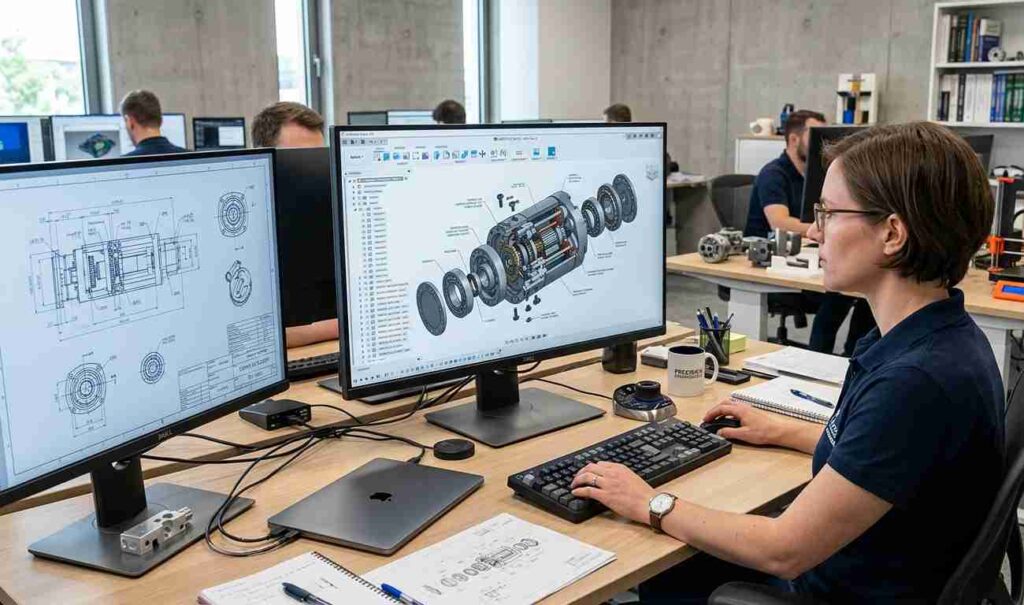
This phase focuses on the design and technical development of the product’s physical elements, including mechanisms, actuators, parts, housings, assemblies, and structural components. It may involve CAD design, material selection, geometric optimization, tolerance definition, and adapting the design to manufacturing processes.
At INFINITIA, mechanical development allows either the creation of a product from scratch or the improvement of existing products by adapting them to the product’s functional and industrial requirements. It can also integrate electronics, sensors, actuators, software, or control systems when the product requires a complete solution rather than an isolated component.

Prototyping
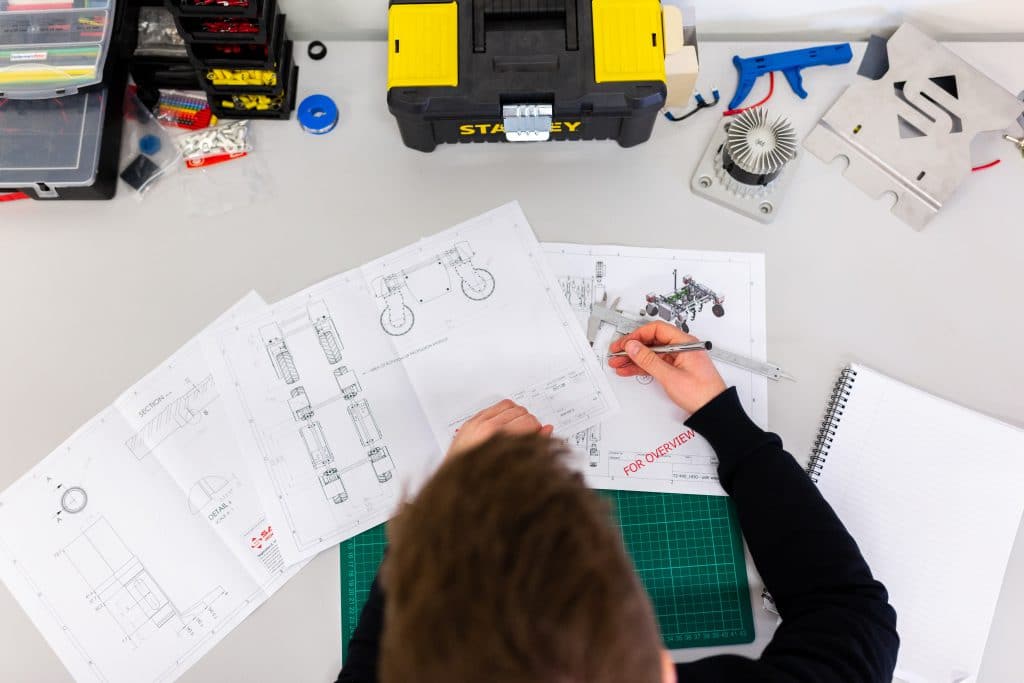
This phase materializes the design through aesthetic, functional, technological, or validation prototypes depending on the project objective. Prototyping makes it possible to verify shape, ergonomics, operation, resistance, assembly, electronic integration, or behavior under representative conditions before advancing to production phases.
At INFINITIA, prototyping is approached as a continuous improvement tool throughout all stages of the development process. It may include demonstrators to validate an idea, functional prototypes to verify technical requirements, or MVPs to evaluate a first useful version of the product during development stages. This approach helps identify deviations, refine the design, and support decision-making before committing to larger investments.

Product Manufacturing
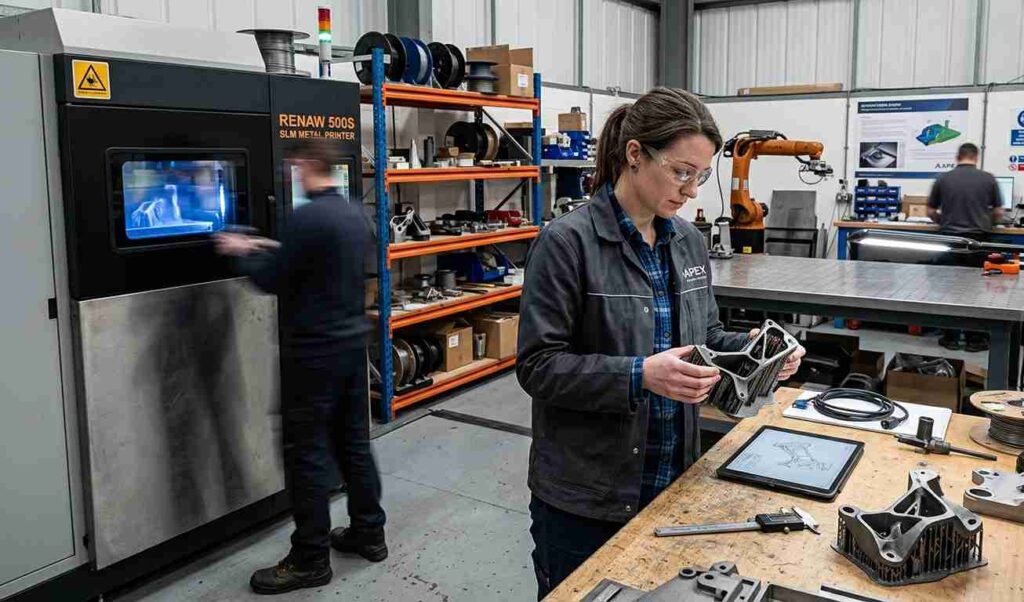
This phase consists of preparing the product for manufacturing, whether through 3D printing, small production runs, short series, pre-series production, or industrialization support within the product development process. It allows review of processes, suppliers, materials, assemblies, costs, repeatability, and quality criteria before moving to larger-scale production.
At INFINITIA, this approach supports the transition from prototype to manufacturable product. Product manufacturing may include supplier selection, design adjustments, final validation, procedure review, and homologation support when required by the market or industry. The objective is to ensure that the developed solution not only works, but can also be produced in a controlled and efficient way.
Product development stages
At INFINITIA, product development is approached through a structured methodology that transforms an initial idea into a functional, validated solution prepared for industrialization. Each stage of the process has a specific technical objective and reduces uncertainty before progressing toward subsequent phases.
This approach combines design, engineering, validation, and manufacturing, ensuring that the product is not only conceptually viable, but also functional, manufacturable, and competitive under real operating conditions.
1. CONCEPT DESIGN
Initial phase in which all starting information is studied, specified, and analyzed in order to carry out the ideation process. The objective is to create product concepts that are viable, feasible, and desirable for both the customer and the business.
What does it include?
Preliminary study and concept maturation
Output: Product design specifications (EDPs)
Ideation and concept generation phase
Output: Definition of development lines and concept generation

2. DEMONSTRATOR
A demonstrator is a simplified version of the final product used to showcase its main characteristics and functionalities. The objective is to provide a representation of the final product so it can be evaluated before market launch.
What does it include?
Functional design, proof of concept, and validation
Output: Idea validation, demonstrator

3. PRE-SERIES
A pre-series consists of a small quantity of products manufactured before full production. The objective is to ensure that the production process is efficient and that the final product meets quality requirements and design specifications.
What does it include?
Development, testing, and improvement phase
Output: Product validation, pre-series
4. HOMOLOGATION
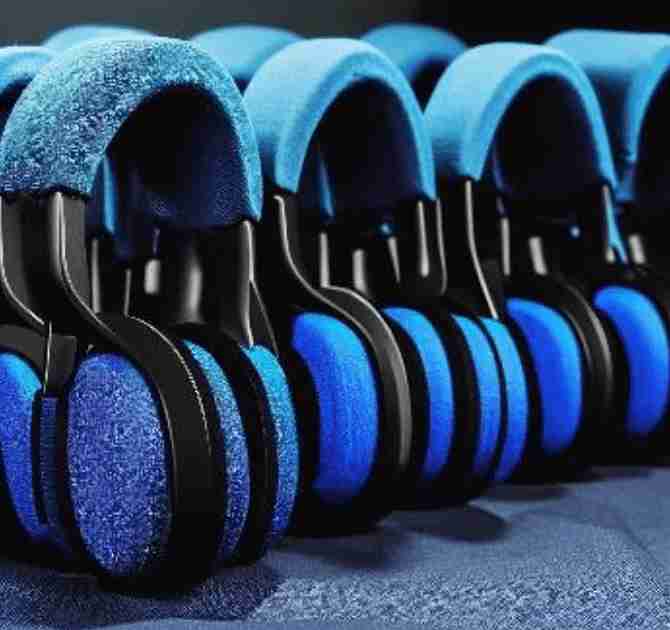
This is the certification and approval process carried out to ensure that a product complies with the technical, safety, and environmental standards and regulations required for commercialization and use in a specific market.
What does it include?
Homologation phase
Output: Certified product

5. MASS MANUFACTURING
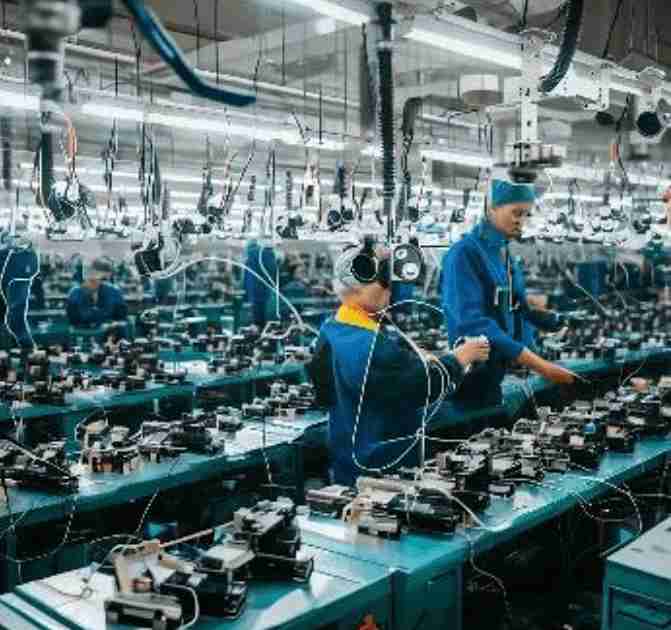
This is the process of producing large quantities of identical products using an assembly line. Specialized tools and machinery are used to manufacture components and assemble them into a final product in a repetitive and efficient manner.
What does it include?
Manufacturing phase
Output: Market-ready product
Some of our projects
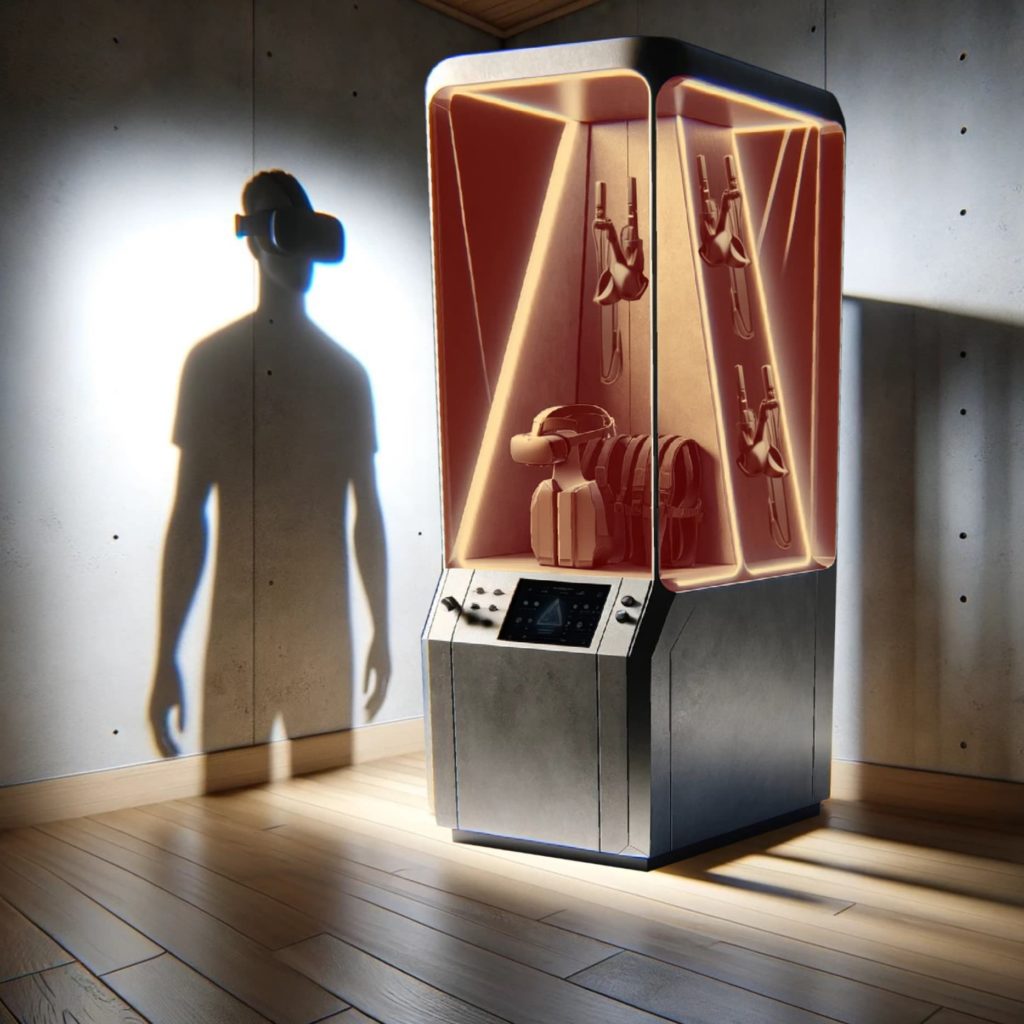
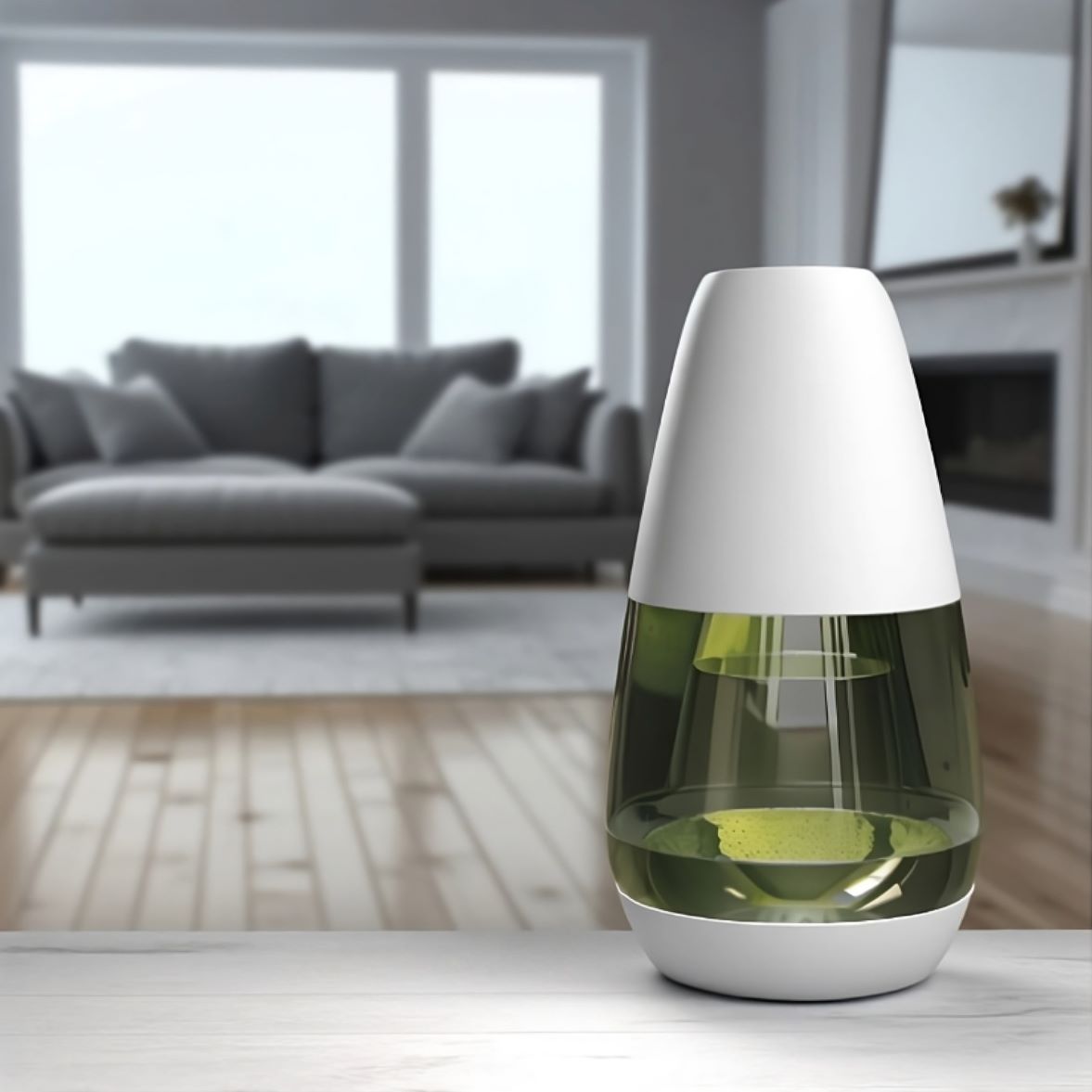
Types and differences between the product development services we provide
At INFINITIA, product development is adapted to the type of technical need, the maturity level of the idea, and the project’s final objective. Not all developments require the same scope: some need technology validation, others require improving an existing product, while others must progress from an initial idea to pre-series production.
Our objective is to integrate different design, engineering, prototyping, and validation capabilities to develop viable, functional products prepared for real operating environments.
New product development
New product development applies when a company needs to transform an idea or market need into a concrete physical solution. This process includes initial analysis, requirement definition, concept generation, technical design, prototyping, and validation.
At INFINITIA, this approach supports the project from its earliest phases, helping define what the product must do, how it should function, which materials or components are required, and which technical limitations may influence development.
This type of project is especially useful when launching a new solution, exploring a market opportunity, or developing an industrial product with differentiated functionalities following a product roadmap.
Aesthetic prototype development
Aesthetic prototype development allows visualization of the final appearance of a product before manufacturing. These prototypes are useful for validating shape, ergonomics, finishes, proportions, visual perception, and user experience, contributing to overall product design.
At INFINITIA, these prototypes may be manufactured through 3D printing, machining, professional finishing, painting, assemblies, or photorealistic mockups. Their objective is not necessarily to validate full functionality, but to represent the product realistically.
This type of development is particularly useful for internal presentations, user validation, investment attraction, product line definition, or decision-making before advancing toward functional prototypes.
Functional prototype development or technology validation
Functional prototypes allow verification that the product meets defined technical requirements. Unlike aesthetic prototypes, these focus on validating behavior, resistance, assembly, usability, electronic integration, or mechanism functionality.
At INFINITIA, functional prototype development makes it possible to evaluate materials, components, mechanical systems, actuators, electronics, or software under representative conditions. This helps detect technical issues before moving toward manufacturing.
This type of prototype is critical for confirming that the product can operate reliably in its intended application.
MVP development as a product lifecycle stage
The MVP, or minimum viable product, enables the creation of a first functional version of the product with the essential characteristics required to validate its usefulness. Its purpose is not to become a final version, but rather to determine whether the solution addresses a real need.
At INFINITIA, MVP development is considered an intermediate phase between concept and final product within the development process. It allows testing critical functionalities, gathering usage information, identifying improvements, and prioritizing changes before investing in full-scale development.
This approach is especially useful when accelerating time-to-market, validating a technical proposal, or reducing risk before scaling the product.
Redesign and improvement of existing products
Product redesign applies when an existing product needs improved functionality, cost reduction, failure resolution, adaptation to new requirements, or updated design. It is not always necessary to start from scratch; in many cases, the greatest value lies in improving an already developed solution.
At INFINITIA, this approach may include analysis of the current product, identification of limitations, comparison of alternatives, material optimization, component redesign, and experimental validation of improvements.
This type of project helps increase product competitiveness, correct deviations, and extend product lifecycle through technically grounded decisions.
Product development plan focused on manufacturing
Manufacturing-oriented development focuses on preparing the product for production. This involves analyzing processes, tolerances, assemblies, supplier selection, repeatability, costs, and scalability.
At INFINITIA, this approach enables the transition from a functional prototype to a manufacturable solution. Materials, geometries, processes, and assembly methods are reviewed to avoid production issues, which is essential during development stages.
This type of development is critical when the product must advance toward pre-series production, short production runs, or mass manufacturing while reducing risks associated with industrial scaling.
Industries where product development accelerates design, validation, and industrialization
Product development has applications across multiple industrial sectors because any physical solution must integrate design, functionality, materials, manufacturing, and user experience within the same process. However, each sector presents different technical, regulatory, and operational requirements, which means development approaches must adapt according to the environment and real operating conditions.
At INFINITIA, we apply product development by combining engineering, design, prototyping, and technical validation to transform ideas into viable solutions prepared for industrialization. This approach helps reduce uncertainty during development stages, optimize decision-making, and ensure that the product meets functional, production, and market needs.
Startup product development: MVP validation and innovative solution development
In startups and new developments, the main challenge is transforming an idea into a functional product capable of technical and commercial validation before making major industrialization investments. Product development helps reduce uncertainty, prioritize functionalities, and validate hypotheses during the earliest stages of the project.
- MVP and demonstrator development: creation of functional versions aimed at validating technologies, critical functionalities, and user experience.
- Optimization for rapid iteration: development of solutions adapted for prototyping, testing, and continuous improvement during early product phases.
- Technical validation before industrialization: analysis of materials, integration, manufacturing, and functional behavior to reduce scaling risks.
At INFINITIA, we help startups and innovative companies accelerate the development of new products through engineering, prototyping, and technical validation, facilitating the transition from initial idea to manufacturing- and market-ready solutions.
Automotive product development: components for dynamic conditions and intensive use
In the automotive industry, products must meet high requirements for safety, durability, weight reduction, and repeatability while maintaining stable behavior under real operating conditions. Product development in this sector requires integrating materials, mechanical design, and manufacturing processes capable of withstanding vibrations, dynamic loads, and continuous thermal variations.
- Development of components for dynamic loads: design of parts and systems capable of withstanding vibrations, impacts, cyclic stresses, and prolonged mechanical loads.
- Optimization of geometries and materials: selection of materials and structural configurations that reduce weight without compromising resistance or functionality.
- Manufacturing-oriented integration and assembly: development of components adapted to repetitive manufacturing processes, ensuring dimensional stability and system reliability.
At INFINITIA, we develop automotive-oriented solutions by combining technical design, prototyping, and functional validation to optimize product performance and facilitate industrialization.
Energy sector product development: solutions for continuous operation and demanding environments
In the energy sector, products must operate continuously under severe temperature, pressure, and environmental exposure conditions. Product development requires integrating materials, design, and processes capable of ensuring stability, durability, and efficiency in service.
- Development of solutions resistant to prolonged operation: design of components and systems capable of withstanding demanding thermal, chemical, and mechanical conditions.
- Optimization of materials and coatings: selection of materials and treatments adapted to aggressive environments and durability requirements.
- Development focused on real operating conditions: validation of product behavior under thermal cycles, pressure, or environmental exposure before industrialization.
At INFINITIA, we develop products adapted to demanding energy environments by combining design, material selection, and technical validation to improve solution reliability and industrial feasibility.
Electronics product development: integrated systems for functional stability and reliability
In electronics, product development must integrate mechanical, electronic, and thermal components within compact and functional solutions. Miniaturization, heat dissipation, and systems integration make small design decisions directly affect the stability and reliability of the final product.
- Integration of systems and components: development of assemblies combining electronics, mechanics, and functional protection within reduced spaces.
- Thermal and structural optimization: design focused on heat dissipation, dimensional stability, and environmental protection.
- Development focused on functionality and real use: validation of product behavior under vibrations, humidity, thermal cycles, and prolonged operation.
At INFINITIA, we develop electronic devices and systems by combining technical design, functional integration, and prototyping to ensure stability and reliability before manufacturing.
Consumer goods product development: functionality, design and user experience
In consumer goods, products must balance functionality, aesthetics, durability, and user perception within highly competitive markets. Product development requires integrating industrial design, material selection, and user experience to generate attractive and production-feasible solutions.
- Development focused on real use and ergonomics: design of products adapted to handling, interaction, and real operating conditions.
- Optimization of materials and finishes: selection of solutions balancing visual perception, resistance, cost, and durability.
- Integration of design and manufacturing: development of products prepared for repetitive manufacturing without losing aesthetic or functional quality.
At INFINITIA, we develop consumer products by combining design, prototyping, and functional validation to improve user experience and accelerate time-to-market.
Industrial machinery product development: technical solutions for demanding production environments
In machinery and industrial environments, products must withstand intensive use, high mechanical loads, and continuous operating conditions. Product development in this context requires designing robust, functional solutions adapted to demanding industrial processes.
- Development of mechanical systems and components: design of mechanisms, supports, tools, and functional assemblies focused on resistance and durability.
- Optimization of assemblies and maintenance: development of solutions facilitating integration, repeatability, and maintenance within production environments.
- Design focused on operational efficiency: validation of product behavior under real working conditions and continuous operation.
At INFINITIA, we develop industrial solutions through engineering, prototyping, and technical validation, improving operational efficiency and facilitating product industrialization.
Defense product development: extreme conditions and high-demand operational environments
In the defense sector, products and systems must operate under extreme load, temperature, vibration, and environmental exposure conditions while maintaining stability and reliability in critical situations. Product development in this environment requires integrating materials, design, and engineering capable of ensuring resistance, functionality, and operational robustness even in highly demanding technical scenarios.
- Development of solutions for extreme environments: design of components and systems capable of withstanding impacts, vibrations, high mechanical loads, and severe environmental conditions.
- Optimization of materials and technical configurations: selection of materials, coatings, and geometries focused on reducing weight, increasing durability, and improving in-service behavior.
- Development focused on operational reliability: functional validation of the product under real operating conditions, including thermal exposure, environmental agents, and continuous mechanical demands.
At INFINITIA, we develop technical solutions for defense applications by combining engineering, prototyping, and functional validation, improving product robustness, optimizing operational behavior, and facilitating industrialization in highly demanding environments.
Product development at INFINITIA to transform ideas into industrial solutions
Product development is a key process for turning an idea, technical need, or market opportunity into a functional, viable solution prepared for industrialization. At INFINITIA, we approach this service through an integrated methodology combining engineering, design, prototyping, and technical validation, enabling the development of robust products from the earliest project stages through preparation for manufacturing.
Our approach integrates conceptual design, mechanical and electronic development, simulation, material selection, prototyping, MVPs, functional validation, and industrialization support. This combination makes it possible to analyze not only how the product should be designed, but also how it should behave, be manufactured, and integrate into real operating and production conditions.
Throughout the process, we work to reduce technical uncertainty, optimize iterations, and validate decisions before advancing toward higher-investment phases. This makes it possible to identify design, integration, or manufacturing limitations early, improving product reliability and accelerating development without compromising quality or functionality.
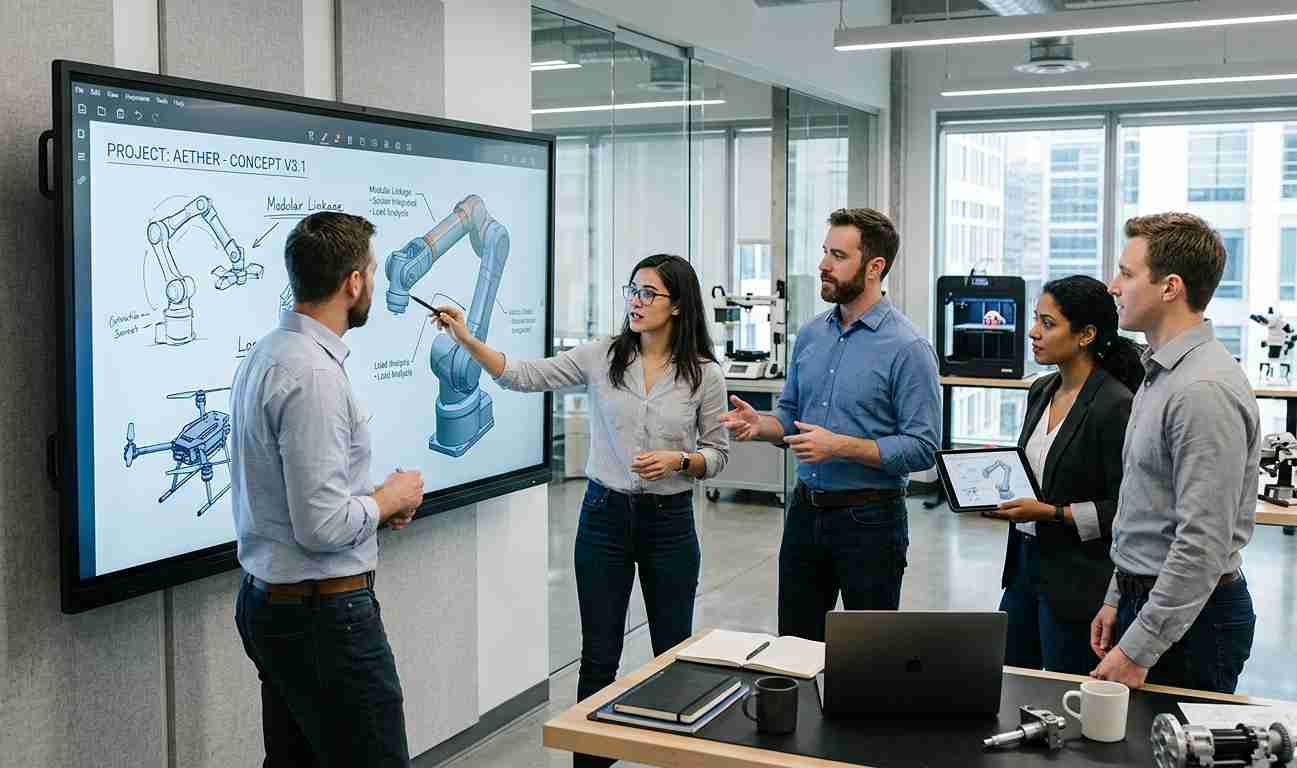
In projects where technology, manufacturing, user experience, and industrial requirements converge, having an external technical team helps structure development and move forward with greater criteria and agility. At INFINITIA, we act as a product development department, integrating engineering and validation capabilities to transform concepts into functional, scalable solutions prepared to reach the market.
Works done in Product development
Frequently Asked Questions about Product Development
What is industrial product development and how does it differ from product design?
Industrial product development is the complete technical process that transforms an idea or need into a validated, manufacturable, and competitive physical solution. Unlike product design, which focuses primarily on form and aesthetics, industrial development integrates mechanical engineering, materials selection, functional prototyping, simulation, and experimental validation. At INFINITIA, we address both dimensions in a coordinated way: from the first conceptual sketches to preparing the product for industrialisation, ensuring that every design decision is technically grounded and viable in production. You can find concrete examples in our product development case studies.
From what stage can INFINITIA get involved in developing a new product?
INFINITIA can join a project at any stage: from the initial conceptualisation, when there is nothing more than an idea or a market need without a defined form, through to advanced phases of prototyping, redesign, or preparation for manufacturing. We work with companies starting from scratch as well as with teams that already have a development in progress and need an external technical partner to resolve bottlenecks, validate decisions, or accelerate their route to market. This flexibility allows us to act as an outsourced development department, adapting the project scope to each specific situation. If your project is in the ideation phase, the initial diagnosis for product development is the usual starting point.
Can INFINITIA help a startup develop its first physical product?
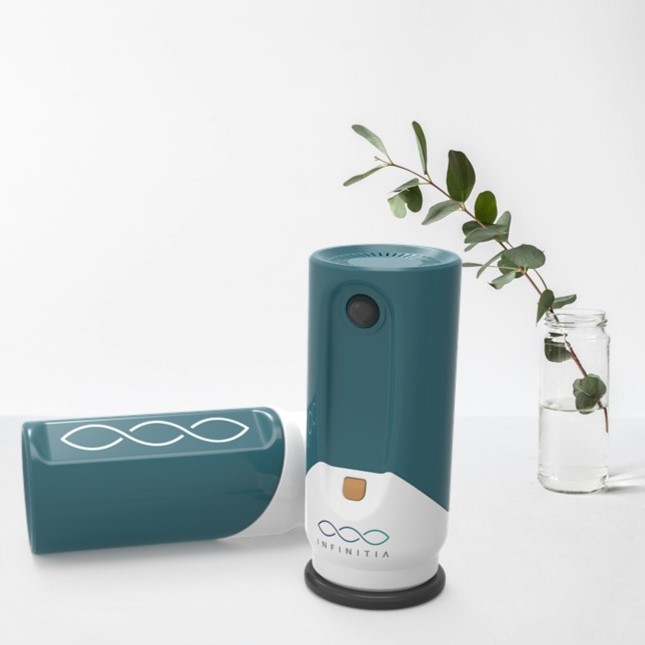
Yes, and it is one of the profiles we work with most. Startups with a physical product face a specific challenge: they need to move fast to validate their proposition, but without the internal technical resources of an established industrial company. At INFINITIA we act as an external technical partner, providing engineering, design, prototyping, and validation from the earliest phases. This allows the startup to focus its resources on the business while INFINITIA handles the technical complexity of the product. Compared to other alternatives such as technology centres or university research groups, perfectly valid and complementary approaches, working with a technical partner like INFINITIA typically offers stronger orientation towards the final product, tighter response times, and an end-to-end vision spanning from concept to manufacturing. Among other projects, we have developed an advanced liquid dispensing prototype aimed at attracting investors and a disinfection device for shared equipment in recreational venues, both starting from concrete needs with no prior product.
How long does it take to develop a product from idea to prototype?
Development time depends on the technical complexity of the product, the maturity of the idea, and the objectives of each phase. At INFINITIA, we work with a structured methodology organised by phases ( concept design, demonstrator, pre-series, homologation, and series production) that allows progress in a controlled way and reduces uncertainty at each stage. In general terms, timelines can range from several weeks for specific validations or early-stage work, to several months or even years for complete developments involving mechanical and electronic integration, prototyping, and preparation for manufacturing. There is no standard timeline: every project is planned according to its real requirements. In all cases, the goal is to optimise iteration time and avoid moving towards manufacturing with unverified technical assumptions. More details on the process milestones can be found on our prototyping page.
What is the difference between an MVP, an MLP, and a proof of concept?
These three concepts address different objectives within the development cycle. A proof of concept (PoC) validates whether a technology, principle, or mechanism works under controlled conditions; it is a feasibility test, not a product. An MVP (Minimum Viable Product) is the first functional version with the minimum features needed to be tested by real users and generate learning. An MLP (Minimum Lovable Product) goes one step further: it incorporates the functional attributes and user experience elements sufficient to make the product not just useful, but also desirable. At INFINITIA we use all three approaches as technical decision-making tools, choosing the most appropriate one based on the project’s objectives and the available investment. Further information is available on our pages for Minimum Viable Product and Minimum Lovable Product.
What role do user studies and market research play in industrial product development?
User studies and market studies are validation tools that allow the technical assumptions of the development team to be tested against the real needs of users and market opportunities. At INFINITIA, we incorporate them especially in the early phases of a project to avoid one of the most common and costly mistakes in product development: designing a technically sound solution that nonetheless does not respond to a real need or lacks competitive fit. A well-executed user analysis allows priorities to be set among functionalities, design specifications to be defined more precisely, and subsequent iterations throughout the development process to be reduced.
Can INFINITIA handle both the mechanical design and the electronics of a product?
Yes. At INFINITIA we approach product development in an integrated way, covering both mechanical development (CAD design, materials selection, geometry optimisation, tolerances, and design for manufacturing) and the integration of electronic components, sensors, actuators, and control systems when the product requires it. This cross-disciplinary capability allows us to develop complete solutions without depending on multiple uncoordinated suppliers, which is critical when mechanical design and electronics must evolve in parallel to ensure the functionality of the whole. It is one of the most practically relevant differences compared to working with more specialised profiles or university research teams, which typically focus on a single discipline.
How do I know whether to redesign my existing product or develop a new one from scratch?
The decision between redesigning and developing from scratch depends on several factors: the degree of technical limitation of the current product, existing manufacturing costs, market requirements that are not being met, and the time available for development. In many cases, redesign offers a greater short-term return because it builds on a validated base: adjusting materials, optimising assemblies, or resolving specific failures can significantly increase competitiveness without the cost of a full development. At INFINITIA, we carry out a technical analysis of the existing product before recommending any approach, assessing real limitations and opportunities for improvement. You can see an example of this type of project in our case study on product redesign to reduce production and assembly costs.
What happens if my product needs to pass homologation or certifications before going to market?
Homologation is the certification process that ensures a product meets the technical, safety, and environmental standards required for commercialisation in a given market. Depending on the sector, applicable regulations may include CE marking, mandatory for most products sold in the European Economic Area, covering directives such as Low Voltage, Machinery, or Personal Protective Equipment, the RoHS directive for electronic components, food safety regulations, or defence-specific requirements. At INFINITIA, we take regulatory requirements into account from the earliest design phases (not only at the moment of certification) which significantly reduces redesigns and the costs associated with late non-conformities. For information on validation testing prior to homologation, you can consult our design and innovation area.
In which industrial sectors does INFINITIA have experience in product development?
INFINITIA has developed product projects in sectors including automotive, consumer electronics, energy, industrial machinery, consumer goods, and defence. Each sector presents different regulatory, functional, and durability requirements, which demands adapting materials, manufacturing processes, and validation strategies accordingly. For example, in automotive we work with components subject to dynamic loads and continuous vibrations; in electronics, thermal integration and miniaturisation are critical factors; and in industrial machinery, operational robustness and maintenance are priorities. This cross-sector experience allows us to identify the specific technical risks of each environment from the earliest project phases — something that a generalist technical partner or a team focused exclusively on basic research can rarely offer with the same practical orientation. You can browse real cases in our completed projects section.
How is the transition from prototype to series production managed?
The transition from prototype to manufacturing is one of the most critical phases of development and, often, the most underestimated. A functional prototype is not always directly manufacturable: there may be geometries that are difficult to reproduce in series, tolerances not achievable with the available processes, materials with unviable supply lead times, or assemblies that hinder repeatability.
At INFINITIA, our product manufacturing area specifically addresses this transition: we review the design from a manufacturing perspective, support the selection and validation of industrial suppliers, adjust tolerances and assemblies, and provide support during pre-series runs before scaling to production. The goal is to ensure that the move from prototype to series does not generate technical or economic surprises.
How can I start a product development project with INFINITIA?
The first step is a technical conversation in which we analyse together the idea, the current state of the project, the objectives, and the main constraints. From there, we propose a specific approach, which may begin with a preliminary study and idea maturation, a technical diagnosis, or directly with a conceptual design phase, and we jointly define the scope and deliverables. You can contact us through the form on the page to receive a priority response from the technical team.
Contact us
To receive a PREFERENTIAL ANSWER, please contact us using the form below.




