
What was the challenge or problem to be solved?
High temperature gas analysis was the starting point for assessing the introduction of a new steel supplier, as it was essential to verify that the material maintained behavior equivalent to the previously qualified supply when subjected to demanding thermal conditions. The client needed to confirm that the change would not introduce technical deviations, operational risks, or regulatory implications arising from the potential release of gaseous compounds during heating.
The purpose of the study was to ensure that the economic improvement associated with the new supply would not compromise process stability, industrial safety, or applicable regulatory compliance, supporting the decision with experimental and comparable data.
Comparative evaluation of steel thermal behavior
The comparative evaluation of steel thermal behavior makes it possible to directly assess how different supplies respond under controlled heating conditions. This approach is particularly relevant when seeking to qualify a new supplier, as it relies on actual material performance rather than solely on theoretical specifications or documentation.
During heating, surface transformations, release of retained compounds or variations in material stability may occur. Comparing both suppliers under the same experimental protocol helps identify technical differences that may not be evident in initial documentation but could become significant during operation.
This comparative analysis provides an objective basis to support the supplier change decision. Beyond confirming equivalence, it allows potential impacts on efficiency, maintenance requirements or process control to be anticipated, strengthening the technical robustness of the qualification process.
Industrial cost optimization supported by technical evidence
Industrial cost optimization represented a strategic opportunity to improve competitiveness. However, any savings had to be supported by certainty that the new steel would not introduce additional operational or compliance risks.
A comparative chemical analysis was required to identify potential differences in gas profiles generated during heating. This comparison had to rely on measurable and reproducible data obtained under equivalent test conditions. Only objective technical evidence could ensure that economic decisions remained aligned with quality and risk control requirements.
High temperature gas analysis as the core of the project
High temperature gas analysis formed the technical core of the study, since heating steel may lead to the release of volatile compounds or the formation of new gaseous products. Identifying these gases was essential to determine whether they could be considered harmful emissions within the specific industrial context.
Validation based on real process conditions and material thermal behavior.

Regulatory implications were also assessed, including alignment with REACH regulation (Registration, Evaluation, Authorisation and Restriction of Chemicals) and occupational exposure limits such as TLV-TWA and TLV-STEL, when applicable. The challenge was to generate robust comparative data that enabled an informed qualification decision while minimizing technical uncertainty.
How was it addressed or what was the solution?
The project was structured around an experimental methodology designed to reproduce real thermal conditions and rigorously characterize the gases generated by each supplier. High temperature testing, advanced material chemical analysis, and operational interpretation were combined to obtain objective and traceable evidence. The goal was to compare suppliers under equivalent conditions and support the qualification decision with technically validated results.
High temperature testing under controlled conditions
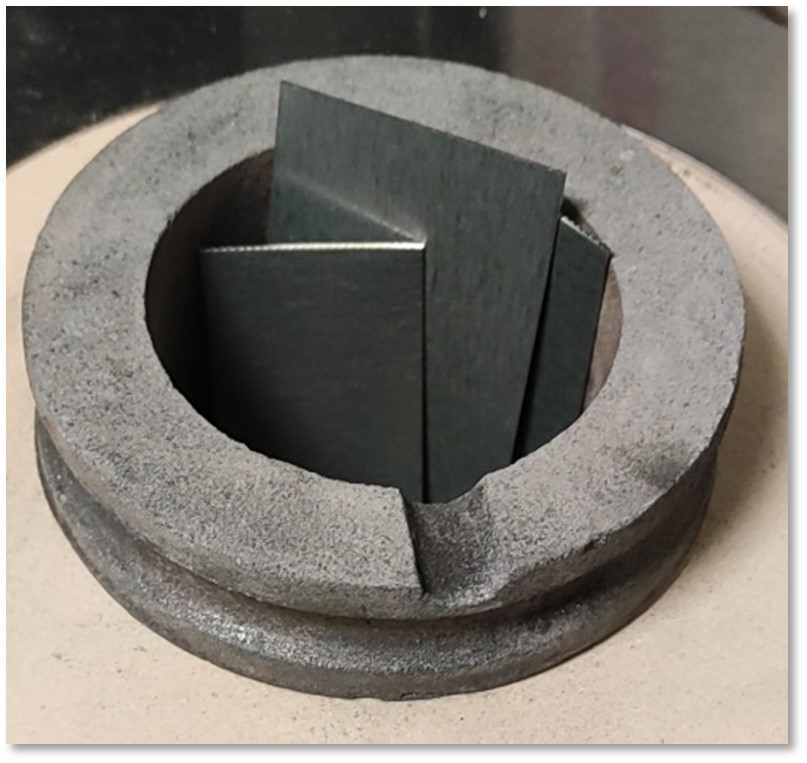
Controlled high temperature testing was developed to replicate the most demanding thermal scenarios of the industrial process. Parameters such as maximum temperature, exposure time and atmosphere were carefully monitored to ensure comparability.
Objective comparison between suppliers through thermal testing under equivalent controlled conditions.
Gas generation was monitored during heating and emissions were collected under controlled conditions for further analysis. This allowed the identification of behavioral differences between materials throughout the thermal cycle. The methodology strengthened result reliability by aligning laboratory conditions with real operational environments.
Material chemical analysis using gas chromatography
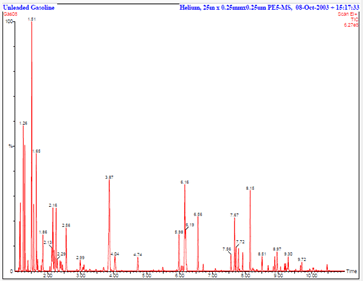
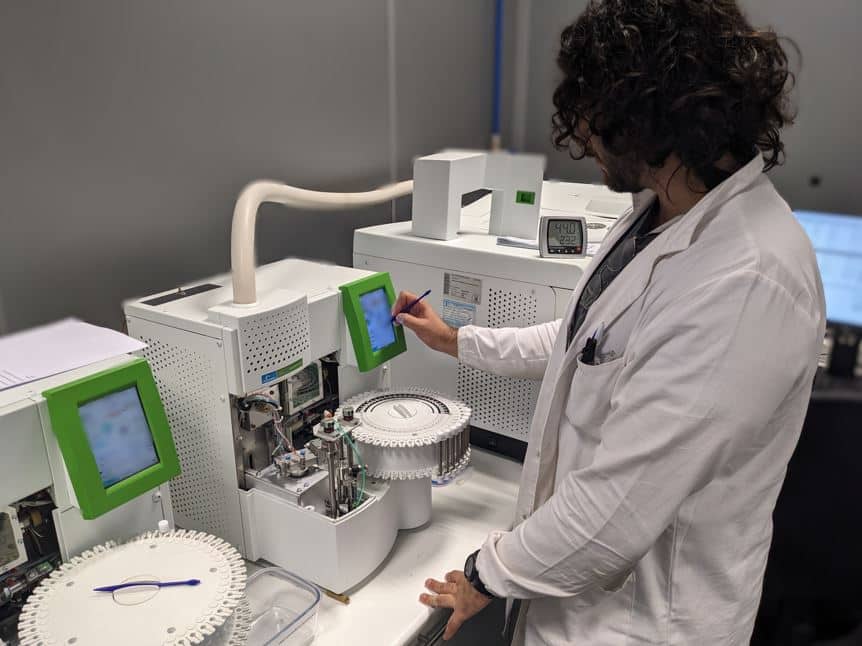
Gas characterization was performed using gas chromatography within a broader material chemical analysis framework. This approach enabled the separation and identification of compounds present in the collected emissions.
It was necessary to design and validate a tailored analytical method adapted to the specific steel type and temperature range evaluated. Method validation ensured adequate sensitivity and reproducibility for reliable supplier comparison.
Results were interpreted based on operational relevance and, when applicable, in relation to regulatory and exposure limit criteria.
Supplier technical validation with an operational focus
Supplier technical validation was based on the objective comparison of emission profiles obtained during thermal testing. Both the nature and relative concentration of detected compounds were evaluated to determine potential impact on process stability or workplace safety.
The assessment determined whether the new supplier provided equivalent performance in terms of thermal behavior and emission control, reducing uncertainty associated with the supply change.
As a result, the client obtained a solid experimental foundation to make a strategic decision aligned with economic competitiveness and industrial safety.
Technical decision-making supported by experimental data and comparative emission analysis.